

The Health Divide: Will the federal push to get more healthy foods into corner stores backfire?

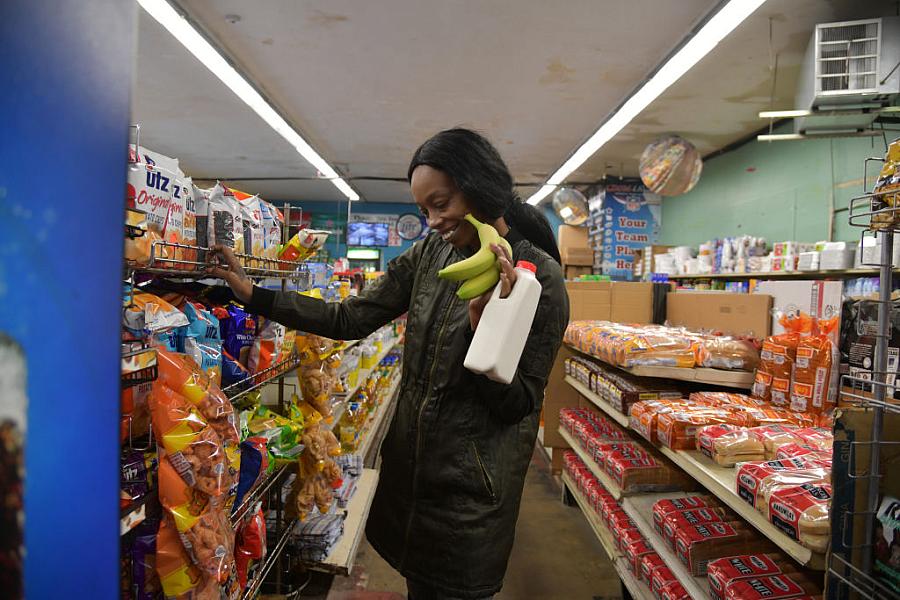
(Photo by Marvin Joseph/The Washington Post via Getty Images)
Nick Stanley, a third-generation convenience store owner in Huntington, Indiana, is scrambling to meet tough new federal requirements for the foods he must stock if he wants to continue accepting SNAP. Thousands of small business owners who participate in the low-income food assistance program face the same challenge.
As some stores, perhaps many, lose SNAP authorization because complying with the rules is too expensive or impractical, it will be harder for people who rely on the benefits to buy food they need.
Beginning Nov. 4, the government requires stores to offer a wider selection of healthy groceries, including more fresh, perishable options.
That may seem like a reasonable effort to improve nutrition and health in low-income communities. But by more than doubling the variety of healthy foods stores must offer, the policy threatens to squeeze out businesses that serve as an indispensable resource in rural areas, tribal nations and urban neighborhoods that don’t have easy access to supermarkets.
The U.S. Department of Agriculture acknowledges the requirements will not affect the Walmarts and Safeways of the world. They already carry everything that’s required, and more. But 70% of SNAP retailers are bodegas, convenience stores and other small grocers, and only half of them — about 99,000 — meet the new standards, according to a recent USDA analysis.
Complying will take investments in refrigeration, storage, inventory and new supplier contracts at a time when grocery sales have slowed — in part because so many families are struggling financially and millions of Americans have lost food assistance.
And the stocking requirements come on the heels of unprecedented rules in some states, including Indiana, that restrict the foods and drinks customers may buy with SNAP benefits.
For small business owners like Stanley, all the upheaval may make participating in SNAP more trouble and expense than it’s worth.
Stanley and his sister co-own a small chain, JJ’s Convenience Stores, starfted by their grandfather in 1980. One of their stores, in a residential neighborhood of Huntington, population 17,167, takes SNAP.
“It's not a huge money-making venture for us,” he said. “We're trying to do this as more of a community service.”
The two major supermarkets in town are across a four-lane highway, he said. Many of his customers have limited transportation and walk or bike to his store. People don’t load up on groceries but pop in for basics: eggs, milk, cereal, not to mention a pack of cigarettes or a bottle of soda.
The stocking requirements are not Stanley’s first round of wrestling with new SNAP rules. Since January, he has contended with Indiana’s ban on using SNAP to purchase soda, other sugary drinks and certain candy.
Indiana didn’t publish a detailed list of forbidden items, Stanley said. And he doesn’t have a compliance department, as big-box stores do, to figure out exactly what was off limits. Pepsi was obvious, but what about orange juice? If it was 100% juice, a customer could still pay with SNAP. If the drink contained an added sweetener, customers would have to use their own money.
Stanley hauled his laptop around the store, scanned product barcodes one by one, and studied the ingredients. Then he and his sister “did our best,” he said, to determine what’s allowable and not.
With the new stocking requirements, he’s dealing with another layer of complexity — again, with little government support.
Until the change, stores had to carry three varieties of food in each of four staple categories — fruits and vegetables, dairy, grains, and protein. Now stores must stock seven varieties in each category and more perishables.
They don’t come here to buy whole wheat flour.” — Nick Stanley, convenience store owner, Huntington, Indiana
It’s no small task to figure out which foods count toward which category. USDA published only limited guidance in September, just a few weeks before the deadline to comply, said Margaret Mannion, director of government relations for the National Association of Convenience Stores (NACS).
Store owners have struggled to understand complicated rules and arcane food distinctions. For example, in which category do peas fit? Under the old requirements, they counted as a vegetable. Now they’re considered protein. Nuts and seeds are protein, too — but almonds, walnuts and sunflower seeds count as one variety, not as three different proteins, Mannion said.
An even bigger challenge for owners is choosing new products to offer that convenience store shoppers actually want. “They don’t come here to buy whole wheat flour,” Stanley said.
Nor do his suppliers carry all the foods he now needs, he said. “Some of those things, we’re going to have to just go to Walmart and buy them.”
The push to expand healthy food options in SNAP retailers isn’t new. Congress mandated tougher stocking requirements in 2014. The Obama administration finalized regulations two years later.
But research showed that only 30% of small retailers in low-income neighborhoods — and a mere 17% of convenience stores — could meet the requirements. Congress has blocked them from taking effect.
Now they’ve come amid unprecedented federal cuts to the safety net and skyrocketing food prices. Putting more pressure on small SNAP retailers may compound the hardships already facing low-income families.
And it may not do much to promote healthier eating.
The new requirements say nothing about limiting ultra-processed foods, Mannion said — though they did bump beef jerky from the protein category. And as nutritionist and New York University professor emerita Marion Nestle has pointed out, the rules are not accompanied by incentives for SNAP recipients to buy fruits, vegetables or whole grains.
Now is a good time for journalists to visit bodegas, corner stores and small grocers that accept SNAP. What products do owners have to add to their shelves, at what cost? Are they considering dropping SNAP, or do they worry the government will cut them from the program?
Talk with customers who rely both on food assistance and small neighborhood food stores, especially older people, people with disabilities and families without reliable transportation.
Stanley said he plans to continue taking SNAP. If he and his sister get any stocking details wrong and the government cancels their authorization, they could reapply after six months.
But they probably wouldn’t.
“If the government goes down that road we may just give up,” he said. “We may just throw up our hands and say, ‘Okay, sorry, we're out.’”