

Kentucky could lessen asthma's billion-dollar burden. But will it act?
This article was originally published in Courier Journal with support from our 2026 National Fellowship, the Fund for Reporting on Child Well-Being and the Dennis A. Hunt Fund for Health Journalism.


Dr. Evan Kuhl, medical director at the UofL Jewish Hospital emergency department, holds a 3D-printed model of human airways.
Aug. 5, 2026 Michael Clevenger/Courier Journal
When a Kentuckian struggling to breathe misses school, calls out of work, or is rushed to the hospital in the panic of an asthma attack because they couldn't afford an inhaler, the disease is extracting a steep cost that is hard to grasp.
The Centers for Disease Control and Prevention has tried, estimating asthma costs Kentucky $1.7 billion each year. But the figure does not capture the full weight of one of the commonwealth's most common chronic diseases.
It omits the child who misses out on playing sports, the nature-lover trapped indoors, or the parent nervously awaiting the next midnight hospital visit. In these lost opportunities, lost wages and lost quality of life, asthma is taking a lot from Kentuckians.
But existing solutions – in schools, homes, doctor's offices and government agencies – could help protect people with asthma. In dozens of interviews, experts and people who live with asthma made clear: It doesn't have to be this way.
Read the entire series: Courier Journal investigates asthma's burden on Kentuckians in 'Breathless'
School attendance and asthma care
Jefferson County Public Schools already staffs school nurses and stocks rescue inhalers in every school, the district said. Those medications were administered to students hundreds of times last year – likely averting trips to the emergency room.
But it's unclear how many of Kentucky's 170 other school districts keep asthma medication on hand that could save a child's life or prevent a costly hospital visit. State agencies over health and education were not able to provide data on the issue.
The Kentucky legislature has already shown interest in bringing life-saving asthma medications into schools, and has passed bills in recent years encouraging districts to stock rescue inhalers and nebulizers. But funding to supply those medications and staff school nurses is another question.

JCPS school bus at Jacobs Bus Compound.
April 24, 2026 Michael Clevenger/Courier Journal
Sen. Max Wise, R-Campbellsville and majority floor leader, who sponsored the legislation on rescue inhalers in 2021, is "encouraged by JCPS's reports of using stock albuterol to help students," he said in a statement. "School nurses and the staff administering that medication deserve credit for putting those policies into practice."
Wise encouraged parents, schools and health care providers to tell lawmakers "what is working and what barriers they still face," and said "getting medication to a child in distress is one part of asthma care."
Even in JCPS, which has made notable headway on asthma care in schools, students with asthma have high rates of chronic absenteeism. Budget cuts could threaten progress. This year, the district is employing fewer nurse practitioners, whose work in schools alongside other health staff helps bridge gaps in care for students with asthma.
Eva Stone, the district's former top health official, said it's "incredibly important" for all schools to have a school nurse "who recognizes that if a child's having to use their rescue inhaler on a constant basis, then their asthma is not well controlled, and that's where the communication with the health care provider comes in." Electronic health records and maintaining quality data on asthma in schools are important for intervention, Stone added.
School nurses work with attendance committees "to identify which students do have higher numbers of absenteeism and follow up with those families," said Megan Habich-Trueblood, a nurse practitioner at JCPS. "Is it asthma? What conditions might be keeping them from coming to school, and how can they help?"
Staff may also help families coordinate care outside of school, added Michelle Vittitow, another nurse practitioner for the district. "That can mean picking up the phone and literally helping them make an appointment."
Physicians and health experts emphasized another crucial step to reduce asthma-related absenteeism: immunization, for schoolchildren and others. The flu and other respiratory viruses can trigger asthma and bring about other complications.
Kentucky lacks several statewide policies that could improve asthma outcomes for students, according to an analysis from the Asthma and Allergy Foundation of America, from indoor air quality requirements to school nurse staffing. AAFA recommends states legislate or adopt the following:
- Mandated emergency medication in every school. Kentucky's current laws encourage, but do not require, schools to stock rescue inhalers.
- A full-time nurse in every school. The Kentucky Nurses Association has previously advocated for lawmakers to fund at least one nurse in every school. In some Kentucky districts, the ratio of nurses to students is 1-1,000 or more, according to state data, and others employ no school nurses.
- Requirements for "comprehensive" indoor air quality management plans for schools, including "regular HVAC inspections and maintenance," mold prevention, use of non-toxic cleaning products and other measures. Kentucky does not regulate indoor air quality. School districts are encouraged to take voluntary actions to protect health, and JCPS has previously received national recognition for its "proactive approach" to indoor air quality.
- Mandates or incentives for school bus electrification. Many school buses run on diesel, and the exhaust can be a significant trigger for asthma. Only a handful of Kentucky school districts have started to transition their fleets to electric school buses.
Intervention before hospitalization
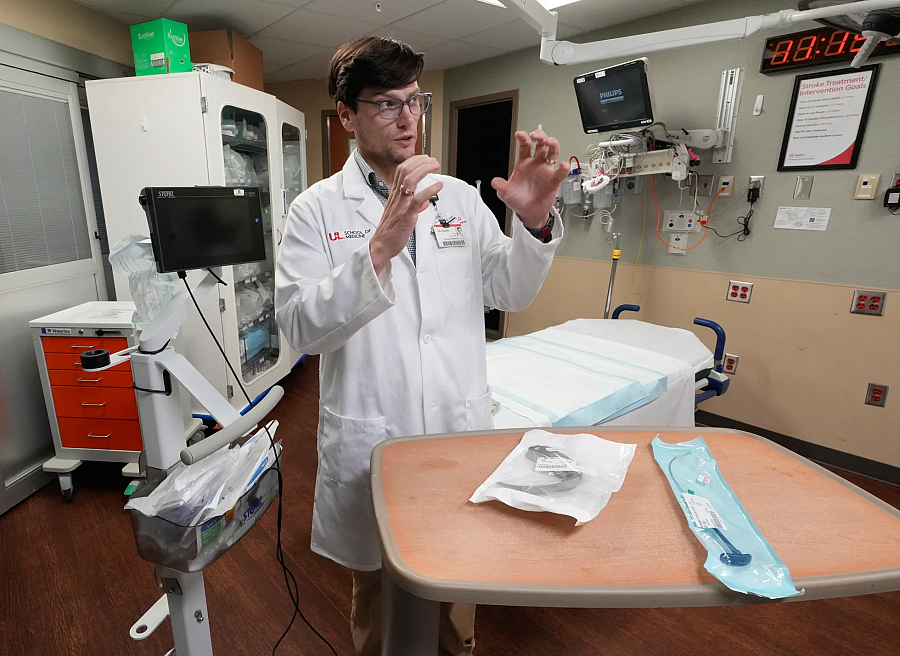
Dr. Evan Kuhl, medical director at the UofL Jewish Hospital emergency department, describes the hospital’s procedures and tools for treating a patient during an asthma attack.
Aug. 5, 2026 Michael Clevenger/Courier Journal
The Kentucky Asthma Management Program, housed in the state's Department for Public Health, runs on $520,000 per year in federal funding, and saves Kentucky $36 million in health care costs annually, according to the AAFA. Like other chronic disease programs, it is limited by a lack of resources.
With more funding, the department could increase its asthma intervention work, said Elizabeth Anderson-Hoagland, Chronic Disease Prevention Branch manager. That could include more home visits, closer partnerships with school districts to gather data on asthma or support for stocking critical asthma medications in schools.
In terms of economic impact, "I really think that would make a huge difference across the state," Anderson-Hoagland said, "plus keep more kids out of the ER and urgent care."
A slice of the state program's funding is passed down to the Louisville Asthma Management Program, or LAMP, in the Department of Public Health and Wellness. The local program, established in 2024, works directly with families to identify asthma triggers in the home and share resources for asthma management. But it, too, is extremely limited in scope, with annual funding of less than $100,000.
Kimber Knight, community health manager of the department's Healthy Homes program, is the sole city employee dedicated to LAMP. With referrals from local doctors, she conducts home visits, offering resources to families and looking for unhealthy conditions in a home that could be triggering asthma, like mold, ventilation issues and pests. But only a few households have consented to home visits this year, Knight said, despite dozens of referrals.
"What I think is frustrating is we can do all of this stuff, we can do all of the home visits, but at the end of the day, we're not changing anything structurally as to why people are in these environments, or having to deal with it," said Angela Graham, the department's executive administrator for research and academic partnerships.
Amid a shortage of quality, affordable housing, many families are stuck living in conditions that may be contributing to asthma symptoms. In numerous interviews, tenants, lawyers and advocates said current laws are not protective against mold and other issues.

Residents at Maple Grove Apartments in Brandenburg, Kentucky launch a tenant union.
In the absence of firm habitability standards, some residents have looked to tenant organizing. In March, the Kentucky Tenant Union won a collectively bargained lease agreement that included mold remediation requirements, said organizer Josh Poe.
"We do that because the laws do not exist to protect tenants," Poe said. "Now we're hoping that within a year, two years, we win enough of these contracts, we organize enough tenants around the state that we can get those types of protections."
The air we breathe
Despite decades of improvements on air quality, Louisville is short of federal standards on ozone pollution and teetering on the limit for particulate matter, both notorious asthma triggers.
"We are pleased with the progress," said Flannery O'Neil, acting director of the Louisville Air Pollution Control District. "But again, always more work to be done."
Kentucky is one of the last states in the U.S. generating a majority of its electricity by burning coal, the most polluting source. Power plants dotting the Ohio River Valley burn millions of tons each year, contributing to the region's air quality woes even with modern pollution controls.
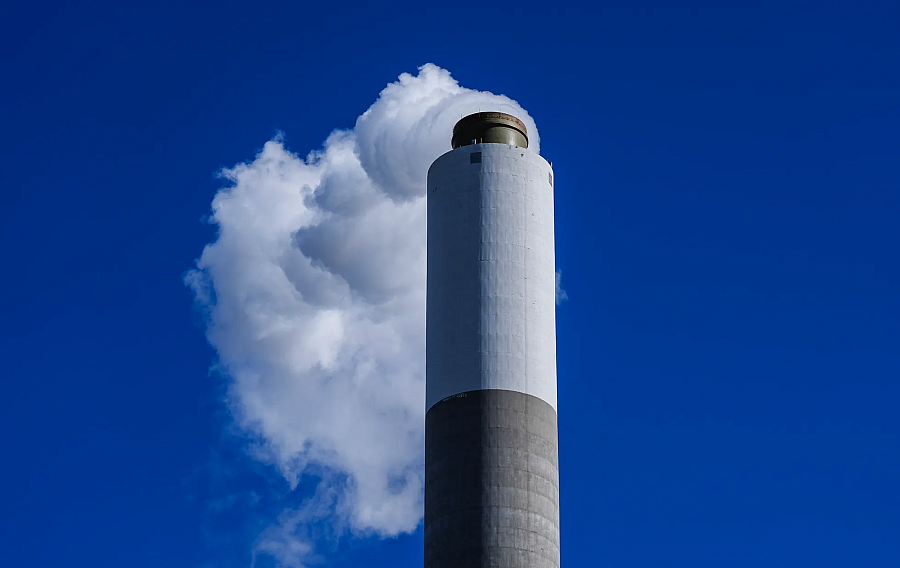
Stacks at LG&E’s coal-fired Mill Creek power plant in southwest Jefferson County, Feb. 20, 2026. Coal plants are a top emitter of air pollution that can contribute to asthma in Louisville and throughout the Ohio River Valley.
Matt Stone/Courier Journal
The state's energy trajectory appears pointed away from coal, as utilities look to other sources. LG&E's Mill Creek Generating Station, the coal-fired plant that's long been one of Louisville's largest single sources of air pollution, is beginning to shift toward gas: another polluting fuel, albeit with fewer local air quality impacts.
Investments in renewable power are poised to bring greater health benefits. Kentucky doubled its solar capacity in 2025, and more projects are set to come online in the coming years.
"Kentucky, we're coal country," said Charlie Zhang, an environmental health geographer and professor at the University of Louisville. "Transitioning to clean energy definitely helps reduce the environmental risks and could help reduce asthma."
Environment and public health groups have called on the U.S. Environmental Protection Agency to uphold strict standards on air pollutants from power plants, vehicles and heavy industry, which are known to trigger asthma and contribute to costly asthma-related hospitalizations across the country. Those rules could prevent hospitalizations and lower the associated costs of asthma in places like Louisville.
In its sprawling asthma policy agenda, the American Lung Association repeatedly encourages transition away from polluting fossil fuels and toward zero-emission technology, both in electricity generation and transportation. Climate change threatens people with asthma by bringing more oppressive summers, worse air quality and extended allergy seasons.
Kentucky, through the office of Attorney General Russell Coleman, has helped lead the fight in the other direction, challenging stringent EPA rules that industry groups have criticized as overly burdensome and damaging to the economy. The state's Republican leaders have applauded the Trump administration for its sweeping repeals of Biden-era standards on coal, gas and oil emissions.
And in recent years, a new concern for air quality has emerged: data centers. Utilities, facing huge upticks in power demand, are looking to keep aging coal-fired power plants running beyond planned retirement dates and planning to build billions of dollars in new gas-fired generation.
Advocates also worry the projects themselves could send pollution into adjacent neighborhoods in the form of diesel generator emissions. Local governments could require data centers to use high-efficiency backup generators to limit harmful diesel emissions, said Byron Gary, program attorney for Kentucky Resources Council, among other recommendations from the group's model data center ordinance.
Overall, advocates have long called for stricter enforcement of air pollution rules, especially as violations are observed at industrial facilities close to homes. Already, the neighborhoods most burdened by Louisville emissions also see some of the highest rates of asthma and asthma-related hospitalizations, in addition to other chronic health conditions.
"It's hard to see how that could not at least in part be tied to environmental contributors such as air pollution," Gary said.
The costs of asthma often come as hidden externalities of decisions about health care, housing and the environment. Insurance and medication access issues are mounting at a time when environmental triggers continue to squeeze the airways, physicians said.
"I think you're seeing a perfect storm that makes these chronic illnesses more and more acute," said Dr. Evan Kuhl, medical director at the UofL Jewish Hospital emergency department.
As he watches asthma-related ER visits tick up on days of poor air quality, he also sees families who cannot afford inhalers and patients whose manageable disease is made life-threatening by a lack of health care.
But experts see viable strategies to bridge gaps in asthma care, from schools to the home. Anderson-Hoagland, at the Department for Public Health, is confident that well-supported public health programs on asthma can make a difference – and even save lives.
"We can improve management," she said, "and we can reduce emergency department visits, and, ultimately, reduce mortality."
Read the entire series: Courier Journal investigates asthma's burden on Kentuckians in 'Breathless'
Connor Giffin is an environmental reporter at The Courier Journal. Reach him directly at cgiffin@courier-journal.com.