

Hillsborough agency addresses use of ‘hidden foster care’ at community meeting
This article was originally published in the Tampa Bay Times with support from our 2025 Data Fellowship.


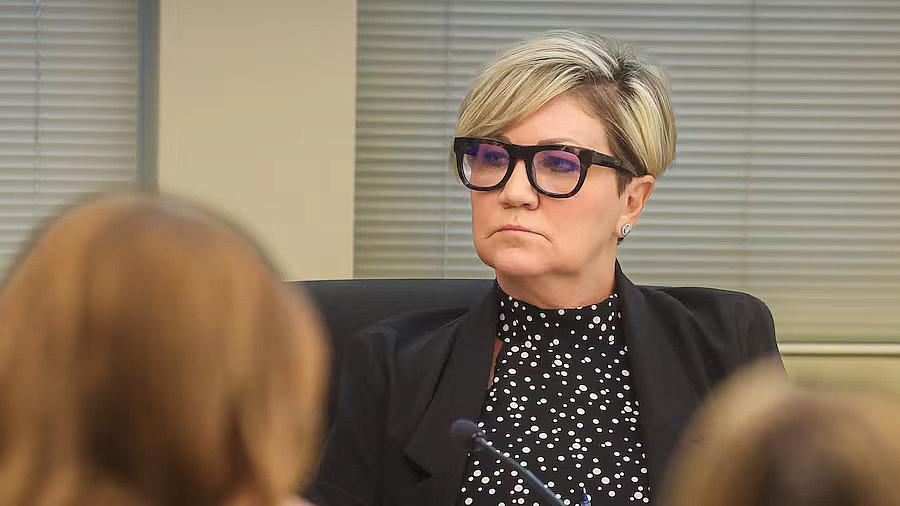
Children's Network of Hillsborough CEO Terri Balliet spoke about her program's work at a Community Alliance of Hillsborough County meeting Tuesday.
DIRK SHADD | Times
About a month after a Tampa Bay Times investigation into a side door in Hillsborough County’s child welfare system, agency leaders largely downplayed community members’ concerns in a public forum Tuesday.
The Times found the Children’s Network of Hillsborough, the county’s lead foster care agency, regularly uses a process called “temporary custody transfers” to separate families outside of the traditional foster system. Parents are urged to sign care of their children away to relatives or family friends. The Children’s Network pays attorneys to represent those taking custody, while parents go without representation.
Leaders at the agency did not directly address the Times’ reporting but said that the organization would like to see that parents have their own attorneys in the future.
“Children’s Network is currently working with the Legislature so that we can push for that exactly to happen,” said Terri Balliet, the agency’s CEO, at a Tuesday meeting. She was speaking to members of the Hillsborough County’s Community Alliance, made up of local child welfare providers.
It was the body’s first general board meeting since the Times investigation into the process, which national experts described as “coercive” and “highly disturbing.” The arrangements, managed by a diversion unit within the agency called the Intensive Family Services Team, swept up families facing a child protective investigation or orders to fix problems ranging from domestic violence to drug addiction, reporters found. In the last four years, those cases dictated where more than 370 children would live, according to a Times analysis.
During a presentation Tuesday about the diversion team, local leaders focused on its use of recovery services and safety plans that allow children to remain at home. They shared testimony from two parents and two case managers who said they had success through the program.
Paulette Boone, the team’s director, said it has helped more than 1,700 children in the last year, with 99% of families not having anymore abuse hotline calls in that period.
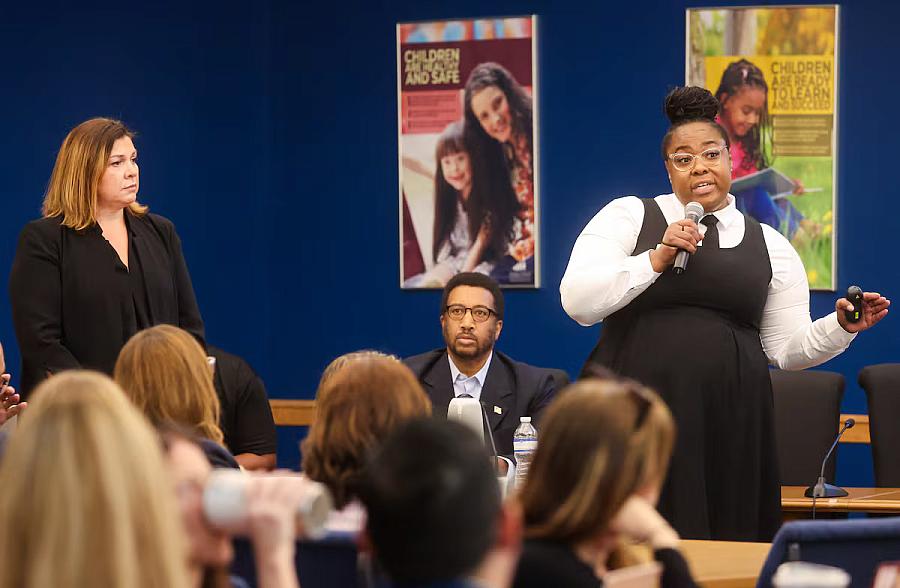
Kimberly Williams, chief operating officer of Children’s Network of Hillsborough, left, and Judge Daryl Manning (sitting in center), look on as Paulette Boone, director of a Children's Network diversion team, addresses the audience at a Community Alliance of Hillsborough County meeting.
DIRK SHADD | Times
But the presentation didn’t mention the use of temporary custody transfers or distinguish where children ended up in such arrangements. Audience members — including researchers and local lawyers — repeatedly asked about referrals to family law attorneys who file custody transfers in partnership with the agency.
Several said they’d heard from parents who echoed the Times’ findings. Those parents reported feeling like they had no choice but to agree to hand over custody of their children. Many were confused about who the attorneys — paid by the Children’s Network — were representing.
“It is a due process issue,” said Mindy Murphy, CEO of the Spring of Tampa Bay, which helps domestic violence survivors.
Throughout the meeting, agency leaders disputed those concerns.
“The information and the reports that are out in the community are just factually wrong,” Balliet said. She didn’t clarify which reports she was referencing and did not return reporters’ requests for clarification after the meeting.
Boone and other presenters emphasized that participation in the program is voluntary so parents can opt out any time.
“There are multiple conversations with the family and it’s explained to them what that process is,” Boone said.
She added that the team is “not making any decision for any family” when it comes to custody transfers, and “if a family decides to rescind their consent, the process stops.”
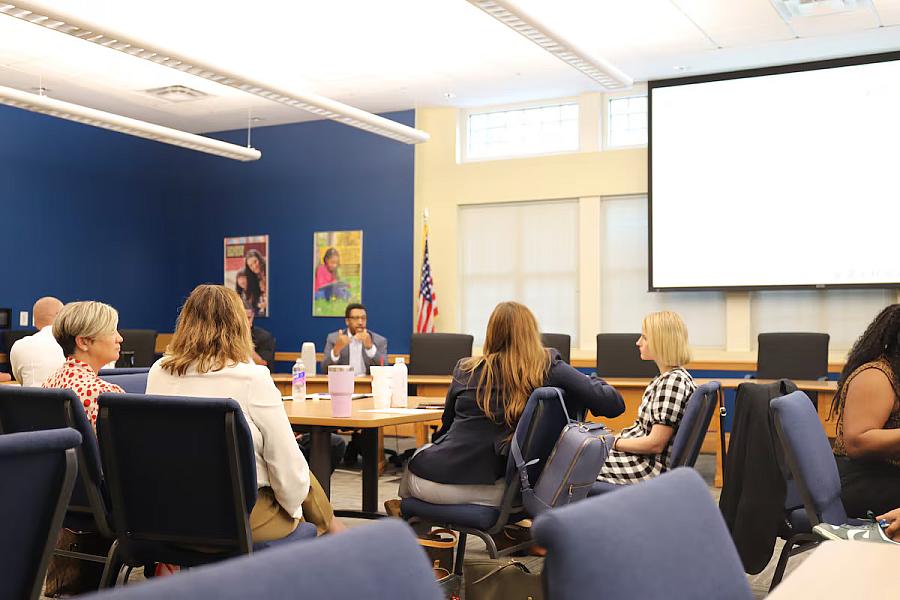
Members of the Community Alliance of Hillsborough County made requests for data from the Children's Network during a meeting last month.
Jill Adams, an attorney who the Children’s Network pays to represent caregivers taking over custody, said she was proud of her work with the program. It offers parents who may otherwise lose their kids for good a less invasive path forward, said Adams.
“I have families that come to me that have thanked me for keeping them out of the dependency system,” Adams said.
In temporary custody cases, the state isn’t required to provide low-income parents with attorneys, as it would in foster care cases. But Adams said she would advocate for that to change. She acknowledged representation affects outcomes.
“Any case that we have where attorneys represent the other side, it is a very different conversation,” Adams said.
Reporters asked agency leaders about the case of Essence Wright – a mother who agreed to a custody transfer in 2023 at the agency’s urging. Wright transferred custody of her infant daughter to her mother. She sought treatment for post-traumatic stress disorder, found an apartment and spent years trying to regain custody.
She eventually hired her own attorney and went to court. The process was slowed by attorneys representing Wright’s mother, who said agency staffers had instructed her to keep the child. It took three years for Wright to get the transfer reversed.
Kimberly Williams, the agency’s chief operating officer, said the Children’s Network could not comment on specific cases. Asked if the Times’ findings were being considered, Williams said the agency does its “due diligence to make sure that we are serving the communities in the way that they need to be served.”
In July, Children’s Network leaders told the Times they would start tracking how many families the diversion team sends through the custody transfer process, and the eventual outcomes for those families. At Tuesday’s meeting, Williams said no such tracking has begun.
Murphy, at the Spring, said she was discouraged that the agency didn’t directly address the Times’ findings and stories shared by service providers. Many families have been helped by the diversion team, she said, but she still has questions about others.
“They deserve to have as much help and as much success as the rest of the IFST system has had,” she said. “We’ve been asking now for about a year and a half, two years, for more data on how this program works, who funds it, why the parents can’t get the representation that the caregivers get, and we haven’t gotten any clear answers.”