

Image
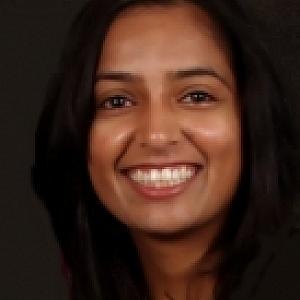
I was the founding community manager here at ReportingonHealth.org and helped design, build and create this community from 2010 to 2012. I created and launched the Career GPS blog and advocated design changes that would prioritize and highlight members' work. I'm happy to continue here as a member and incorporate important questions about health into my reporting.
I'm now the Social Media Manager at Public Radio International, where I work on the digital side of show like The World to build coverage and conversation around global health and immigration.
I've also worked as a freelance journalist writing online and magazine pieces from across Asia, including China, Thailand, Indonesia and Sri Lanka. I am the co-editor of Chinese Characters, a collection of stories about life in China to be published by UC Press this year. I was a South Asian Journalists Association Reporting Fellow in 2007/08 and the editor of the online magazine AsiaMedia from 2004 to 2007. I am now a consulting editor to the Journal of Asian Studies. My writing has appeared in the LA Weekly, Far Eastern Economic Review, Mother Jones Online, Pacific Standard, TimeOut Singapore and Global Voices.
<p>Last week, the USC/California Endowment National Health Journalism Fellows were knee-deep in seminars and conversations about international trade, urban violence and community campaigns. As it turns out, these are all <a href="http://www.reportingonhealth.org/blogs/reinventing-health-beat-local-im… for a health beat</a>. The National Health Journalism Fellows and Dennis A. Hunt Fund for Health Journalism grant recipients convened in Los Angeles to expand their reporting horizons.
<p><a href="http://www.reportingonhealth.org/users/joannalin">Joanna Lin</a> graduated from USC in 2008, just before the U.S. economy began to nosedive. Since then, she has worked for five different media outlets, grew a professional journalism career in a time of upheaval, and developed a philosophy and fortitude about doing the work she loves.</p>
<p><a href="http://www.reportingonhealth.org/users/destrin">Deborah Estrin</a> is a computer science professor interested in the low-tech. To her, everyday technology -- as opposed to supercomputers and expensive gadgets -- are brilliant tools for data collection. The world's 5 billion cell phones -- and the cameras and GPS that are increasingly common components -- represent tremendous opportunities. Using "smart" mobile phones, researchers, community groups and journalists can design ways to capture information about people whose stories and health status are otherwise hard to capture.</p>
<p>It's all hospitals and doctors in today's <em>Daily Briefing</em>:<br />
<p>If Wednesday is leaving you in an intellectual slump, here are some links that will help you understand and challenge the news:<br /><br /><strong>Sun Scare?</strong> Harmon Leon at the <em>Huffington Post</em> questions the <a href="http://www.huffingtonpost.com/harmon-leon/is-profit-behind-dermatol_b_6… of dermatologists</a> -- and lets four dermatologists examine his moles in the process.<br />
<p>Get your week rolling with these tidbits from around the web:<br /><br /><strong>Live Now:</strong> <em>Forbes</em>' Matthew Herper is <a href="http://blogs.forbes.com/sciencebiz?s=avandia">blogging the Food and Drug Administration’s Avandia review</a> in real time.<br />
<p>Catch up with stories you might have missed over the weekend and share what you're reading in comments:</p>
<p>A young black man is rolled on a gurney into an emergency room in an inner-city neighborhood. What assumptions do health care providers make about why he is there? What assumptions do journalists make?</p> <p>Dr. John A. Rich laid out the basic assumption this way: "Young black men don't just get
<p>After a 30-year career writing about health, Susan Brinks found herself in the throes of her own medical story.</p> <p>She has been a freelancer since being laid off from the <em>Los Angeles Times</em> in October 2008, and her COBRA -- the post-employment extension of her health insurance -- runs out on July 20.</p>
<p><a href="http://www.reportingonhealth.org/users/dr-tom-linden">Tom Linden</a> seemed to be on a fast track to a successful career in journalism.<br /><br />He was the editor-in-chief of his high school newspaper in Southern California. As a college student at Yale University, Linden got his reporter's legs at the <em>Yale Daily News</em> and covered the New Haven Black Panther trials for the <em>Los Angeles Times</em>. When he graduated in 1970, he won a fellowship and secured a book deal to write about army deserters in exile who were protesting or escaping the Vietnam War.<br />