

The Health Divide: The trauma reverberates long after immigration raids

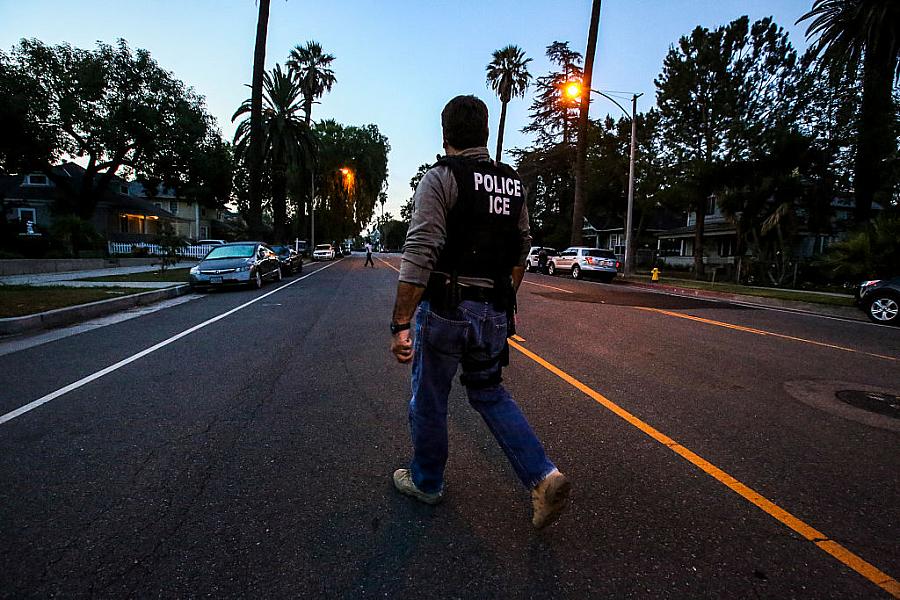
(Photo by Irfan Khan/Los Angeles Times via Getty Images)
Every immigration raid leaves behind a much bigger group of victims than those taken away in handcuffs.
Galo Suarez, 25, along with his fiancée and her brother, had just left a Milwaukee grocery store when federal immigration agents stopped them.
Suarez said masked agents with guns drawn shattered a window of their vehicle and pulled them out. Officers released him after finding his work permit, but his fiancée, who also had a work permit, and her brother were taken into custody.
"They had guns pointed at us. They didn't ask us for our names. They didn't ask us for our ID. They pulled us violently out of the car," Suarez said through an interpreter during a news conference.
The harm from the encounter didn't end with the arrests. Across southeastern Wisconsin, children watched their parents being taken away. Families were left wondering when, or if, their loved ones would come home. Neighbors saw masked agents move through their communities, unsure whether they or someone they loved would be next.
If you've been wondering why so many immigrant families are living in fear, the broader numbers help explain it. Since January 2025, more than 590,600 people have been deported from the United States, and ICE is carrying out arrests at a pace the country hasn't seen in years.
In June 2026 alone, the agency arrested a record 43,138 people, the highest monthly total since President Donald Trump returned to office. As of mid-July, nearly 66,000 people were being held in ICE detention centers awaiting the next step in their cases. Those arrests aren't just happening at the border — they’re taking place in neighborhoods, at workplaces, during routine check-ins with immigration officials and, in some cases, outside courthouses where people are trying to follow the law.
Immigration raids are often measured by the number of people arrested. But those numbers don't tell the whole story. Every arrest leaves behind traumatized families and frightened communities, with neighbors wondering who will be next. Those mental health effects are what makes immigration enforcement not just a political debate but a public health issue.
Fear becomes a health issue
A 2025 commentary published in the journal The Lancet Regional Health – Americas argues that aggressive immigration enforcement can create a climate of fear that harms mental health — not only for the people arrested, but also for their families and entire communities.
Since the beginning of the second Trump administration, U.S. Immigration and Customs Enforcement has sharply increased detentions and deportations of people the agency says are in the country unlawfully. It has also broadened its authority to detain some people with green cards, visas, humanitarian parole and other lawful immigration statuses.
That fear has been intensified by the way some enforcement operations are carried out.
Across the country, federal immigration agents have conducted operations in masks, plain clothes and, at times, using unmarked vehicles. Civil rights advocates and some local officials say those tactics make it difficult for people to know whether they're encountering federal agents or someone pretending to be law enforcement.
When people don't know whether those approaching them are legitimate law enforcement officers or someone impersonating them, that uncertainty can become its own source of chronic stress and anxiety. The fear doesn't stop with the people being detained. It spreads to families, neighbors and entire communities.
That fear has only intensified in recent weeks after two high-profile fatal encounters involving ICE agents.
On July 7, an ICE officer shot and killed Lorenzo Salgado Araujo, a Houston construction worker who was driving to work. Federal officials later acknowledged he was not the original target of the enforcement operation, and witnesses have challenged the government's account of what happened. Less than a week later, an ICE agent fatally shot Joan Sebastian Guerrero, a Colombian man in Biddeford, Maine, during another enforcement operation.
Both shootings remain under investigation, but for many immigrant families, the message has already landed. When people hear about workers being killed on their way to work during immigration operations, fear spreads in neighborhoods across the country. Parents think twice before taking their children to school, showing up for work or even driving to a doctor's appointment.
The trauma left behind
Studies have linked immigration detention and the constant fear of deportation to depression, anxiety, post-traumatic stress disorder and suicidal thoughts. Children often bear the deepest scars. According to the American Immigration Council, young people who witness a parent's detention or deportation are more likely to experience emotional and behavioral problems that can persist long after the arrest.
Researchers have also found that chronic fear surrounding immigration status can affect pregnant women and young children. Stress during pregnancy has been associated with premature births and low birth weight, while children raised amid constant legal uncertainty face a greater risk of emotional and developmental problems. In one well-known study in the wake of an immigration raid in Postville, Iowa, infants born to Latina moms had a 24% higher chance of low birth weight after the raid compared with the year before, while infants born to white moms saw no such change.
The consequences extend beyond individual families. Fear of immigration enforcement can keep people from seeking medical care, counseling or prenatal services until health problems become more severe. That widens existing health disparities and places additional strain on communities and the health care system.
The questions worth asking don't end with who was arrested or what happened to them.
What happens to the children afterward? Do parents skip doctor's appointments because they're afraid to leave home? Do people stop treatment for chronic illnesses because they're afraid to be seen? How many families begin living with anxiety that never fully goes away?
Even when someone is eventually reunited with their family, the trauma doesn't simply disappear. Emotional wounds can linger for months or years, disrupting mental health, family stability and access to medical care.
The good news is we already know some of what works. Researchers point out immigrant families are more likely to seek care when hospitals and clinics build trust instead of fear. That can mean hiring community health workers who speak patients' language and understand their culture, partnering with attorneys who can help families navigate immigration-related legal issues, and creating clear policies that reassure patients the primary concern is getting medical care, not enforcing immigration laws. None of those solutions erase the fear overnight, but they can help assuage fears when families worry that a trip to the doctor could put them at risk.
Immigration enforcement has become one of the nation's most contentious political debates. But beneath the politics is another story that deserves just as much attention. It's a public health story. Long after agents depart, the trauma lingers.