


Tennessee was one of four states that recently passed important new laws taking aim at the country's high maternal death rate. Yet you’d be hard pressed to find out about the legislation from reading the news.
Tennessee was one of four states that recently passed important new laws taking aim at the country's high maternal death rate. Yet you’d be hard pressed to find out about the legislation from reading the news.

The FDA finally took action on a long-delayed petition Thursday, allowing folic acid to be added to corn-masa flour to potentially prevent birth defects. The vitamin has been added to other grains for years.

Just before President Obama announced a new set of new initiatives to boost access to addiction treatment this week, a four-part series on NPR looked at the opioid epidemic's smallest victims, and what can be done to improve their care.
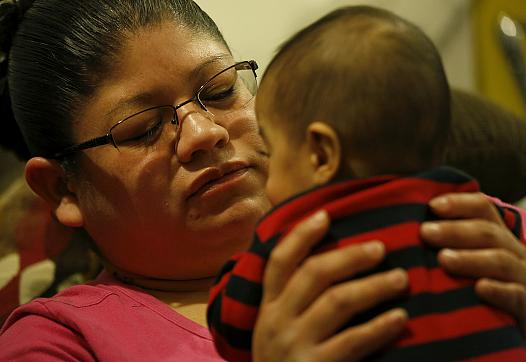
The percentage of babies born to women who didn't receive prenatal care had increased dramatically in Bexar County, Texas, over four years. What was driving this? Sometimes the lack of answers becomes part of the story.
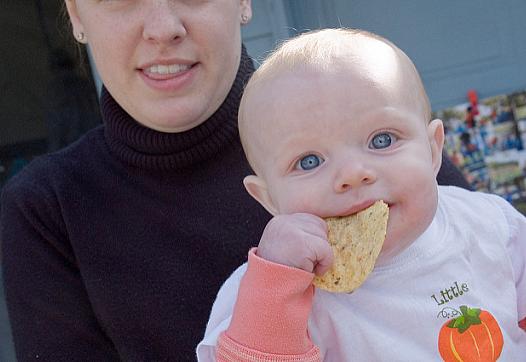
More than 40 members of Congress called for the FDA to allow folic acid to be added to corn masa on Tuesday. Advocates say such a move could help prevent devastating birth defects like those seen in three counties in Central Washington.

Delaying care or not getting any at all puts the baby and the mother at greater risk of serious medical problems, and Bexar County, Tex., has one of the highest rates in the nation of premature births. So what might be done to ensure mothers get better care, despite scarce resources?

Waiting for Medicaid eligibility is a common experience in Bexar County, Tex., and one big reason why women don't receive prenatal care as early as they should. It contributes to the rising number of babies born to women who received prenatal care after their first trimester — or not at all.

In Johnson County, for every 1,000 infants born in recent years, fewer than five don’t make it to their first birthday. In Wyandotte County, the number is closer to eight.

Advocates have been urging the FDA to allow corn masa to be fortified with folic acid for years, with the goal of curbing rare birth defects among Hispanic children. The FDA hasn't budged so far, but that could change as the agency reviews new research.

When it comes to lowering high infant mortality rates, Rwanda has become an encouraging if unexpected example of what can be done with "big data made small."