POWER AND PREJUDICE (chapter four: ‘It was like they created the felony murder rule for Black people’)
The story was originally published in MLK50 with support from our 2025 Data Fellowship.

Shawn Hatcher has now spent a quarter of a century in prison. He is incarcerated at a correctional facility in northwestern Tennessee, along a bend in the Mississippi. Every Monday and Friday, he volunteers to clean his housing unit’s showers, scrubbing them thoroughly to prevent mold and insects. He has a job. He makes 42 cents an hour doing the prison’s laundry. The wages, he acknowledges, are akin to “modern-day slavery.”
Almost a decade ago, Shawn began mailing his small earnings to a Nashville homeless shelter. The owner of the shelter, a woman named Shawn’a, became curious about Shawn.
“He would always write me little, short memos, like, ‘God bless you. Thanks for all that you do.’” Shawn’a said. After months of letters, Shawn’a decided she’d like to get to know him. “I was like, ‘Can you call me?’” she said.
“We just got talking, and we started working together as a team, feeding homeless people,” she said. Over time, “we started kind of being like best friends.” Then, they fell in love. A few years ago, the pair married.
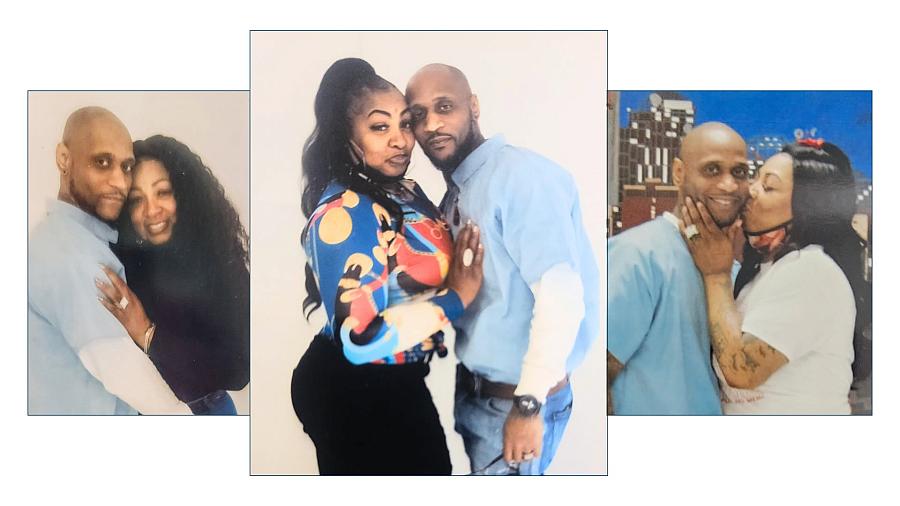
Shawn and Shawn’a. Photos courtesy of Shawn’a Hatcher
At first, Shawn’a didn’t know why Shawn was incarcerated — she hadn’t asked. When he told her his story, she wondered if she could help. She had a degree in criminal justice that she had not used.
“Maybe that’s why God had me go to school all those years,” she told Shawn. “To fight for you.”
“I didn’t really know who to reach out to, so I just started reaching out to anybody and everybody,” she said. She called the NAACP. She wrote letters to the White House and to courts in Shelby County. “I started sending his story everywhere.”

Shortly after Shawn’a began sharing Shawn’s story publicly, she started getting requests from the families of other incarcerated people across Tennessee. Their loved ones had also been sentenced to die in prison for crimes they didn’t commit, they said. Could she help them, too?
“They thought I did it for a living,” Shawn’a said. “I’m like, ‘No, I’m the owner of a homeless shelter. I don’t fight for people.’”
And yet, she started sharing their stories, too. “I just was writing letters, thousands of letters,” she said.
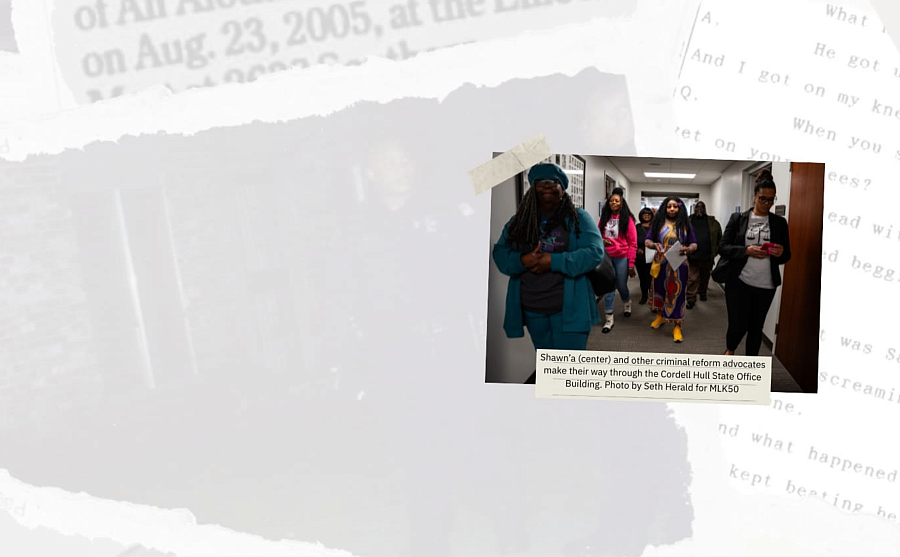
That advocacy led her to join the “Separate Acts, Separate Facts” coalition — a group of people fighting to end the felony murder rule. Some participants have children, siblings or spouses incarcerated because of Tennessee’s felony murder rule. Others were incarcerated themselves.
Through the Separate Acts, Separate Facts coalition, Shawn’a learned that overwhelmingly, Tennesseans convicted of felony murder were Black and poor.
“It was like they created [the felony murder rule] for Black people,” she said.
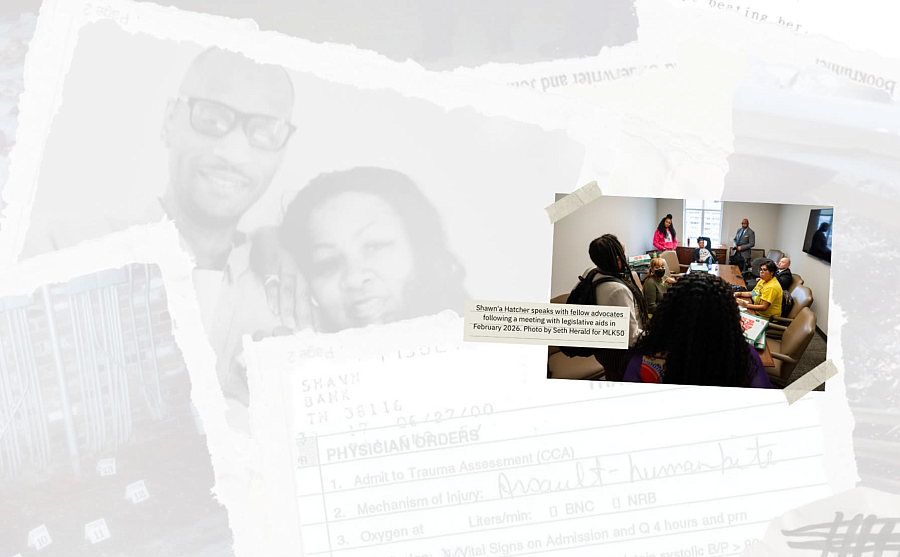
Prosecutors seemed to be targeting people who “can’t fight for their lives because they don’t have money for lawyers,” she said. “It’s dead wrong.”
During the legislative session, Shawn’a regularly visits Tennessee’s Capitol to share Shawn’s story with lawmakers.

Shawn’a, along with several other women from Separate Acts, Separate Facts, was present at the August 2025 hearing about felony murder. The felony murder rule, Shawn’a told senators, had condemned her husband “to die in prison for a crime he didn’t commit.”
“My husband deserves a second chance,” she testified. “He was a junior in high school, and now he’s a 42-year-old man.”
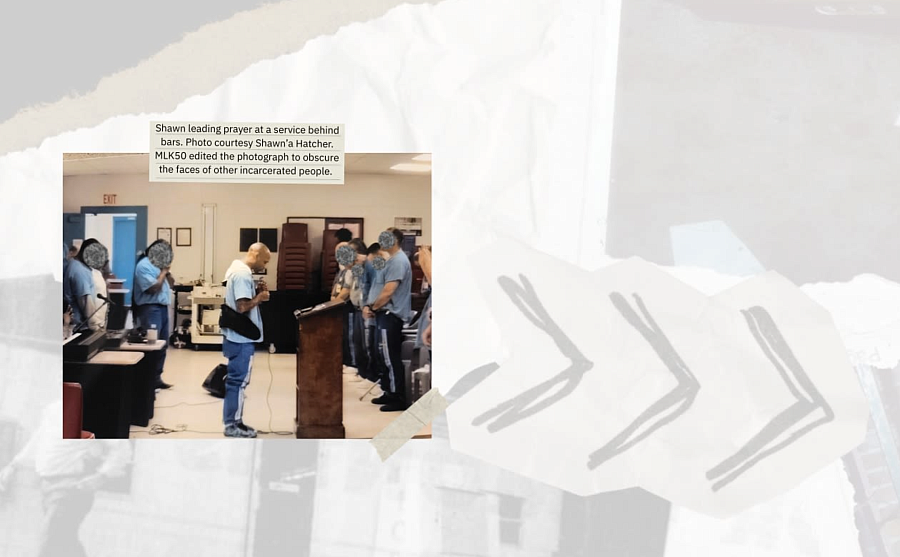
Shawn has changed a lot in the 25 years he’s been in prison. When he was a teenager, “I was just so deprived,” he said. While children from more stable homes might have supportive parents and counselors, “a lot of things I had to pick up later on,” he said.
He attributes some of his change to his faith. He reads the Bible every day. His favorite story is that of Joseph, whose brothers sold him into slavery. When Joseph later reunites with his brothers, they fear that Joseph will take revenge.
“He was able to forgive them and love them, in spite of,” Shawn said. It’s a lesson he tries to internalize. If he remained angry with his family, “I would be denying myself a certain peace.”