

‘Our Health Is Our Wealth’: Lessons from investigating health care disparities

(Getty Images)
Frustrated and exhausted at times from investigating ER disparities, I felt so worn down by the reporting process that I could easily understand why someone would reach a breaking point in their attempt to get emergency care.
My recent reporting on African Americans who have been involuntarily committed to mental hospitals, however, convinced me to push through. The result was a 15-part series called “State of Emergency: Finding Equity from Triage to Treatment.”
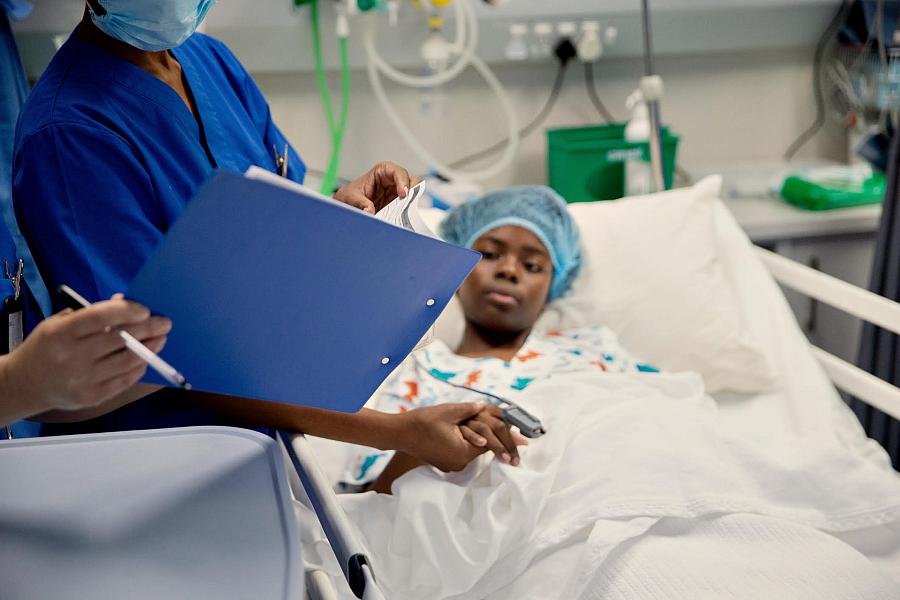
Medical triage is supposed to be based on the severity of a patient's condition and urgency, but studies have shown that Black patients across the board receive lower triage scores, leading to longer waits and less urgent care.
How many Black families are penalized for how they look or react after hours of waiting? For instance, a mother who shows up in a bonnet or pajamas because she didn't have the chance to change clothes before rushing her sick baby to the emergency room.
The stakes are high. Medical emergencies and health care interactions are universal life-or-death experiences that directly impact the physical and emotional well-being of readers and their families. It’s crucial to validate lived experiences. Mainstream media often overlooks or glosses over the systemic barriers, microaggressions and mistrust African Americans face in medical spaces.
Because African Americans are not a monolithic group, everybody’s experiences are different. Some flat out refuse to go to certain hospitals because of their experiences there, while others will praise those same facilities for saving their lives.
In an online survey from my outlet, The Sacramento Observer, asking locals to share their ER stories and their confidence in area hospitals to provide competent and comfortable experiences, respondents described leaving after waiting four or more hours, being left in hallways without communication, and how being “talked down to” by ER doctors stripped them of their dignity. Others said they refused to go to the ER except as a last resort, when they were “practically dying.”
Some feared retaliation during future hospital visits. One woman requested anonymity to share her concern that medical staff who openly express racist political views might allow those biases to impact patient care. The fear is real. I once had a local social work administrator tell me to be mindful of such retaliation during my reporting on child protective services disparities or families’ concerns about child removal. It didn't change my approach, but it was there in the back of my mind, nonetheless.
It’s also important for medical school administrators, institution leaders — and funders — to hear the concerns of those they serve and recognize the importance of culturally competent care, hiring medical professionals of color, and educating those who aren’t on how to provide care in diverse settings.
The “State of Emergency” series focuses on empowerment through education and advocacy. As Rhonda Smith, the outgoing executive director of the California Black Health Network, said in one of my stories: “If your rights aren’t being respected, if you feel like you’re being mistreated and not valued as an individual and a human being and a patient, then you have the right to fire your physician. You can get another provider who does and try to find one that practices more cultural humility and compassion.”
By exploring how patients can question the care they receive, recognize their own expertise as daily managers of their health, and navigate unresponsive systems, my series offered practical tools rather than just highlighting disparities.
The reporting laid bare a precarious balancing act: Patients in crisis must place their absolute trust in professionals, yet too often find themselves caught on a seesaw of mistrust, neglect, and survival. It’s like calling 911: You’re asking for help, but you know that things can escalate rather quickly. You shouldn’t have to worry about who’ll show up and how they feel about someone who looks like you or where you live.
In my story "State of Emergency: Navigating the Chasm of Race and Care in the Emergency Room,” I wrote about how families in an extreme emergency often have no choice but to rely on a system that is unresponsive or hostile. I also explored this theme through a historical lens in “Resilience and a Rescue Revolution: The Historic Impact of the Freedom House Ambulance Service.” which centered on how people “created their own” in a time when they were shut out of equal opportunities to be treated and cared for. After my ER series was published, I learned of another free ambulance service that was created by the Black Panther Party in Winston-Salem, North Carolina, in 1971. Ambulance providers said it was “too dangerous” for them to go into Black neighborhoods, so the Black Panthers created their own system.
I knew early on in my reporting that I wanted to provide a bridge between this historical context and current realities. Connecting past abuses and ongoing institutional biases helps readers understand why these challenges persist, reframing individual fear or frustration as part of a larger systemic issue. I included how doctors tested out experimental procedures on African Americans who didn’t or couldn’t give consent. Much has been said about the Tuskegee experiment and how Black men with syphilis were given placebos instead of promised treatment. Dr. Tiffani Johnson shares an experience from early in her career of hearing another doctor cavalierly mention the sterilization of Latina women.
Carrying these stories forward taught me invaluable lessons about survival, advocacy, and the continued realities of health reporting. I’ll share a few here:
Work with what you have: My motto is “I don’t chase. I replace.” Translation: If you can’t access information from one source, find another. Broaden your idea of who an expert is. Many Black doctors and researchers don’t get asked for interviews, even though they have the expertise.
Build a diverse Rolodex: Tap into community members and advocates who you can call on for comment or who can refer you to other people to speak to or get data from. This same pool of people will share information with you (exclusively at times) when things that warrant coverage consideration pop up.
Resilience is not futile: These are challenging times we find ourselves in right now.
There’s pushback on efforts to address and eliminate longstanding health disparities and those who champion that work. The federal government has made major cuts to health care funding that have resulted in reduced services or the complete shuttering of community clinics and rising costs for critical care. Advocates have had to get creative in order to still do the work they know to be successful and impactful. The same is true for journalists; the need for tenacious storytelling is greater than ever.
Listen to your sources: While I was talking to a woman whose brother died after multiple visits to the ER, she said something profound: “Our health is our wealth.” While we’re often told to leave ourselves out of our reporting, I had to apply that to my personal life and also how I approached my reporting for this series.
Like respondents to my ER survey, I too have avoided going to the ER in the past due to cost, but the woman’s words reminded me that sustainable journalism requires us as journalists to prioritize our well-being and recognize that we are no good to anyone — least of all our readers — if we run ourselves into the ground.