

‘I Need My Dad’: Inside a Watts Family’s Struggle Without a Husband and Father

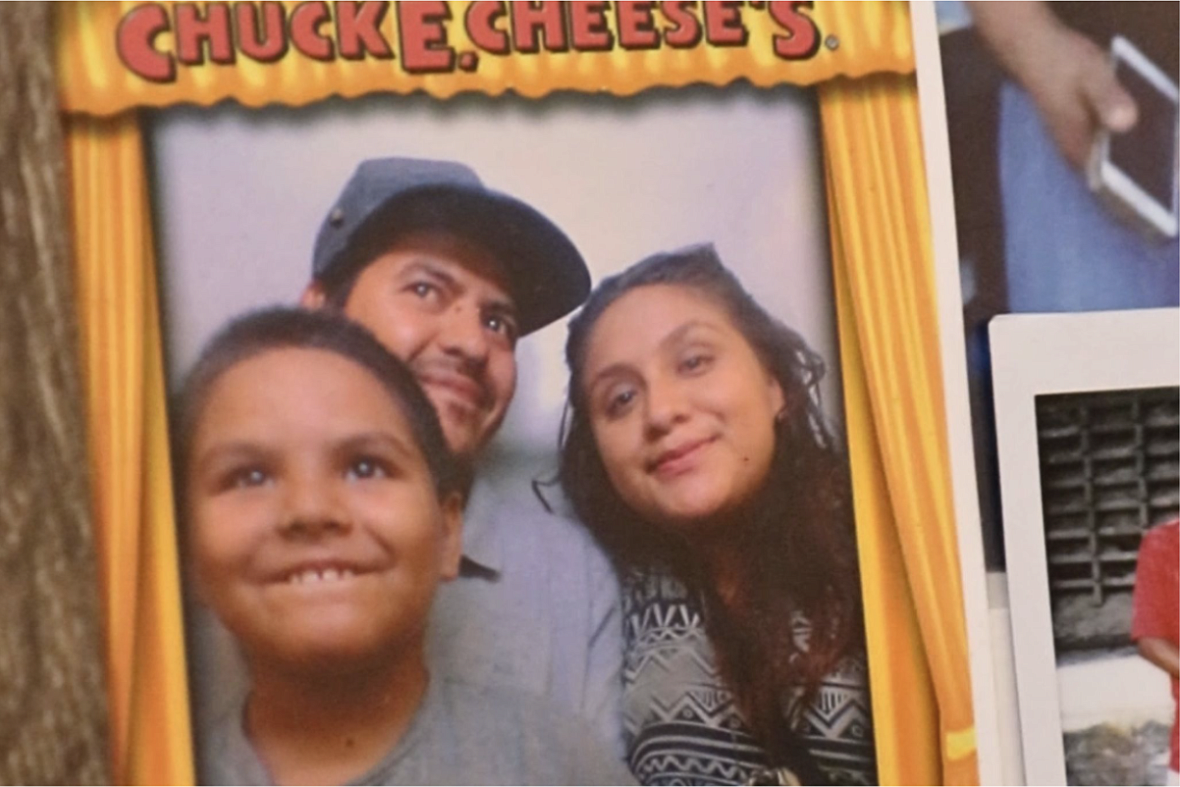
Alma Ramirez, her partner José, and their seven-year-old son at Chuck E. Cheese’s.
Janette Villafana
Every night, for months, as they settled into bed at their home in Watts, California, seven-year-old José, named after his father, would look over to his mother, Alma Ramirez, and ask her one question:
“Why did they take my dad away?”
His father, 41-year-old José Padilla, was detained on January 27, 2026, by Immigration and Customs Enforcement while he was working as a car washer in Los Angeles. The father of four, who has been living in the United States for over 20 years, was one of more than 1,400 people detained in the L.A. area that January, according to the Deportation Data Project, and one of at least 373 car wash workers detained from June 2025 through January 2026, according to data compiled by the CLEAN Carwash Worker Center.
Like many other families who have lost the head of their household due to ongoing immigration raids across Southern California, Ramirez and her children have faced intense financial struggles coupled with the emotional and mental health toll of family separation.
“It impacted the kids more because they had their dad every day. Even if he came home tired from working in the hot sun, he would come and play with them,” said the 31-year-old mother of three, while sitting in her living room. “And he took care of us. He would pay our bills, help me around the house doing chores, and bathe [the kids.] He was a real present dad. That’s what I love about him.”
According to a 2025 report released by American Families United that surveyed individuals impacted by immigration raids, 97% reported emotional hardships, and 78% reported financial hardships after a family member is detained.
“Now that he’s not here, we really feel his absence and how much he helped us—not only with the bills, but also just by being there for the kids, for me, and for my parents,” Ramirez said. “It’s been hard for us to be without him. He was our person. Honestly, he was everyone's person.”
As for the impacts on children, the psychological toll of immigration enforcement is not only acute but “chronic, layered, and developmental,” according to a report published in Psychiatric News. For children in mixed-status families, these disruptions and absences can cause enduring symptoms of PTSD, anxiety, and depression.
According to the UCR School of Medicine report, the worksite raids and arrests during federal immigration enforcement operations are causing what they describe as a “public health emergency” for millions of kids like Joaquin and his brothers. Dr. Lisa Fortuna, professor and chair of psychiatry and neuroscience at the UCR School of Medicine and the lead psychiatrist behind the report, said these types of separations from a caregiver “fundamentally reshape a child’s development and mental health.”
“Children learn by watching their caregivers. When that stability is disrupted, it impacts how they relate to others and see the world,” said coauthor Dr. Kevin Gutierrez, in a statement on their website about their findings. “Without safe, nurturing environments, we limit their potential emotionally, socially, and cognitively.”
These fears and the eventual detainment of a loved one have been shown to lead to school absenteeism, academic disengagement, and heightened emotional distress, according to the UCR School of Medicine report.
In Ramirez’s case, two of her children, José and Alex, who has autism, both experienced some type of disengagement in school following their father’s detainment. José’s eldest son, Alex, depended on his father, who helped him with everything from bathing and schoolwork to attending school meetings.
“The reason José decided to work a carwash job was for the kids, especially Alex, because he requires extra care,” said Ramirez as she waited for Alex to be dropped off by the school bus. “He wanted to make sure he could be available for all of them at any given moment.”
That June, Alex and his brothers had been away from their father for five months, and during those months both of the eldest kids began therapy.
“We told the school about what happened, and both of them are assigned a therapist now to help them process and understand their feelings, and they are learning different ways they can manage those big feelings,” she said. “My seven-year-old tries to be a tough little kid, but I can tell he misses his dad. Aside from therapy, he has gotten extra help in school whenever they notice that he is not able to focus like he used to.”
In a letter to the immigration judge supporting his dad, Alex wrote about how much he missed his father and how badly he wanted to see his dad in “real life,” not through a phone or tablet.
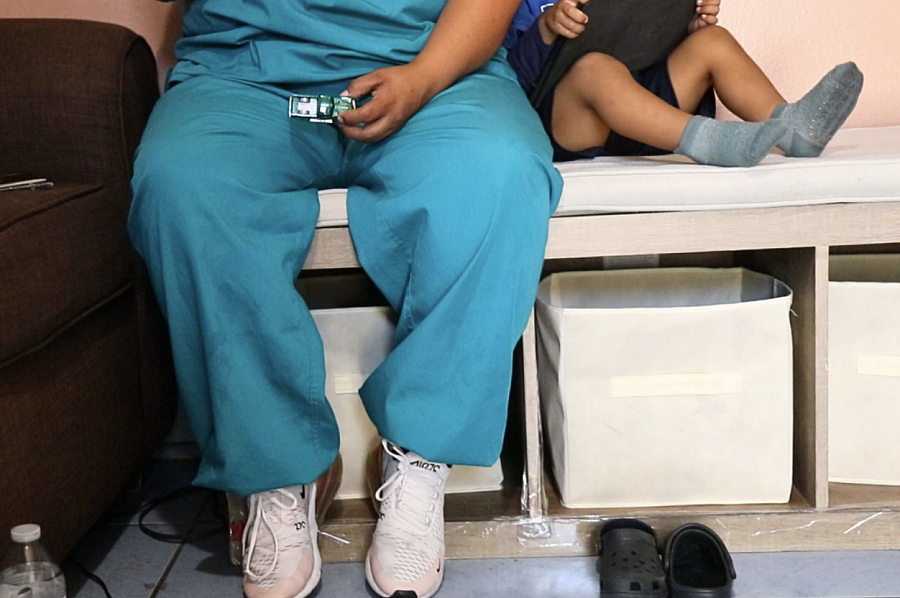
Ramirez sits in her living room next to her son Joaquin, who is watching a video on his tablet. She fidgets with one of his toy cars as she recounts the day her partner was detained by ICE.
Janette Villafana
Routines Interrupted
For seven-year-old José [Jr.], his 2-year-old brother Joaquin, and 17-year-old stepbrother Alex, their father José was a constant figure of safety and stability. They played together every evening after finishing their homework, he would read to them and, along with Ramirez, often go on family outings. At night, part of José’s kids' routine included them cuddling in between their father’s arms as he soothed the little ones to sleep.
“We had our routines, each morning and evening, and all that went away,” Ramirez said.
According to Ramirez, the family unit deteriorated the moment José was detained.
“From one day to the next, everything was on me,” she said, bouncing her two-year-old son in her arms. “And I don’t mind stepping in, but you have to understand, we were such a great team; we really helped each other. When I suffered postpartum depression, he was patient; he took care of everything, and he helped me get back to myself.”
Ramirez and her partner, whom she jokingly calls her mari-novio, a word combining husband and boyfriend, have been together since 2014 and are a mixed-status family. She met José when he was a single dad of two and when he worked at her father’s car-washing business. Like any parents, their life goal is to give their kids a good, stable life.
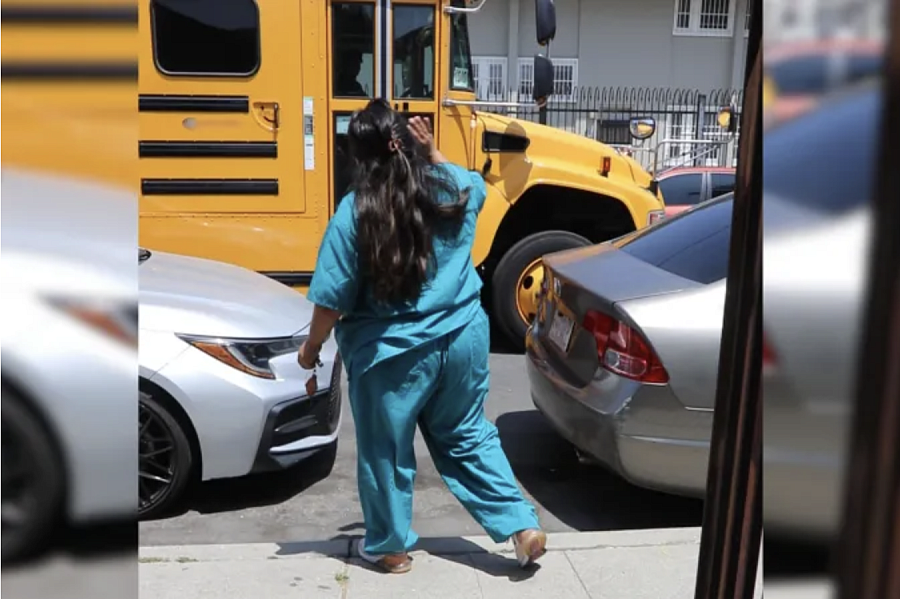
Ramirez waves to the school bus driver as she waits for her stepson Alex, who has special needs, to get off the bus after school.
Janette Villafana
On the day José was detained, he and Ramirez had gone about their regular morning routine: they helped get the kids ready for school; one helped bathe and dress them while the other made breakfast.
Then Ramirez would take her son and nephew to school while José stayed home with their youngest and did some light cleaning around the house before getting ready for work.
The only difference that morning was the time José left for work. According to Ramirez, José would typically leave the house by 9 a.m., but that day he left extra early to pump gas, something he didn’t normally do, but he had forgotten to fill the car the day before.
“He was rushing out the door when I told him, 'No, you have to eat,’ and I gave him two burritos and a coffee, and he took off,” she said, trying to hold back her tears as she recalled the details of that morning.
Ramirez was standing in her mother’s kitchen when she got the call. “The guy on the other end asked me if I knew Morro, which is José’s nickname, and when I said yes, he said, ‘ICE just detained him.’”
“I broke down; we were all devastated. We couldn't believe it.” Ramirez remembers having to hand over the phone to her mother and sister because she couldn't contain her tears.
As a family, they had observed the ongoing ICE raids in their neighborhoods and had only discussed safety measures like sharing each other's locations, but she said they never discussed what they would do if José was actually detained.
“We just felt like, you know, it won’t happen to us if we’re careful. Until it did,” she said. “Looking back, I wish we would have created some type of plan, but even then I don’t think anything prepares you for the huge feeling of loss that is felt in a home when a husband is taken away.”
José was eventually transported from downtown Los Angeles to the Adelanto Detention Facility, before being transferred one final time to the California City Detention Facility in Kern County.
The drive from Watts to the detention center is a hefty 3-hour ride, so with a busy schedule, a family to take care of, and a car that isn't reliable for such a drive, Ramirez and her family mostly communicated with José through video phone calls every other night.
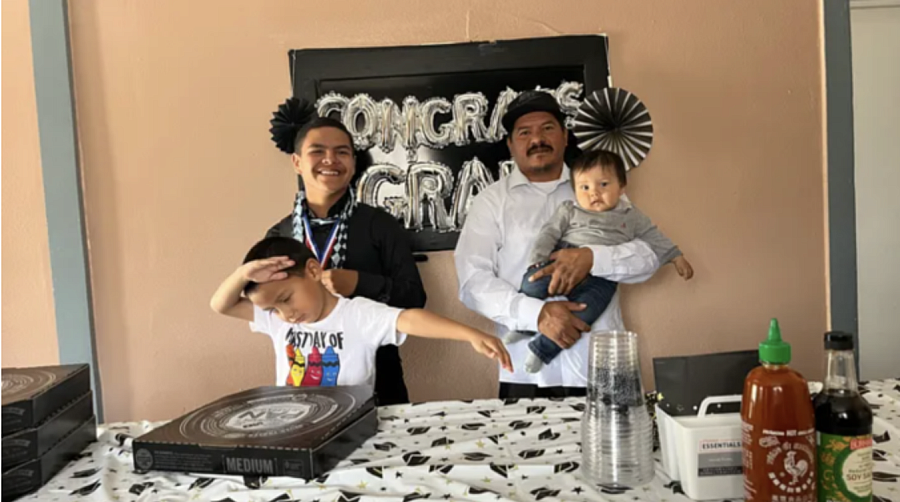
José with his children, Alex, Jose Jr., and Joaquin celebrating Alex’s graduation.
Photo courtesy of Alma Ramirez.
“I Need My Dad”
The Children’s Equity Project at Arizona State University found that the detention and separation of children and parents, even for a short amount of time, may trigger toxic stress, which can have profound negative effects on the psychological well-being and healthy development of young children, such as “emotional and behavioral problems”.
“Psychological science is clear: detention, deportation, family separation, and the constant threat of such actions create chronic stress that increases anxiety, depression, trauma-related symptoms, and long-term health risks", said APA CEO Dr. Arthur Evans, Jr., in a report by the American Psychological Association. "These harms are especially severe for children, whose emotional development depends on stable and secure caregiving relationships."
On a Friday afternoon in June, Ramirez laid out family photos on her couch. In her hands was a Valentine's Day gift she had made just for José, before he was detained.
“We didn’t get to celebrate Valentine’s Day how we wanted, but it’s ok, this is waiting for him when he gets out,” she said, feeling optimistic about his return.
“Look, that’s him!” she said, pointing to José, who was being embraced by his seven-year-old in a photograph—both sporting huge smiles on their faces.
Ramirez said each kid has been impacted differently, and the changes differ from child to child. Her youngest boy, two-year-old Joaquin, is taking it the hardest.
“He’s still little, so it's hard for him to understand why he can’t see his father,” Ramirez explained. “He was the one who was used to sleeping in his dad's arms, so every night he turns to see the empty space next to me, and he says ‘Me hace falta mi papa,’ ‘I need my dad.’”

A photo of Ramirez and José out on a date; she often looks through old photos to feel closer to him.
Janette Villafana
A Mother Tries to Keep Things Afloat
For months, the mother of three managed her children, household duties, and school as best as she could. At the time of José’s detainment, she was a stay-at-home mom and a student studying for a test to become a certified phlebotomist.
Unfortunately, she had to retake the test a few times because, after losing her partner's support, she had little to no time to study.
“It’s been very hard. I just find myself crying all the time, some days are harder than others,” she said. “Andrea from the CLEAN Carwash Worker Center is the one who told me I should look into taking therapy cuz I could benefit from it. Outside of my family, she has been extremely helpful because she lets me let everything out when I need to.”
Ramirez and her kids live with her parents and pay rent, but she said that even though she is in a better living situation than most, paying bills and managing it all while trying to keep her partner's spirits up has been difficult. She explained that she and José have had to find ways to balance the financial and emotional load.
“José got a job at the detention center kitchen because he said he didn't want to drown in depression. He wants to make the time pass by, and he says any money he makes he can use to buy himself soups and snacks because he didn’t want me to worry about putting money in his account,” she said, with a slight smile on her face. It was another reminder of why she loved him and how hard he is still trying to care for them even while detained.
According to a 2020 study in Pima County, Arizona, an immigration arrest can cost households an average of over $24,000. In addition to lost income, this amount includes out-of-pocket legal fees, the value of belongings that were seized during arrest and not recovered, and other expenses related to supporting a family member as they navigate the immigration court system.
“I've also utilized local resources to get food, groceries, and other help to keep us afloat because right now we don't know how long it will be until he is freed. Freed to us or deported,” said Ramirez.
She said her morning begins before 5 a.m. She usually gives her mother a ride to work early in the morning, allowing her about an hour to herself before she has to get the kids ready for school, which she spends trying to study.
“It's been a struggle managing time and finding a new flow,” she said. “I have to study either really late at night or really early in the morning because it has to be when the kids are asleep, so I hardly get rest.”
Ramirez has not been able to pass her test but hopes to retake it soon, once she can adjust to her new routine. As for José, she hasn't lost hope, although she does worry for him because of the news she has seen about conditions inside detention centers.
“I do have a lot of faith and hope that he will be freed,” Ramírez said in June. “I can’t wait for the day my kids have their father back, for him to see all of his kids again.”
On August 4, 2026, six months after his detention, Ramírez and her kids got the news they've been waiting for. José was released from immigration detention, and his kids welcomed him at Union Station in Los Angeles. The Immigrant Defenders Law Center, which helped José and his family with his case, captured the emotional reunion.
“Who’s that papa?” Ramirez tells her seven-year-old as they turn the corner; no words come out, just smiles and tears of joy and relief.
The family's healing journey is far from over. While José has regained his freedom, he is still fighting his case and hoping he can stay in the country where he has built a life with his family. Ramirez shared that, to help with attorney fees, they have left his GoFundMe account open. For now, Ramirez and her kids rejoice as they are all once again in José’s arms, enjoying the warm embrace they longed for for six months.