

Searching for Mom at 2 a.m.: The Toll of Dementia Caregiving on LA Korean Families
This story was produced in collaboration with SBS International for the Ethnic Media Collaborative project Healing California.

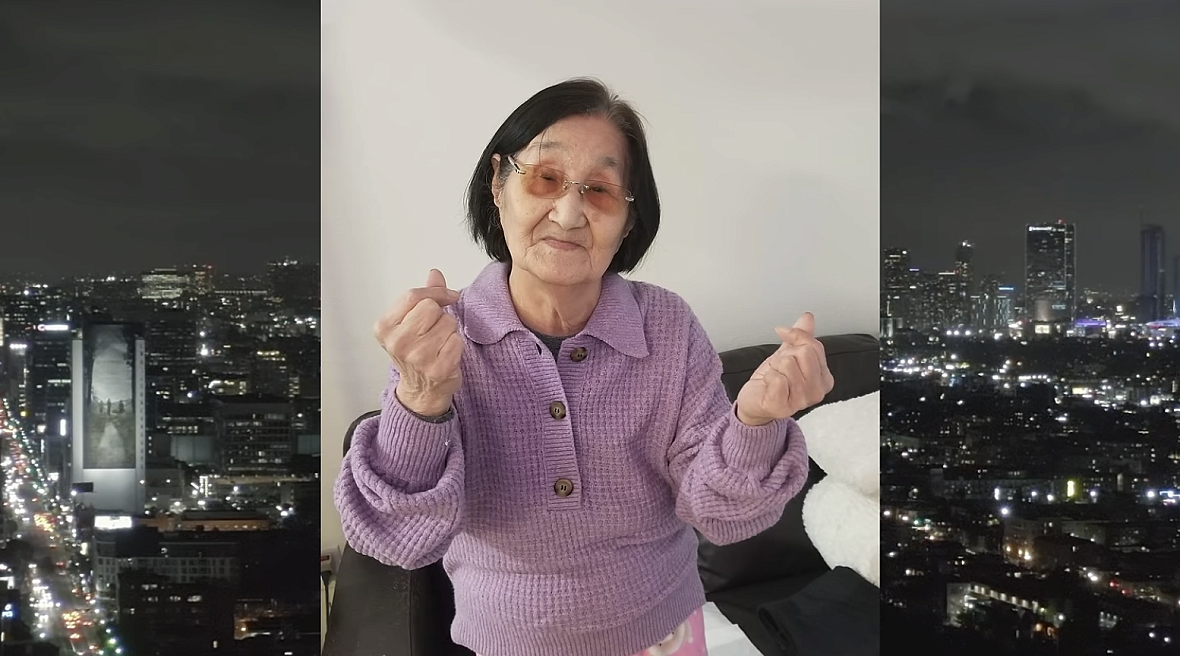
About one month ago, a 97-year-old Korean American woman with dementia disappeared near Los Angeles’ Koreatown. She had left her home late at night, without proper shoes. By the time her family realized she was missing, several hours had already passed.
About one month ago, a 97-year-old Korean American woman with dementia disappeared near Los Angeles’ Koreatown. She had left her home late at night, without proper shoes. By the time her family realized she was missing, several hours had already passed. The family reported her missing to the police, but heard nothing, despite the police issuing a Silver alert.
“We were going around neighborhoods like Skid Row, constantly asking people. We kept thinking that if someone had wanted to help, surely they would have contacted us within those four days, and that made us keep thinking the worst. It rained all day on the first day, and she had gone out without shoes, wearing only socks, so we just kept having these terrible thoughts…”
The family began searching the surrounding area themselves. The key lead eventually came not from the police but from a neighbor.
“Someone who lives in our apartment building said they were coming home around three or four in the morning and saw firefighters in the lobby transporting an elderly woman who was wearing the same clothes as the woman in the flyer. So on the fourth day, I called our local fire station myself and asked whether they had taken my grandmother…”
According to the family, she had already been taken to a hospital early that morning. But because her identity was not immediately confirmed, the woman carried no ID, the family did not learn that she was there for several days.
“Firefighters are one of the agencies that respond to situations like this, so we never imagined that the police wouldn’t have contacted the fire department. To us, that just seemed like such an obvious thing to do.”
The family believes the days of searching, uncertainty, and worry could have been shortened if they had learned sooner that she had been taken to a hospital. This lack of communication between departments is an issue California lawmakers have tried to address.
A 2024 state law required the Commission on Peace Officer Standards and Training, or POST, to develop guidelines for responding when people with dementia wander. Published in November 2025, the guidelines address coordination among police, first responders, hospitals, and transportation services.
But these are recommendations, not requirements. LAPD also includes dementia in its 40-hour mental health intervention training course that more than 6,400 department personnel have completed. But the department's own public guidance still advises families to check local hospitals themselves when a loved one goes missing.
How Common Is Wandering?
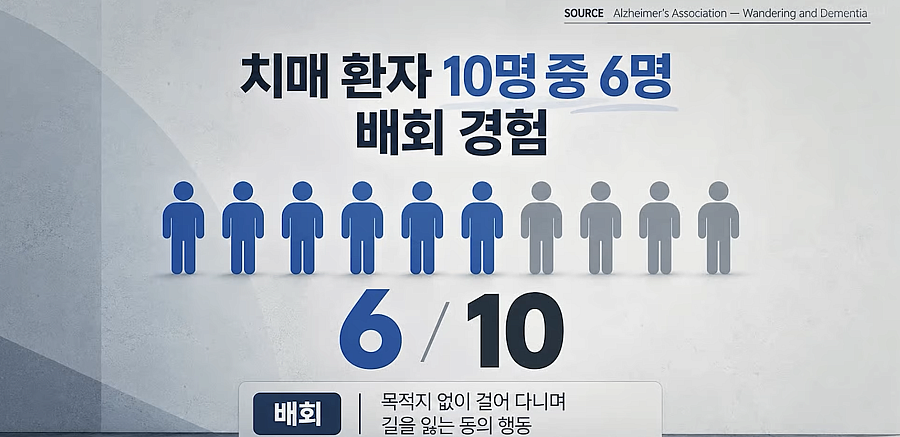
Wandering — when a person with dementia leaves a safe place and becomes lost and confused — is not uncommon.
According to the Alzheimer’s Association, six in 10 people living with dementia will wander at least once, and many do so repeatedly.
The 97-year-old woman was eventually reunited with her family. But for families caring for someone with dementia, the fear of wandering doesn't necessarily end when a loved one returns home.
For another Korean American family, that fear has already become part of everyday life.
Another Korean American family has been caring for a mother who has lived with dementia for about a decade.
“What worried us most was that she would leave the house and wander. If she got lost, we had no way of knowing where she had gone. We were always afraid we might lose her.” The family’s fears were ultimately confirmed. As her condition progressed, she began leaving the house on her own. Sometimes, the search continued well into the night.
“When it got really bad, there were times we were out looking for her at midnight or two in the morning.”
The family also tried using location-tracking devices, but one of the things that ultimately helped most was connecting with other families going through the same experience.
“Being with people going through the same difficulties, being able to relate to each other and share our experiences — that gave me a lot of strength.”
Dementia deeply affects the person who has the disease — they can grow anxious, depressed, violent or confused — but the family caretaking can develop equally challenging problems.
For a third family, caregiving lasted 10 years. At first, she tried to continue working while also caring for her mother.
"As each day went by, my mother’s condition wasn’t getting better. Her dementia was progressing so quickly. So I quit my job and started studying dementia on my own, in my own way…”
She began educating herself about dementia so she could better understand her mother's condition and learn how to care for her on her own. But the cost of caregiving extended beyond her job.
“During the 10 years I cared for my mother with dementia, my social life completely ended. Because I didn’t want to say out loud, ‘My mother has dementia,’ I cut myself off from all of my social relationships.”
Barriers Facing Korean American Caregivers
A 2024 study conducted in part by USC Social Work Professor Yuri Jang found similar struggles and barriers to care. Researchers conducted in-depth interviews with 16 Korean American dementia caregivers in the greater Los Angeles area.
They identified language barriers, unfamiliarity with the U.S. health and social service systems, and limited time and resources to seek information or professional help as major obstacles to accessing services. While this was a qualitative study of 16 caregivers and the findings cannot be generalized to the entire Korean American population, Jang, a co-author of the study, says the findings offer a closer look at a caregiving crisis that has often remained largely invisible in the Korean American community.
"My research focused on how language barriers affect access to health and social services. Dementia caregiving was becoming a major issue in the Korean community, but it wasn't really visible."
At first, the caregiver tried to learn about dementia on her own but struggled to make progress.
Eventually, she enrolled in K-Savvy, a Korean-language caregiver education program developed by USC Professor Yuri Jang and her research team to help Korean American families better understand dementia and manage the challenges of caregiving.
K-Savvy was adapted from the existing Savvy Caregiver program to make it more accessible and culturally relevant to Korean American families.
“When I was studying on my own, most of what I found about dementia was frightening and negative. But after joining K-Savvy, I learned step by step how to provide care, what kind of mindset a caregiver should have when interacting with a patient, and how to respond to everything from food to different caregiving situations. After that, you start to develop the ability to cope with those situations.”
Families cannot stop the steady march of dementia. But they can learn how to better respond to it.
"Most family caregivers suddenly find themselves in a caregiving situation without any prior knowledge. Through education, we teach caregivers basic knowledge about dementia and the skills they need to respond to different situations.”
K-Savvy is not simply a Korean-language translation of the original program.
Researchers incorporated participant feedback to adapt everyday examples and family dynamics to better reflect Korean American culture.
“One of the important cultural differences was that, in the U.S., many of the examples involved people caring for their spouses. But when we worked with Korean families, there was a much wider range of caregiving relationships, including people caring for their parents-in-law. When we adapted the program for Korean families, we also saw caregiving shaped by Korean cultural values, including a sense of responsibility and obligation within the family.”
How families view accepting help can be just as important as what the program teaches.
“Because dementia still carries social stigma, many families don’t tell others what they’re going through and try to handle everything on their own. When they join the class, many realize, ‘I’m not the only one. Other people are struggling with the same things.’ That sense of connection can be a major benefit.”
From a Small Pilot to a Larger Study
The first study was small. Thirteen Korean American dementia caregivers participated in the six-week pilot K-Savvy program. The session completion rate was 98%. Participants not only showed a statistically significant reduction in depressive symptoms after the program, but that improvement was maintained at a six-month follow-up.
Researchers are now testing those early findings on a larger scale.
This year, USC received $3.4 million from the National Institute on Aging to conduct a larger study evaluating whether K-Savvy can reduce depressive symptoms and improve outcomes for Korean American dementia caregivers.
Caring for the Caregiver
Another central part of the program is teaching caregivers to care for themselves.
“Dementia caregiving doesn’t last for a day or two. It’s a long marathon. So taking care of yourself has to be part of the process.”
Jina Kim, who has helped lead the program, says she has seen the toll of long-term caregiving firsthand.
“For people who had already been caregiving for five or six years, you could really see how much long-term stress and isolation had built up. Instead of getting completely caught up in the situation, we teach caregivers to take a step back and learn how to analyze what is happening.”
Education cannot stop dementia. And it cannot erase every burden a family carries. But the families we met shared a similar starting point: They began caregiving without knowing what to do.
When a loved one wanders, where can a family turn for help? And will the systems designed to protect them — police, firefighters, and hospitals — work together when they go missing? When a caregiver becomes exhausted, who can they reach out to? And are existing resources actually reaching the families who need them across barriers of language and culture?
Caring for someone with dementia can be a long journey. And the people walking beside them need care, too.