

Florida must protect families swept into Hillsborough’s ‘hidden foster system,’ leaders say
This article was originally published in The Tampa Bay Times with support from our 2025 Data Fellowship.


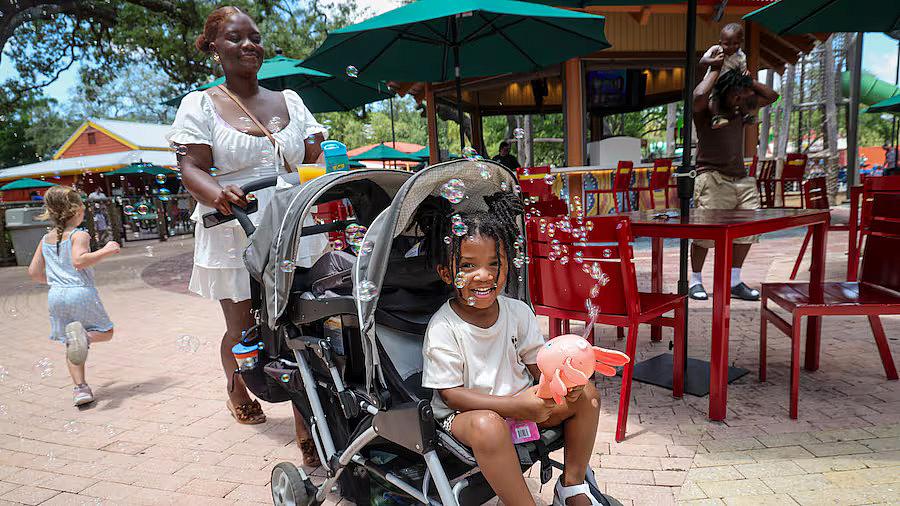
Essence Wright, 26, pushes her son and daughter through ZooTampa at Lowry Park in May. Wright spent three years separated from her daughter after signing a temporary custody form in Hillsborough County.
DOUGLAS R. CLIFFORD | Times
Federal and state lawmakers are calling for investigations and pledging to fix an “alarming” side door in Hillsborough County’s foster care system that a Tampa Bay Times investigation revealed has swept up hundreds of parents and children in recent years.
Republican U.S. Rep. Gus Bilirakis said he submitted a request to co-sponsor federal legislation aimed at monitoring what happens to children separated from parents outside of the formal foster system.
“The allegations raised in this report are deeply concerning and warrant a thorough review by the appropriate state officials responsible for Florida’s child welfare system,” he said in a statement this week. “Parents should fully understand their rights, the options available to them, and the consequences of any decision involving the custody of their children.”
Bilirakis said the federal bill, called the Hidden Foster Care Transparency Act, would bring “much needed transparency and accountability.” Introduced last September, it would require states to track and report whether parents had attorneys and whether kids eventually entered the formal foster system. The measure was referred to the U.S. House Ways and Means Committee.
“The safety, well-being, and best interests of children must always remain paramount,” Bilirakis said.
The Children’s Network of Hillsborough “welcomes appropriate oversight of all child welfare practices and is fully committed to cooperating with any review by state or local authorities,” CEO Terri Balliet said in an email to the Times.
“Our highest priority has always been the safety and well-being of children in our care,” she wrote. “We believe that, when it is safe to do so, children are best served by remaining connected to their families and trusted caregivers, a principle that guides our family-preservation approach.”
More than 300 times in the last four years, the Times found, the Children’s Network – the county’s lead child welfare agency – used a process called “temporary custody transfers” to keep children from their parents’ care and place them with relatives. The approach does not have the same oversight, services or safeguards in place as the traditional foster care system, which also steers kids to live with family members.
Balliet said relatives involved in temporary custody transfers undergo home assessments, background checks and are linked with resources like counseling. The Children’s Network said transfers are voluntary and that the process is less traumatic than foster care for families — giving parents a choice in where their kids end up.
Parents said it doesn’t work that way. Several who spoke with the Times described feeling coerced into signing consent forms that amounted to contracts handing their children over to relatives. None were provided with an attorney. Meanwhile, children and caregivers who took them in went without the financial support they could have gotten under the formal foster care umbrella.
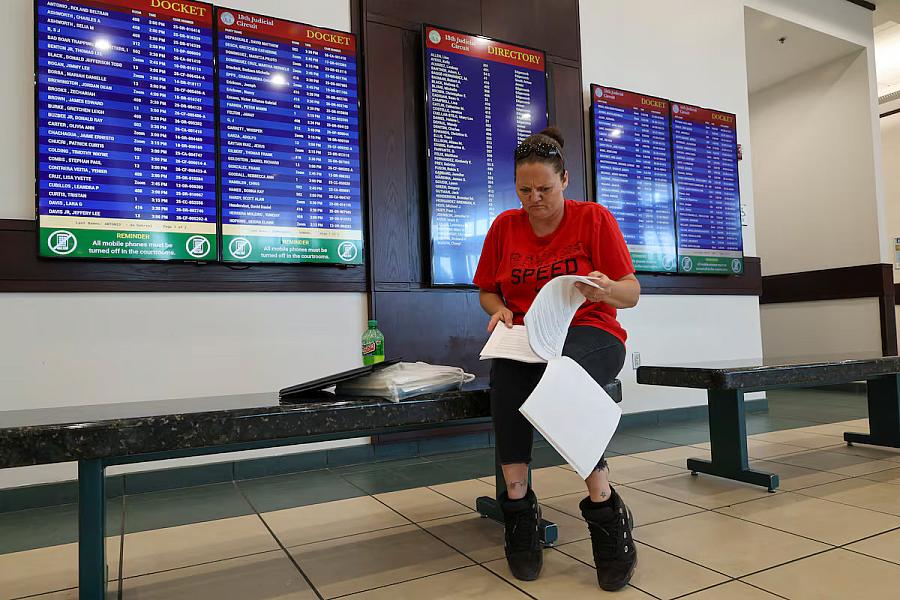
Leslie Flora said she didn't understand what she was signing when she was presented with paperwork for a custody transfer nearly three years ago. The paralegal who presented the forms, Flora said, kept all but the signature line covered.
DOUGLAS R. CLIFFORD | Times
The Children’s Network does not track how these arrangements play out for families, nor are the removals reflected in official data tracking foster care placements. The Times found that parents rarely win custody back in court. Only after the Times began reporting did the agency say it will begin tracking such outcomes.
State Rep. Robin Bartleman, D-Weston, called the Times’ findings “very, very disturbing.” She said she sent a request to the Department of Children and Families asking for an investigation into the Children’s Network and to determine whether a similar approach is happening elsewhere in Florida.
“If they’re circumventing what’s supposed to be a good process, children’s lives will be at risk,” Bartleman said. She spent more than a decade on the Children’s Services Council of Broward County, a local authority that funds family health and support services. “You’re going to change the trajectory of those children’s lives based on the trauma.”
Bartleman acknowledged a broader trend in child welfare toward diversion programs that keep kids out of foster care in favor of “in-home services.” That’s a good thing, she said, but “it’s not really ‘in-home’ when you’re removing children.”
Other lawmakers agreed the use of temporary custody transfers warrants further scrutiny.
“The key word there is ‘temporary,’ which means there should be a clear process outlined for potential reunification of the family,” said state Sen. Brian Nathan, D-Tampa, in an emailed statement. “My office will be looking into this issue to see if any policy changes would be appropriate.”
Beyond potential infringements on due process, state Sen. Barbara Sharief, D-Miramar, said she found it troubling that parents in Hillsborough struggled to get consistent visitation with their children after being thrust through the side door. She worries further about limited oversight from judges overseeing custody transfers.
“It’s unlike the criminal justice system where you’re innocent until proven guilty,” Sharief said. “In this system, you’re guilty until you can prove your innocence.”
She spoke with officials from the Department of Children and Families earlier this week and read the Times’ findings aloud to them, she said. They told her they felt confident they could address any problems without legislation, she recalled.
“If they can’t, we will introduce a bill,” Sharief said.
The Department of Children and Families did not respond to a request for comment.
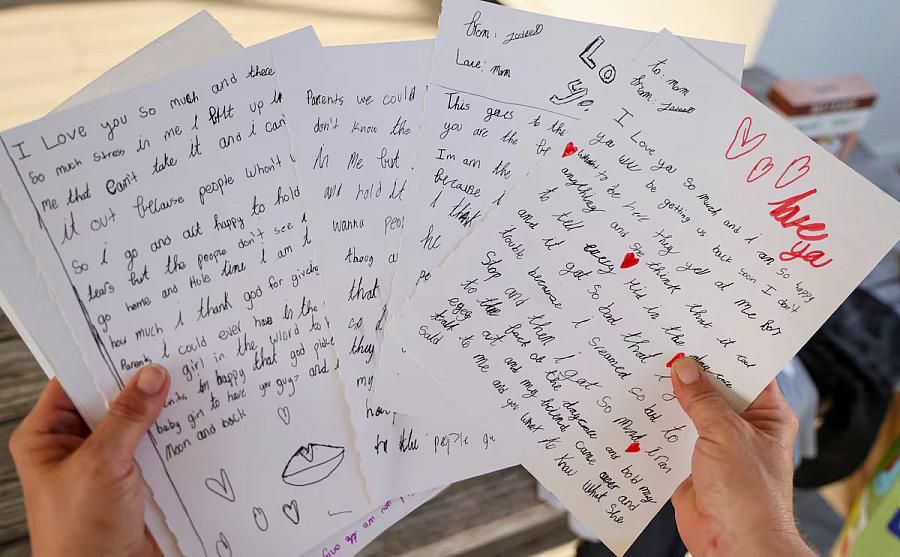
Leslie Flora's daughter, 11, has written letters to her mother asking to return home. Flora's son, Jaden, turned 18 earlier this year and moved back in with his parents.
DOUGLAS R. CLIFFORD | Times
State Rep. Rob Long, D-Delray Beach, said he’s had conversations with colleagues about the Times investigation. He expects legislation around “hidden foster care” would garner bipartisan support.
“It’s unreal that we’re not tracking where these children end up,” Long said. “That should be dealt with immediately. If we don’t pass a bill, at least to do that, we’re crazy.”
State Rep. Dana Trabulsy, R-Fort Pierce, called it a “profound imbalance” that the Children’s Network pays attorneys to represent caregivers taking over custody but not parents. “And if none of those things were tracked,” she said, “how can the state accurately evaluate the performance of this program?”
State Rep. Daryl Campbell, D-Fort Lauderdale, called the findings “alarming and eye-opening.” A former social worker, he said lawmakers must take a close look at practices that allow gaps in oversight to exist.
Agencies across the country have come under scrutiny for similar practices. Hidden foster care arrangements generally lessen the load on overburdened foster systems, save child welfare agencies hundreds of thousands of dollars and leave a scant paper trail, experts say.
Richard Wexler, executive director of the National Coalition for Child Protection Reform, called the Times’ findings in Hillsborough the “most horrifying” example of such a system he’s seen across the U.S.
Tampa City Council member Lynn Hurtak said as a former elementary school teacher, she’s seen the strain the child welfare system can put on families, especially those with few resources. Hurtak said she worries about a lack of support provided to children and caregivers through the side door, and she plans to contact lawmakers about it.
“That’s a cop-out by the state,” she said. “It’s a way to not put money towards children.”
The investigation also sparked calls among members of the Community Alliance of Hillsborough County, a consortium of child welfare providers that meets monthly to share recommendations on family issues. The alliance is made up of representatives from the county’s courts, schools and the nonprofit sector.
Brian Strawser, president and co-founder of the nonprofit Florida 1.27 and a member of the alliance, said he requested the group gather for a special meeting for “fact finding and oversight.”
Strawser, who has worked with local foster providers in Hillsborough over the last 20 years and has adopted four children, said the Children’s Network has been more effective than previous lead agencies. He doesn’t “presume wrongdoing,” he said, but the agency — and the Florida Department of Children and Families — must explain how custody transfers are presented to families and how officials guarantee parents’ rights and children’s wellbeing are protected.
Jennifer Kuhn, another alliance member and executive director of Mary Lee’s House – a child advocacy center — said she wants to hear from judges who review custody transfer cases and to gather more “lived-experience perspectives.”
The group’s advisory board will meet Sept. 15.