

Image
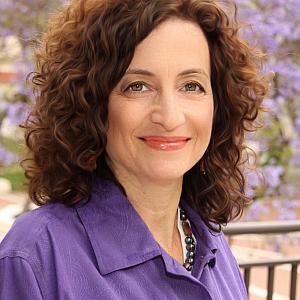
Michelle Levander
Editor and Founding Director
Editor and Founding Director
Michelle Levander is the founding director of the Center for Health Journalism at the University of Southern California’s Annenberg School of Journalism. Since she launched the Center in 2004, the professional journalists who have participated in its journalism fellowships have published more than 4,200 major investigative and explanatory articles in partnership with the Center as well as multi-outlet collaborations. Those journalism projects have won top journalism honors, changed laws, reinvigorated policy discussions, and provoked new community discussions across the nation. Under her leadership, the Center has launched initiatives that nurture collaborative reporting and engagement, building an interdisciplinary community of practice. Among the Center programs she founded, its Data Fellowship, launched in 2015, equips reporters to do their own data analysis to report investigative and explanatory stories on health and health disparities. Its engagement initiative helps reporters to build their reporting around community perspectives by relying on creative strategies to connect their voices to policy action. Levander launched the Center after more than 15 years as a staff reporter and editor in New York, California, Hong Kong, and Mexico, working for Time Magazine Asia, the Asian Wall Street Journal and the San Jose Mercury News. She has received journalism awards from the Overseas Press Club of America (Best Reporting in Latin America), the Inter American Press Association, the Society of Professional Journalists L.A. (Distinguished Work in New Media) as well as a Northern California Co-Producer Emmy Award (Spanish-language Outstanding Achievement Health Journalism). A former Inter American Press Association fellow, she spent a year in Mexico, at El Colegio de Mexico in Mexico City and Michoacán, researching migrant culture from rural Mexico. She has a bachelor’s degree in history and literature from UC Berkeley and a master’s degree from Columbia University’s Graduate School of Journalism.
<p>When Toni Yancey gave me a copy of <em>Instant Recess</em>, her new book published by UC Press, I diligently began reading, expecting measured and important public health advice, solid research, all carefully relayed in an academic tone.</p>
<p>I had a hunch that Carolyn Cannuscio had a story teller’s heart when she plucked out this detail from a Philadelphia city-dweller account of gentrification: ‘One woman described the way she saw her “people being pulled out like sweet potatoes, roots and all—and their health has never been the same since.’”</p>
<p><em>Mary Knudson, a journalist, author and </em><a href="http://advanced.jhu.edu/faculty/view/?id=424"><em>member of the John Hopkins University faculty</em></a><em>, recently discovered that U.S. News & World Report subjected one of her guest blog posts to "keyword" advertising, one of the more ethically troubling practices of online content sites.</em></p>
<p><img src="http://media.scpr.org/images/bio/2010/02/26/small.jpg" alt="Julie Small/SCPR" width="100" height="128" style="float: left; margin: 10px;" /></p> <p><strong>Prison Health Care: Live Conversation with Julie Small</strong><br /><strong>Thursday, August 26</strong></p>
<p>It is a terrible irony that journalist Kevan Carter died so young — of a massive stroke at age 55 — after <a href="http://www.reportingonhealth.org/fellowships/projects/soul-food">writing so sweetly</a> about good food, soul food and the disproportionate toll that heart disease and stroke exact on African Americans.</p>
<p>This Sunday evening, we began our week-long National Health Journalism Fellowships, which brings together 20 journalists to discuss, debate and learn about health journalism topics. At our keynote dinner, we had a chance to meet and hear from our National Health Journalism Fellows and the grantees of our Dennis A. Hunt Fund for Health Journalism who had joined us from across the country.</p>
<p>In a little more than two weeks, we will launch our 2010 National Health Journalism Fellowships. Of course, we hope and expect that the talented journalists who participate will produce great stories. But we will know this program has succeeded if it prompts participants to challenge conventional notions of what constitutes a health story. Seminar speakers will touch upon topics as varied as international trade and gang violence. But running through the Fellowships' weeklong extended conversation is a common theme: the links between Place and Health.</p>
<p>Melvin Baron has spent his career educating the public about health and medicine, first as a pharmacist and then as a <a href="http://www.usc.edu/schools/pharmacy/faculty_directory/detail.php?id=25"… Associate Professor of Clinical Pharmacy</a>. He’s 77 now, and he confesses to some frustration with the handouts that pharmacists and doctors use to inform patients about health and medicine.</p> <p>“Much of what we give you is lousy,” he told me. “It’s a lot of words. Most of it is way above the audience. It doesn’t resonate and it’s boring.”</p>
<p>The Internet and social media have a way of upending professional conventions and giving rise to new models. As traditional boundaries blur, some unique collaborations have emerged between cutting-edge journalists and public health practitioners. I’ve been fascinating by some of these projects, which have yielded new insights, ground-breaking stories and new ways of connecting with the public. </p>
<p><a href="http://twitter.com/DrPam?utm_source=follow&utm_campaign=twitter2008…. Pam</a>, whom I just began following on Twitter, shares this interesting <a href="http://healthcarereform.nejm.org/?p=2201&query=TOC">article</a> about which medicine will define America as we head toward historic health reform. Worth a read. If the New England Journal is having this debate, it suggests a sea change in thinking about medicine and medical technology and its role in improving health for all. Please share your thoughts!</p>
