

This LA County program takes pregnant women out of jail and gives them housing and a fresh start

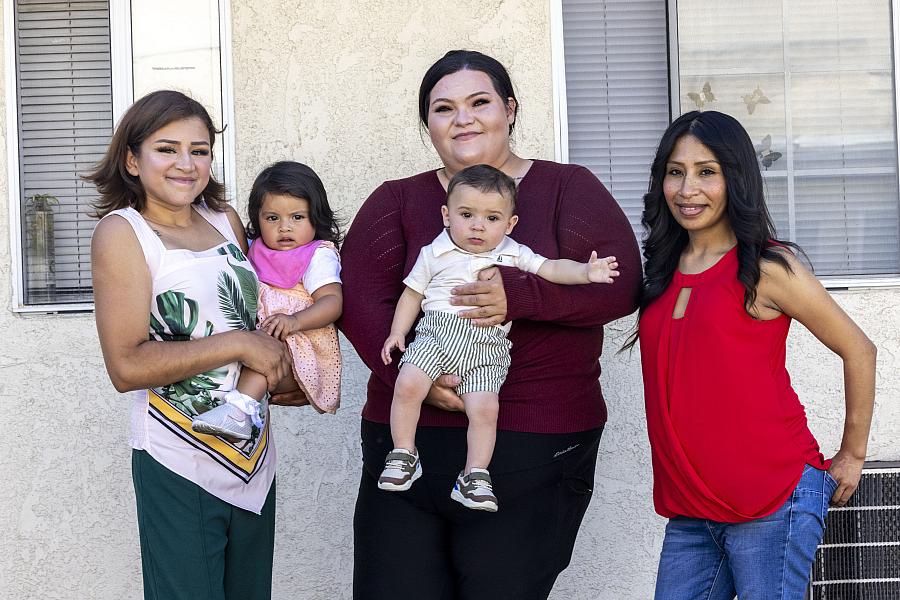
From left, Gladis, Mary and Nancy spoke to Fellows taking part in the 2026 National Fellowship during a field visit to the LA housing complex where they now live. The mothers are taking part in a maternal health diversion program run by Los Angeles County, which removes pregnant women from jail and provides housing, services and a pathway to eventual independence.
(Photos by Jill Connelly for the Center for Health Journalism)
The motel in Mid-City Los Angeles is a dated building painted seafoam green with burnt orange and blue accents. It looks like an overnight stop on a 1960s road trip. But it’s no longer a motel.
The building on Washington Boulevard has been given a second chance. So have the women who now live there. They are pregnant or moms with young kids who were able to leave jail and enter interim housing through the maternal health diversion program run by the Los Angeles County Department of Health Services’ Office of Diversion and Reentry (ODR).
“I got lucky enough to receive the ODR program,” said Mary, 26, a current participant and mother of a 7-month-old boy. “It’s the greatest opportunity I’ve ever had. Instead of serving the time, they let us come here and with (the chance of) keeping my son.”
Mary was speaking to journalists taking part in the USC Center for Health Journalism’s 2026 National Fellowship, which made a field visit to two housing locations last week. The participating women helped Center leaders to design the visits. (The Center is using the mothers’ first names only to protect their privacy.)
Nancy, who is 22 weeks pregnant, and Gladis, a mother of two girls, ages 19 months and 9, also shared their stories.
In partnership with LA County Superior Courts, ODR’s diversion programs focus on people with serious physical, mental or behavioral health challenges and involvement in the justice system, removing them from county jails and placing them in community settings with housing and support services.
“ODR is about opportunity,” said Alicia Sanchez, a program manager for ODR.
The Washington Boulevard site has space for 22 women and their children and is operated by the nonprofit First to Serve. The staff includes a housing program manager, a nurse, and a case manager. A second location for mothers in South LA is run by Holliday's Helping Hands.
Intergenerational trauma, addiction, and second chances
The three women at the Mid-City residence shared stories of trauma and addiction that led each of them into the criminal justice system.
Mary said her addiction problems started at 13, when she started using prescription pain medications before turning to methamphetamines and cocaine. In her early 20s, she became involved in an auto fraud scheme that led her to flee her native state of Arizona. She turned herself in to a local police department in Southern California and was facing 11 years behind bars due to drug and fraud offenses.
Another mom who lives at the home also shared her struggle with addiction.
“My addiction is alcohol,” said Gladis, “I started drinking at 14 after losing my family. Then I became a workaholic. Drinking, drinking, drinking, working, working, working. I wasn’t paying attention … so they took away custody of my daughter.”
She said she was unaware that she had already lost custody and took the little girl. As a result, she was charged with kidnapping, she said. She has been sober for two years and takes part in Alcoholics Anonymous.
Nancy, who also lives at the home, said her substance use also started with alcohol as a teen and progressed to methamphetamines. She spent years going in and out of jail and thought that was what her life was going to be. During her addiction, she lost custody of a daughter.
“This program is for real a blessing to me, because I’m going to get the chance to keep my baby girl,” Nancy said.
Pregnant and incarcerated
The LA County jail system is one of the largest in the U.S., with nearly 60,000 people booked every year. Women account for 10% of those behind bars, with most being held at Century Regional Detention Facility in Lynwood. Pregnancy testing is part of the screening at jail entry, and 3% to 5% of women are pregnant when they enter, according to national statistics.
At least two-thirds of jailed women have mental health issues, post-traumatic stress disorder (PTSD) or substance use disorder, according to the Council on Criminal Justice. Nearly all have survived trauma, such as sexual violence, child abuse, bullying or intimate partner violence.
“I never knew I had anxiety. It was stressful being in jail and having anxiety attacks. You don’t see the sunlight. You get thoughts about not ever coming out … and I was pregnant,” said Gladis.
Many women enter jail with high health needs, and incarceration adds to their trauma. After release, they continue to face challenges with their mental health, finding housing, achieving financial stability and reunification with their children.
Getting pregnant women out of jail
The LA County maternal health program began in 2018, with the goal of providing pregnant women with maternity, mental health and specialty care, such as addiction treatment. Most of the participants avoid time behind bars and live in specialized, interim housing that allows them to stay with their children. The program lasts about two years, with graduates transitioning to permanent, supportive housing. (Taylor Walker of Witness LA reported on the program in a 2021, a series supported by the Center for Health Journalism.)
In addition to the maternal diversion program, ODR’s other programs also include assistance for people with mental illness and frequent encounters with law enforcement, and individuals with misdemeanor or felony offenses who are not competent for trial. The largest program offers supportive housing for individuals in jail who are homeless and have a serious mental health disorder.
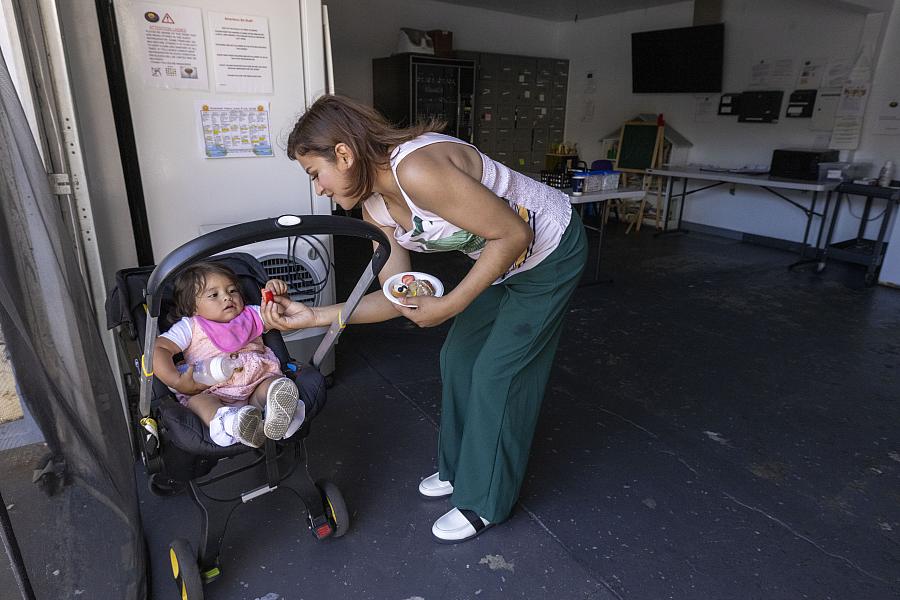
Gladis, a participant in LA County's maternal health diversion program, gives a snack to her daughter at the Mid City housing facility where they now live.
(Photo by Jill Connelly for the Center for Health Journalism)
Over the past 15 years, about 15,000 participants have stayed out of jail and received housing and “wrap-around” services.
Other than being pregnant or parenting and an adult, the maternal diversion program does not have strict enrollment criteria. ODR has its own court, and lawyers may request the program for their client, with judges deciding individual cases. Clients can also be referred by sheriff's deputies.
“There’s a specific deputy that takes care of the pregnant girls, and she referred me,” said Mary.
The two current maternal health homes can accommodate about 50 women and their children.
The program numbers are modest for a county of nearly 10 million people. Since October 2022, 104 mothers have been released from jail and referred to the diversion program, according to county data. Less than 1% have been reincarcerated overall.
More broadly, the county reports that 15,500 people have been released from jail into diversion programs since 2015.
Finding hope in the future
Gladis is on track to complete her two years in the program in February 2027. She is currently looking for an apartment and working with her mother as a pupusa street vendor. Her 9-year-old daughter has been living with her maternal grandmother.
“I’m getting custody back for my oldest daughter — I’m hoping by August,” Gladis said.
All three women said they wanted to tell their stories to journalists so they can “get the word out” to other women in similar predicaments that there are programs like the one run by ODR.
“I’m not the only one. There’s someone out there that needs help. … (W)e have a great program,” said Gladis.
The program’s impact on the well-being of moms, children and their families isn't easily measured by numbers.
“(I)t not only gives us stability, but it gives us resources to be able to fix what we’ve done,” said Mary. “It gives us something that we haven’t had before.”
Clarification: This column has been updated to include reference to the mothers' role in helping design the National Fellowship field visit, as well as Taylor Walker's 2021 Fellowship project on the program.