

A reporter’s quest for data on Central Valley well water points to health risks — and the need for more testing

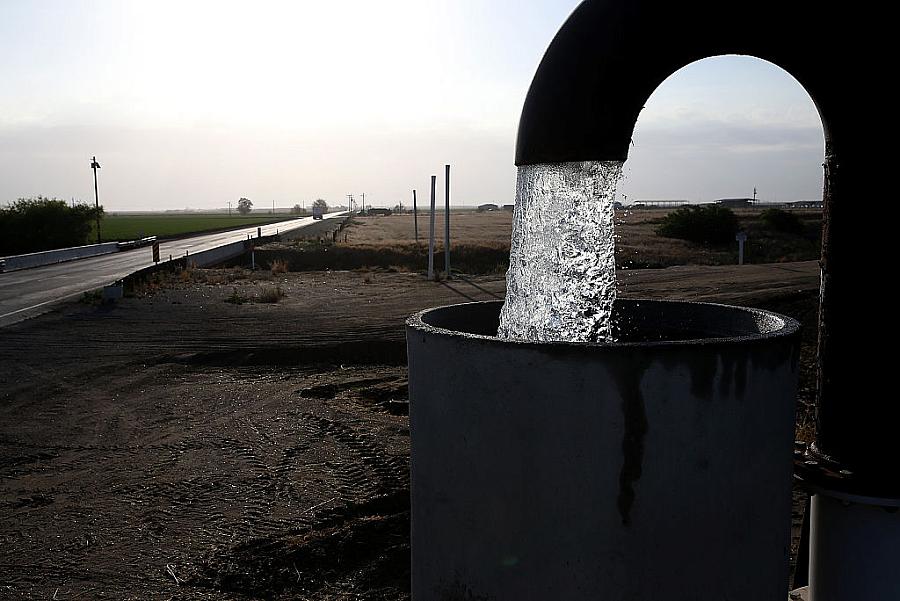
(Photo by Justin Sullivan/Getty Images)
Unincorporated regions of the Central Valley often lack access to clean drinking water.
It’s often due to contaminants from agricultural activities like dairies and crops, as well as septic systems. These communities are generally low-income and have language barriers, further preventing access to the information necessary to make informed decisions about their drinking water.
On top of that, the most common contaminants in Central Valley drinking water are tasteless, odorless and invisible to the naked eye.
My goal with this project for the 2025 Data Fellowship was to highlight what’s likely in domestic well water for residents in Stanislaus and Merced counties, and if it is a concern for their health.
This was my first major data project. Before this, I had been looking at water issues on a case-by-case basis, writing about specific areas of unincorporated Stanislaus County. I knew there were regions that were hotspots for poor water quality because the small water systems around it were contaminated.
But domestic wells are more vulnerable, and testing data is hard to obtain. I had hoped that shedding light on what we did know would make people more aware of what was potentially in their wells and to take steps to protect themselves.
Because I had written smaller stories about water quality, I built a source relationship with the State Water Resources Control Board, which helped me to gain access to the data necessary to report this out.
But getting the data was a bit more involved than I had originally anticipated. I assumed that a nonprofit that provided testing would provide it to me due to our good source-relationship, but their lawyer blocked the release of the information.
I knew that the information was public because it was reported to the state, but I didn’t know how to access it or what would be in it. So I requested the data sharing agreement with the nonprofit, which showed when they started sharing data and what they shared.
From there it was a matter of finding out where the data was held and talking on background with people at the State Water Board about how I planned to use the data. I made clear that I did not want to identify individual wells, since I knew from previous reporting there were concerns from residents about being identified. Many conversations later, we found two datasets that I used for the basis of my reporting: nitrate testing and data on co-contaminants.
The nitrate testing data provided me with information on where the testing was done and how high it tested. What it didn't tell me is when it was tested. Nitrate, which is caused by fertilizer, dairies or high concentrated septic tanks, can cause what’s known as “blue baby syndrome,” in which the contaminant can reduce the blood’s ability to carry oxygen in infants and pregnant women.
Getting this data was a starting point. I knew when the testing program started and I knew when the data sharing agreement was modified, providing me with a range. The data was from September 2022 to mid-December 2025.
The co-contaminant spreadsheet included the other contaminants I was looking for, such as uranium, which is naturally occurring but can cause liver and kidney issues over time; arsenic, which can cause severe skin irritation and increase risk of cancer over time; and 1,2,3-Trichloropropane, which is a byproduct of a legacy pesticide that can cause skin irritation and liver damage.
The data included Merced County as well as Stanislaus County, so I worked with a reporter at the Merced-Sun Star to use the data to write a second story about the Merced region.
What I found was startling. In both counties, people who had domestic wells were more likely than not to have nitrate in their wells above the safe drinking water limit. But there is a caveat: It could be that people who sought out testing knew they were more likely to test over the limit. Also, the number of domestic wells that had been tested was small.
With the co-contaminant data, both counties had commonly tested over the safe drinking limit for uranium and 1,2,3 TCP, with the same caveats.
Getting people to talk about what was in their well was another challenge. I met one person while doing a ride-along with the nonprofit that tested the wells, but for the rest, we door-knocked in neighborhoods that we knew were affected.
The stories I produced were just a glimpse at the potential dangers of domestic wells, highlighting where in both counties high concentrations were popping up. Ultimately, the aim was to encourage more residents to get their own wells tested.