

Licking County is the nation's radon epicenter. Why isn't more being done to help?
The article was originally published in The Columbus Dispatch with support from our 2025 National Fellowship and Dennis A. Hunt Fund.

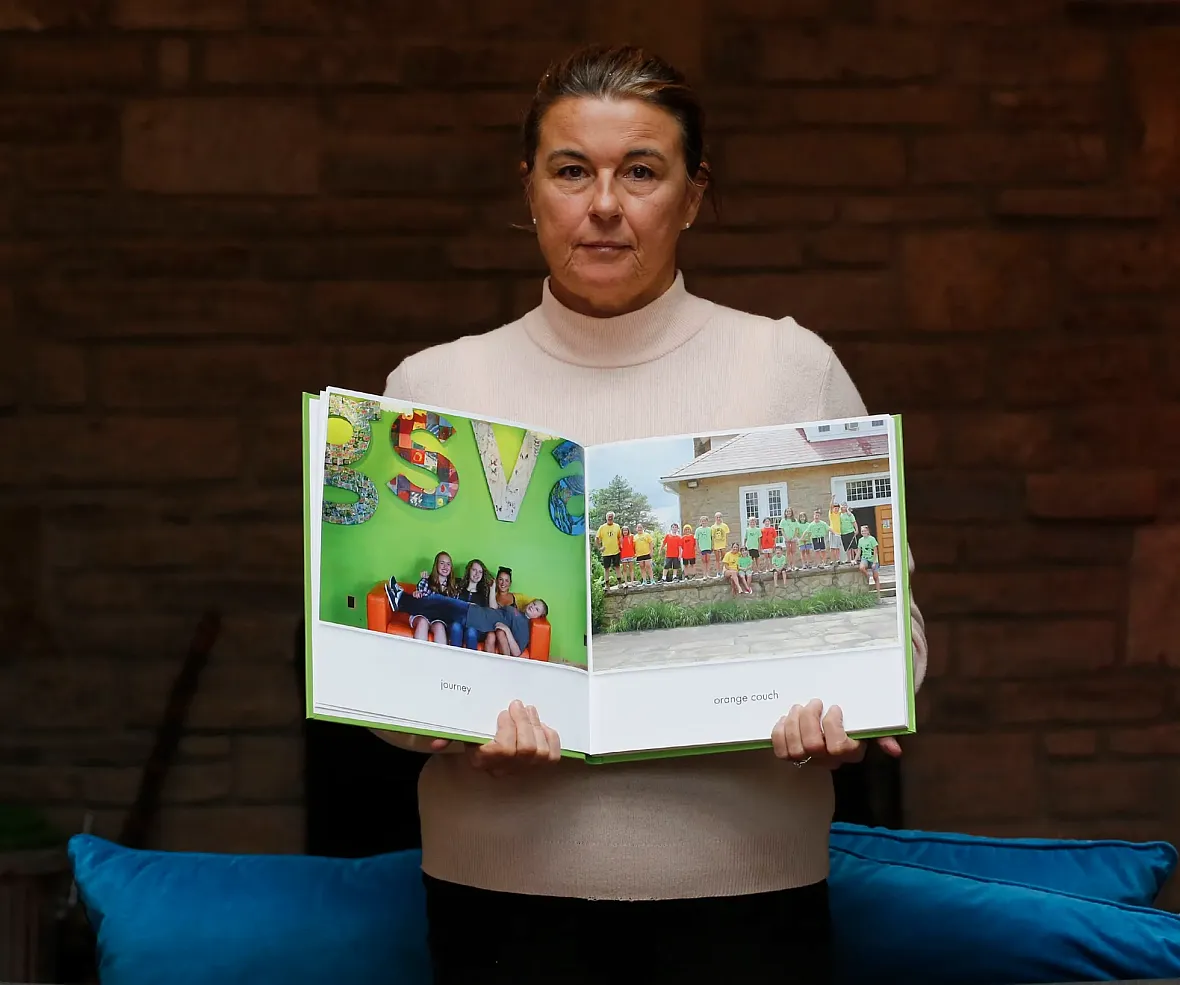
Annie Cacciato, pictured here in 2017, holds a book she made from her work at the Granville Studio of Visual Arts Eddie Wolfe Gallery 2008-2015, which tested at a level of 25 picocuries per liter for radon, well over the EPA action level of 4. Annie died in 2021 and believes she got stage four lung cancer from radon.
Tom Dodge
Annie Cacciato leapt to her feet, shouting "this could be it" as the television commercial faded to black on the screen in front of her.
The moment still sticks out to her husband Matt Cacciato because the otherwise mundane home services advertisement would become a catalyst to explaining the disease that defined the rest of his wife's life. A never-smoker, Annie felt shocked by her diagnosis of stage 4 lung cancer in 2013 and desperately searched for a cause.
But Annie may have never made the discovery had she not traveled nearly 1,300 miles from her Licking County home to a Denver cancer conference, where she saw the local radon TV ad in her hotel room in 2015.
“Annie was steadfast in wanting an answer for herself," said Matt. "She really wanted to know how she ended up with this."
Annie was living in one of the worst areas in the country for radon — an invisible killer that seeps into homes and buildings through the basements and concrete slabs beneath them. A Dispatch investigation found that state and local policymakers have failed to protect Ohioans from the gas for decades.
At 6.5 picocuries per liter, Licking County has the highest median level of radon of any of Ohio's 88 counties, testing data from the Ohio Department of Health shows. Among 21,460 tests conducted from 2003 through 2020, the average Licking County reading was 14.7 picocuries per liter.
The 43055 ZIP code in Newark, the county's largest city, has the highest concentration of radon in the nation, a 2025 Harvard University study found. And at least one Licking County building has registered test results of 1,400 picocuries per liter — more than 350-times the Environmental Protection Agency's recommended remediation level of 4.
"It's likely in your home and putting you at risk," said Dr. David Carbone, Annie's doctor, head of thoracic oncology and chair of lung cancer research at Ohio State University's James Cancer Hospital. "If you have lungs, you can get lung cancer."
After her diagnosis, Annie dedicated her remaining years to advocacy.
She trained to become a licensed radon professional so she could test buildings and homes herself. She spoke up every chance she had, becoming a frequent face of radon's toll in local news coverage. And she pushed legislators to consider changes to state law to better protect Ohioans.
Eight years after her diagnosis, the advocate and mother of three who loved spending summers with her family on Buckeye Lake died on Nov. 8, 2021. She was 58.
Annie didn't pass without putting up a fight though, Matt said, pushing for more action on radon into her final days.
“The fact that (testing) is not mandated and required by law was one of the frustrations that Annie had at the end,” Matt said. “How can’t this just be the logical next step?”
A 'mythical creature' killing Ohioans in Licking County
Though Licking County is the nation's epicenter for radon, Matt said his late wife saw the void of awareness as a major obstacle to saving lives.
People can't do something about the radon in their homes if they don't know about it, he recalled Annie thinking.
"It is the second leading cause behind smoking but clearly underpublicized," Matt said. "She tried to raise that awareness so people could avoid a similar fate."
The Licking County Health Department has tried to raise awareness about radon locally by offering resources online and by periodically pushing out information through stories in The Dispatch and other publications. Still, while parts of Ohio are ground zero for radon, local doctors told The Dispatch they themselves haven't spread as much awareness as they should.
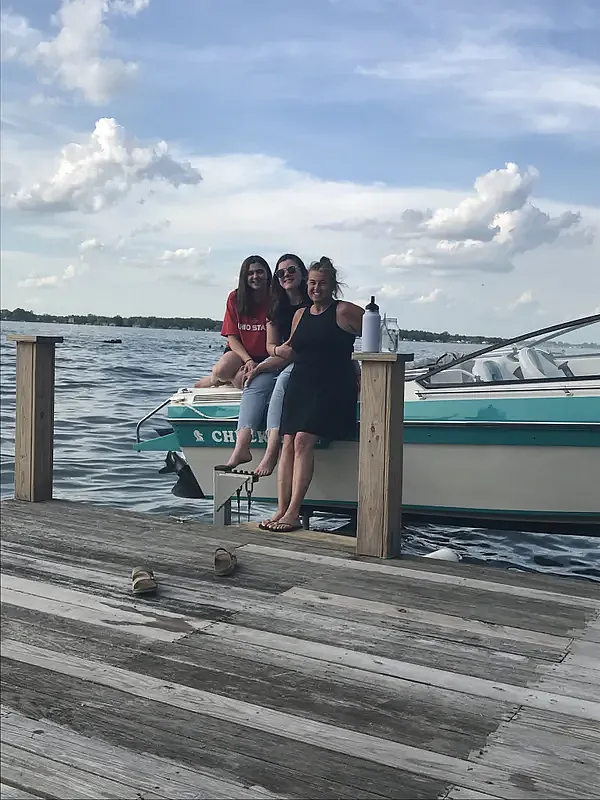
Annie Cacciato, right, with two of her daughters Josephine, left, and Grace at Buckeye Lake in 2020. Annie died from radon-induced lung cancer in 2021.
Photo Provided By Josephine Cacciato
Dr. Talya Greathouse, vice president of medical affairs at Licking Memorial Hospital, has been practicing locally for 26 years. Despite knowing the gas is widespread, she said it doesn't come up much in conversations with patients.
“I just don’t think it’s top of mind and I will take responsibility for that,” she said. “There's just so many other things."
Radon, Greathouse said, has become "a little bit of a mythical creature" against the backdrop of dozens of other health issues that are at epidemic levels and in the years since the COVID-19 pandemic.
But radon's threat is very real, especially in Licking County.
While it's common for radon levels to test above the EPA's action level of 4 picocuries per liter in central Ohio, homes in Licking County routinely test in the 200 to 400 range or higher, said Shad Evans, president of the Ohio Association of Radon Professionals and manager of operations for Protect Environmental in Columbus, formerly known as Radon Be Gone.
That's 50 to 100 times higher than the level at which the EPA recommends mitigation.
As part of its investigation, The Dispatch used grant funding to test nearly 70 homes in Licking, Franklin and Delaware counties.
A home on Canyon Road in the Licking County village of Hebron had the highest radon level of the dozens tested in the region. At 58.2 picocuries per liter, the home's radon level was more than 14-times higher than the EPA's remediation level. And it wasn't the only one.
High radon levels have long been floating in the back of Cara Morrison's mind.
A lifelong resident of the Licking County village of Utica, Morrison said she and her husband had their home tested for radon when they bought it in 2002. She remembers the results came back high but as the years went on, life got in the way and they never acted on them.
Then a few years ago, a friend from church who had never smoked was diagnosed with lung cancer. The friend's family thought radon might be the cause and all of a sudden Morrison began to worry about whether the invisible gas might still be invading her home.
When The Dispatch tested her home, it returned results of 20.7 picocuries per liter. Now, Morrison said she'll likely mitigate her house in the coming months.
"I just hope that people are more aware of what radon can do and take notice," she said. "Get your house tested and get it rectified."
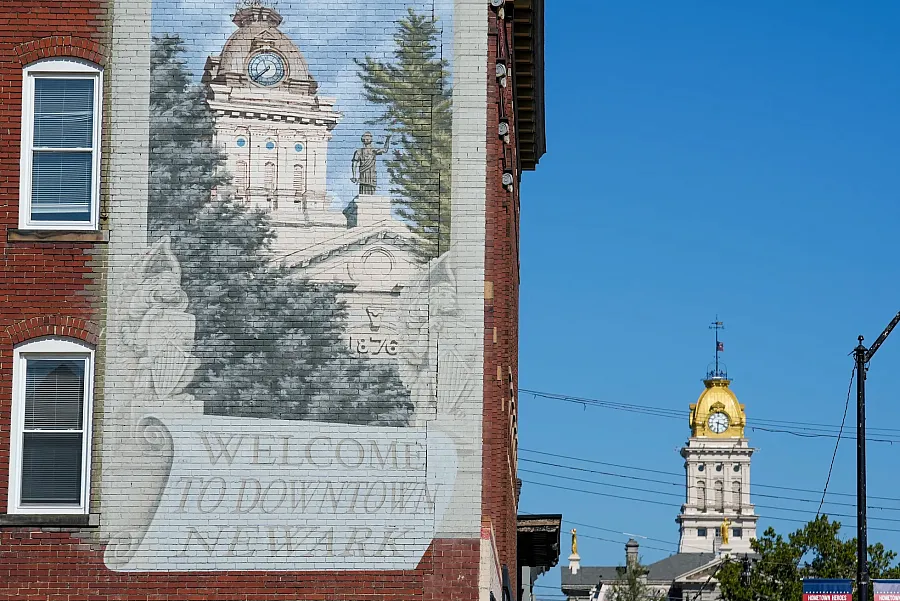
A mural with Licking County Court House in the background Thursday, Sept. 11, 2025 in Newark, Ohio. Licking County has the highest median level of radon of any of Ohio's 88 counties.
Samantha Madar/Columbus Dispatch
A 'dirty bomb' that too few Ohioans are aware of
Not long after Annie and Matt's second and third daughters were born, the couple decided to move from Los Angeles to Granville to be closer to Annie's family and nearby hometown of Alexandria.
Home to Denison University and a population of roughly 6,300 or so residents, Granville has been named one of the nation's best college towns and one of the top small towns to live in. But Annie never could have guessed what laid beneath the ground in the Licking County village would bring her life to an early end.
When Annie was diagnosed with lung cancer, her home already had a radon mitigation system installed. Instead, it turned out that Annie was being exposed to dangerous levels of radon in her workplace.
While homes are sometimes tested for radon, few other places are, Carbone said. Workplaces remain one of the many "big unknowns," he said, because they're so seldom tested for the deadly gas.
A once successful sales executive for Time Warner Cable, Annie decided to pursue a passion in philanthropy when she came back to Ohio. Along with friends, she started an art-education nonprofit dubbed the Granville Studio of Visual Arts in 2008.
By the time Annie was diagnosed with lung cancer in 2013, she'd worked at the art studio for five years.
She suspected the historic Bryn Du Mansion that housed her nonprofit might have high levels of radon and she was right. Test results revealed 25 picocuries per liter of radon in the building, nearly six-times the EPA's remediation level.
While no test can link a specific cancer to radon, the gas is often considered a culprit when patients do not smoke and have a known radon exposure. Annie would later describe the radon in her workplace as "a dirty bomb" she'd been completely unaware of for years.
"I think we all assume that whether in the private sector or our government, that we have a safe environment," Annie told Dispatch sister paper the Newark Advocate in 2018. "We have a life-threatening danger that you can’t see."
When Annie began working to raise awareness about radon, she encountered the same difficulties others faced in trying to get people to pay attention.
Annie, however, wasn't one to take no for an answer on something she was passionate about, said her daughter Josephine Cacciato. The youngest of Annie's three daughters, Josephine, 23, said her mother was always strong-willed, focused and strategic about what she needed to accomplish.
“If somebody wasn’t listening, she was like: ‘No,’” Josephine said. “She would get her point across.”

Josephine Cacciato, 23, outside Cherbourg Bakery in Bexley. Her mother, Annie, died from radon-induced lung cancer in 2021.
Samantha Madar/Columbus Dispatch
For years, Evans said Annie pushed Granville schools to test for radon in its buildings.
When the district finally did, Evans said some facilities came back with elevated results leading the school system to mitigate to protect students.
Jeff Brown, superintendent for the district, called Annie a "huge catalyst" who spurred testing for radon even as other districts still don't. All three of Annie's daughters are graduates of Granville schools, which Brown said now tests for the gas every five years.
"I had heard Licking County was notorious for higher radon levels," Brown said. "She really wanted to do what was best for our community and our students."
To raise money for lung cancer research, Annie started the Blue Beautiful Skies Fund at Ohio State in 2014. The fund has so far raised more than $1.45 million, Matt said.
And by the end of her life, Annie finally made headway with lawmakers on radon.
Legislators in 2021 passed a bill declaring January radon awareness month and sent it to the governor's desk. Annie was there when Gov. Mike DeWine signed the bill — known as the Annie Cacciato Act — into law on July 1, 2021.
The first official awareness month in Ohio was in January 2022, just weeks after Annie died in November 2021. Though Annie is gone, her husband Matt said she hoped the awareness month would be just the first step in getting lawmakers to do more on radon.
If anything, he said, it'll hopefully save other Licking County residents like Annie from an early, preventable end.
“We’ve got a ways to go but Ohio as a state is better off than it was,” Matt said. “We can solve these problems together if we have the courage to do it.”