

"They Couldn't Ask For Help": Drug Addiction and Mental Health in LA's Korean American Community

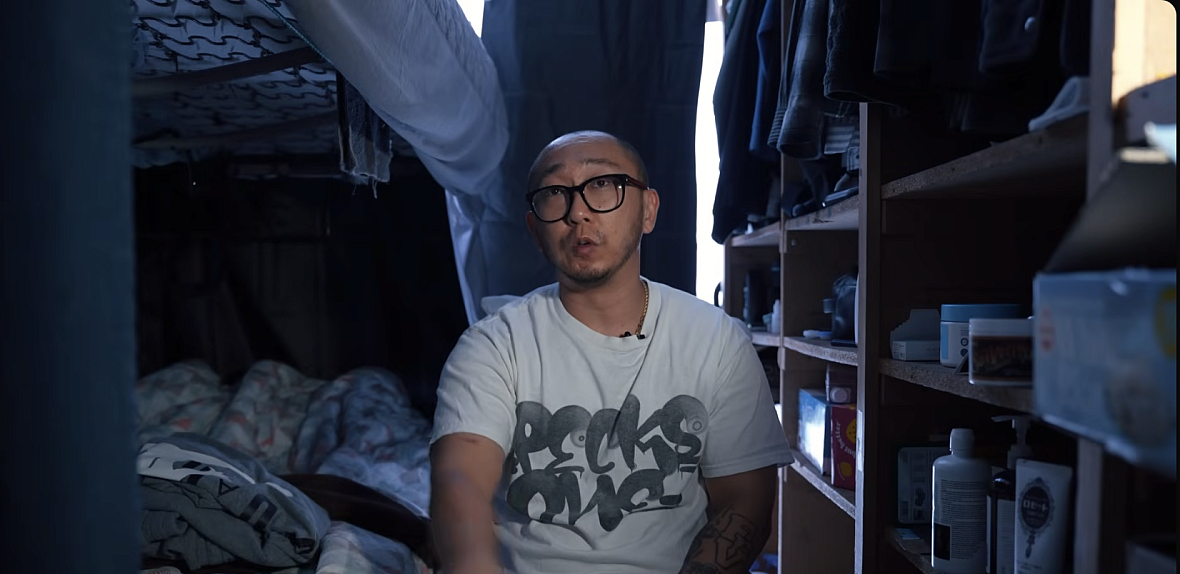
Daniel Jang is a 36-year-old Korean American recovering addict from Orange County. For Korean American families the challenge is knowing where to go, finding services in their language, and feeling safe enough to ask for help before shame and silence make the problem worse.
DuHyun Lee
Daniel Jang / 36, Recovering Drug Addict
“I lost my job. I dropped out of school. I almost died. No matter how much pain and trouble drugs put me through, I always went back to it.”
Anonymous Recovering Drug Addict
“You may think, ‘I’ll quit soon’ or ‘I’ll only do a little.’ But that can lead to something much bigger.”
Skid Row in downtown Los Angeles and MacArthur Park near Koreatown. In both areas, open drug use and drug dealing are difficult to miss. In 2023, drug overdose was the leading cause of death among people experiencing homelessness in LA County. More than 1,400 people experiencing homelessness died from drug overdoses that year, while total deaths exceeded 2,500. The mortality rate was nearly 49 times higher than that of the general population.
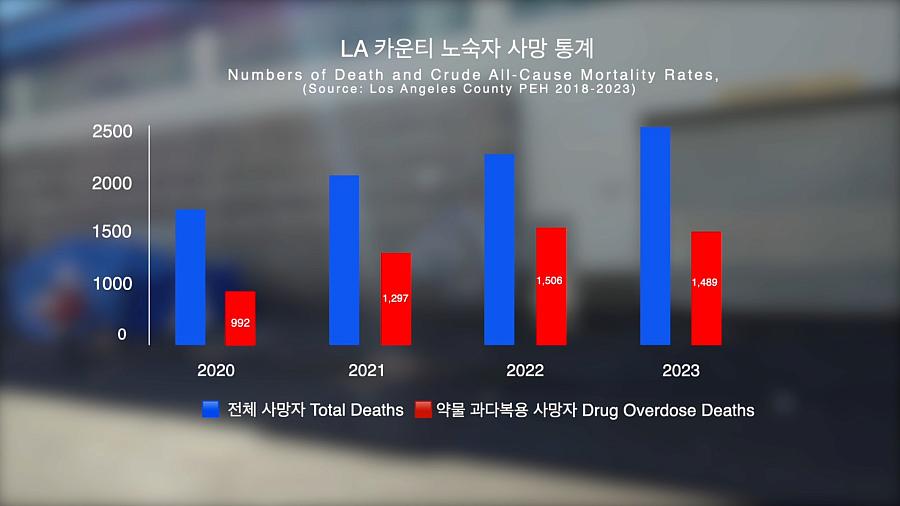
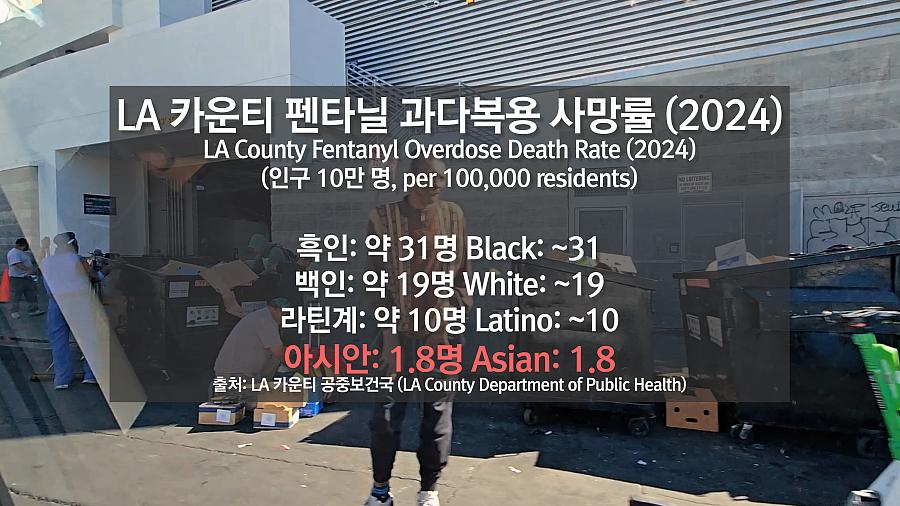
But official data for Asian communities shows a different picture. In 2023, Asians accounted for just 49 fentanyl overdose deaths countywide, the lowest of any racial group. By 2024, that number had dropped even further to just 26 deaths — a 48% decline marking the steepest drop of any racial group in the county.
On paper, that is encouraging news. Even so, people working in recovery say the numbers do not tell the whole story. Death is not the only metric of suffering.
Daniel’s Story
Daniel Jang is a 36-year-old Korean American recovering addict from Orange County. He says he was first exposed to alcohol and drugs as a teenager and later struggled with addiction and relapse.
Daniel Jang / 36, Recovering Drug Addict
“When I was 16 years old, at my friends’ houses we would be drinking. They smoked weed, and I was smoking joints with them, smoking bongs and stuff like that. Then when I got to college, that’s when my drug use really took off. I started using heavier drugs — ecstasy, meth, OxyContin, heroin, all that stuff.”
For Daniel, drugs were not only about chasing a high.
Daniel Jang / 36, Recovering Drug Addict
“I felt so happy. I didn’t feel nervous. I didn’t feel scared. I could relax and be myself. That’s what alcohol and drugs did for me.”
But the relief did not last. Over time, addiction took over more parts of his life — school, work, family relationships, and his sense of self.
Daniel Jang / 36, Recovering Drug Addict
“I always have a lot of regret. Depression… I feel like I messed up my life. I also feel like I owe so many apologies to my parents and my family members. I’m not as happy as I should be.”
Daniel says getting sober was not one single moment. After repeated relapses, treatment, and the support of people who helped him find the strength to keep going, he says he no longer wanted to keep living the same way.
Daniel Jang / 36, Recovering Drug Addict
“I finally got in trouble. I got a case, and I don't want to go to jail again. I was tired of going to jail. So Pastor went to court, and he got me to be court ordered here.”
Daniel’s story reflects what the data shows — but it also reveals what the numbers may not capture. The experiences of people in recovery suggest that addiction is often hidden within Korean American families, making it difficult to see the full picture through the numbers alone.
Anonymous Recovering Drug Addict
“They hid it because it was too shameful. When I contacted my friends after being sent here, my mother said, ‘Why would you tell people? We told them you went abroad to study.’ That’s when I realized my mother didn’t want other people finding out.”
Mental Health and Addiction
The LA county report also notes that year-to-year fluctuations among smaller racial groups, including Asians, can be statistically unreliable. Still, according to data obtained by The Korea Times, , at least nine Korean Americans in LA County died from drug overdoses in 2025. For people on the front lines of recovery, the question is not only how many people die. It is also how long people suffer before asking for help.
Youngho Han / Pastor, Running a Drug Rehabilitation Ministry
“The drug problem didn’t appear overnight. It has built up over a long period of time, and now the situation has become very serious. We are already past the stage of prevention.”
Pastor Henry Han has spent nearly 30 years working with recovering addicts. He says many people arrive at addiction after years of emotional pain, isolation, depression, or untreated mental health struggles.
Youngho Han / Pastor, Running a Drug Rehabilitation Ministry
“They end up turning to drugs because they are suffering mentally and emotionally. Even while taking psychiatric medication, they still feel tremendous pain. To them, drugs feel better than the medication they’re prescribed. That’s how they fall even deeper into addiction.”
Experts say emotional struggles such as depression, anxiety, and isolation can lead to substance use problems when left untreated. But in many Korean American families, talking openly about mental health can still be difficult.
Lisa Wong, Psy.D. / Los Angeles County Department of Mental Health
“Stigma is probably the biggest barrier for people seeking mental health treatment in the API community. There is a tendency to internalize and make kind of internal attributions for failures or difficulties. So what we have been trying to do is increase awareness of mental health resources, but also increase awareness that everyone has mental health issues.”
California is now investing billions of dollars into behavioral health care. In 2024, voters approved Proposition 1, a $6.4 billion bond measure to expand mental health and substance use treatment, supportive housing, and behavioral health facilities.
Los Angeles County received nearly $1 billion for 35 behavioral health projects.
But many of those projects will take time.
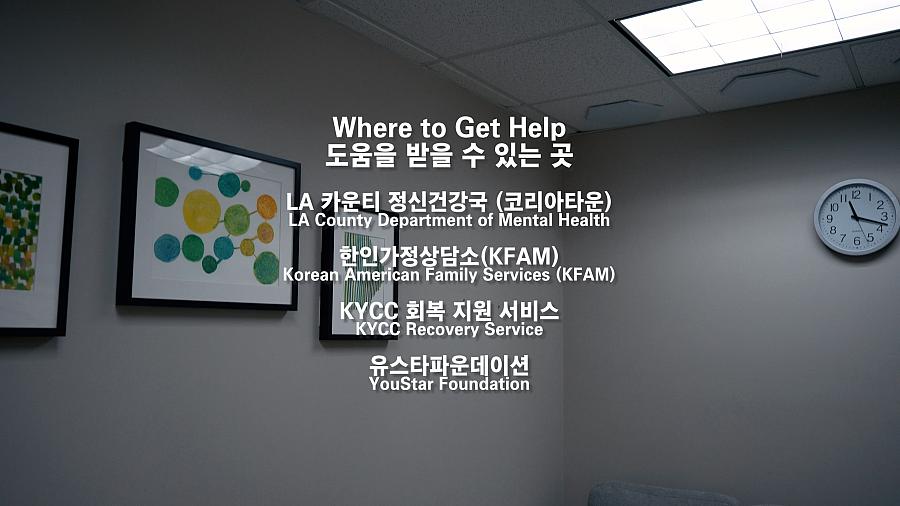
For Korean American families struggling now, the challenge is more immediate: knowing where to go, finding services in their language, and feeling safe enough to ask for help before shame and silence make the problem worse.
Mi Sook Nierodzik, Psy.D. / Mental Health Program Director, Korean American Family Services
“Just like getting a regular health checkup, mental health issues can be much easier to treat when they are identified early. But if families wait until it becomes a crisis, recovery can take much longer. At Korean American Family Services, people can speak in Korean and find ways to get help.”
Recovery and Hope
For Daniel, recovery is still ongoing. Now, he says his life has a direction he could not see during the worst years of addiction.
Daniel Jang / 36, Recovering Drug Addict
“I was going for my master’s in social work, but after talking to the pastor here, I want to go to seminary now. Hopefully, I want to become either a pastor or a spiritual counselor, and I want to give back to this community.”
Daniel’s story shows recovery is possible with support.But it also shows why delaying help can be so dangerous.
Daniel Jang / 36, Recovering Drug Addict
“Your life is more valuable than drugs. Your life is very important. Your family members, your friends, your loved ones — people are really going to miss you if something happens to you. Don’t waste your life.”