

The Hidden Toll: Reporting on Youth Autism and Mental Health in the Misinformation Age
Autism is in the national spotlight. Diagnoses have risen steadily in recent decades, and the appointment of RFK Jr. as health secretary ushered in fresh scrutiny and misinformation on the condition at the highest levels of government. Amidst all the debates, the reality of what it means to be an autistic child or adolescent is often overlooked. Autistic children are far more likely to have mental health challenges than neurotypical peers, and are twice as likely to attempt suicide as well. Standard screening tools often miss key warning signs, and interventions for neurotypical kids may not work for autistic youth. In this webinar, we’ll delve into new in-depth reporting that is bringing fresh attention to the mental health challenges of growing up with autism, discuss ways to counter growing misinformation about the disorder, and provide reporting guidelines that will help journalists rigorously evaluate the evidence behind new claims and treatments.
This webinar is free and made possible by the Kristy Hammam Fund for Health Journalism.
Panelists
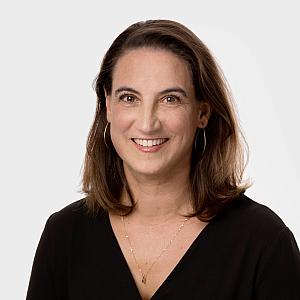
Corinne Purtill is a science and medicine reporter for the Los Angeles Times. Her writing on science and human behavior has appeared in The New Yorker, The New York Times, Time Magazine, the BBC, Quartz and elsewhere. Before joining The Times, she worked as the senior London correspondent for GlobalPost (now PRI) and as a reporter and assignment editor at the Cambodia Daily in Phnom Penh. She is a native of Southern California and a graduate of Stanford University. As a Center for Health Journalism 2025 National Fellow, Purtill’s reporting explored the overlooked mental-health and suicide risks facing autistic children and teens, as well as false claims and political fights over autism causes and treatments.
Suggested resources
“Autistic kids are at higher risk of suicide. Why don’t their parents, therapists and doctors know that?” by Corinne Purtill, LA Times
“Autism researchers face budget cuts and RFK Jr.’s scorn at annual meeting,” by Corinne Purtill, LA Times
“How one reporter cuts through the noise on autism, amid the deluge of misinformation,” by Corinne Purtill, Center for Health Journalism
“Mental health on the spectrum,” by Corinne Purtill, LA Times
“In search for autism’s causes, look at genes, not vaccines, researchers say,” by Corinne Purtill, LA Times
“‘Negligible evidence of efficacy’: Researchers speak out against pricy autism treatment,” by Corinne Purtill, LA Times
“Autistic people are more likely to experience suicidal crisis. 988 is changing to serve them better,” by Corinne Purtill, LA Times
“Can MERT help kids with autism? There’s little evidence,” by Corinne Purtill, LA Times
“Identity first, or person first? Guidelines this series follows when writing about autism and mental health,” by Corinne Purtill, Los Angeles Times