

Incarcerated then Deported: A Latina’s Journey Through the Justice System
This story was co-published with Radio Bilingüe as part of the 2026 Ethnic Media Collaborative, Healing California.

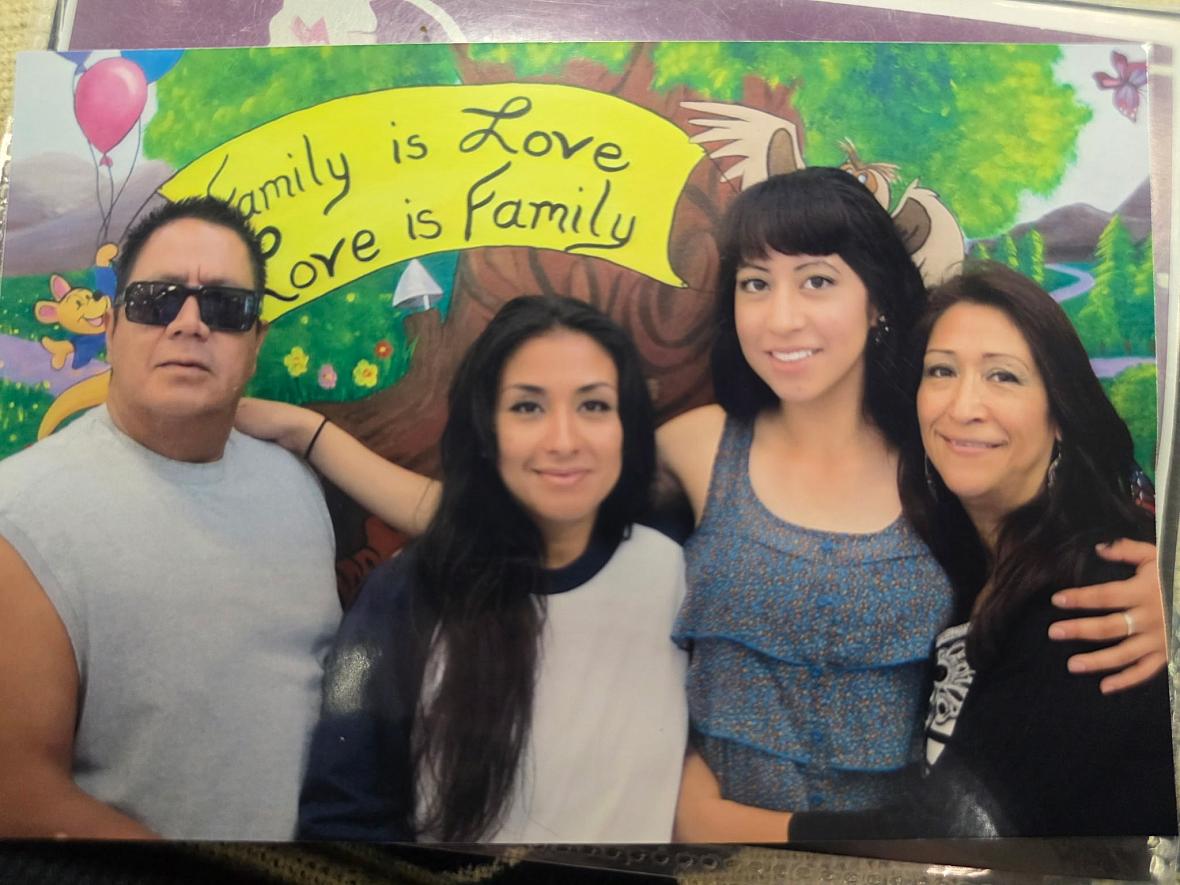
Ursula with her parents and sister in Central California Women’s Facility in Chowchilla, California
Ursula Gomez was incarcerated for 20 years for a crime she says she did not commit. Even after she won the right to a new hearing in 2025, she still faced a looming threat — deportation. Ursula was born in Mexico but left at age 5 to live with her family in Los Angeles, making her a noncitizen.
When she found out she would be transferred to ICE custody, on the day of her release from Central California Women’s Facility, she remembers feeling shocked.
Ursula: “At that moment, I felt horrendous and I was like, ‘Fuck, like this can't be real.’ Like, what? But I also didn’t have a lot of time to wallow because I was going to Fresno State. So I still had to finish, hurry up and finish all of my homework for the semester before they paroled me so that I could pass. The world doesn't stop because I'm in a crisis.”
Ursula says everything happened very quickly. On July 31, 2024 ICE picked her up from Central California Women’s Facility in Chowchilla, California, where she had been held for two decades. They took her to the Northwest ICE Processing Center in Tacoma, Washington.
The detention center is notorious for serving people raw food, rampant sexual abuse, and general failure to adhere to protocol. There, Ursula also continued her habit of keeping up with the news. And over time, she knew her noncitizen status would be a looming issue. So she accepted her deportation, and was dropped off in Nogales, Arizona in 2025.
Ursula: “It has been extremely difficult. I cannot imagine anyone going through this and having to navigate it alone.”
After leaving the prison system, which Ursula describes as violent and unstable, she now faces the nightmare of the immigration system, which she’d been preparing for because she kept up with the news from prison. When she was incarcerated, Ursula had temporary legal residency in the United States. But because she was incarcerated for 20 years, she did not reapply. As such, she decided it’d be best to not fight her immigration case, and accept deportation.
Michelle Pacheco is an immigration advocate for California Coalition for Women Prisoners, a grassroots organization that offers resources and support to incarcerated and detained women in California. She was incarcerated for four years, but now travels to different prisons and detention centers in Southern California to provide information and support to incarcerated Latinas.
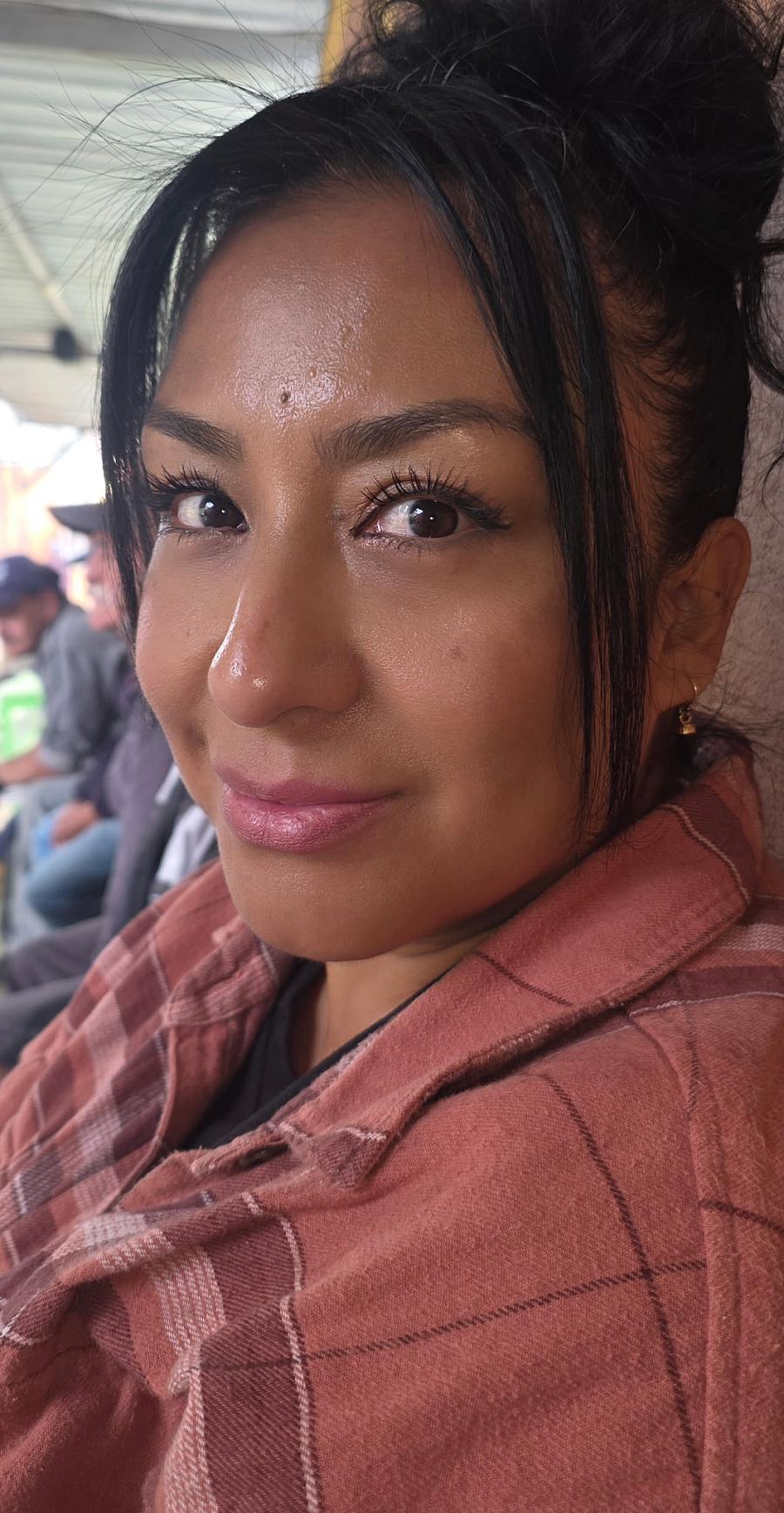
Ursula Gomez was incarcerated for 20 years for a crime she says she did not commit.
In the United States, approximately 190,000 women and girls were incarcerated in 2024, according to Prison Policy. Approximately 19% of those women were Latinas.
Michelle tells me that she has spoken with women who have an ICE hold, a process where immigrants are incarcerated for a couple of days and then transferred to ICE. But there were women who didn't even know what was happening, because of the language barrier and those who detained them, didn't explain it to them.
Michelle: “The counselors that are allegedly there for us, they’re not there to support us or give us information.”
Michelle remembers a routine that they were used to when they would return from criminal court.
Michelle: “They would put like 15 to 50 women in an open garage after court, and you would strip and they would check you. The guards would walk by, they’d stop, talk to someone at the front desk, and they could see you, naked after being in court all day. It was awful.”
In the midst of all different forms of violence, Michelle says Latinas created a sisterhood to support each other.
Michelle: “At the end of the day, it doesn’t matter if someone is in there for killing her husband or for being in a gang, women, especially Latinas, unite and they don’t let others take advantage of you, especially right now, with the way things are going.
When Michelle mentions “the way things are going,” she is referring to the Trump administration’s treatment of immigrants. Ursula’s story is an example of this.
Ursula’s childhood was filled with love and support. But she felt that she couldn’t be her true self. There was an aspect of her identity that ashamed her.
Ursula: “The men in my house, my uncles, my dad, everybody spoke of lesbians like they were the worst thing to be. So that put me in a really difficult situation with myself.”
She says her family, especially her dad, created an oppressive environment.
Ursula: “In my house, whatever my dad said went, he was really prone to anger, he was violent with my mom, really nasty with me and my sister when he was upset. Incredibly strict in the house, especially because we’re two women, we don’t have any brothers, so it was worse.”
So when Ursula was 19, she met Gary, a man 10 years older than her who was a gang member.
Ursula: “I just saw that as an out. A lot of young girls are so flattered that an older man wants to be with you, like it’s something special.”
But soon, the relationship, which she says started out sweet and romantic, changed dramatically.
Ursula: “He ended up being completely the opposite and he was crazy and he was abusive. I couldn't even sleep without him hugging me and he would always have his hand in my hair, holding it so that he could feel when I got up at night.”
One in every five women in the United States, according to Break the Cycle, experience Intimate Partner Violence, a form of mistreatment that involves physical, emotional or mental abuse from a partner.
Shortly after meeting Gary, she found herself in the situation that would lead to her incarceration. Gary, Ursula, and a friend, who was also in the gang, went to visit another friend.
When they entered, Gary took out a gun. Ursula says she suddenly realized that, instead of hanging out with this friend, the plan was to rob him. Gary was shot and killed, while his friend was wounded. Ursula says she was not in the room when the shooting unfolded.
Ursula: “I was aware that I had done nothing wrong to anyone. I was not there with the intention to do anything wrong.”
Ursula was convicted of murder in 2005, but an appeals court overturned that conviction. Rather than face a retrial, she pleaded no contest to voluntary manslaughter and was sentenced to 21 years. She entered the Central California Women’s Facility in 2005.
Even though Ursula felt abandoned by the system, there was a moment that changed her perspective. In 2017, she was watching PBS in the prison and the Eddy Zheng documentary came on. Zheng was a man who was incarcerated at San Quentin for 21 years and also had an immigration case, like Ursula. During his time inside, Zheng connected with churches to generate support for his case.
Ursula: “And so I thought to myself, ‘I could totally do that.’ When I saw that documentary, it really was a life-changing moment. I started making different decisions and things that I did and people I hung out with. And I was like, I cannot be here and straddle the fence on anything I do and ask people to support me.”
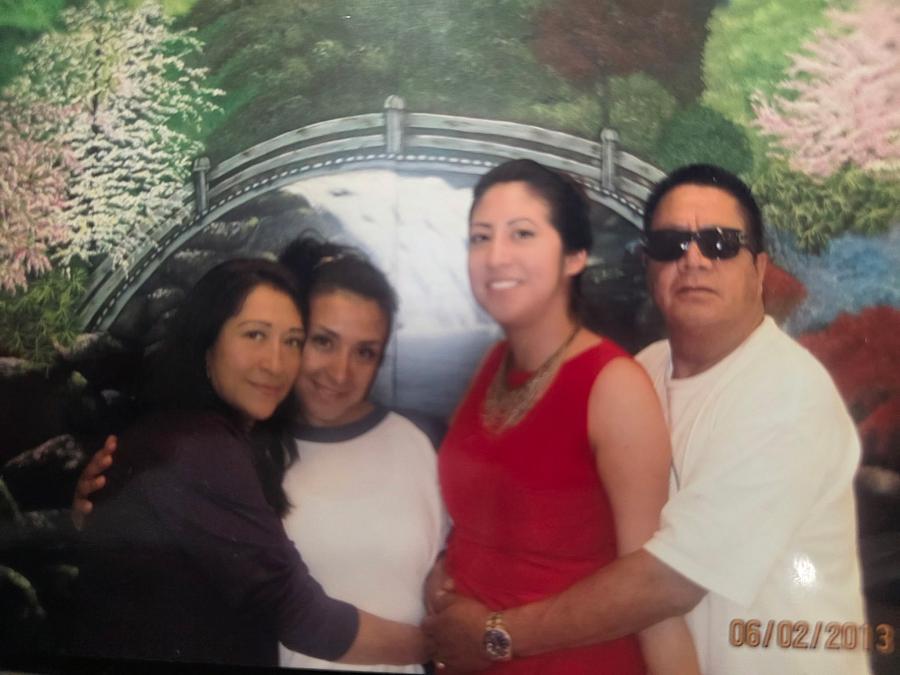
Ursula with her parents and sister in Central California Women’s Facility in Chowchilla, California
That’s when she connected with several organizations, like the California Coalition for Women’s Prisoners and community leaders. She also started reading self-help books and enrolled at Fresno State, studying Interdisciplinary Studies.
In July 2024, she was notified by prison staff that she was going to be picked up by ICE. Her release date, which would have been in August, was moved to late July to accommodate ICE’s policy of not picking people up on the weekends.
Ursula: “I found out where I was going prior to leaving because once you're out of CDCR and in ICE custody, it is extremely hard to find out where people go unless they already have an A number. And most people with an immigration hold do not.”
After finding out where she would be sent, she started to prepare; she connected with her support group and they helped her by fundraising. She also started to fight her immigration case, with the support of her group and a lawyer. Shortly after, she was transferred from Chowchilla, California to the Northwest ICE Processing Center in Tacoma, Washington.
This past year, there have been reports of mistreatment in the detention center; they’ve served people raw food, some have reported being sexually abused, and for years, community leaders and lawyers have said that it is a place of “intense violence.”
During her time there, Ursula said that the abuse she faced inside was so intense that she couldn’t take it any longer. She accepted her deportation to Mexico.
Ursula: “Even though I was born in Mexico, they brought me to the U.S. when I was little, so I’m not used to the culture over here. Having an upbringing in the U.S. and the type of culture is so different.”
In Mexico, she spent a few days at a shelter, speaking with doctors, psychiatrists, and therapists. Also, she was given a card with two thousand pesos on it by the staff. But after a few days, she had to leave the shelter, as is their policy. But she also had to sign a release form.
Ursula: “There are folks that have left and they’ve never been found. People disappear, people who arrive to Mexico after being deported by the United States.
After leaving the shelter, she got on a plane to Playa del Carmen; where she’s been since last year. Adjusting to a new way of living has been extremely difficult. She described the months-long process of receiving her Mexican identification, finding work, and now, moving to Tijuana.
Ursula: “To be closer to the border, to my support group, so people can easily visit me. And hopefully better job opportunities.”
But she’s also still fighting her case. She tells me she’s trying to get all of her charges dropped, which would mean a clean record, but also a return to the United States.
In the final minutes of our conversation, Ursula tells me her plans for the future.
Ursula: “I really want to work towards a space that helps, not like the refugio which was a government thing, but a space that helps people reenter into their community and adapt without having to do it alone because it's not easy.”