The Post-Roe Surprise: More Abortions

The story was originally published in Reveal with support from our 2026 National Fellowship.

Access to medication abortion in the years since Covid and the fall of Roe v. Wade has completely reshaped the abortion access landscape in America.

“There’s this irony that’s actually happened,” says Dr. Angel Foster, an abortion provider and researcher. “Tragically, 33 to 40 percent of women of reproductive age now have less of a right to an abortion. But access for many people has increased.”

Foster is the founder of the Massachusetts Medication Abortion Access Project, a clinic whose work is one major player in why abortions are up. Massachusetts and almost half the states in the US have passed shield laws that legally protect abortion providers. The one Foster operates under allows her to prescribe abortion pills to patients in states with abortion bans. 

And while the battleground may be shifting as medication abortions grow more common, the war is far from over. 

This week on Reveal, we explore post-Roe America through the eyes of three women with three very different missions: Foster, who offers medication abortions nationwide; a courier who risks arrest to stockpile abortion pills for an uncertain future; and a conservative activist whose life’s work is trying to stop them both.

Transcript

Reveal transcripts are produced by a third-party transcription service and may contain errors. Please be aware that the official record for Reveal’s radio stories is the audio.

Al Letson:

From the Center for Investigative Reporting and PRX, this is Reveal. I’m Al Letson. Allow me to introduce you to an exclusive ring of New England Society.  

Sophie Bridges:

You have to know somebody.  

Speaker 3:

You do have to know somebody. Everybody [inaudible 00:00:18].  

Speaker 8:

Wait, really?  

Speaker 3:

Yeah.  

Speaker 6:

It’s really competitive to get into volunteer here. People try to get in, and they’re not accepting because they have so many requests to volunteer.  

Speaker 8:

Somebody that I [inaudible 00:00:27].  

Al Letson:

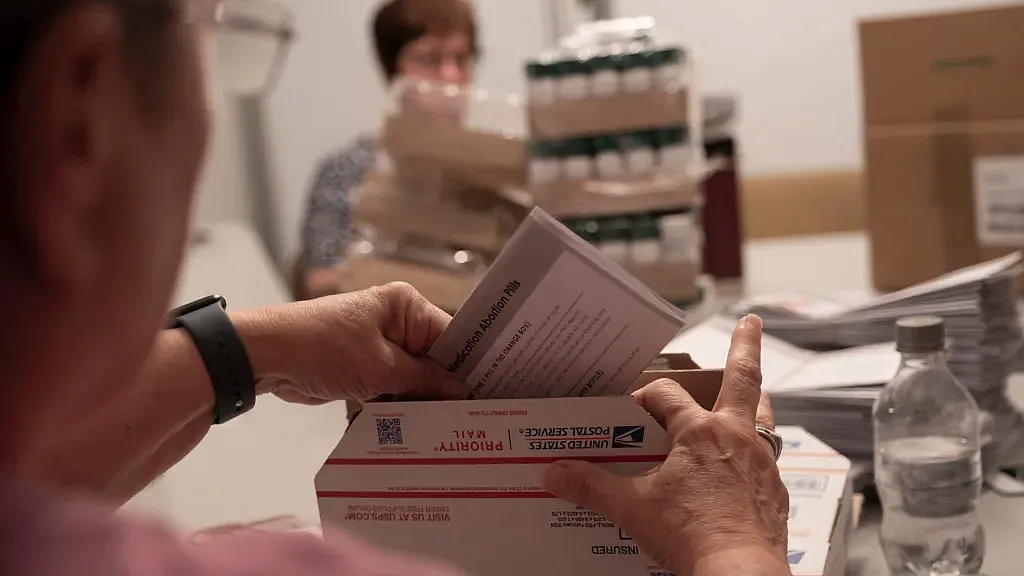
If you do know somebody, and you get off the waiting list, you’ll be invited to a nondescript office space for an afternoon shift. You’ll sit on the couch, squeeze between boxes of supplies, and get to work.  

Sophie Bridges:

What are you guys up to right now?  

Angel Foster:

We are writing cards. It says, “We wish you the best, MAP,” and that’s on the back of the MAP card.  

Speaker 6:

And they get included with the packets.  

Al Letson:

Those packets are shipments of pills, doses of two drugs that are the gold standard for medication abortion. And they’re coming from the MAP, the Massachusetts Medication Abortion Access Project. After the fall of Roe v. Wade in 2022, people on both sides of the abortion debate expected the number of abortions to plummet. But in the years since, there’s been a twist. The number of abortions nationwide is up. And one of the key players making it happen is The MAP. This hour, we’ll be following how the way people get abortions has shifted, how that’s put opponents on the defensive, and how underground activists are working to future-proof access. Reporter Nina Martin and producer Sophie Bridges went to the Boston area to visit The MAP. They start on the street outside where they think the offices are.  

Nina Martin:

So let’s try to figure out how to get in.  

Sophie Bridges:

Should we try alleyway?  

Nina Martin:

Yes, let’s try the alleyway.  

Sophie Bridges:

I do think everybody is idling because they’re here for the weed shop.  

Nina Martin:

My producer Sophie and I are standing in front of the address we’ve been given for The MAP. But what we see is a weed shop. It has honestly a little bit of a jail-like quality.  

Sophie Bridges:

This can’t be right.  

Nina Martin:

Okay. We knew that one of the country’s major abortion providers would want to fly under the radar, but not like this.  

Sophie Bridges:

Well, we really do go in through the weed shop. That’s crazy.  

Nina Martin:

We soon learned that sharing a building with a dispensary is actually very intentional. It lets the map piggyback on some of their security features. It’s just one of the careful choices plotted out by the woman we are here to see, Dr. Angel Foster, a professor of medication abortion studies at the University of Ottawa, and the co-founder of The MAP.  

Angel Foster:

So welcome to our office. This is where 3,000 to 3,500 abortions take place each month.  

Nina Martin:

When Angel says up to 3,500 abortions take place here, she’s not talking about patients coming in. There’s no waiting room, no exam table, no ultrasound machine. What there is is about a half a million dollars worth of the abortion drug mifepristone stacked up to the ceiling in little orange boxes.  

Angel Foster:

I mean, this is effectively a stockpile, because probably in this office right now, we have about three months for our patients of medication on hand. And we do have another shipment that will come in in the next couple of days to give us another cushion.  

Nina Martin:

Mifepristone was patented by French scientists in the 1980s, specifically as an abortion drug. Mifepristone stops a pregnancy from continuing to develop. But it wasn’t effective enough on its own. So there’s another drug that’s used with it, Misoprostol. It was developed as an ulcer medication, but it also causes uterine contractions. And in the ’80s, in some countries, it was sold over the counter.  

Angel Foster:

Here, you’ve got this medicine that’s available in pharmacies all around the world that has a black box warning on it that says, “Don’t take this pill if you’re pregnant because it’ll cause an abortion.”  

Nina Martin:

In Brazil, where abortion was heavily criminalized, women who didn’t want to be pregnant thought, huh. They started taking the drug and telling their friends about it.  

Angel Foster:

And so it was really women in Brazil and then a number of other countries over time that kind of alerted researchers to the idea that there was this drug that was kind of magic, right? It did this thing that it wasn’t created for, but was really effective.  

Nina Martin:

That magic drug shifted the framing for global health researchers. Even in countries where legalizing abortion was off the table, people could have safe, private abortions at home just using Misoprostol.  

Angel Foster:

That doesn’t mean we shouldn’t fight for legal abortion care. But with pills, you could circumvent that. And that’s an amazing story around access.  

Nina Martin:

By the early 2000s, Angel was becoming one of those researchers herself, following an interest that started when she was very young.  

Angel Foster:

When I was 10, my mom sort of sat me down and explained to me why she was so supportive of abortion rights.  

Nina Martin:

In the ’60s, Angel’s mom was a college student trying to get an abortion when it was still mostly illegal in the US. So she did what a lot of people did at the time, cobble together $300, almost $3,000 in today’s money, and crossed the border into Mexico.  

Angel Foster:

And it was so common for American women to come to get their abortions and be carrying cash that she was robbed at knife point. And so she had to go back to the US, she had to sell more things and borrow more money to get another $300 to come back and to be able to get the abortion.  

Nina Martin:

The abortion went fine, and Angel’s mom was able to continue her studies. But the financial pressure and the violent robbery traumatized her.  

Angel Foster:

I mean, my mom was the most important person to me as a 10-year-old. And so when I heard this, I was like, “I want to be an abortion provider so that nobody has to go through what my mom went through.” And so I’m in middle school and people are asking, “What do you want to be when you grow up?” And I’m like, “I want to be an abortion provider.” And you’ve got parents who are like, “Wait, what?”  

Nina Martin:

Angel stuck to it. She went to medical school and started traveling the world, helping patients from Thailand to the West Bank get access to abortion pills. But her most ambitious project would happen back home in the US, after the Supreme Court overturned Roe v. Wade in 2022. Abortion advocates were predicting that when states started banning abortion, most people would end up carrying unwanted pregnancies to term. Pregnancy’s risky, and in the US, it’s especially risky for black women. The advocates predicted that many more women, most of them black, would die.  

Angel Foster:

And it was devastating to think about. And the question was, what can we do as a movement and community to change those numbers?  

Nina Martin:

Part of the answer was already right in front of them. Back during the height of COVID, the FDA was forced to allow doctors to prescribe mifepristone remotely. That paved the way for abortion pills by mail. Then when the Dobbs decision overturned Roe, it became clear that patients in states with bans would lean on providers from out of state to get care. The question was how to protect those providers from the legal reach of anti-abortion states? A trio of law professors came up with a solution, shield laws. The basic idea is that a state pledges to protect doctors, staff, and anyone helping with an abortion in their state, even if the patient is from a state with an abortion ban. Almost half the states in the US have passed some type of a shield law since Roe was overturned, and eight of them explicitly apply to telemedicine.  

Angel Foster:

We’re coming up on three years since people have been operating under the shield laws and practicing under shield laws, and they’re working. I mean, they’re doing exactly what they’re supposed to do.  

Nina Martin:

Under shield laws, the governors of California and New York have refused to extradite abortion providers to Louisiana, for example. And together, shield laws in telemedicine have allowed an expansion of abortion access that has taken even Angel by surprise.  

Angel Foster:

The idea that after these bans, we actually have an increase in the number of abortions was a thing that wasn’t on my bingo card.  

Nina Martin:

In Texas, abortions are up almost 30% since 2022. In Mississippi, it’s a ginormous 85%.  

Angel Foster:

So when we look at Mississippi, I think it’s such a great case study in both kind of what the reality was under Roe and then what’s happened post-Dobbs.  

Nina Martin:

Before Dobbs, there was only one abortion clinic in the entire state, and the laws required multiple visits. The pills alone averaged $600.  

Angel Foster:

And right now, a Mississippian can go and order pills from our service and get an abortion through the formal healthcare system that’s clinician supported, and they can do that for $5. And if they can’t afford the $5, we will waive the $5.  

Nina Martin:

The MAP can afford to do that because they have a lot of support from donors and from that very long list of volunteers, plus the legal backing of the state of Massachusetts. By this summer, The MAP was sending out almost twice as many packages as when we went to visit in the spring, more than 6,000 a month, most for immediate use, some to stash away for the future. Of course, there are some limitations. Doctors generally can’t prescribe pills more than 12 weeks into a pregnancy. In many states, they can’t prescribe to minors without parental consent. Some people don’t know they could get abortion pills in the mail or they’re afraid to. And some will still prefer to go to a clinic or need in-person care. Still, telemedicine now accounts for 30% of abortions in the US, and that number keeps growing. Angel says the broader transformation of the abortion landscape happened precisely because the Dobbs decision was so sweeping. Eliminating abortion rights across so many parts of the country forced the abortion access movement to innovate.  

Angel Foster:

So there’s this irony that’s actually happened, which is that tragically, 33 to 40% of women of reproductive age now have less of a right to an abortion, but access for many people has increased.  

Nina Martin:

As a researcher, the divide between rights and access has always been a challenge for Angel. As a provider, she sees it as an opportunity.  

Angel Foster:

If abortion care has to be separate, then let’s try to make it more like what it is that we would like all healthcare to be.  

Nina Martin:

Again, this took Angel by surprise, which made me wonder, how are the anti-abortion folks responding to what she’d helped build? How much of this is not what they were expecting either?  

Angel Foster:

Hard for me to know because I’m not an anti and I don’t really run in those circles, but it is very clear that they are preoccupied with trying to figure out a way to either re-regulate or to ban mifepristone and to ban telemedicine as a way of trying to change this dynamic.  

Nina Martin:

In fact, on the day we visited The MAP, the state of Louisiana asked a federal appeals court to block the FDA rules that allow patients to get mifepristone via telemedicine. A few weeks later, the Supreme Court stepped in and allowed prescriptions to keep going for now.  

Angel Foster:

Even if mifepristone became banned, medication abortion is here to stay. If it’s not mifepristone, it’ll be misoprostol alone. That’s not going to change.  

Nina Martin:

Remember, misoprostol is the drug Brazilian women figured out worked for abortion all by itself. Lots of people around the world use it this way, and The MAP will pivot to misoprostol-only abortions if it has to.  

Angel Foster:

I think for them at this point with medication abortion pills, it’s really kind of a whack-a-mole situation.  

Nina Martin:

Angel says The MAP will keep operating unless they’re forced not to. But that comes with some personal sacrifices. In the early days of shield laws, a bunch of providers were talking about their work publicly. Now, Angel is one of the only ones. And despite the protection of the Massachusetts Shield Law, she tries to minimize her legal risk because it only protects her in the state, she doesn’t drive outside of it. She can fly around the world, like to see her husband’s family in the Netherlands, but she won’t travel to any state with an abortion ban.  

Angel Foster:

And so South Carolina is a pretty hostile state.  

Nina Martin:

And that’s a problem because Angel’s mom, who inspired her lifelong commitment to abortion access, lives in South Carolina.  

Angel Foster:

My mother-in-law died last year. And I actually was able to fly out and we were all there together with her on her last day. It was very hard and sad, and also really beautiful at the same time. And it was exactly the death experience that she wanted, and I’m so grateful to have been a part of that. And when my husband and I were leaving, he was like, “How do you feel about the fact that if this was your mom, we wouldn’t be able to do this?” And it was really hard to absorb.  

Nina Martin:

And yet, Angel remains radically committed to this work. She spends her days approving new patients, managing her team, and raising money. In her free time, she reads lawsuits against other shield law providers. So why haven’t you been? Why them and not you?  

Angel Foster:

I mean, it’s hard for me to know, but it also could be a matter of when. We haven’t been sued yet. We haven’t faced any criminal charges yet. I don’t know.  

Al Letson:

That story was brought to us by reporter Nina Martin. The MAP is now one of the largest telemedicine abortion providers in the US. And even if they haven’t been sued yet, they’ve attracted the attention of anti-abortion leaders. While Nina and Sophie were in The MAP’s offices, they spotted a pink post-it notes with the name of two prominent anti-abortion activists.  

Sophie Bridges:

I wanted to ask about a post-it note that says, “If these two people call, contact Angel immediately. Don’t send anything to them.”  

Angel Foster:

Kristan Hawkins and Lydia Taylor Davis.  

Al Letson:

Up next, we meet Kristan Hawkins, the anti-abortion activist trying to make The MAP’s work unthinkable. Stay with us.  

Al Letson:

From the Center for Investigative Reporting and PRX, this is Reveal. I’m Al Letson. It’s a warm, sunny day outside the student center at Texas Tech. Students are lining up for their chance to meet a conservative celebrity, Kristan Hawkins.  

Speaker 2:

I follow her on all social media. I’ve been waiting for this since it was announced. She, I think, is doing the Lord’s work in trying to bring awareness to this and change people’s minds about it.  

Al Letson:

Kristan is the president of Students for Life, one of the most well-funded anti-abortion organizations in the country. Students for Life has groups across middle school, high school, and college campuses. Kristan’s been running it for the last 20 years, since she was fresh out of college herself. Young people have been the core of her movement.  

Speaker 3:

In my mind, she’s the Charlie Kirk of abortion.  

Al Letson:

Kristan’s standing in front of a banner that says “Abortion is human sacrifice. Change my mind.” Kristan was friends with Charlie Kirk, the late conservative activist who made the “Change my mind” format famous. And that’s what she’s here to do today: debate students, many liberal, a lot of them men.  

Kristan Hawkins:

All right, next question. Thank you.  

Speaker 5:

Thank you.  

Al Letson:

A brave few step to the microphone. One is a guy in his late teens or early twenties. He’s clutching a plastic water bottle and looks not totally sure how he ended up here. Kristan is debating him on whether abortion is acceptable in cases of rape.  

Speaker 6:

Basically, I think that rape-related abortion, I think it’s morally permissible.  

Kristan Hawkins:

I would say, sir, you have demonstrated an illogical position.  

Al Letson:

Some of these exchanges will get chopped up into social media clips. The back and forth with that guy becomes a video called “Student stumped by pro-life question”.  

Kristan Hawkins:

So I have a friend, Ryan, who was conceived in rape. Can I go and shoot Ryan today?  

Speaker 6:

No.  

Kristan Hawkins:

Why?  

Speaker 6:

Because everyone’s human, but that’s a good question, though.  

Al Letson:

Kristan shares these videos online to an audience of over a million followers, whom she often addresses as the pro-life generation.  

Kristan Hawkins:

Hey, pro-life gen. So I’ve been on nonstop calls since…  

Hey pro-life gen. I’m on Capitol Hill…  

Hey, pro life gen. I have got some not great updates to share…  

In order to end abortion, here are the things we need to do. We have to change minds. We have to build up the army. We have to transform our culture.  

Al Letson:

That’s the future Kristan is trying to build; one where abortion is not just inaccessible, but unthinkable. The fall of Roe v. Wade should have been a huge step in that direction, but instead young people became more supportive of abortion than ever before. And as you heard before the break, since 2022, abortions are actually up thanks, largely to wider access to abortion pills by mail. So Kristan began focusing her attention and her content on new ways to stop medication abortion. Reporter Amy Littlefield has spent years covering architects of the anti-abortion movement, and she’s been up close and personal with Kristan as she toured the country this spring. Here’s Amy.  

Amy Littlefield:

Okay, Kristan, I have a bone to pick with you.  

Kristan Hawkins:

Okay.  

Amy Littlefield:

I had one of these at the airport yesterday because you said I would like it, or you said you liked it.  

Kristan Hawkins:

Yeah.  

Amy Littlefield:

I’m in a coffee shop with Kristan the first day of following her around. Kristan, it turns out, doesn’t drink coffee. She prefers the energy drink Celsius. I was trying to understand Kristan on a deeper level, so I thought I better try it.  

So sweet. Do you like-  

Kristan Hawkins:

I do like. I like sweet stuff.  

Amy Littlefield:

For the uninitiated, Celsius is a fitness drink. Zero sugar, high in caffeine, marketed as a way to boost metabolism and burn fat.  

Kristan Hawkins:

No, no. It has tons of vitamins in because my pee is bright yellow.  

Amy Littlefield:

Why am I so interested in what Kristan is drinking? Because she has infamously claimed people who have medication abortions are contaminating the water supply with abortion pills and fetal remains.  

Okay, but what’s the water source? Is there abortion medication in the water that they’re using to make these drinks?  

Kristan Hawkins:

Amy, that is a question. That’s why I won’t drink tap water.  

Amy Littlefield:

Do you actually not drink tap water?  

Kristan Hawkins:

Rarely. I have to be really desperate if you get me to drink tap water.  

Amy Littlefield:

Kristan first started talking about abortion pills in the water years ago. And around that time, scientists started resoundingly refuting it. Since then, her efforts have inspired a slew of state and federal bills that would require doctors to give people who have medication abortion special catch kits to collect their blood and tissue. Trump’s EPA has even recommended that states start testing water for abortion pills. This is one of Kristan’s more creative attempts to undermine medication abortion access. I was about to witness another one: the Students for Life sting operation. We’re in the parking lot of NASA’s Lyndon B. Johnson Space Center in Houston. Kristan stands with her social media coordinator and protege, Lydia Taylor Davis.  

Kristan Hawkins:

Are we allowed to film?  

Lydia Taylor Da…:

Better to ask for forgiveness than permission, sometimes.  

Amy Littlefield:

The video they’re making will show Lydia and Kristan ordering abortion pills online. They’ve chosen this iconic Texas landmark as their backdrop, to make it clear they’re ordering from Texas. Abortion is banned here, but thanks in large part to telemedicine and shield laws, the number of abortions in the state is actually up.  

Lydia Taylor Da…:

I don’t know which one that was. There’s so many websites.  

Amy Littlefield:

Do you guys worry that you’re unintentionally showing people how easy it is to abortion pills?  

Kristan Hawkins:

Yeah, that’s why I’m hesitant on doing this with you.  

Lydia Taylor Da…:

So we don’t promote the actual websites.  

Amy Littlefield:

Kristan and Lydia will be ordering pills from an abortion provider you’ve already met this hour: the Massachusetts Medication Abortion Access Project, or The MAP; a telemedicine practice run by Dr. Angel Foster.  

Kristan Hawkins:

Tell me again. I’ll just start. I don’t need a script.  

Lydia Taylor Da…:

So start saying, “I’m Kristan Hawkins, President of Students for Life.” And you’re going to say, “We’re about to order abortion pills into Texas to prove how dangerous they are.”  

Kristan Hawkins:

Hey everyone. I’m Kristan Hawkins, President of Students for Life, and today we are in Houston, Texas, and we’re going to show you how tragically easy it is to order illegal chemical abortion pills into this pro-life state.  

Amy Littlefield:

This PR stunt, as Kristan describes it, is partly to encourage state and federal lawmakers to crack down on the flow of abortion pills into states like Texas. Kristan had told me they planned to use the stunt to sue the providers. By the time we got to Texas, though, they’d scrapped that idea. But why throw away a chance to order abortion pills in front of the Space Center?  

Kristan Hawkins:

Hold on. You have to go to “Abortion pills”, “Search by state”, then I search “Texas”.  

Security guard:

Good morning. How are y’all doing?  

Amy Littlefield:

A security guard walks up to tell the crew they’re not allowed to film here.  

Kristan Hawkins:

This one? MAP?  

Lydia Taylor Da…:

Yes, that one.  

Security guard:

No, this is not private property. On the street it’s private property.  

Lydia Taylor Da…:

It’s Massachusetts.  

Amy Littlefield:

The whole operation has to move, through the parking lot and out onto the main road. Kristan submits her order request.  

Speaker 3:

I think this is probably good right here.  

Kristan Hawkins:

How’s the sound?  

Speaker 3:

Just wrap it up. It’s loud. And then just say something about how this is dangerous.  

Amy Littlefield:

Kristan and Lydia call abortion pills dangerous a lot in their content, even though medication abortion has a long safety track record and has been widely used here for over 25 years.  

Kristan Hawkins:

So to wrap up, we just ordered chemical abortion pills, which are illegal in the state of Texas, here in Houston, Texas [inaudible 00:07:57].  

Amy Littlefield:

Earlier in the show, you heard my colleagues Nina Martin and Sophie Bridges visiting The MAP’s offices. They noticed a Post-it note warning staff not to accept any orders from Kristan or Lydia.  

Speaker 10:

I wanted to ask about a Post-it note that says if these two people call, contact Angel immediately. Don’t send anything to them.  

Speaker 11:

Yeah, Kristan Hawkins and Lydia Taylor Davis. Students for Life posted on their social media, I think it was on Instagram…  

Amy Littlefield:

Students for Life had advertised the sting operation on social media, and an abortion rights group had tipped The MAP off. So when Lydia tried to put it in an order using her real name, The MAP blocked it. Kristan used the fake name Wanda, but she accidentally put her age as 15, too young for The MAP. So her order got rejected, too. We asked Dr. Angel Foster what happened.  

Angel Foster:

So we did get a request from somebody named Wanda Hawkins, but because she identified her age as 15, we were not able to care for her.  

Amy Littlefield:

I was curious what Kristan and her team would do with this footage, so I watched their social media for months. They never posted it. When I asked why, they told me it was because of the technical difficulty. I’ve been following Kristan Hawkins for a long time in my reporting because she seems to be the anti-abortion movement’s best shot at winning over young women, who are overwhelmingly pro-abortion rights. She has the ear of top Republicans, a flare for wild schemes, and she’s a woman who’s good at making herself look sympathetic by dunking on men across the political spectrum. But what is the future Kristan Hawkins actually wants young people to accept? It’s clearly one where abortion is illegal. I wanted to hear what else.  

In your ideal world, would these things be legal? Yes or no? So we’ll start with the easy one: abortion.  

Kristan Hawkins:

No.  

Amy Littlefield:

Contraception.  

Kristan Hawkins:

I think it depends on the contraception.  

Amy Littlefield:

IUDs.  

Kristan Hawkins:

No.  

Amy Littlefield:

As for birth control pills, Kristan won’t answer yes or no. Instead, she says we need a serious study to find out if they cause abortions. It’s worth mentioning there have been several decades worth of studies on the pill, plenty of them quite serious; and the science is clear. It doesn’t cause abortions. Okay, back to the lightning round. Does Kristan think these things should be legal?  

IVF.  

Kristan Hawkins:

No.  

Amy Littlefield:

What about surrogacy?  

Kristan Hawkins:

Absolutely not.  

Amy Littlefield:

Same-sex adoption.  

Kristan Hawkins:

I don’t mind it. I think it’s not ideal.  

Amy Littlefield:

Same-sex marriage.  

Kristan Hawkins:

I have a nuanced view on it. I do have a problem saying it’s marriage and that my church should be forced to host a gay wedding.  

Amy Littlefield:

When Kristan talks about banning methods of birth control that are used by millions of people, it’s easy to feel like she’s on the far right fringe. But what really got me interested in spending time with her right now was a group of people who are even further out there; so far, they were once out of the frame. These guys.  

T. Russell Hunt…:

Abolitionism is the biblical approach to fighting abortion. It starts with, okay, what is abortion? It’s murder. You’ve got a constant biblical teaching that there is a way that God wants cultures to deal with murder.  

Amy Littlefield:

That’s T. Russell Hunter, the founder of Abolitionists Rising. Abolitionists believe people who have abortions should be charged with murder. Some even think they should be put to death. And yes, they are intentionally co-opting the name of the anti-slavery cause. Abortion restrictions in the US tend to focus on punishing providers, not patients, but people are getting abortion pills anyway. So there’s growing momentum behind state legislation that would go after the person getting the abortion. It’s a major question dividing the anti-abortion movement right now. Do you or do you not arrest a significant portion of the nation’s population? Abolitionists have become a regular presence at Kristan’s campus events, like this one at UC Berkeley.  

Speaker 14:

Can you give me the decency to call me a misogynist to my face? You get paid $320,000 a year and you won’t answer questions.  

Amy Littlefield:

That day, some young women stopped to watch the spectacle.  

Kristan Hawkins:

There was a couple girls that actually took the AirPods out of their ears and normally probably would not have stopped by our table or just thrown me the middle finger and kept walking, who felt sympathy that these guys were screaming my salary out on the quad, who then I said, “Yeah, we actually agree on 99% of things. We disagree on this one thing. And by the way, they don’t like me because I’m a woman.”  

Amy Littlefield:

Kristan’s well aware that at least in some circles, these Abolitionists are actually making her more sympathetic.  

Kristan Hawkins:

I joked to the staff that day, I was like, “Huh, maybe we should just make an anonymous donation to these crazy people because they’ll attract more liberal students to the table to have the conversations that we want to have.” But yeah, no, I’m not paying them money to be insane. But I have joked about it.  

Amy Littlefield:

I’ve got to admit, when I watch Kristan face off with The Abolitionists, I can’t help but root for her. But how much does she actually disagree with them? In April, Kristan endorsed a proposed South Carolina abortion ban that included criminal penalties for people who get abortions. She says she supported the bill because she knew that part would eventually be stripped out.  

So this isn’t Kristan Hawkins moving further to the right because of pressure from The Abolitionist?  

Kristan Hawkins:

No, it was, I’m sick of… I didn’t want the abolition part of the bill, which we know is going to get stripped out, to be the main focus.  

Amy Littlefield:

Either way, the bill didn’t pass. Kristan has told me that she doesn’t want to prosecute people who have abortions, at least not now. Her reasoning in part is that it would create a huge backlash.  

Kristan Hawkins:

I’ve always been very clear that this is not a conversation for now. And at some point, criminalization for everyone could be on the table. I don’t think it’s in my lifetime, for sure, because culture is not there. And we still have 50 plus years of telling women that what is inside of her is nothing but a meaningless clump of cells.  

Amy Littlefield:

So how much does the culture have to change before you criminalize women? Is 50% against abortion enough?  

Kristan Hawkins:

I don’t think 50% would… No, but I don’t know when that would be.  

Amy Littlefield:

75%, 80%?  

Kristan Hawkins:

I have no idea. I think we’ll know it when we see it.  

Amy Littlefield:

Here’s why I’m so interested in pushing Kristan to really define her stance. As medication abortion access grows, The Abolitionists gain ground, and they’re helping Kristan gain ground, too. They’ve moved the frame so far to the right, they’ve made Kristan look like the new center in the anti-abortion movement; a center that might be okay, someday, with criminal charges for people who have abortions.  

A month and a half later, Kristan is back on the road. And so I am too. This time to Washington DC for another PR stunt at the Department of Justice.  

Kristan Hawkins:

Are you ready? Go [inaudible 00:15:43] get wet.  

Speaker 15:

Hey students, we want everyone-  

Kristan Hawkins:

God [inaudible 00:15:47] abolished abortion.  

Speaker 15:

Come back here with your signs.  

Amy Littlefield:

It’s pouring rain. Kristan’s team has set up a makeshift podium with the Students for Life sign. Everyone and everything is getting drenched. Behind Kristan are eight college students shoulder-to-shoulder, holding signs that say “Enforce Comstock”. Across the street, someone starts up a leaf blower.  

Kristan Hawkins:

I need to shout because he’s loud.  

Speaker 16:

The sounds amazing. You can just talk normal.  

Kristan Hawkins:

Hey pride gen, it’s Kristan Hawkins, president of Students Life Action. And we are out here in the rain in Washington DC in front of the US Department of Justice, because we are done waiting for the federal government to enforce the Comstock Act. This is a law…  

Amy Littlefield:

Kristan has been pushing the Trump administration to enforce the Comstock Act. That’s an 1873 anti-vice law that banned mailing abortion drugs or devices. It’s named for Anthony Comstock, a postal inspector who wanted to purge the mail of anything he found obscene; from pornographic drawings to birth control to anything used in an abortion. The abortion part hasn’t been enforced in decades, but it’s still on the books. Like criminalizing abortion seekers, reviving Comstock is another extreme strategy trying to meet the reality of expanded abortion pill access. It could be interpreted to apply to any supplies abortion providers use. And so it could effectively ban abortion in every state.  

Kristan Hawkins:

This is good, common sense. We do not need permission to act. We do not need a new bill in Congress. We just need the Trump administration and its Department of Justice to enforce the rule of law. Thank you for tuning in right now.  

Amy Littlefield:

Kristan heads into the Department of Justice. She said she was meeting with officials there to push them to consider a Comstock revival. A couple of months later, Trump’s Attorney General pick was asked in his confirmation hearing if he would review options to enforce Comstock. He said yes.  

Kristan Hawkins:

Okay, so we have a lot to talk about. I have a couple crazy things that have been happening. There is no singular, ordinary day serving in the pro-life movement. And it is so hard because you have these massive wins, and then you have these deeply personal losses. And I think anyone who starts a Students for Life group, who joins us in the pro-life generation, knows this and has personally felt this. I want to talk about that a little bit. Maybe you’ll commiserate with me. So let me start…  

Amy Littlefield:

Kristan, she’s still out there trying to sway the opinions of a public that largely supports abortion rights, by debating on campuses, posting social media videos, and claiming we’re drinking other people’s abortions. But if Kristan gets her Comstock wish, changing minds might not matter. A nationwide abortion ban could be coming, whether the public wants it or not.  

Al Letson:

That story was reported by Amy Littlefield. You can read more of Amy’s reporting in her book, Killers of Roe: My Investigation Into the Mysterious Death of Abortion Rights. Even if abortions were banned across the country, there will always be people who need them, and there are folks who are willing to go beyond the law to make sure they can get them.  

Speaker 17:

I am a sweaty girl. So the first meetup, I was sweating pretty profusely.  

Al Letson:

We meet an activist trying to help future-proof abortion access. That’s next on Reveal.  

Al Letson:

From the Center for Investigative Reporting and PRX, this is Reveal. I’m Al Letson.  

Judith Arcana:

In the early summer of 1970, I thought I was pregnant.  

Al Letson:

This is writer, teacher, and activist Judith Arcana. In 1970, she didn’t want to be pregnant, but she was living in Illinois where, like most of the U.S., abortion was illegal.  

Judith Arcana:

I called a friend of mine who was a medical student, and he said, “Everybody here says call this number and ask for Jane.”  

Al Letson:

So she did. The woman she spoke to wasn’t really named Jane. She was a part of an underground network of women in Chicago who helped people get abortions in the years before Roe v. Wade. Today, they’re widely known as the Jane Collective after the pseudonym they used over the phone.  

Judith Arcana:

Ultimately, I discovered after a very long time that I was not pregnant and called her back to tell her that, and I was extremely interested in what they were doing. And she said, “Well, we’re taking in new counselors in the fall and I’ll call you.”  

Al Letson:

So Judith became a Jane. The Janes started out as a referral network, fielding phone calls, making appointments, and counseling patients on what to expect. They found a guy they trusted to perform most of the abortions, and eventually he taught them how to do it themselves. While they were active, the Jane Collective helped over 11,000 people have safe abortions. Here’s one of Judith’s collaborators interviewed in the same 1995 documentary, Jane, An Abortion Service.  

Speaker 3:

We wanted to change the system. We wanted to create a reality in which women were in control, and we did.  

Al Letson:

In 1973, after Roe v. Wade protected abortion rights, the Janes disbanded, but their legacy lived on. Fast-forward to early 2022 when Roe was under threat. Reporter Rebecca Grant suspected that the U.S. was about to see a resurrection of Jane-like networks, and she was right, but this time they’d have different tools, the internet and medication. Now, as attacks on abortions escalate, these networks are scaling up too. Here’s Rebecca.  

Rebecca Grant:

When Lena walks into the cafe near the airport, she looks like any other traveler ordering coffee before catching a flight. It’s early, and Lena is tired after a night of tossing and turning, mostly from jet lag, but she’s here for an important meeting, one she can’t miss.  

Lena:

I am a sweaty girl. So the first meetup, I was sweating pretty profusely, but I’m much more comfortable now.  

Rebecca Grant:

This isn’t Lena’s first meeting like this. It doesn’t always happen in a cafe. It could also be another public place, like a hotel lobby, or once a parking garage. But Lena’s been to this cafe before. It’s convenient, and since it’s so close to the airport, there’s nothing weird about walking in with a suitcase. Lena sits at a table and tries to remain incognito. About five minutes later, she spots the person she’s meeting, walking in with their own luggage. They’ve met before.  

Lena:

I’m watching for them. They always come and say hi first.  

Rebecca Grant:

Lena’s not her real name and this isn’t her real voice. We’ve hired an actor to protect her identity because these trips could get her in legal trouble. I also can’t tell you much about her, where she flew from, or where the meeting took place. What I can tell you is Lena is a courier, an activist who helps sneak abortion pills into the U.S. And this meeting is with an abortion pill supplier. Lena is part of a community network that mails abortion pills around the country for free. These networks are listed on some of the same websites as official telehealth providers, but they aren’t run by doctors and they don’t abide by the same regulations. Their goal is to make safe abortions as low barrier as possible, even and especially in states with bans.  

Lena:

I think to sum it up, community networks are not bound by the law, and especially unjust ones. I mean, these laws never stop abortions. They only affect the health and wellness of pregnant people. So we are here to do what we can for those who are turned away from standard medical healthcare.  

Rebecca Grant:

You can’t just bring prescription medication into the U.S. and distribute it without risking arrest, prosecution, and jail time. That’s true for any drug, not just abortion pills, but it’s hard to think of other medications that are as intensely politicized. So when I first started reporting on the modern abortion underground, I was surprised anyone was willing to talk to me.  

In the spring of 2022, I received a message on Signal from a new source. She told me she got her start during COVID when abortion clinics across the country shut down overnight. She had a way to get Misoprostol and took it upon herself to mail the pills to people locally who needed them. At first, it was mostly a one-woman operation. She served a couple of people a month who all found her through word of mouth. But around the time we started talking, when it was clear that abortion rights were on borrowed time, her vision got bigger. She started a recruiting effort, and one of the people who joined up was Lena.  

Lena:

I broke up with my boyfriend. That’s when I started. And I think that that really made a difference where I was like, “I have all of this extra time and energy and feel this purpose to be doing something.” I mean, I always felt like I should be doing more, but you know how boyfriends can be draining.  

Rebecca Grant:

When I first spoke to Lena, it was 2023, and she was not a courier yet. Her first job with the community network was as a mailer, a person who packages and ships the medication to people who need it. Over time, she proved she was trustworthy and was invited to take on more responsibilities.  

Lena:

It was a small group of us at a table, a very intimate conversation going into pretty full detail about what couriering would require. And it took a little bit of consideration and a little bit of thinking about what you would do if something went wrong and coming up with kind of a story if you were to get asked questions in the process. And then from there, it was a pretty easy decision.  

Rebecca Grant:

Lena is well aware of the risks and sees herself as well positioned to take them on. Some people in the network have partners, kids, important jobs, elderly parents they care for.  

Lena:

I would rather be the one taking the risk where I don’t have as much to lose as many other folks. That’s a big factor.  

Rebecca Grant:

In the early days, when the networks were just getting off the ground, they connected with a prominent and very public abortion activist in Mexico named Veronica Cruz Sanchez or Vero, who offered to share medication from her own supplies. All the network had to do was pick up the pills and bring them back across the border. And they did, hidden in decoy prescription and over-the-counter pill bottles. But when demand for pills surged in the months after the fall of Roe, the networks couldn’t rely on Vero’s reserves anymore. They had to establish supply chains of their own.  

And because they aren’t doctors and nurses writing prescriptions, it’s not like they can source from FDA regulated pharmacies. So they turned to India where most of the world’s generic drugs are manufactured, and there was no shortage of pharmaceutical entrepreneurs willing to sell both mifepristone and misoprostol, what’s considered the gold standard for medication abortion?  

Lena:

The drugs are high quality generic pills. They’re carefully packaged and an excellent price.  

Rebecca Grant:

So it turned out that the challenge wasn’t sourcing the medication. That was surprisingly easy. The real issue was getting it into the U.S. The networks have experimented with a few different approaches like international shipping, but it tends to be slow and expensive, and they’ve had packages get confiscated by customs. Smaller quantities get through okay, but limit how many people they can serve.  

Lena:

So we luckily were able to find this workaround.  

Rebecca Grant:

The workaround is Lena and other couriers, people willing to fly abroad and pick up the pills in person. Believe it or not, it winds up being cheaper, even with the expense of international travel. And as a courier, Lena can hide in plain sight, another anonymous traveler in a sea of millions. The more trips she takes, the more dialed in her travel routines get. She’s invested in more durable luggage, so she never has to worry about her stuff getting wet or smushed. She packs lighter than she used to, and she always parks in the same place at the airport, so she’s not anxious about finding her car later. She even has specific music she listens to settle her nerves.  

Lena:

I’m going to out myself, I’m a Swiftie, so I do have particular poppy song playlists of hers.  

Rebecca Grant:

A lot goes into these trips and a lot is riding on them. But for all the planning and high stakes, the meeting at the cafe on Lena’s recent trip is quick and easy, uneventful.  

Lena:

I usually empty one of my suitcases and bring that with. The supplier will go into the bathroom and do the transfer into my suitcase that way.  

Rebecca Grant:

It only takes a couple of minutes, and then they hang out and talk.  

Lena:

Most of the time it’s almost like we could be medical people discussing innovations and research.  

Rebecca Grant:

Right. You could just be two people on a normal business trip type thing.  

Lena:

Yes, hopefully. Hopefully that’s what it looks like.  

Rebecca Grant:

Has anyone ever seemed too interested?  

Lena:

No, but at one point there was a technician working on something in the same room, and that made me uncomfortable. Is this their cover, that they’re a technician? But that was just the unwarranted paranoia creeping in.  

Rebecca Grant:

The meetings can be anywhere from 45 seconds to two hours. Her usual contact is a good talker and will linger if they don’t have another appointment to get to. And Lena savors their conversations because of the sense of freedom she feels.  

Lena:

It is nice to nerd out in safe places with safe people because no one in my real life knows what I do.  

Rebecca Grant:

Community activists practice strict operational security. They use aliases even when talking to each other, which they only do on encrypted channels. The same goes for their conversations with me. And the different roles like mailers and couriers are kept separate. That way, if someone in one role gets caught, the entire network doesn’t have to shut down. And no one Lena knows has been caught yet.  

Lena:

I don’t want to say anything that will jinx us. That’s why I’m not going to say what I want to say, but it’s been very successful so far, and we are hoping it continues to be.  

Rebecca Grant:

Before her return flight, Lena runs through rituals to help her stay calm. She mentally reviews her backstory for why she’s traveling in case anyone asks. And she does an exercise a therapist’s friend recommended where she visualizes herself arriving home with no issues. When she actually lands in the U.S., that’s when the anxiety really sets in. Because if she’s going to be caught, this is probably when it would happen. That’s why she describes this part of the journey as moving through steps of relief.  

Lena:

I get off the plane and there’s no one waiting to take me into questioning, and that’s a bit of relief. And then I go through customs, and then that’s a bit of relief. And then I go through and get my bags, and that’s a bit of relief. And then I actually make it to the car and out of the parking garage, and I fully relax. We are rolling the windows down. We are putting on the music, and we are taking big, deep breaths.  

Rebecca Grant:

Are we putting on Taylor Swift?  

Lena:

We are. Not The Tortured Poets Department, just the pop.  

Rebecca Grant:

Lena puts herself through all of this because she believes abortion access needs a fail safe. If the Comstock Act gets enforced or another challenge to abortion pills by mail is successful, it will be a major blow to telemedicine abortion, but it won’t stop these activists. In fact, they anticipate that volume to their networks will double, maybe even triple. They’re preparing accordingly, in part by recruiting new couriers and by sending established couriers like Lena on more supply runs.  

Lena:

No one’s coming to save us. We have to save ourselves. This is one of the most tangible acts of resistance you can get. I mean, who doesn’t love a protest and a sign waving exercise? But I’ve done a lot of those and I’ve knocked on a lot of doors. I’ve made a lot of phone calls and you can’t feel any of those results. And this has real results.  

Al Letson:

That story came to us from Rebecca Grant. Kirsten Salpini is the voice actor who played Lena. You can read more of Rebecca’s reporting on community networks and abortion activism in her book, Access: Inside the Abortion Underground and the Sixty-Year Battle for Reproductive Freedom. Our lead producer for this week’s show is Sophie Bridges. Additional field recordings were done by Rachel de Leon, Anna Yo, and Peter Berger. Jenny Casas edited the show. She had help from Nina Martin and editorial support from Marianne Szegedy-Maszák.  

Additional production support from Maddie Oatman and Steven Rascon. Kate Howard was the executive producer for this episode. Artis Curiskis is our fact checker. Victoria Baranetsky is our general counsel. Our production manager is the great Zulema Cobb. Score and sound design by the dynamic duo, Jay Breezy, Mr. Jim Briggs, and Fernando “My Man, Yo” Arruda. They had help today from Claire “C. Note” Mullen and Cameron Smith. Taki Telonidis is our deputy executive producer. Our executive producer is Brett Meyers. Our theme music is by Camarado Lightning.  

Rebecca’s reporting was supported by the USC Annenberg Center for Health Journalism. Support for Reveal is provided by The Reva and David Logan Foundation, the John D. and Catherine T. MacArthur Foundation, the Jonathan Logan Family Foundation, the Robert Wood Johnson Foundation, the Park Foundation, the Smith Family Foundation, and the Hellman Foundation. Support for Reveal is also provided by you, our listeners. We are a co-production of the Center for Investigative Reporting and PRX. I’m Al Letson. And remember, there is always more to the story.  


Credits

Reporters: Nina Martin, Amy Littlefield, and Rebecca Grant | Producer: Sophie Bridges | Additional field recording: Rachel de Leon, Anna Yeo, and Peter Berger | Voice actor: Kirsten Salpini | Editor: Jenny Casas, with help from Nina Martin and Marianne Szegedy-Maszak | Additional production support: Maddie Oatman and Steven Rascón | Episode executive producer: Kate Howard | Fact checker: Artis Curiskis | General counsel: Victoria Barenetsky | Production manager: Zulema Cobb | Digital producer: Artis Curiskis | Score and sound design: Jim Briggs and Fernando Arruda, with help from Cameron Smith | Deputy executive producer: Taki Telonidis | Executive producer: Brett Myers | Host: Al Letson

Rebecca Grant’s reporting was supported by the USC Annenberg Center for Health Journalism. 

Support for Reveal is provided by Reveal listeners, and the Reva and David Logan Foundation, the John D. and Catherine T. MacArthur Foundation, the Jonathan Logan Family Foundation, the Robert Wood Johnson Foundation, the Park Foundation, The Schmidt Family Foundation, and the Hellman Foundation.