

The Health Divide: Poor food in prisons is an underreported health story

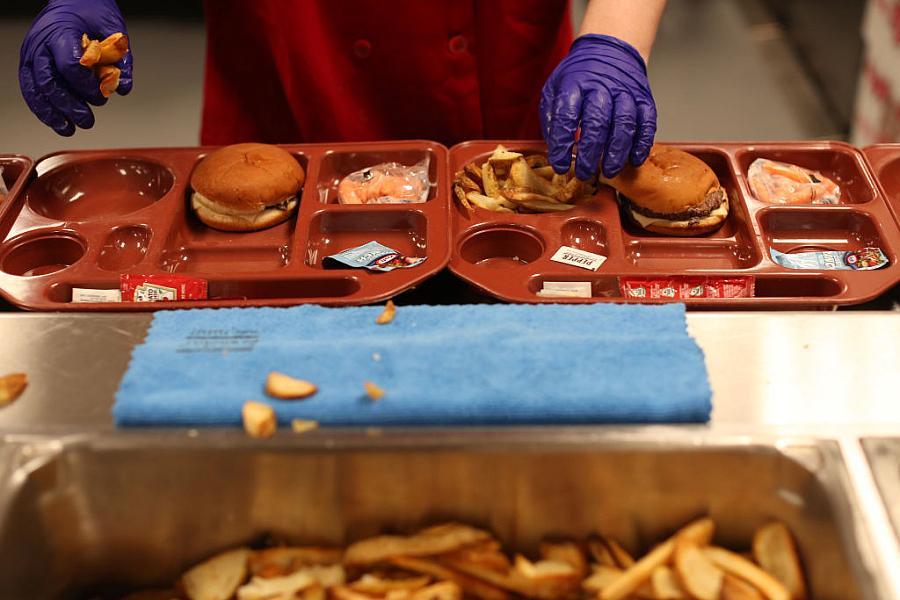
(Staff photo by Ben McCanna/Portland Press Herald via Getty Images)
By the time a federal report came out this month detailing appalling conditions at the Florida immigrant detention center known as Alligator Alcatraz, it was shut down.
Still, it’s hard to look away from the photos and descriptions: small metal cages used as “calming areas”; migrants packed into small windowless rooms; showers caked with filth and infested with bugs.
One photo shows a cooler of drinking water perched beside toilets. The report, by the Department of Homeland Security Office of Inspector General, also documents faulty refrigeration, a food safety violation that can endanger health. In an interview with WPTV in West Palm Beach, an immigration lawyer recounted what clients who’d been locked up in the facility told him.
“The food was horrific,” he said.
I was struck by this because when the news hit, I happened to be reading a new book about food in U.S. prisons. “Captive Consumers: Hunger, Violence, and Inequality in American Prison Food” describes similar problems and many more in America’s massive penal system.
Instead of treating prison food as a basic human necessity — perhaps even something that can foster health, healing and a sense of dignity — author Chin Jou argues that we’ve allowed it to become part of the punishment and dehumanization of incarceration. Jou, an associate professor of history at Rice University, writes that hunger is chronic because portions are often meager and nutritionally deficient.
The rates of foodborne illnesses like salmonella are seven times higher in correctional facilities than outside, because all too often food safety protocols fall short, Jou reports. And it’s not unusual for prisoners to be served meals that violate their religious beliefs or conflict with their medical needs, even during pregnancy.
As I read the book, I found myself wondering: If we’d cared more about what America feeds the nearly 2 million people held in jails and prisons — if we had refused to accept hunger or inadequate food as an instrument of punishment — would we have seen unsanitary drinking water at Alligator Alcatraz, or a diet without a single fresh fruit or vegetable at the Aurora facility outside Denver, or food with mold and worms at the family detention facility in Dilley, Texas?
Correctional facilities and immigration detention centers are, of course, separate systems, governed by different laws, bureaucracies and standards. There isn’t even really a prison system; it’s a patchwork of thousands of facilities, some run locally, some run federally and many controlled by states. But these institutions all wield almost total power over the people they hold, down to the most fundamental decision of daily life — what they eat.
Jou investigates that power and the money behind it. Prison food, she writes, is increasingly outsourced. Large corporations get lucrative, taxpayer-funded contracts to feed people who cannot walk away. In some cases, the same corporations also run the prison commissary.
“Lots of people have pointed out that this represents a conflict of interest,” Jou told me. It incentivizes companies to skimp on meals, all but forcing people to buy supplemental food from the commissary, often at exorbitant prices. (Colorado Newsline reported a similar dynamic at the Aurora detention facility.)
The quality of prison food also is an urgent health matter. Prison populations are overwhelmingly Black, Hispanic and poor, groups that have some of the highest rates of hypertension, heart disease, stroke, many cancers and other diet-related conditions. Typical prison fare is heavily processed, often drenched in sodium and sugars — not what any doctor would recommend to lower the risk of chronic illness or manage it.
Public outrage over conditions in ICE facilities is, rightly, mounting. And Health and Human Services Secretary Robert F. Kennedy Jr. has endorsed efforts to reduce the use of highly processed food in federal prisons as part of the MAHA agenda.
But conditions in state prisons, which hold most of the nation’s incarcerated population, are largely off the public radar.
“Rarely do you see politicians or government officials drawing attention to this topic because it's not going to pay political or electoral dividends,” Jou said. State prisons tend to be in rural areas, isolated behind armed guards and barbed wire. Unless someone has a loved one locked up or working in a prison, “they’re out of sight, out of mind,” Jou said.
That makes deep reporting on the conditions at these facilities all the more important.
Jou opens her book with a sharp critique of some national media coverage during the 35-day federal government shutdown that began Dec. 22, 2018. Stories described federal prisoners enjoying lavish feasts (“holiday steaks,” “herb-dusted Cornish hens,” “heaping plates of chicken wings”), while prison employees continued working without pay.
But the holiday food had been ordered long before the shutdown, and it was nothing like the fancy offerings that prison websites boasted. Jou quotes a social media post by Keri Blakinger, a journalist who had been incarcerated earlier in her life for 21 months.
“In my experience, just [because] they call something ‘steak’ doesn’t mean you’d even want to feed it to your dog,” Blakinger wrote.
It’s a good reminder to question official statements when reporting on prisons — or any large institution, for that matter. Any story should include the voices of people on the receiving end of a policy, program or meal.
“I think the best treatment on prison food actually comes from local reporting,” Jou said.
A strong recent example is an investigation by the nonprofit news outlet New York Focus into food in that state’s prisons. Three apples and one “petite” banana were the only fresh fruits offered during a week’s worth of meals last summer. The story’s lead writer, Joseph Wilson, is incarcerated in a New York prison.
In 2022, according to the story, the state banned most outside packages from friends and families. Authorities said they wanted to stop the flow of illegal drugs and weapons, but the move also closed off a critical source of fresh food. Contraband seizures declined sharply, but prison violence increased.
Meanwhile, prices in prison commissaries, another source of healthy food, have increased 45% in the past five years. And a recent report by an independent oversight body found that New York’s prison food does not meet nutritional standards.
“I did not get sentenced to malnutrition,” an incarcerated man told New York Focus.
Jou points out that the vast majority of people who are incarcerated will eventually be released. All of us would benefit if they returned to communities healthy.