

Despite months of stonewalling, this reporter was still able to reveal Illinois’ failure to provide health care for people in prison

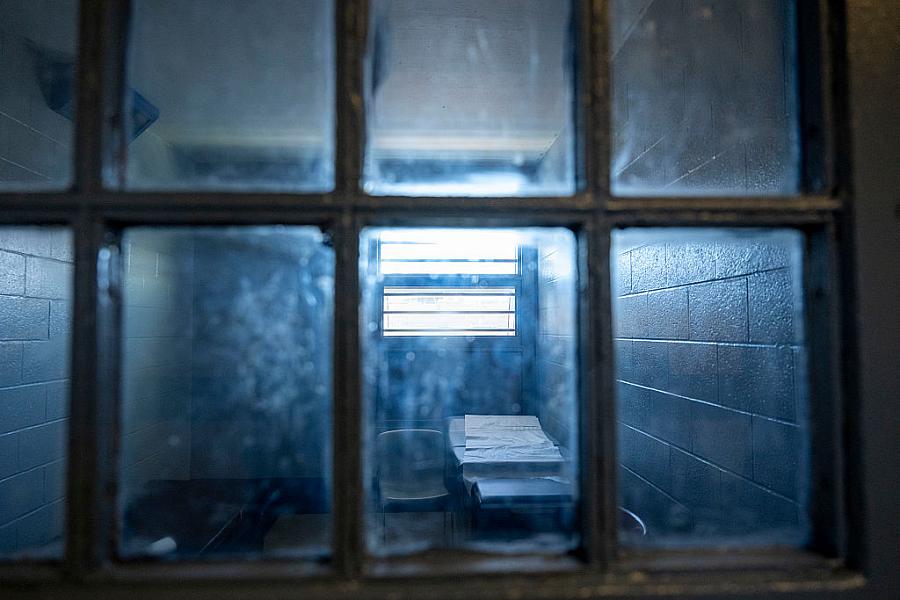
Tyler Russell via Getty Images
People incarcerated in America have a constitutional right to medical care. Yet the health care they get is rarely adequate.
Over the last couple years, I've reported on how that plays out in Illinois prisons and the connection between incarceration and health.
I reported on the abysmal care pregnant people received while detained in Illinois county jails. I dug into the detrimental toll solitary confinement has on a person's mental and physical health in Illinois prisons. And I covered how prison can be a risk factor for developing dementia.
But I wanted to understand where exactly things were breaking down within the state's correctional health care system, and how those failures impact incarcerated people.
With a reporting grant from the USC Center for Health Journalism, I had the time and resources to dig into how the correctional department handles health care for the over 30,000 people locked up in Illinois state prisons.
But then some news broke. The state abruptly ended its contract with its longtime private, for-profit health care provider, Wexford Health Sources. For years, Wexford faced regular accusations of providing poor care and allowing preventable deaths in Illinois prisons. After severing ties with Wexford, the state entered into an emergency contract with Centurion Health, another private, for-profit health care company serving prisons.
So, I pivoted. I learned about the state's new medical provider and the company's track record in other state correctional systems. I read more than 100 lawsuits against Centurion, a Justice Department investigation into the company's practices, several state audits and news reports from across the country.
I discovered Centurion had just as many problems as Wexford. The suits showed a pattern: Inmates repeatedly complain about a health issue, they’re ignored by correctional and medical staff members, and their condition worsens to the point of dangerous complications or death.
To report the story, I also worked closely with our colleagues at Prisoncast, a WBEZ show geared toward incarcerated people and their loved ones. We produced a radio interview for WBEZ and Prisoncast's quarterly show. I also helped create a social media video outlining the investigation.
After that story was published, I followed up with advocates and state lawmakers and reported their reactions and plans to address Centurion's issues. They called for stronger oversight and accountability for the state’s new prison health care provider.
For the second part of the project, I wanted to focus directly on what it's like to get health care in Illinois prisons and how the Illinois Department of Corrections (IDOC) delivers correctional medicine.
I started with records requests. I asked for any and all deidentified information on the diagnosed health conditions and diseases of inmates currently incarcerated at an IDOC facility; deidentified health care costs by age for current inmates; and a year of health care grievances broken down by detention facility.
My thought behind the request was to try to learn whether or not the state tracks the diseases incarcerated people have and if they're providing adequate care. I wanted to learn how many people in detention facilities have certain terminal illnesses and/or chronic, debilitating conditions that require acute medical care.
But I got nothing in return. I was told my request was overly burdensome and violated HIPAA. I tried tailoring my request down even further, but no luck. The corrections department also took weeks if not months to answer each request.
So I had to find a new way into the story. Luckily, after my first story published, an attorney reached out to me. She was on the legal team for a class-action lawsuit against IDOC representing all people in custody with serious medical and dental needs.
In 2019, the corrections department entered into a consent decree for that case. Consent decrees are court-enforceable settlement agreements in which the defendant agrees to make specific changes. The judge presiding over the case also appoints an independent monitor to conduct reports tracking whether or not the defendant is in compliance.
I once again pivoted. I read every report the monitor has published (there have been nine of them, and they're hundreds of pages long). I interviewed the lawyers on the lawsuit's legal team.
That all left me with a clear picture of what's going on in IDOC's health care system:
- The department only employs the equivalent of 16 full-time physicians across its 29 correctional facilities, which house more than 30,000 people. The department receives a budget for roughly 33 full-time physicians.
- High turnover also plagues IDOC. Over the last six years, 49 physicians have resigned, the monitor reported.
- About 60% of nursing staff positions are vacant, and about a quarter of the facilities don’t have a medical director to oversee care.
- The department has not implemented a policy for analyzing staff workload and tracking filled and vacant positions. IDOC has also not supplied the monitor with clinical performance reviews for physicians, nurse practitioners, physician assistants, dentists, dental hygienists and dental assistants. Nor have prison officials shared disciplinary records for those professionals.
- The vast majority of patient records are on paper and have not been digitized, which the monitor described as “inefficient, unreliable, and inadequate.” A lack of electronic medical records makes it difficult to ensure continuity of care or to track patients’ medical conditions, the monitor says.
The insights I gained from these reports also explained why IDOC wasn't cooperating on my records requests. The monitor says the department hasn't granted access to certain data and records, despite the court order empowering them to do so.
Throughout this project, I learned new ways to get creative. Because the two entities I reported on, Centurion Health and the Illinois Department of Corrections, didn't once cooperate, I had to find new ways to get the information I was seeking.
But despite changing my approach, I stayed true to why I wanted to do this project in the first place: I sat down with the people incarcerated in Illinois and their families to talk about their health issues and how the substandard medical care they were receiving made their health worse.