

When FOIA fell short, a reporter used these effective strategies for investigation on Chicago youth jail

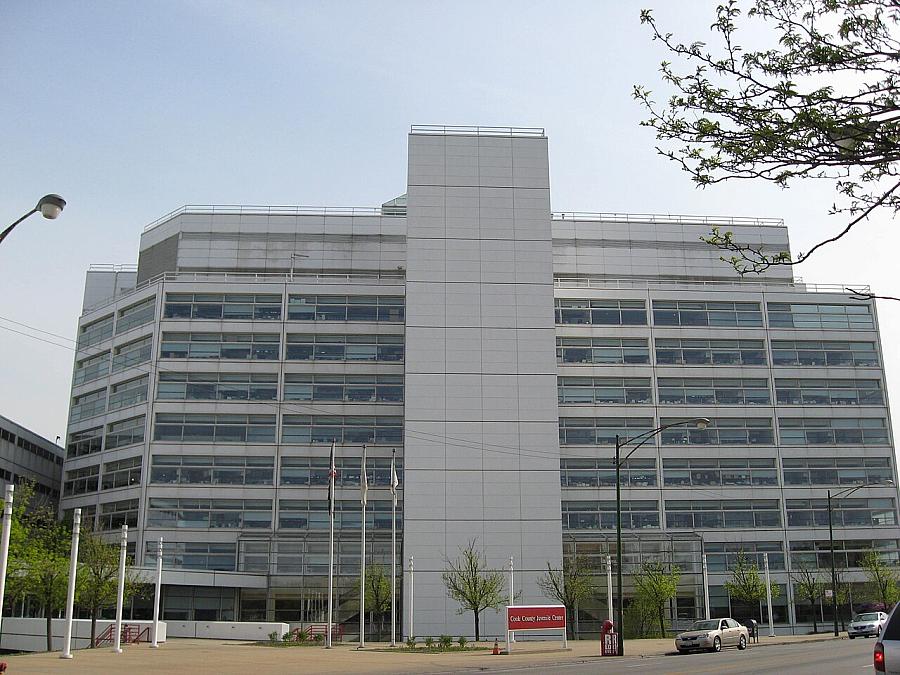
The Cook County Juvenile Temporary Detention Center in Chicago is one of the largest youth jails in the country. It also poses real challenges for investigative reporters seeking to report on potential abuses in the facility.
(Photo by Zol87 via Creative Commons)
The Freedom of Information Act is arguably one of the most important legal tools for the American public, especially members of the press. It allows us to scrutinize our government and hold them accountable. It advances the transparency needed for an ideal democracy and fosters an informed citizenry. But FOIA also has its limitations and local governments often exploit those limitations by using broad exemptions to withhold information.
In Illinois, for example, the judiciary has conveniently carved itself out of the state’s FOIA law. In 1983, when state legislators were drafting the bill, they defined public bodies as “all legislative, executive, administrative, or advisory bodies of the state.” But they did not include the word “judicial.” As such, judges have interpreted the law to mean that the judicial branch in Illinois, including its administrative functions, is not subject to FOIA.
Here’s what that looks like in practice: The 16 juvenile detention centers in Illinois that are run and operated by the chief judges of each circuit court are not subject to the state’s Freedom of Information Act. That means members of the public cannot request basic information about these facilities, such as data on the use of solitary confinement, employee disciplinary records or information on the types of programming available to youth.
I first ran into this issue in 2021 when I was reporting a story about the lack of legally mandated special education services for students with disabilities at the Cook County Juvenile Temporary Detention Center (JTDC), one of the largest youth jails in the country. As a student journalist, I was taught to use FOIA as a tool for asking questions and digging deeper, but I quickly realized the JTDC was a black hole of information that would require a different approach.
What surprised me most was that I didn’t encounter this issue while reporting on the adult jail or state prisons, which report to other public agencies. When the notoriously secretive Chicago Police Department misapplies a FOIA exemption or fails to respond within the legal timeframe, there are legal mechanisms in place to challenge that. But not with the JTDC. If I make a request to the Chief Judge about information related to the facility, he’s not obligated to respond and there are no legal tools at my disposal to challenge that.
So when civil rights attorneys filed a class-action lawsuit in 2024 on behalf of hundreds of former detainees who claimed they were sexually and physically abused while at the Cook County juvenile detention center, I knew it would require strong investigative skills combined with a comprehensive community engagement plan to uncover what was really happening at the JTDC.
I filed FOIA requests with the Chicago Police Department for police reports related to incidents at or near the juvenile detention center. I also requested information from the Illinois Department of Juvenile Justice, which conducts annual walkthroughs of the facility, for their inspection records. Little by little, I’ve been able to piece together the universe of cases that span three decades using information from other public agencies.
I also developed a wide range of sources including current and former employees of the JTDC, formerly incarcerated youth and their families, advocates, and child welfare experts. From my conversations, I learned that the superintendent of the detention center was rarely seen at the facility and the property records I found raised questions about whether he actually lived in the state. That story was instrumental in helping me build trust with sensitive sources, which also helped the following stories.
Earlier this year, I learned about an incident involving a 15-year-old boy who was allegedly thrown to the ground by a guard at the facility while handcuffed in December 2023. The boy was knocked unconscious and sustained visible bruising. The employee was fired three months after the incident, and turned himself into the police six months later. It was the only case I could find from the reports I had in which an employee had been criminally charged for allegedly abusing a child at the juvenile detention center.
Since the case was already pending in court by the time I learned about it, the police department was unwilling to hand me any additional records about the incident beyond the single-page police report I had. They also wouldn’t give me surveillance footage of the incident, saying its release “would jeopardize the fairness of the ongoing trial.”
The Cook County Board President’s Office, which handles records related to all Cook County employees, also wouldn’t give me the personnel file for the employee involved in the incident and instead deferred my request to the Chief Judge’s Office. As you can probably imagine, the Chief Judge’s Office did not respond to my request until many, many months later (and after the trial ended).
And if it wasn’t already made clear to me, the judge presiding over the trial signed an order barring the city from releasing any records related to the case to anyone in my newsroom while it was pending in court.
This made my job significantly difficult, but not impossible. I was still able to obtain records related to the case from other public agencies outside of the City of Chicago and through the sources I developed. With the information I was able to gather, I wrote a story about the case leading up to the rare trial. I was the only reporter in the courtroom when the judge finally heard the case and decided to find Kevin Walker not guilty of aggravated battery and official misconduct.
Days later when the video was finally released to us, we published it along with a content warning and an analysis from experts about the video and whether the judge’s ruling was appropriate. The video got thousands of views on our social media platforms and sparked conversations about the use of force at the juvenile detention center.
On the same day we published the video, the superintendent quietly submitted his retirement letter to the Chief Judge. The Chief Judge, who recently lost his election in September, was also stepping down.
It’s the first time in 10 years the juvenile detention center is undergoing a change in leadership and the new administration has promised to take it in a better direction. Our reporting sparked questions from Cook County commissioners during a budget hearing in October and guided conversations among JTDC advisory board members during a meeting in early December.
But the challenges present during my reporting process still persist. Despite new leadership, the JTDC’s operations remain a secret. A house bill intended to make the Illinois judicial branch, including juvenile detention centers, subject to FOIA has stalled. And recently I learned that a contractual bargaining agreement between the labor unions and the juvenile detention center allows for disciplinary records that are inactive after 24 months to be destroyed.
My hope is that cases like the one we’ve covered raise questions about the way incarcerated children as young as 10 are treated at juvenile detention centers and push for greater transparency measures. The number of plaintiffs in the class-action lawsuit continues to grow, which will only raise more questions and prompt more hard-hitting investigative journalism.