

The Health Divide: This HIV prevention pill still isn’t reaching the men who need it most

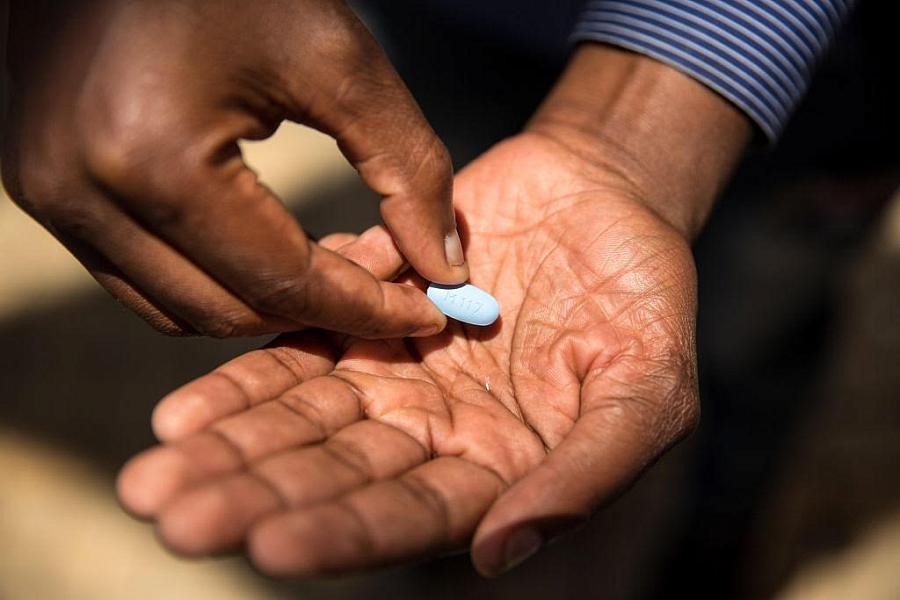
Pre-exposure prophylaxis or PrEP is highly effective in preventing the spread of HIV, but there are persistent racial disparities in who has access to the drug.
(Photo by Daniel Born/The Times/Gallo Images/Getty Images)
Jamal Keyton Perry knows firsthand the challenges Black men face in accessing PrEP, or pre-exposure prophylaxis, the HIV prevention medication.
As a Black gay man, he noted that even though the Food and Drug Administration approved the first at-home HIV test and the drug Truvada in 2012 — a once-daily pill that is 99% effective in preventing the spread of HIV — he didn’t learn about Truvada until five years after it entered the market.
Perry learned about PrEP during his visit in 2017 to the Brady East STD Clinic, which offers free sexual health services and testing on Milwaukee’s East Side.
After his test, one of the clinic’s volunteers spoke with him about PrEP and asked whether he would be interested in working with young people at Diverse & Resilient, an organization that works on improving the safety and well-being of LGBTQ people in southeastern Wisconsin.
Perry took that opportunity at the time, since he said he was taking control of his sexual health and wanted to help others on that journey.
While Black gay and bisexual men experience higher rates of HIV, studies indicate they do not necessarily engage in riskier behaviors than other groups. But PrEP remains less accessible to many in this community.
Reasons for the divide include limited access to early testing and treatment, the high cost of medication for those without insurance, mistrust of the medical system, stigma related to homophobia in Black communities, generalized HIV stigma, health care providers not discussing PrEP during medical visits, and a lack of targeted educational campaigns highlighting how the pill can significantly reduce the risk of contracting HIV.
While PrEP has been largely marketed toward gay and bisexual men, Perry, 32, said anyone who engages in unprotected sex should be on PrEP.
New HIV diagnoses are highest among people ages 25 to 34, followed by those ages 13 to 24, noted Perry, now the HIV Biomedical Prevention Coordinator at the Wisconsin Department of Health Services.
The racial disparities are stark
From 2017 to 2019, Perry struggled to maintain his PrEP regimen because his insurance covered only a small share of the cost. He has been on the medication consistently since 2019 and reports no side effects.
Today, nearly 14 years after PrEP entered the market, its use remains significantly higher among white gay and bisexual men than among Black gay and bisexual men. While the number of PrEP users increased by 20% from 2021 to 2022, the CDC reports that 1.2 million additional Americans could benefit from taking PrEP.
Statistics illustrate the racial disparities clearly.
According to data from AIDSVu, Black Americans accounted for 42% of new HIV diagnoses in 2021, but only 14% of PrEP users. In contrast, Hispanic and Latino individuals represented 27% of new HIV diagnoses and 17% of PrEP users, while white individuals comprised 26% of new diagnoses and 64% of PrEP users.
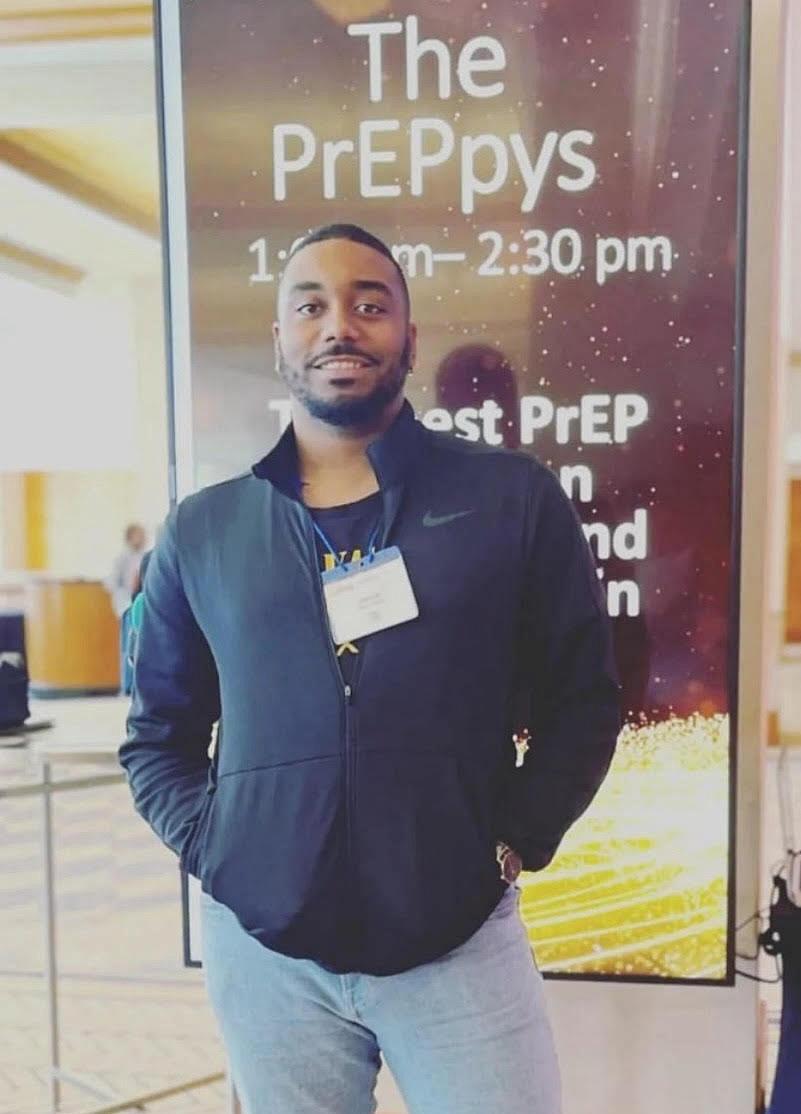
Jamal Keyton Perry.
Courtesy photo
There are geographic disparities as well. Data show that the U.S. South accounted for just over half of new HIV diagnoses but only 38% of PrEP users. In the South, Black individuals made up 48% of new HIV diagnoses but only 21% of PrEP users. In the Midwest, Black individuals represented 48% of new diagnoses and only 12% of PrEP users. In the Western U.S., Hispanic and Latinx people accounted for 46% of new HIV diagnoses but only 23% of all PrEP users.
Perry noted that some cities and states have made more progress than others in addressing health disparities.
Atlanta launched programs to cover co-pays and out-of-pocket costs for Black gay and bisexual men. A co-pay assistance card covers up to $7,200 in annual out-of-pocket costs for PrEP with no monthly limit. Chicago saw a 21% decline in HIV cases from 2017 to 2021 due to its “Getting to Zero” strategy, which emphasizes community-led efforts and partnerships with safety-net clinics in Black and Hispanic neighborhoods to encourage LGBTQ+ individuals to use PrEP.
In 2019, California passed a law allowing pharmacists to dispense a 30- to 60-day supply of PrEP without a doctor's prescription.
“These are the measures that must be taken to close the gap,” Perry said.
The ongoing push to raise awareness of HIV and PrEP
The hip hop community has been actively involved in efforts to expand access to PrEP in Black and brown communities.
T-Boz, 55, of TLC, collaborated with Gilead in November to release “So We PrEP,” a reimagined version of the group's 1994 hit “Creep.” The music video encourages open conversations about sexual health with partners.
Health journalists can help by promoting awareness and informing people of the significance of PrEP. Reporters can also highlight the barriers that certain communities face in accessing PrEP, whether due to transportation issues, financial constraints, or stigma.
What initiatives are underway to reduce these obstacles? Are your community’s HIV cases rising? How many people in your community are using PrEP? Who is most affected in your region?
The website prepvu.org is a good place to start. The platform provides ways to compare locations, show the number of HIV diagnoses over time, and show the number of people on PrEP by state and city. (Note that the site is a partnership between Emory University’s Rollins School of Public Health and Gilead Sciences, which makes PrEP medications.)
More coverage of these issues can help prevent the spread of HIV and save lives.