

The Health Divide: Women of color are dying in pursuit of the ideal body

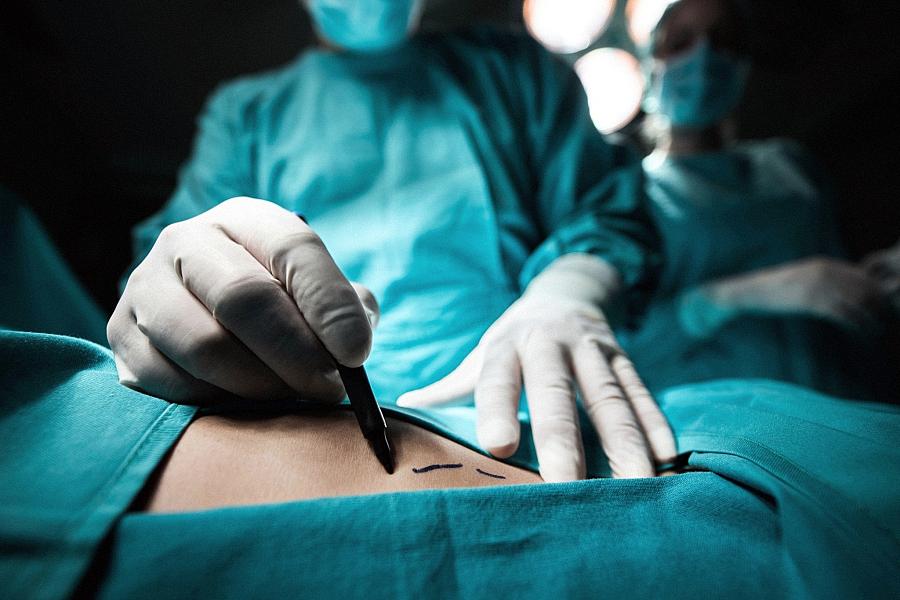
(Getty Images)
When Alicia Renette Williams was a ninth-grade teacher at Huffman High School in Birmingham, Alabama, she decided to travel to the Dominican Republic for a cosmetic procedure to improve her figure.
The “Brazilian butt lift” surgery is far less expensive in the Dominican Republic than in the United States, according to the medical tourism platform PlacidWay.
But days after the surgery, Williams began having complications.
On June 7, 2019, just five days after the surgery, Williams died from blood clots. She was 45. Her story underscores a growing trend among women, and some men, in the U.S. who undergo the enhancement procedure in the U.S. and abroad as they pursue idealized figures.
According to the American Society of Aesthetic Plastic Surgeons, now known as the Aesthetic Society, buttock augmentations have become the fastest-growing cosmetic surgery in the United States, increasing from about 7,300 procedures in 2012 to nearly 48,000 in 2021. While exact figures are not available, it is estimated that millions of Americans travel abroad each year for medical care and services that include breast augmentations, tummy tucks, and BBLs, which remain the most popular reasons for medical tourism.
The BBL procedure has the highest risk among cosmetic surgeries, with more than one death for every 4,000 procedures. In 2018, the estimated mortality rate was as high as one in 3,000 procedures, making it the deadliest cosmetic surgery. The main complication is a fat embolism.
For Black women like Williams and Latina women, these procedures carry a higher risk of complications compared to white women. The increased risk is often due to disparities in underlying health conditions such as hypertension, diabetes, and anemia, issues which are known to elevate the likelihood of surgical complications that include blood clots, poor healing, and longer hospital stays.
The pressures that lead to risky surgeries
According to the Centers for Disease Control and Prevention, there were 93 deaths related to cosmetic surgery among U.S. citizens in the Dominican Republic from 2009 to 2022, with deaths peaking at 17 in 2020.
Despite the risks linked to BBLs, some women still opt for the surgery. Women cite reasons such as increased self-confidence, societal and social media influences, and the belief that skilled surgeons can perform it safely. With more people using social platforms like OnlyFans and Reddit, some women are also using their enhanced bodies to gain online views and make money.
For Black women, there is an added layer of pressure, with some saying they undergo the procedure to conform to the perceived “thick” beauty standards often shown in music and entertainment, featuring hip-hop stars and celebrities like Cardi B, Nicki Minaj and Kim Kardashian.
Another factor influencing African American women’s decision to undergo the procedure is rooted in the deep-seated historical reasons why Black women question their beauty, according to Hannah Giorgis, a staff writer at The Atlantic, who authored the essay, “What Makes a Black Woman Real?”
"For most of the country's history, Black women have been necessarily excluded from the dominant narrative about beauty — that is to say, beauty as an instrument of social and economic power,” Giorgis wrote. “And for all the understandable concern about botched surgeries and predatory clinicians, there's been precious little acknowledgment of how unrelenting the social pressures facing Black women can be, and how few avenues exist for advancement and personal fulfillment in such a hostile climate.”
These are important points to consider: There is significant social pressure to conform to current trends in beauty and sexiness. And women of color often face a sense of limited possibilities that leaves them without alternative ways to feel good about themselves.
A long history of sexual objectification
In October, Alicia Stone, a 13-year veteran of the NYPD, traveled to Colombia in hopes that a BBL would give her the perfect body, according to a story in the New York Post.
The 40-year-old married mother of three underwent liposuction and a BBL surgery on October 16. Instead of recovering at the hospital, she was sent to a hotel to heal alone. On October 23, she was found unresponsive in her room.
Stone, who is African American, was taken to the hospital, but it was too late. The cause of death was determined to be cardiac arrest, although her husband, Michael Stone, told the Daily News that he intends to request a probe into his wife’s death.
Stone wasn’t an influencer looking to make money online; she was just a woman trying to improve her figure.
Women are also dying in the U.S. after such augmentation surgeries. Ahmonique Miller, a 28-year-old mother of one from Las Vegas, died in March 2025 in Miami while recovering at an alleged illegal recovery home. Her cause of death was determined to be acute combined drug toxicity from unprescribed medication given to her after the surgery. And Wildelis Rosa, a 26-year-old police officer and Army reservist, died in March 2023 after a BBL in Miami due to a pulmonary embolism after surgery.
Journalists have highlighted the risks of these procedures (including this reporting series supported by the Center for Health Journalism), but health journalists can further influence the conversation by providing a deeper sense of the health risks. While discussing the main dangers of such surgeries, like the risk of death, it's important also to acknowledge other lesser risks that often go unmentioned, such as infections, necrosis, scarring, physical discomfort, and activity restrictions.
Some have gone through the experience and now experience what’s called “procedure regret,” meaning they felt pressured by social media trends and didn’t foresee the long-term effects of body enhancements.
Since history is often erased or forgotten, it’s also vital for journalists covering this issue to recognize that some Black women feel pressured to undergo the procedure due to the long-standing hypersexualization and fetishization rooted in the anti-Black Jezebel stereotype, as well as contemporary beauty standards that emphasize curvy bodies.
Society commodifies Black bodies while punishing them. It may celebrate the BBL look on non-Black women like the Kardashians, yet it also pushes Black women to take unnecessary and dangerous health risks in pursuit of that same appearance.