

Do you live near one of LA’s lead clean-up sites?
This article was originally published in The Los Angeles Public Press with support from our 2026 California Health Equity Fellowship.

(Illustration by Alyson Yee)
Los Angeles’ industrial legacy is like that of a toxic family member — overwhelming and difficult to ignore.
One such obstinate cousin is the chemical lead, a potent neurotoxin.
While bans on lead in gasoline and paint have reduced overall exposures over the years, it remains widespread in cities, and is disproportionately found in largely low-income Black and Latino neighborhoods.
But just how widespread is soil lead contamination across LA?
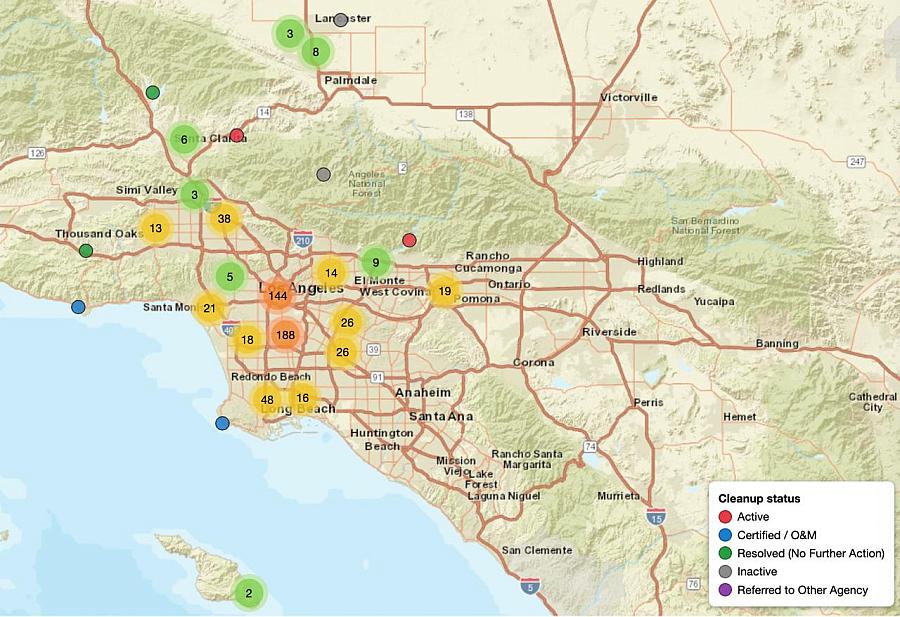
LA Public Press is working to document all mapped soil lead contamination county-wide — which hasn’t been done before.
We asked the Department of Toxic Substances Control, or DTSC, for all ongoing cleanup sites where lead is a contaminant of concern, or ones that have been officially closed but where lead remains in place.
The 616 sites in the following map range from massive cleanups with far-reaching impacts to small cleanups with a negligible risk of human exposure. Each site on the map comes with a link to a page on a state website called Envirostor explaining the site’s status and history.
At some sites, you’ll see cleanup oversight has been referred to another agency. DTSC doesn’t necessarily update Envirostor on the current status of these cleanups, meaning the available information might be old. (Map information current as of Sept. 16, 2026).
Map by Daniel Talamantes.
This map only tells a portion of the story.
It does not include, for example, studies done after last year’s wildfires in Pacific Palisades and Altadena, like those posted here and here. Many independent researchers have conducted their own soil lead analyses over the years at LA County homes, schools and parks, while governmental agencies have sometimes provided unusually detailed maps of their testing (like around Exide).
But the studies linked above are nowhere close to documenting all of LA’s mapped soil lead contamination.
If you know we’ve missed something, please send it to us at: tips@lapublicpress.org.