

Dr. Tiffani Johnson Turns ER Experience Into Equity Work
The story was originally published in The Observer with support from our 2026 California Health Equity Fellowship.

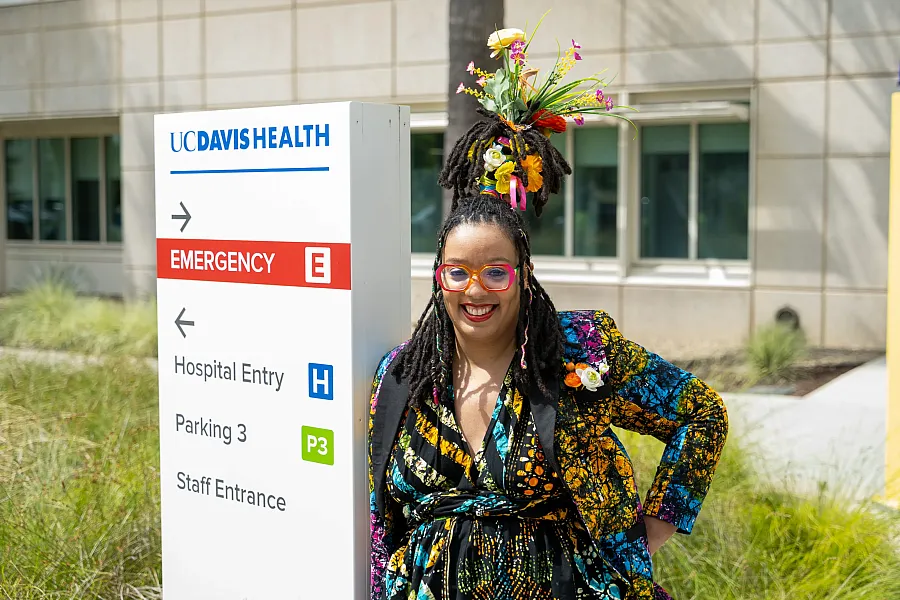
Local ER pediatrician and researcher Dr. Tiffani Johnson uses data to show the need for improved emergency room care for children. Dr. Johnson uses unique scrubs and bubbles to put her patients at ease during potentially traumatizing ER visits.
— Russell Stiger Jr., OBSERVER
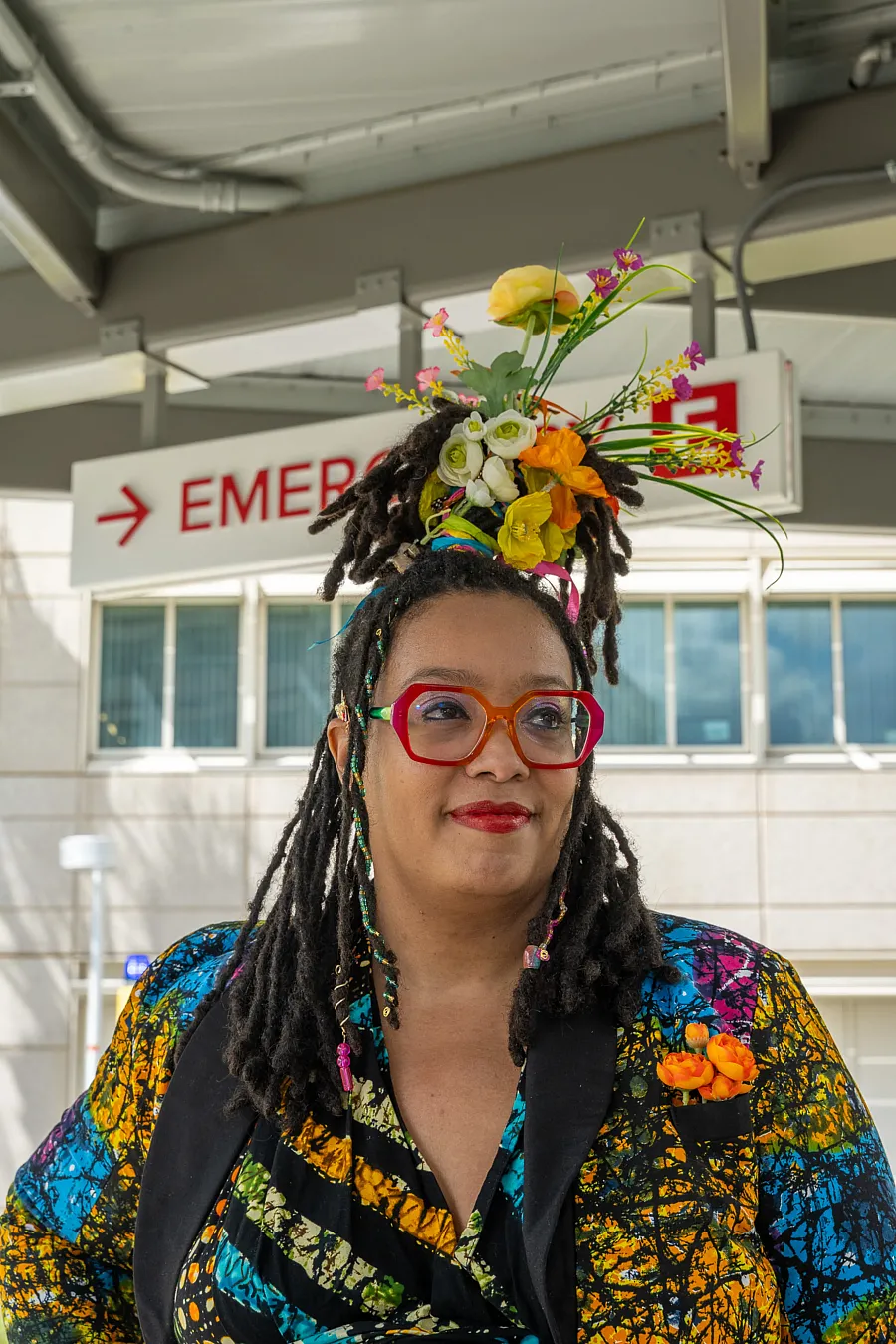
Dr. Tiffani Johnson works as a pediatrician in the UC Davis Medical Center's emergency department. Dr. Johnson has published several papers on how equity impacts care for children in the emergency room.
— Russell Stiger Jr., OBSERVER

Local ER pediatrician and researcher Dr. Tiffani Johnson uses data to show the need for improved emergency room care for children. Dr. Johnson uses unique scrubs and bubbles to put her patients at ease during potentially traumatizing ER visits.
— Russell Stiger Jr., OBSERVER
The breakroom at the clinic was supposed to be a place of respite — a brief moment for staff to catch a breath between rotations. For young medical student Tiffani Johnson, it became the site of a profound awakening.
She says she sat in silence, paralyzed by the power dynamics of her medical training, overhearing an attending physician casually discuss performing sterilizations on Latina Medicaid patients — women he deemed to be having “too many babies.” Denied interpreters, these women likely didn’t understand the procedures performed on them. Johnson felt powerless to intervene then, but being scared silent didn’t break her. It forged her.
Years and several career stints later, that moment remains the bedrock of Dr. Johnson’s practice. Today she’s a pediatric emergency physician and “equity scientist” at UC Davis Medical Center and it fuels a fierce determination to ensure that every Black and brown patient she treats is heard, protected, and treated with an unwavering standard of care.
“I collected these stories,” Dr. Johnson says. “There are different stories in every phase of my career and in every phase I became both more enraged by these experiences as well as less afraid in speaking out against these experiences and in advocating for these patient populations.”
Family History
Dr. Johnson’s dedication to advocacy is rooted in a generational legacy of survival and resilience. Her great-grandmother, Serena Smallwood, was born in 1919 in Plymouth, North Carolina. As a teenager, she was sexually assaulted by a group of white men, and at 14, gave birth to Dr. Johnson’s grandmother, Katherine.
Smallwood fled the Jim Crow South for New Jersey, doing domestic work to ensure her daughter would not face the same fate. Katherine Smallwood, who worked as a model under the name Katherine Bell, later appeared on the cover of Jet magazine.
Their strength was passed down to Tiffani’s mother, Kathleen Smallwood Johnson, who earned a law degree as a single mother with two small children. She served as a public defender, school board attorney, and NAACP president, raising Tiffani within a “community of Black excellence.” Surrounded by librarians, lawyers, and physicians, Dr. Johnson grew up with a clear sense of possibility.
“That lineage of advocacy born out of trauma … is what kind of courses through my DNA and really kind of helped me to want to advocate for underrepresented and underserved populations.”
Dr. Johnson grew up in the upper middle-class town of Montclair, New Jersey. Her family later moved to Trenton, which had a challenged public school system and provided a stark perspective. The dropout rate was staggering; her freshman class of 1,000 dwindled to 492 by graduation. Resources were so scarce that her honors English class had to read “The Scarlet Letter” aloud because there weren’t enough books, and her science class frequently had to turn students away for a lack of chairs.
“Seeing my friends in those different school systems and how their social conditions and social drivers impact their choices, their trajectories across their life course, I think that was what really motivated me to study how inequities and social drivers impact health.”
Critical Conditions
Dr. Johnson views the emergency department as a critical safety net and an entryway into the health care system for the most vulnerable.
“If you don’t have insurance, if you don’t speak English, if you are unhoused, regardless of your social situation or status, the emergency department is mandated to provide care for those patients,” she says.
“In the emergency department, I see everyone. You don’t have insurance, I don’t care. I’m not thinking ‘Oh, they don’t have insurance, so I’m not going to do the CT scan that they need.’ In the emergency department, we just provide the care that you need and let the systems figure those other things out later.”
Dr. Johnson’s research focuses on the impact of race and racism on child health. Her pivotal studies include work on how cognitive stressors in the emergency department shape physician implicit bias, and research revealing significant racial and ethnic differences in how children with fractures receive pain management. These findings show how systemic inequities shape pediatric care, which has guided her professional path.
Her career has evolved in phases: starting with documenting the existence of disparities, moving to understanding contributing factors like implicit bias, and now focusing on structural drivers. She also leverages strategic “co-conspirators” — often white male colleagues — to pull levers of power she cannot access alone. When the hospital deployed a canine unit in the emergency department, she collaborated with such colleagues to advocate for its removal, citing the trauma the dogs inflicted on patients experiencing substance use crises or mental health emergencies.
Vital Signs
On Mother’s Day, Dr. Johnson reached out to her mentor, Dr. Renée Rosalind Jenkins, the first Black woman president of the American Academy of Pediatrics, to thank her for her support and legacy.
“She’s my ’mama in medicine,’” Dr. Johnson says.
Having benefited from “tremendous mentorship” herself, Dr. Johnson now maintains a “gaggle of mentees” across the country. She pours into these protégés with the same dedication she once received, though she is quick to clarify her current role.
“I’m kind of a cousin or auntie,” she says. “One day I’m going to be somebody’s ‘medical mama.’ I’m looking forward to [it], but right now I’m definitely officially at auntie status.”
In national roles with the American Academy of Pediatrics and the Academic Pediatric Association, Dr. Johnson has used her platform to elevate early-career scholars. Reflecting on the next generation of physicians, she feels a sense of hope.
“I’m solidly mid-career — not quite an elder — but this next generation gives me so much hope. These young folks aren’t putting up with the same things my generation did; they’re pushing back and driving change, and that really encourages me.”
Looking forward, Dr. Johnson is embarking on a sabbatical to explore three arcs: resistance movements across the diaspora, longevity among Black women, and Afrofuturism. As she pivots from documenting harm to reimagining the future, her message remains focused on sustainable resistance for those who carry the work.
“My generation and the generation before us, we were just taught this ‘grind culture.’ It’s like you have to work twice as hard to get half as far,” she says. “That is another thing that is killing us.”
Her advice to those following her path is clear: “Your value is not just in how many papers you produce. You are inherently valuable. Don’t let this career kill you.”