

Maine’s older residents are ‘aging into crisis’
This article was originally published in the Portland Press Herlad with support from our 2026 National Fellowship and engagement initiative.

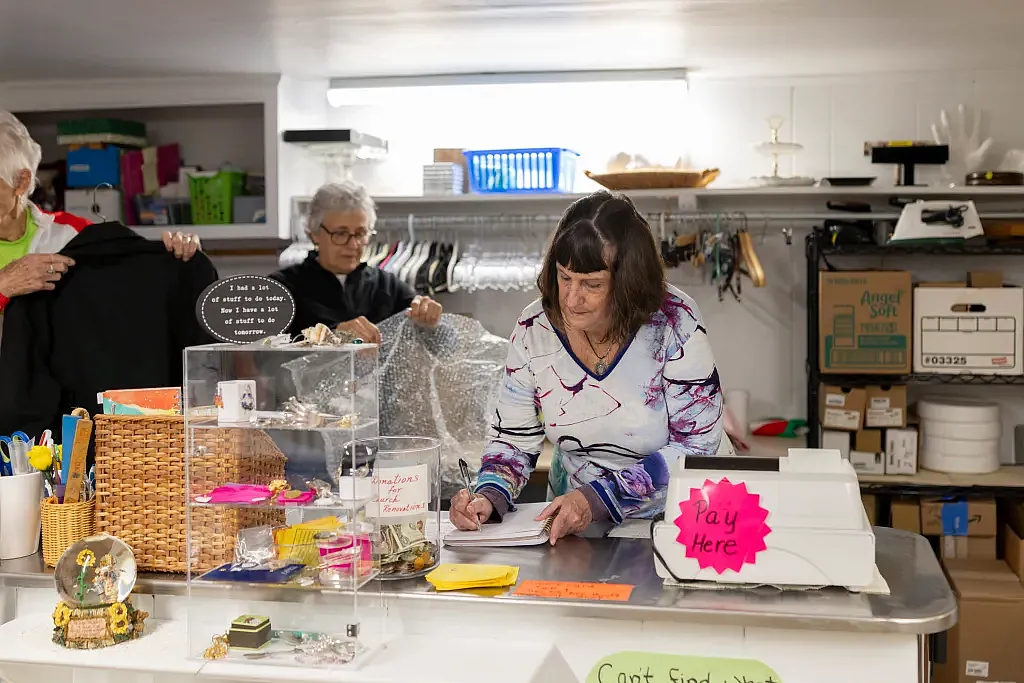
Linda Walls works her shift in the thrift store at Edgecomb Community Church on Oct. 6.
Brianna Soukup/Staff Photographer
BOOTHBAY PENINSULA — By the end of each month, Linda Walls has only pennies left.
Nearly half of her $1,100 monthly income pays for the room she rents from a friend. Food, medical costs and bills quickly eat up the rest.
It was one unexpected health crisis that caused her financial stability to unravel. She said she was homeless for a short time and, living only on Supplemental Security Income, has spent years rebuilding her life.
Walls, 71, said she was comfortable — then had nothing.
She’s not alone.
Older Mainers are struggling to keep up with rising costs, access transportation to get to appointments and maintain aging homes on fixed incomes. New data shows that about half of households in the state headed by people 65 and older struggle to afford basic expenses. Those challenges are especially acute in rural areas, according to experts.
“When there’s high inflation and costs go up, they’re kind of stuck,” said Lindsay MacDonald of Spectrum Generations, central Maine’s area agency on aging. “If they can’t work, what else can they do?”
According to data from 2024 released in June by the United Ways of Maine, 52% of older households live below the federal poverty level or are part of a population called ALICE — Asset Limited, Income Constrained, Employed. At that income level, people don’t always qualify for assistance but often struggle to pay for basic needs and are not able to set aside money for emergencies.
Nearly a quarter of the state’s residents are 65 or older, according to U.S. census data. Projections by the Office of the State Economist show that group is expected to grow in Maine over 11% between next year and 2032.

Gail Boudin organizes free produce the church gets and then sets out for people to take at Edgecomb Community Church on Oct. 6.
Brianna Soukup/Staff Photographer
As people live longer, even those with savings are finding they don’t have enough, said Jess Maurer, executive director of the Maine Council on Aging. About a third of older Mainers have no savings and rely solely on Social Security, she said.
Maurer said the stories she hears are haunting: Older Mainers cutting up and burning furniture for heat. Retirees skipping meals and visits to the doctor because, without transportation, there’s no way to leave home. People isolated and alone, using chamber pots and going without showers because they aren’t mobile enough to get to their bathrooms.
“People are aging into crisis,” she said.
HEATING HOMES AS OIL COSTS RISE
Tourists and seasonal residents flock to the Boothbay peninsula in the summer.
The scenic point of land juts out into the Gulf of Maine between the Sheepscot and Damariscotta rivers. Small boats tender cruise ship passengers to shore, where they flood shops and restaurants. Visitors show up by the thousands to wander through the Coastal Maine Botanical Gardens.
And on a dirt lot behind the Boothbay Public Works garage, the Woodchucks have been busy thinking about winter.
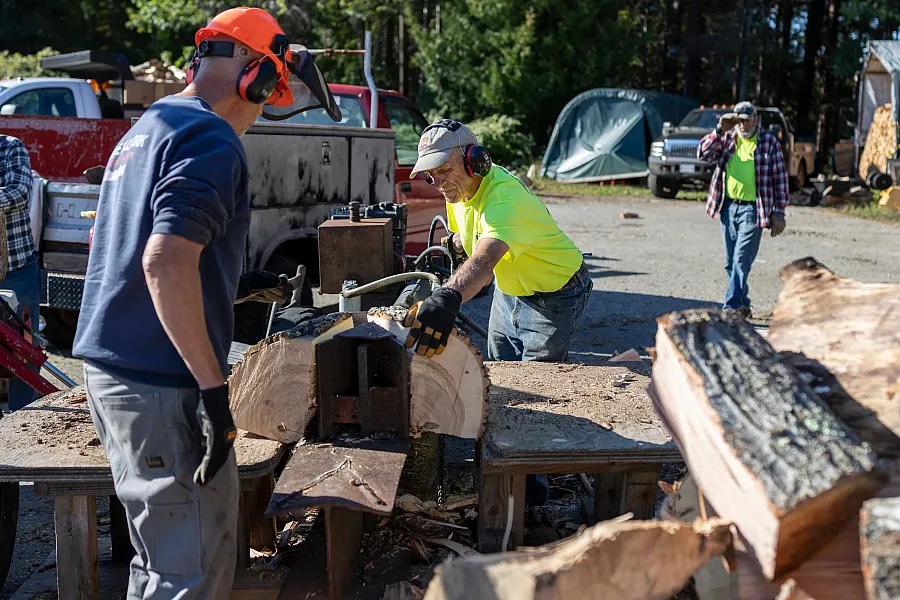
Jon Smith, a volunteer with the Woodchucks, splits wood in Boothbay on Sept. 15.
Brianna Soukup/Staff Photographer
Twice a week year-round, the volunteers behind the region’s wood bank split, chop and stack firewood to bring to people on the peninsula who need help heating their homes. Most of the Woodchucks are retired and have spent years growing the operation into one of the larger wood banks in Maine.
“We’re old men with chainsaws,” volunteer Tom Churchill quipped during a break from chopping in July. “What can go wrong?”
The wood bank, which operates on a lot rented from the town for $1 a year, has become a lifeline for residents who struggle to keep up with heating costs in a region where many people live in older homes.
It will be even more critical this winter, said Holly Stover, director of the nonprofit Community Resource Council, which oversees the Woodchucks program. In late September, as oil prices shot up and state officials urged people to apply for heating assistance as soon as possible, Stover said she had heard from people terrified of what winter will bring.
“I think this year the panic is going to set in,” Stover said.
The Woodchucks delivered 100 cords of wood last year and said they anticipate requests for help will be even higher this season. The CRC also stocks its 24-hour food pantry with emergency bundles of wood — they usually disappear within hours — and runs a local fuel fund that pays for heating oil.
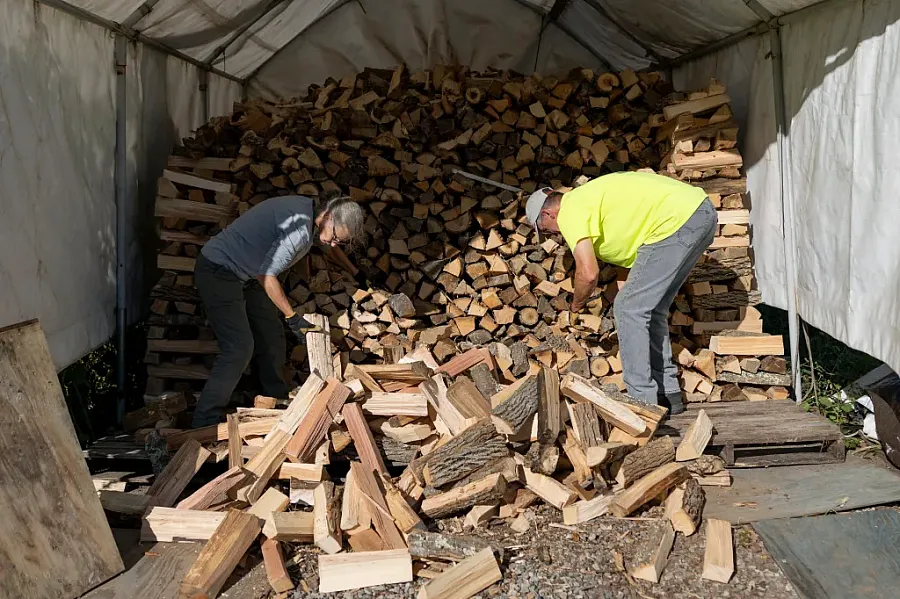
Martha Tornielli and Randy Haist, volunteers with the Woodchucks, stack chopped wood for the region’s wood bank in Boothbay on Sept. 15.
Brianna Soukup/Staff Photographer
About half of all homes in Maine rely on oil as a primary heat source, making the state the most heating oil-dependent in the country, according to the Natural Resources Council of Maine. In late September, heating oil in the state reached a record $6.02 per gallon. The governor’s office estimates it will cost $740 more to fill a standard 275-gallon tank this winter than it did last year.
In early October, Gov. Janet Mills sent a letter to Maine’s congressional delegation saying current federal funding for the Low-Income Home Energy Assistance Program is insufficient to meet the increased need. She wrote that some residents will be forced to choose between staying warm and putting food on the table this winter.
David Cornforth, who runs Spectrum Generation’s Ramping Up Repairs program, sees firsthand the challenge facing older residents of Lincoln County and surrounding counties, as they try to heat and maintain their homes with limited money.
The program, which started two years ago, funds critical home repairs for qualifying low-income residents. It is not the only program of its kind in Maine — a similar one operates on a small scale on the Boothbay peninsula — but experts say there is not enough help considering the age of the state’s housing stock.
The first Ramping Up Repairs project was to replace multiple broken windows in an old farmhouse owned by a couple in their 60s with health problems. Cornforth said the windows were fixed just before winter set in.
“They called in the spring and said it was a godsend,” he said. “They said they didn’t know what the winter would have looked like for them.”
POVERTY UNSEEN
When people think of coastal Maine, they’re unlikely to associate it with poverty. In the Midcoast, it’s not uncommon to see high-priced homes near the water selling to out-of-state buyers looking for a summer getaway. But even in the wealthiest communities, there are people facing financial hardship.
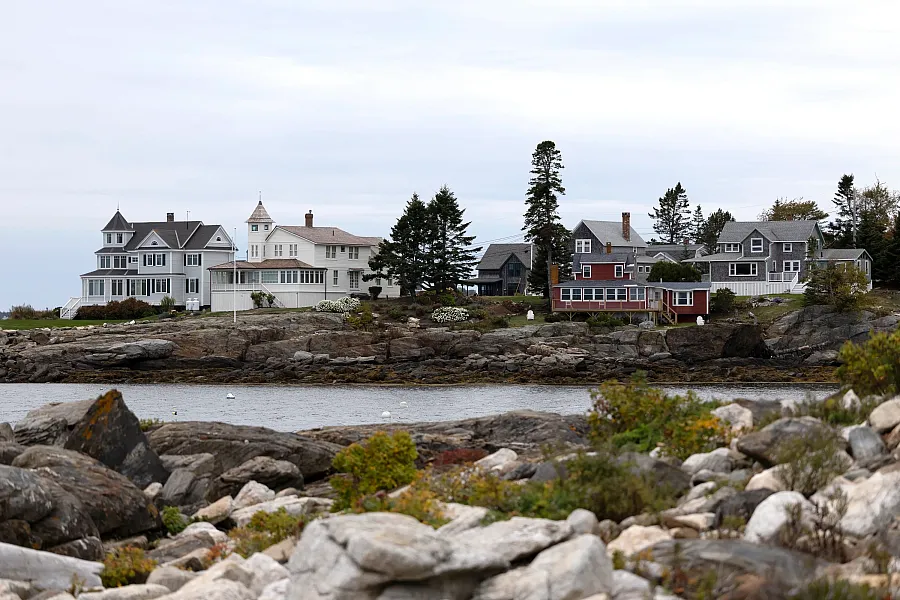
Waterfront homes in East Boothbay on Oct. 11.
Brianna Soukup/Staff Photographer
“The pockets of poverty are unseen,” said Stover, from the Community Resource Council. “You don’t see the people living in the woods or in rundown trailers.”
According to 2024 data released this summer, 47% of households in Boothbay and 46% of those in Boothbay Harbor are below the ALICE threshold. Lincoln County, with a median age of 51.4, is among the oldest counties in Maine, which has the highest median age in the country at 44.9, according to census data.
While money pumps into the region during summer, there are still families barely getting by throughout the year.
“Those who have two or three homes come in to enjoy Vacationland,” said Nicole Evans, executive director of the United Way of Mid Coast Maine. “Their dollars disappear in the dead of winter.”
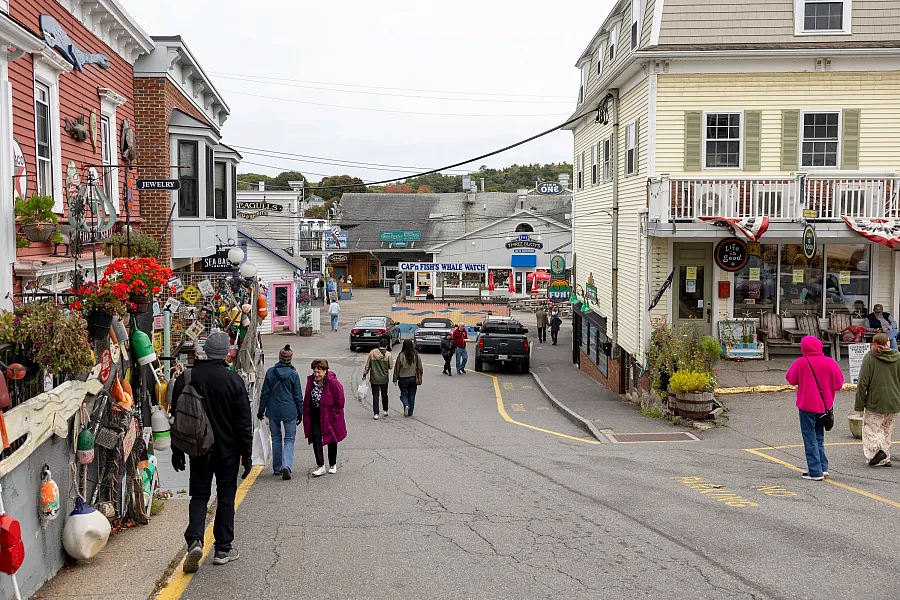
Boothbay Harbor on Oct. 11.
Brianna Soukup/Staff Photographer
People who need assistance on the peninsula often turn to the Community Resource Council. In addition to firewood and heating oil assistance, the council arranges rides to medical appointments, helps people sign up for assistance programs and provides food.
Last November, when there were fears that Supplemental Nutrition Assistance Program payments would be delayed because of a government shutdown, the council bought $250 grocery store gift cards for 283 families.
A few years ago, the council opened a community fridge behind Boothbay’s town office that is accessible all the time. Stover said a survey of local residents showed people who work different shifts had a hard time making it to food pantries during the day. Others, she said, prefer to stop in for food without the pressure of being seen or talking to people.
The community fridge is a small building with a freezer, refrigerator and shelves for bread and dry goods. Produce comes from local stores, farms and gardeners, and restaurants sometimes stock it with prepared meals.
“You can fall behind once and not go hungry,” said the Rev. Todd Weir, president of the Community Resource Council board. “Or you could fall behind every month and not go hungry.”
‘IT’S REALLY TOUGH’
On a crisp Tuesday in early October, Walls stood behind the counter of the small thrift store at the Edgecomb Community Church, chatting happily with the other volunteers and customers browsing the shop.
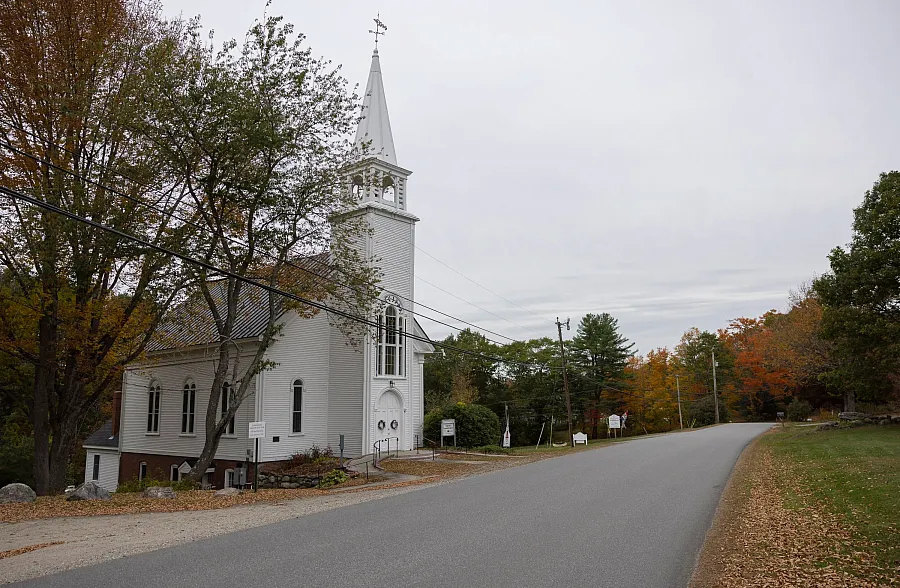
Edgecomb Community Church in Edgecomb on Oct. 11.
Brianna Soukup/Staff Photographer
After several years of hardship, she’s found a supportive community in this historic white church perched on a grassy hill.
Walls spent most of her adult life in southern York County, where she said she raised six children and worked in local stores and pharmacies. She never had enough to set aside money for retirement, but lived comfortably.
Then she got sick.
Four years ago, Walls was living in Limerick when she woke up with stomach pain so bad she ended up in the hospital, where doctors told her she had a perforated colon. Her recovery was a difficult one with multiple setbacks.
Unable to work or pay rent after she was released from the hospital, she said she had no choice but to leave her home. She gave her cat to her granddaughter and put all of her belongings in the trash or on the curb for free because she couldn’t afford to store them. She said she left with three shirts, two pairs of pants and a pair of shoes.
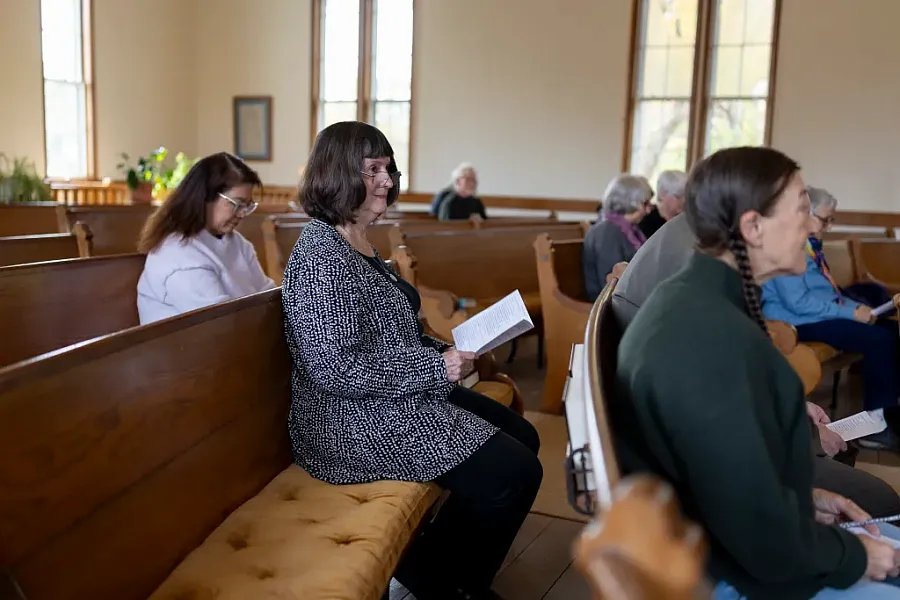
Linda Walls during service at Edgecomb Community Church on Oct. 11.
Brianna Soukup/Staff Photographer
Walls said she was scared to go to a shelter and spent four nights sleeping on the ground in a cemetery in Scarborough before her son found out and brought her home to his apartment.
A caseworker helped her navigate resources and sign up for Medicaid. Walls said she got a job and eventually a new apartment, but is now unable to work because of her health issues.
A couple of years ago, Walls said, she moved into a friend’s trailer in Wiscasset. She pays $500 in rent and helps around the house, but he covers most of the utilities.
She said she can’t afford to live on her own.
“If you’re alone and in your 70s, it’s really tough,” she said.
According to the U.S. Census Bureau, 9.5% of Mainers 65 and older are living in poverty.
Women over 75, who typically earned less during their careers and had to take time off for caregiving, live in poverty at twice the rate of men, according to the Maine Council on Aging.
Maurer, from the Council on Aging, said Social Security “masks poverty” because people receive just enough to not qualify for assistance programs. That is the case for Walls, who said she makes too much for SNAP to help pay for food.
In October, the Social Security Administration projected the annual cost-of-living adjustment for older adults and people with disabilities will go up by 3.6% beginning in 2027. That translates to $75 extra per month for recipients, but some don’t think it will be enough to offset soaring prices, according to an AARP survey.
Without government assistance, many people turn to a patchwork of local agencies. But Maurer said others may fall through the cracks because they won’t ask for help or don’t know where to find it.
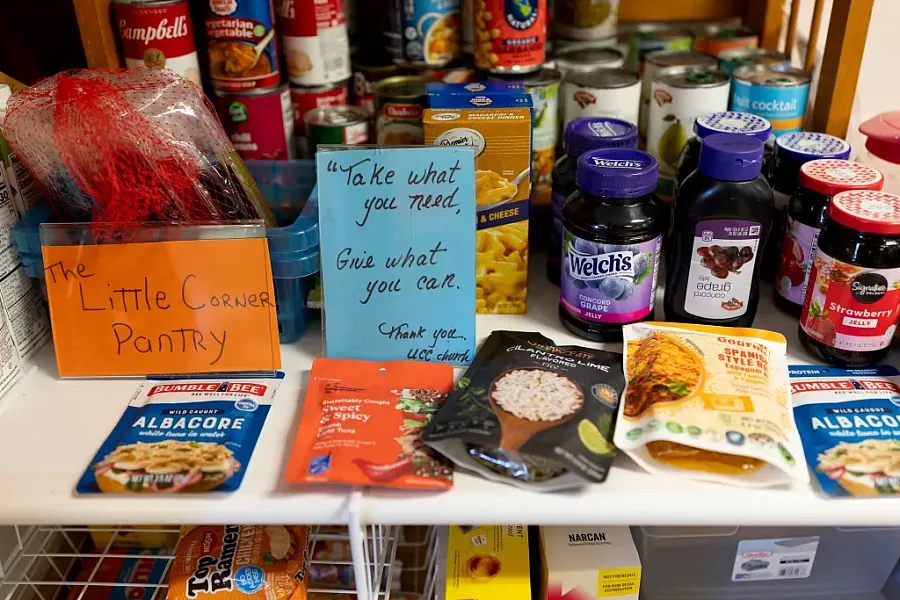
The small food pantry at Edgecomb Community Church on Oct. 6.
Brianna Soukup/Staff Photographer
“People in their 80s and 90s, they’re not going to say, ‘I don’t have enough money for food.’ They’re just not going to eat,” she said. “They’re going to keep their house at 50 degrees. They’re going to take their meds once a day instead of twice a day.”
ONE PROBLEM AWAY FROM CRISIS
On Tuesday mornings, two rooms at the Community Center in Boothbay Harbor are crowded with tables of older women playing mahjong. The clickity-clack of their tiles is nearly drowned out by the conversations about book clubs, grocery prices and grandchildren.
The center, in a nondescript strip mall, started after the local hospital closed and people were concerned about the impact on older adults in the community.
The center combats social isolation and improves people’s quality of life, but has also become a place residents can turn to for help with transportation and medical supplies, office manager Jane Carpenter said.
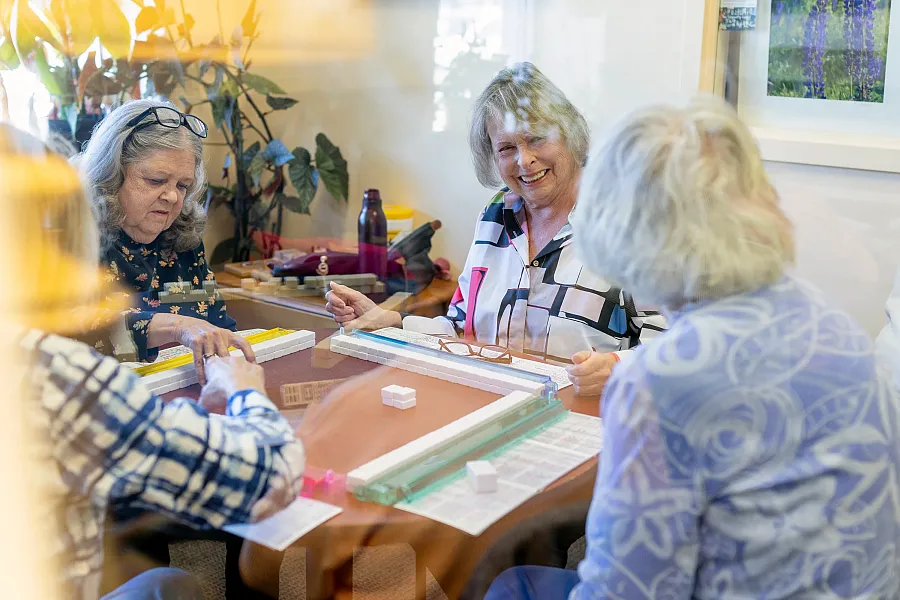
Pam Utley, left, and Pam Olson, center, play mahjong with their group in the Community Center in Boothbay Harbor on Sept. 15.
Brianna Soukup/Staff Photographer
Down the hall from the rooms where people gather to knit and play games is the medical equipment closet. The brightly lit room is lined with walkers, wheelchairs, shower chairs and canes. Shelves are crammed with incontinence supplies, braces and blood pressure cuffs.
All of it is free to take for anyone who needs it. Carpenter said the program used to serve just the immediate area, but now caseworkers from elsewhere in the county know they can call if they need to find supplies for someone.
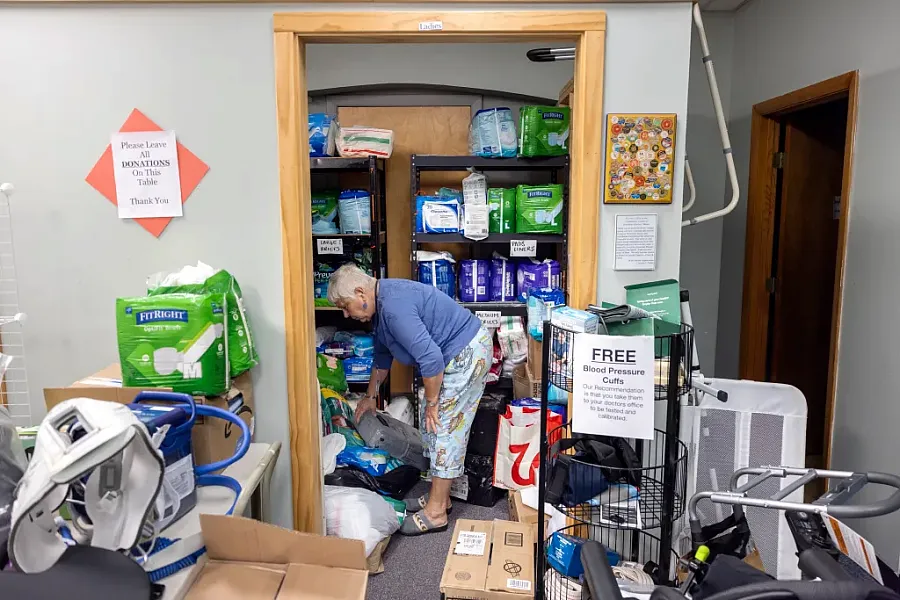
Betty Lou Townsend looks for something for a client in the free medical equipment closet in the Community Center in Boothbay Harbor on Sept. 15.
Brianna Soukup/Staff Photographer
Sometimes people seem hesitant to take what they need, but Carpenter said the no-questions-asked policy aims to reduce the stigma.
“People are very proud in this area,” she said. “They don’t want to admit they need help.”
Transportation is one of the biggest issues in Lincoln County, which has multiple peninsulas, said Katie MacDonald, director of Healthy Lincoln County, an organization that aims to improve health outcomes through food security and substance use prevention programs.
“There are some places in Maine where you really can’t get there from here,” she said. “You can see it across the bay, but it’s 45 minutes up and around to get there.”

A winding road in Edgecomb on Oct. 11.
Brianna Soukup/Staff Photographer
Healthy Lincoln County is trying to meet the needs of low-income residents, including those who can’t get to stores or food pantries, through its Community Routes program. Each month, the program delivers groceries, clothing, hygiene products and other items to people in 10 towns across the county.
Community Routes coordinator Samantha Mehlhorn said delivering these items directly to people has been “huge” for them.
“We have some great resources in our area — there are a number of food pantries — but that doesn’t mean there’s going to be one they can get to,” she said.
On the Boothbay peninsula, both the Community Center and Community Resource Council recruit volunteers to bring older residents without cars to medical appointments and to run errands, but it’s not always easy. Most of the appointments, according to organizers, are in Portland, Brunswick or Damariscotta, a distance that’s harder to get volunteers to cover as gas prices go up.
At the Community Resource Council, many of the volunteers who used to drive have aged and now need drivers themselves, Stover said.
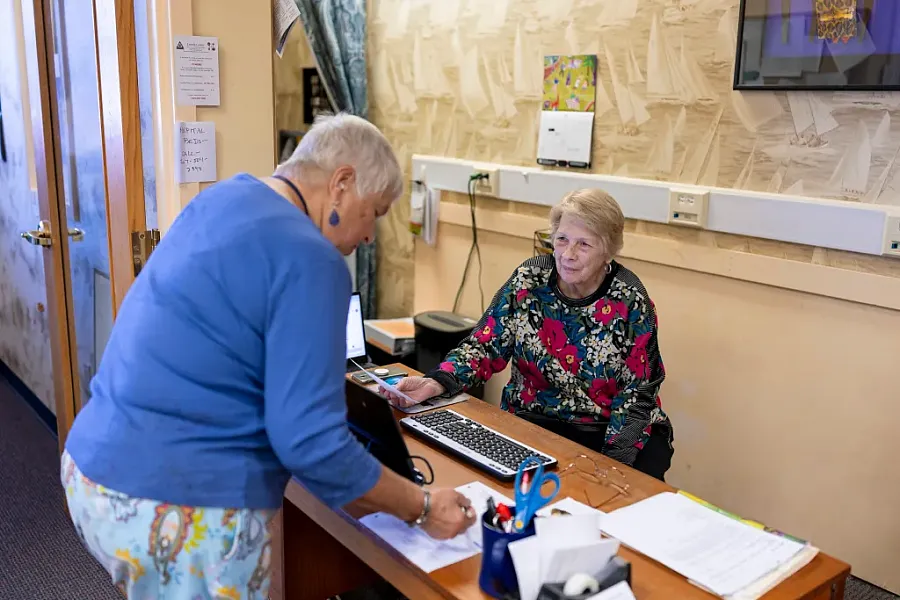
Jane Carpenter, right, talks with Betty Lou Townsend, as Townsend fills out the form for someone who took supplies from the free medical equipment closet at the Community Center in Boothbay Harbor on Sept. 15.
Brianna Soukup/Staff Photographer
“Transportation is a real concern for us. We don’t seem to have a good town- or county-generated alternative,” said Carpenter, from the Community Center. “We scramble every day to see who can drive.”
In recent years, Maine’s Area Agencies on Aging and others who work with older residents have lobbied the Legislature to support the Older Mainers Act to put more money toward various services, including transportation, meal programs, caregiver support and wellness initiatives.
Legislation introduced in the last session would have allocated $9.75 million toward those programs. At the time the bill was presented, more than 700 people were on waitlists to receive Meals on Wheels.
In 2025, the Legislature approved $3 million in one-time funding from the general fund to support the programs and services provided by the Area Agencies on Aging. But the leaders of those agencies say more support is needed as the number of older residents increases.
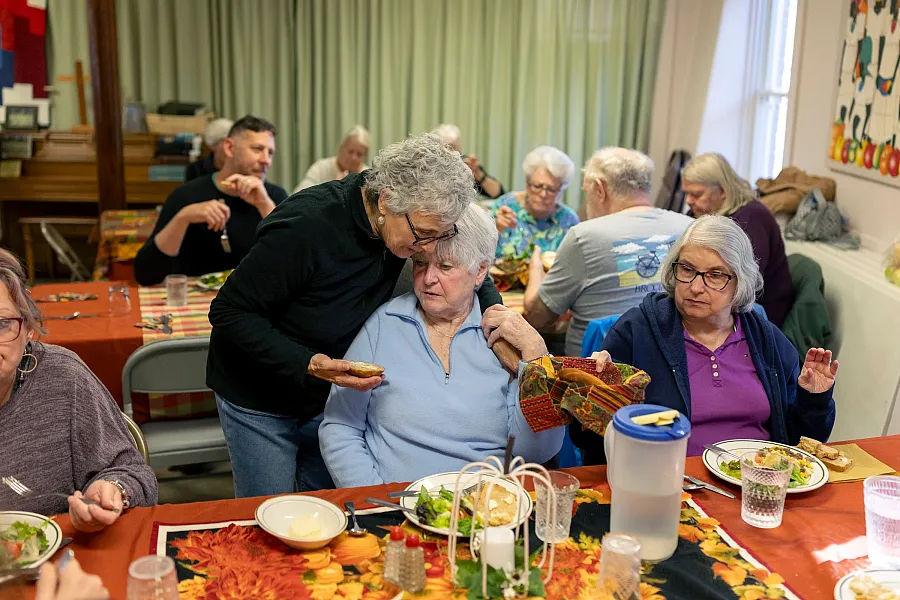
Madeline Olney greets Louise Hardina with a hug during a free community lunch at Edgecomb Community Church on Oct. 6.
Brianna Soukup/Staff Photographer
Gerard Queally, president and CEO of Spectrum Generations, said the services provided by Area Agencies on Aging prevent social isolation, help people navigate benefits, and are cost-effective alternatives to frequent emergency department visits, long hospitalizations and early placement in nursing homes.
Despite committee support, the Older Mainers Act died on adjournment in April without being funded. Advocates say they will continue to push for more funding to support Maine’s aging population.
Sharon Foerster, who was vice president of the Maine Council on Aging board of directors, said in written testimony last year in support of the bill that people wait to ask for help until they really need it.
“Far too many older Mainers,” she testified, “are ‘one away’ — one health problem away, one unexpected expense away, one home system failure away, or one loss away from crisis.”
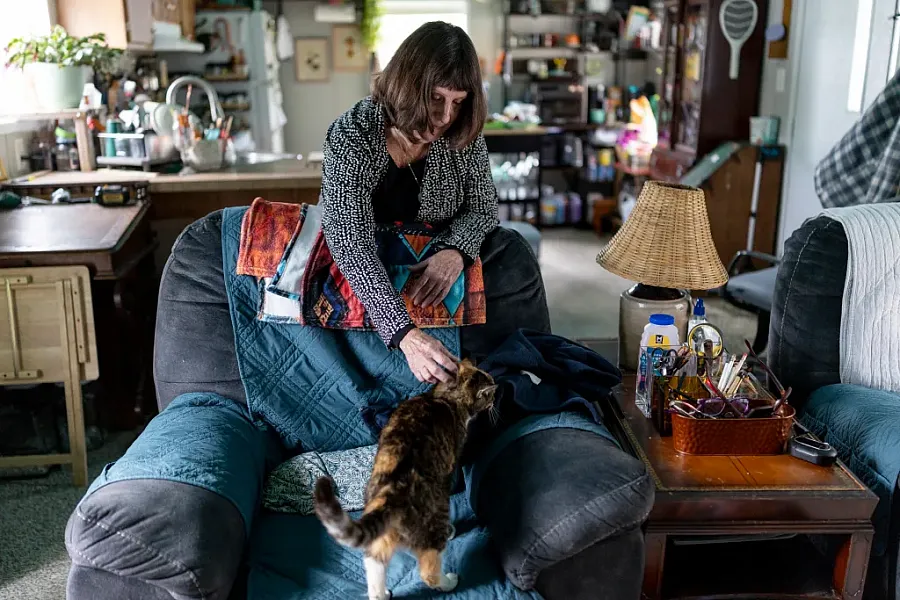
Linda Walls pets her cat Shaylea at her home in Wiscasset on Oct. 11. Walls has had her cat for 20 years and said she had to give her to her granddaughter when she became homeless.
Brianna Soukup/Staff Photographer