

Who Gets Access to Breakthrough Drugs?
They’ve been called “game-changing drugs” and “wonder drugs” — a pharma breakthrough that has ushered in the “great American GLP-1 experiment.” These much-hyped medications are transforming care for obesity and diabetes, even as doctors explore new uses for everything from sleep apnea to binge eating. Their potential to reduce the risk of chronic disease could prove especially powerful for low-income, disadvantaged patients, who suffer from chronic illness at disproportionately high rates. But the very patients who might benefit most are the ones least likely to get these drugs, due to their exorbitant cost and limited or nonexistent insurance coverage. Fewer than a dozen states cover GLP-1s for obesity in their Medicaid programs, down from 16 in 2025. It’s a policy patchwork that offers yet another example of access to health care and treatment being dictated by income, insurance status and where you happen to live. This spring, the federal government launched an initiative that aims to negotiate lower GLP-1 prices on behalf of Medicaid programs, with states joining on a rolling basis until Jan. 1. For reporters, there will be myriad questions to track: Which states will sign on? Will more low-income people get prescriptions? Are these drugs capable of bending the curve on chronic illness in vulnerable communities? In this webinar, we’ll explore whether these breakthrough treatments are poised to widen or narrow the chronic disease disparities that have long plagued America’s disadvantaged communities.
This webinar is free and made possible by The Commonwealth Fund.
Panelists
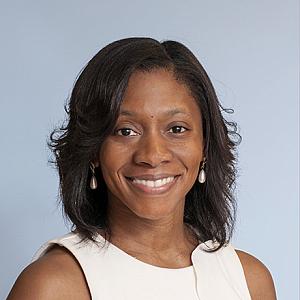
Dr. Fatima Cody Stanford is an obesity medicine physician-scientist, educator and policymaker at Massachusetts General Hospital and Harvard Medical School. Her work bridges the intersection of medicine, public health, policy and health disparities. She earned her BS and MPH from Emory University, her MD from the Medical College of Georgia as a Stoney Scholar, and her MPA from the Harvard Kennedy School of Government as a Zuckerman Fellow in the Harvard Center for Public Leadership. She completed her obesity medicine and nutrition fellowship at MGH/HMS following an internal medicine and pediatrics residency at the University of South Carolina. She has served as a health communications fellow at the Centers for Disease Control and Prevention and as a behavioral sciences intern at the American Cancer Society. Her honors include the American Medical Association Inspirational Physician Award, the Harvard Medical School Amos Diversity Award and the Massachusetts Medical Society Award for Women's Health. After obtaining her MPH, she earned the Congressional Award Gold Medal, the highest honor Congress bestows on America's youth.
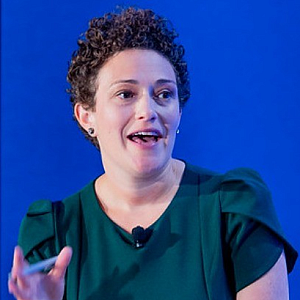
Sarah Karlin-Smith is a research director for Public Citizen’s Access to Medicines Program. Her work explores how government policies and pharma industry lobbying influence how medicines are developed and approved, what diseases are prioritized by scientists, and who gets access to treatment and at what cost. Karlin-Smith spent 15 years as a journalist covering health policy and politics with a focus on drug development and pricing in the United States for Politico, Pink Sheet and FDA News. She has appeared widely as a speaker on podcasts, TV and radio, and at conferences, speaking on topics like drug shortages and COVID-19 vaccines. She completed a bioethics fellowship for journalists at Harvard Medical school, reported on a new medical and public health school model being pioneered in Rwanda as part of an International Women’s Media Foundation reporting fellowship and completed a health reporting fellowship at the National Institutes of Health National Library of Medicine.
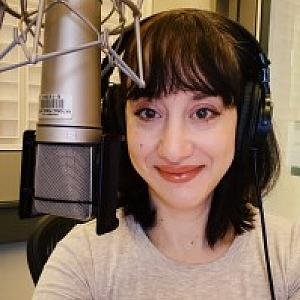
Sydney Lupkin is the pharmaceuticals correspondent for NPR, where she has reported on accelerated drug approvals whose confirmatory trials were overdue, Operation Warp Speed contract accountability, and the ripple effects of obesity drug shortages. Before coming to NPR, she was a correspondent at Kaiser Health News, where she covered drug prices and specialized in data reporting for its enterprise team. She’s reported on how tainted drugs can reach consumers, how companies take advantage of rare disease drug rules and how FDA-approved generics often don't make it to market. She's also tracked pharmaceutical dollars to patient advocacy groups and members of Congress. Her work has won the National Press Club's Joan M. Friedenberg Online Journalism Award, the National Institute for Health Care Management's Digital Media Award, and a health reporting award from the Society for Advancing Business Editing and Writing. Lupkin graduated from Boston University. She's also worked for ABC News, VICE News, MedPage Today and The Bay Citizen, with earlier stints at ProPublica, The Boston Globe, The Boston Herald, The New England Center for Investigative Reporting and WCVB.
Suggested reading
Find Sarah Karlin-Smith's slides from the webinar here.
“Medicaid Coverage of and Spending on GLP-1s,” by Elizabeth Williams, KFF
“The Health Divide: This breakthrough obesity drug is creating a big new health disparity,” by Fran Smith, Center for Health Journalism
“What's ahead for the weight-loss drugs known as GLP-1s in 2026,” by Sydney Lupkin and Scott Detrow, NPR
“Spotty insurance coverage for GLP-1 drugs gets worse,” by Sydney Lupkin, NPR
“Buy discount Ozempic here now click this link,” by Sydney Lupkin and Jeff Guo, NPR’s Planet Money
“A new chapter for online sales of obesity drug alternatives tests legal limits,” by Sydney Lupkin, NPR
“Thinking of buying obesity drugs online? Read this first,” by Sydney Lupkin, NPR
“Patients scramble as cheaper obesity drug alternatives disappear,” by Sydney Lupkin, NPR
“Patients turn to ‘gray market’ for cheaper obesity drugs, but it’s risky,” by Sydney Lupkin, NPR
“Primary care doctors raise alarm as telehealth companies get involved in obesity drugs,” by Sydney Lupkin, NPR
“Restrictions on obesity drug coverage force patients to pivot,” by Sydney Lupkin, NPR
“High Price of Popular Diabetes Drugs Deprives Low-Income People of Effective Treatment,” by Renuka Rayasam, KFF Health News
“Employers drop coverage for weight loss drugs as pharma's direct-to-consumer programs grow,” by Elaine Chen, STAT
“The end of compounded GLP-1 copies leaves many patients in a ‘lose-lose' position,” by Katie Palmer and Elaine Chen, STAT
“Petition to HHS: Expand Access to GLP-1s Through 28 U.S.C. § 1498,” Public Citizen
“Off-BALANCE? Trump’s Obesity Drug Demo May Not Live Up To The Hype,” Public Citizen
GLP-1 Medicaid Coverage by State: 2026 Tracker, The RX Index