

The Health Divide: This breakthrough obesity drug is creating a big new health disparity

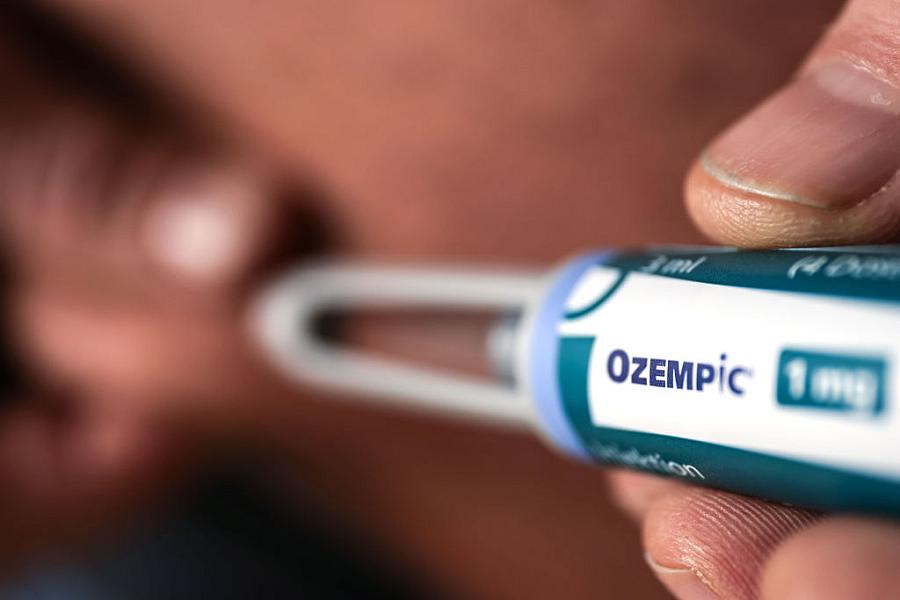
(Photo by Roberto Pfeil/picture alliance via Getty Images)
On July 1, Dr. Fatima Cody Stanford’s Medicare patients finally gained access to a treatment that may dramatically improve their health, while her Medicaid patients lost access to the same treatment because policymakers decided it costs too much.
That day, Medicare began covering GLP-1 medications for treating obesity. It marked a significant shift for a federal health insurance program that has prohibited payments for drugs prescribed solely for weight loss. At the same time, MassHealth, one of a handful of state Medicaid programs that has helped low-income people obtain GLP-1s for obesity, discontinued that coverage.
“It was a victorious day for one group, and it was tragic for another,” said Stanford, an associate professor of medicine and pediatrics at Harvard and an obesity medicine specialist at Massachusetts General Hospital.
There may be no clearer illustration of the inequitable access to these blockbuster obesity medications.
GLP-1 medications are changing lives, reducing chronic illness and pushing the bounds of what’s medically possible. Yet what happens when an expensive drug that works well for a condition affecting millions of people remains out of reach to many who might benefit?
Who gets the medication? Who doesn’t? Are these choices based purely on economics? Or does stigma influence decisions not to cover obesity medicine, especially for low-income people? Although the American Medical Association and the World Health Organization recognize obesity as a chronic disease, the idea that it’s a personal failure runs deep.
For Stanford, these are not abstract questions. “This is highly personal for me,” she said.
About one-third of Stanford’s patients at the Mass General Weight Center in Boston are on Medicaid, she said. Those who’ve been taking the medication strictly for weight loss will have to switch to cheaper, older, less effective drugs such as naltrexone.
“It’s devastating,” Stanford said. “There’s not another word I can think of for a sizable percentage of my patients.”
GLP-1s such as Ozempic and Wegovy help people shed more pounds more quickly than previously possible without surgery, and they help sustain the loss as long as they’re continued. The drugs have also been shown to lower risks of heart attacks, strokes, Type 2 diabetes, liver disease, kidney disease and other serious conditions linked to obesity. Those benefits, too, last only while the drug is taken.
Studies have shown that Black, Hispanic and Asian American adults are far more likely than white adults to have Type 2 diabetes, the first condition the Food and Drug Administration approved a GLP-1 to treat. But people of color are much less likely to be prescribed GLP-1 for that disease. They’re also less likely to get GLP-1 prescriptions for weight loss. And prescription rates are lower in poorer neighborhoods than in higher-income ones.
The price has dropped since the GLP-1s first came on the market in 2005. Still, a health plan or a patient paying out of pocket may spend $350 to $1,000 a month, depending on rebates, discounts and other deals.
Steep prices haven’t stopped GLP-1s from becoming a hot item in Hollywood. But multiply the price over a lifetime for the 40% of Americans who have obesity, or the 70% who are overweight, and you can see the problem for commercial and public insurers. Only 36% of employers cover GLP-1s for obesity through their health plans.
Federal policy requires state Medicaid programs to cover GLP-1s for Type 2 diabetes, cardiovascular disease and obesity-related sleep apnea — FDA-approved purposes. Although the FDA has also approved GLP-1s for obesity treatment, the government lets states decide whether to cover the drugs for that reason.
Most states have declined. And some that paid for GLP-1s for weight loss for a while have since limited eligibility or dropped coverage altogether, as the costs explode and budgets get hammered by massive federal cuts to health care.
California, New Hampshire and South Carolina eliminated coverage earlier this year. Pennsylvania did, too, after the state’s GLP-1 costs soared from $233 million in 2022 to an estimated $1.3 billion in 2025. Massachusetts expects to save about $15 million by limiting GLP-1 coverage for weight loss, according to The Boston Globe.
In May, the federal government launched an initiative called BALANCE (Better Approaches to Lifestyle and Nutrition for Comprehensive Health) to negotiate lower GLP-1 prices on behalf of Medicaid programs. Participation by drug manufacturers and states is voluntary. States have until Jan. 1, 2027 to opt in.
Reporters can track the program’s progress. Which states and manufacturers join? Are more low-income people getting prescriptions? Can treatment alone bend the curve on obesity and chronic illness in communities with limited access to healthy foods, safe parks and playgrounds, and primary care?
Medicare coverage of GLP-1s for weight loss is another story to follow. Eligible patients have only a $50 monthly co-pay, so demand may be huge. Older patients have the most to gain from the treatment, because they have the highest risk of the catastrophic events and the chronic illnesses that GLP-1s may stave off, Stanford said.
About one-third of her patients are on Medicare. Until now, some have paid for GLP-1s out of pocket. Some desperately wanted the medication but couldn’t afford it. And some who took GLP-1s when their employer-based health plans covered the drugs had to stop the treatment when they retired and switched to Medicare for insurance.
The new Medicare coverage is a big deal for a lot of people.
But the program, called Bridge, is slated to expire in December 2027. It’s unclear what will happen after that. Meanwhile, the fact that Medicare is now paying for weight-loss prescriptions doesn’t mean it will approve them for a given patient.
There are various requirements for eligibility depending on body mass index and co-morbidities. And there are layers of prior authorization. The government has not created streamlined systems to facilitate approvals or support patients, health care providers or pharmacies as they puzzle through new rules and paperwork, Stanford said.
Affluent, highly educated patients may be able to navigate the bureaucracy. So may patients who have access to major treatment centers with entire offices devoted to dealing with insurance. The hurdles will be more challenging for patients who rely on overburdened, under-resourced clinics or primary care doctors who treat obesity among dozens of other conditions and are pressed to squeeze appointments into 15-minute blocks.
This reality begs another question for journalists to pursue: Does Bridge deliver GLP-1s to patients who need them most? Or does it further widen the already considerable gap between those who receive state-of-the-art obesity treatment and those who are shut out?