

Image

Bailey Loosemore
Food & Culture Reporter
Food & Culture Reporter
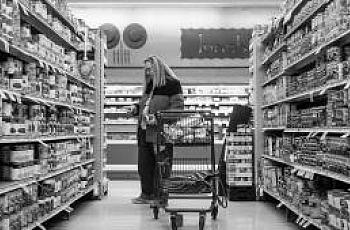
A questionnaire helped a reporter find more than a dozen Louisville residents of different neighborhoods and backgrounds who all faced similar problems.
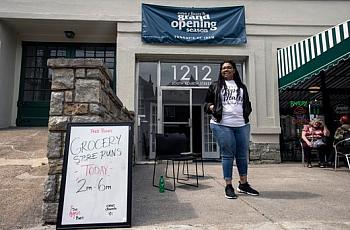
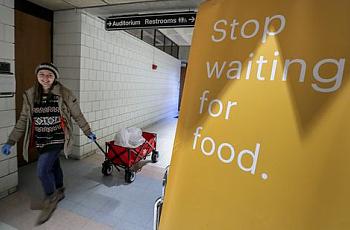
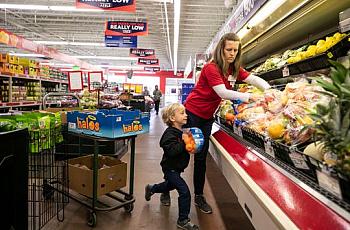
The Hope Buss offers free rides to the grocery store for people without personal transportation.
The Courier Journal's continued coverage of food insecurity in Louisville is supported by the University of Southern California Center for Health Journalism's 2018 National Fellowship....
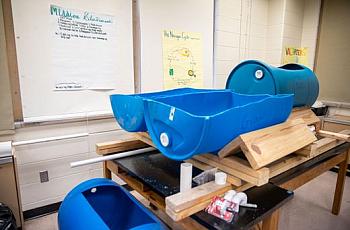
Deep within the hallways of Western Middle School for the Arts, a garden-topped fish tank invites passersby to watch food production at work.
Across the country, students from low-income households are enrolling in college at increasing rates — with 39 percent of undergraduates falling at or below 130 percent of the federal poverty line in 2016, according to data from the National Postsecondary Student Aid Study.
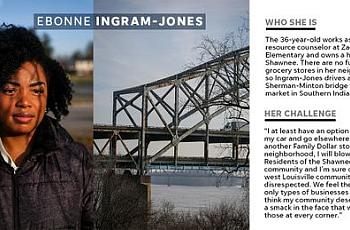
Last week, the Courier Journal published a series of stories that explored food access in Louisville. The articles showed how inadequate access to groceries can lead to health disparities in predominantly low-income neighborhoods.
This story follows up on a series of articles that explained how food access issues arise and how the Louisville community is pursuing long-term change.
Louisville neighborhoods without grocery stores have higher risks of developing illnesses. And it's costing us millions in emergency health care.
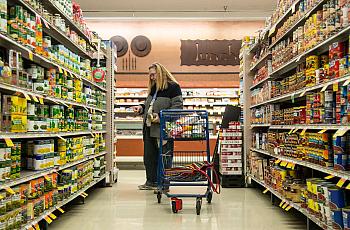
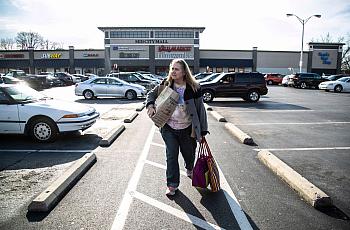
Across Louisville, more than 44,000 people live within food deserts, meaning they can't easily get healthy, affordable food. Here are some key takeaways from The Courier Journal's coverage of the issue.
In Louisville's Hazelwood neighborhood, where a third of the residents live in poverty, an urban farm has grown from the site of a former low-income housing complex.