

The Health Divide: The AI data center boom will harm the health of communities that can least afford it
Author(s)

Image
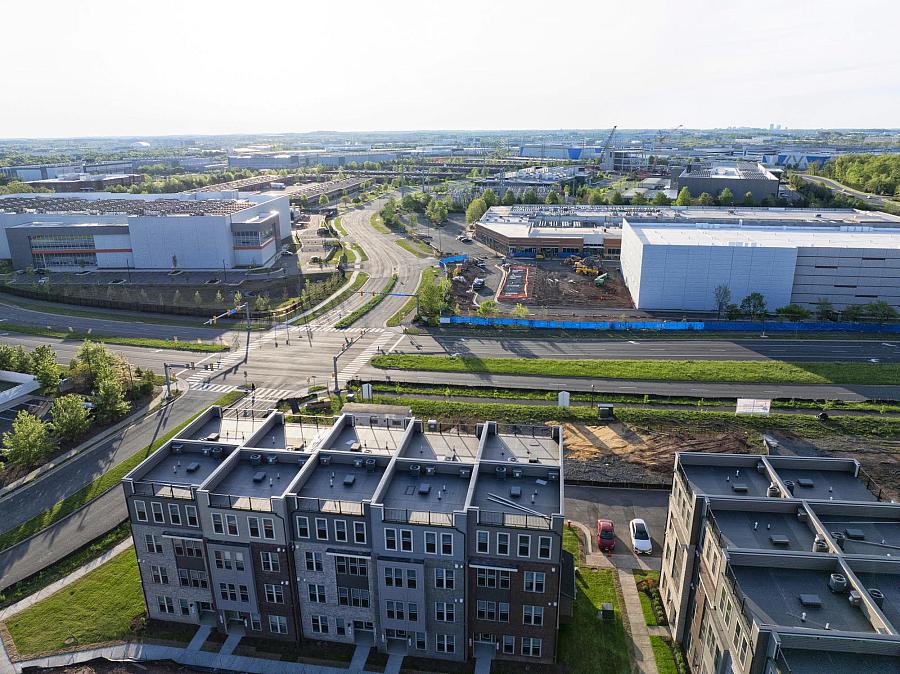
A residential community next to data centers in Ashburn, Virginia.
(Getty Images)
Published on
January 20, 2026
The rapid expansion of supersize data centers to power AI may not seem like a big story for health journalists. The growing public backlash has focused on the environmental impact: the massive use of electricity, the strain on already-stressed power grids, and the consumption of so much water it can drain local supplies.
But these facilities also rely heavily on air-polluting fossil fuels that pose significant health threats.
The risks will grow as the data center building spree continues and the federal government rolls back environmental and health protections. And the toll will be heaviest in marginalized communities.
These are places that have borne the brunt of decades of industrial development, hazardous waste disposal, freeway emissions, contaminated water and all the associated health problems. Now these communities have an outsized share of data centers, with more and larger ones on the way.
A new report from the Kapor Foundation, which advocates for racial equity in technology, points to “an emerging and troubling national trend where Big Tech and data center developers are choosing vulnerable communities as sacrifice zones” in the race for global dominance in AI.
“It’s just going to make air pollution burdens worse,” said Eric Nost, an associate professor of geography at the University of Guelph.
Data centers are being built faster than grid connections and capacity can accommodate. As utilities warn of multiyear delays, some facilities generate their own power with huge gas generators.
Many others don’t rely exclusively on their own power sources, but they have backup diesel generators that are used as needed and tested regularly.
Either way, the generators spew noxious chemicals into the air. These include fine particulate matter, nitrogen dioxide, sulfur dioxide and volatile organic compounds — a smoggy stew linked to lung cancer, respiratory ailments and higher risks of cardiovascular disease, cognitive decline and early death.
Data centers also fuel pollution indirectly. The huge amount of electricity they devour is typically produced using gas or, even dirtier, coal.
In an analysis published in 2024, a team led by researchers at the University of California at Riverside estimated that by 2028, data centers could contribute to roughly 600,000 asthma cases a year nationwide, and 1,300 premature deaths from the condition.
The researchers calculated that the staggering amounts of energy and industrial infrastructure needed to train a highly sophisticated large language model can produce air pollutants equivalent to making 10,000 round trips by car between Los Angeles and New York City.
Although pollutants can travel — and harm people — hundreds of miles away from a data center, the risks are greatest in neighboring communities. Nost and Lelia Marie Hampton, a Ph.D. student at MIT, analyzed information on 550 data centers across the U.S. They found that areas within a mile of these facilities tend to be disproportionately communities of color and have air pollution levels above the national average.
The facilities that Nost and Hampton studied represent only about 10% of all data centers in the U.S. so the findings can’t be generalized. But the pattern is consistent with stories and research emerging across the country.
Last week, the Environmental Protection Agency ruled that Elon Musk’s giant xAI data center in Memphis had illegally used 35 truck-sized methane gas turbines to power the facilities. The center is just a few miles away from the historic Boxtown neighborhood, where 90% of residents are Black and the median household income is $37,000.
Andrew R. Chow of Time magazine told the story of the data center and the area in August. Once a mecca for Black rural residents because it housed so much industry, Boxtown later became a case study in corporate abandonment and disinvestment, then a dumping ground for chemical waste, and eventually home to a Superfund site.
In a place so battered by contamination, it can be hard to pinpoint the precise sources of air pollution. But a study by researchers at the University of Tennessee, Knoxville, commissioned by Time, found that the peak nitrogen dioxide level rose by 79% after the xAI data center began operating.
Earlier this month, journalist Adam Mahoney of Capital B wrote aboutresidents in rural Colleton County, South Carolina, who are waging a battle on two fronts: to stop a proposed data center complex the size of 1,200 football fields, and a new gas plant and pipeline to power the place. Plans for the complex came to the county, where 23% of residents are poor, and 41% are Black or Latino, after the developers tried and failed to site a similar behemoth in a whiter, more affluent area.
Even in California, which has some of the nation’s most progressive environmental protection policies, data centers are overwhelmingly sited in marginalized communities already struggling with over-industrialization and hazardous conditions, not to mention poverty, high rates of chronic illness, and limited access to health care, according to the recent report by the Kapor Foundation. For instance, the report revealed that 82% of data centers in California are in areas with poor air quality.
The federal government’s recent actions will take us further down this road. In a July executive order, President Trump called for accelerating the development of data centers by speeding up environmental reviews, modifying landmark protections like Clean Air Act, and building on brownfields and Superfund sites, which are almost always in the nation’s most distressed communities.
And earlier this month, the Environmental Protection Agency abandoned its longstanding practice of calculating how much money is saved in health care costs by limiting air pollution. Instead, the agency will consider only the costs to industry.
Given the administration’s priorities, it’s hard to imagine the government will fund new studies to assess how the data center juggernaut is affecting public health. And the industry is notoriously opaque. There is no comprehensive open-source data set about these facilities, and details about them are often shrouded in proprietary secrets.
That makes it all the more urgent for journalists to track the story of community health impacts.
Hampton urged journalists to talk with locals — residents, doctors, local officials and others — about data center plans and operations. “It’s really important to have community opinions about what's going on.”
“The more reporters report, the more data we have,” she said.