

Stolen Bloodlines: Sterilization and the fight for reproductive justice in Indian Country

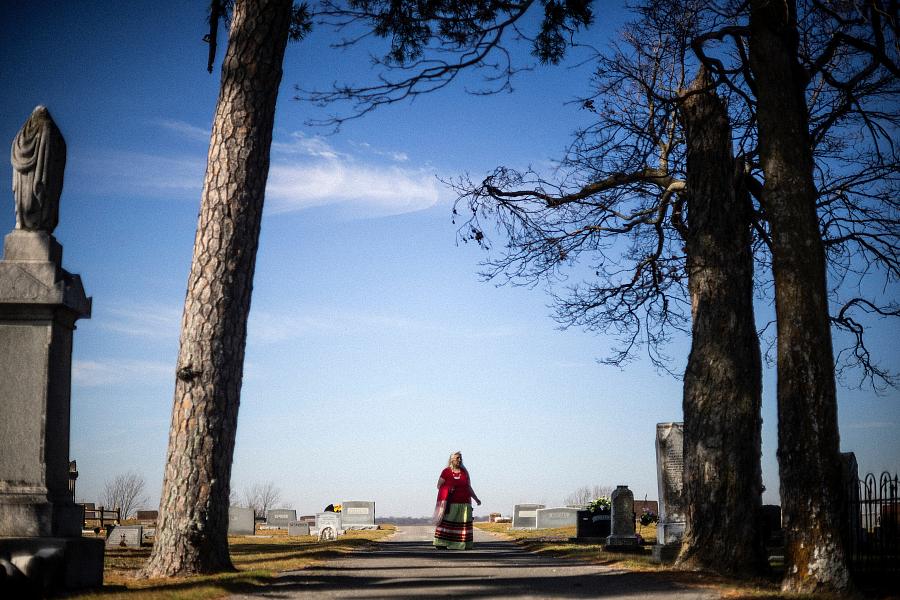
Patti Jo King visits the Tahlequah Cemetery near her home in Tahlequah, Oklahoma.
(Photo by Shane Bevel for The Imprint)
Years ago, while researching another story, I stumbled across an image of a 1976 newspaper clipping that stopped me cold. The shocking headline, “Government Admits Sterilizing 3,400 Native American Women,” was accompanied by fewer than 100 words, which begged far more questions than it answered. Given the casual depravity of such an admission with no context, I put the clip in a folder vowing to follow up and investigate later.
At the time, it brought back memories of whispered stories from my childhood in northeastern Oklahoma about Native women who couldn’t have children. I neither understood those hushed conversations, nor connected the dots to what was happening to Indigenous people across the country. Prior to the Internet, most Native communities were isolated from one another, with little access to national news or broader conversations, making it nearly impossible to recognize patterns of systemic abuse beyond their own local experiences.
Back then, no one talked openly about being sterilized or the existential pain these women no doubt suffered through no fault of their own. Being poor and Native, they were forced to rely on the Indian Health Service or county hospitals as their only access to health care — only to be misled and violated by doctors in ways that were grotesque in their callousness and disregard for human rights.
While public attention often focuses on abuses in state institutions or the Nazi regime’s forced sterilization of “undesirable” populations, the impact of U.S. government sterilization policies on Native communities has received far less examination. Though these procedures had been performed since the 1930s, approximately 70,000 Native women were sterilized in the 1970s alone. Experts now estimate that the total number of Native adults and children sterilized in the 20th century could run well over 100,000.
As I began researching this project, I uncovered far-reaching, coordinated policies and patterns of reproductive control in which not only women, but also men and children, were sterilized in institutions that were intended to provide treaty-mandated health care to tribal communities. For example, many Native patients were subjected to “exploratory surgeries” under vaguely written consent waivers that removed legal liability, leaving them vulnerable to sterilization when they sought care for unrelated medical issues.
Forced to grapple with their longing to have children and bloodlines lost forever, victims carried an incomprehensible grief. Many languished in silence, battling depression, addiction and long-term psychological damage that was ignored by the government and the medical profession that had stripped them of the most fundamental part of their humanity.
For women like Dr. Patti Jo King, a citizen of the Cherokee Nation, who was sterilized for a treatable ovarian cyst at 20, it became a defining wound from which she has never fully healed. In fact, Native women across the country reported being pressured to sign waivers while in labor or under anesthesia, being misled about a procedure’s reversibility, or threatened with loss of benefits or removal of their children if they refused. Men and children received sterilizations during unrelated surgeries for, say, tonsillectomies and appendectomies, discovering years later they had been given tubal ligations or vasectomies without their knowledge or consent.
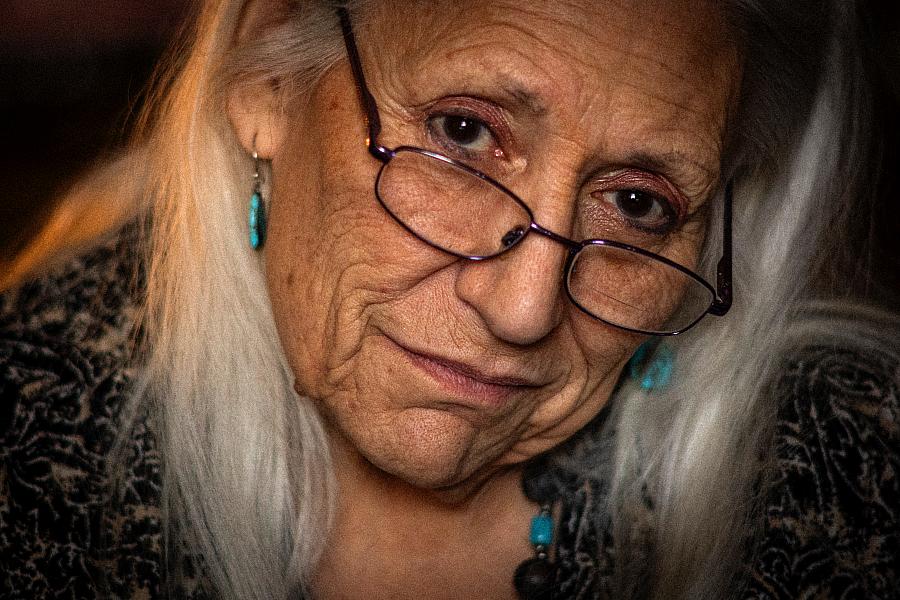
Patti Jo King, now 73, was asked to sign a vaguely worded waiver before surgery at age 20 that made her uneasy. She recalls it mentioning the word “sterilization.”
(Photo by Shane Bevel for The Imprint)
My investigation also revealed that Congress and federal agencies wielded their legislative power, regulatory control, and federal law enforcement authority to carry out a nationwide campaign starting as early as the 1930s. For instance, “field matrons,” white women employed as agents of federal policy, monitored Native households, dismissed the authority of Native midwives, and pressured pregnant women to deliver their babies in government hospitals where they could be monitored and brought under strict federal medical control.
As a result, Native bodies became battlegrounds where policy and prejudice intersected — not only through structural vulnerability and power imbalances, but also through surveillance and control.
Law enforcement and female federal agents, for example, enforced compliance by threatening Indigenous midwives with jail, forcing Native women to go to Indian Health Service hospitals for deliveries, and dictating how women should bear children, raise families, and manage their bodies. When their doctors presented sterilization as routine or even necessary without evidence, as King’s doctor did, the line between consent and coercion all but vanished.
Forced sterilization in Native communities was not mere institutional negligence or a misunderstanding of the facts. It was a policy implemented by a government bent on eradication and a medical establishment untethered from the Hippocratic oath.
Under federal policies that emerged in the 1960s and 1970s, “family planning” was framed as anti-poverty, yet within Native communities, limiting birth rates carried profound cultural consequences. For tribal nations already devastated by disease, warfare and displacement, these acts were another form of genocide, raising uncomfortable questions about the “right to life” and how law and policy were weaponized to deny reproductive rights to Indigenous people.
The 1970s are not distant history. Many of those affected, including Patti Jo King, are still alive. Children who were never born represent deep personal losses and lasting demographic impacts to tribal nations — Native people today comprise less than 2% of the total U.S. population. In communities where cultural transmission, language, and kinship are threatened, the ability to have children is critical to collective survival.
Yet this story also illuminates the resilience of Indigenous communities. Out of decades of abuse, Native-led birth justice initiatives have emerged to reclaim autonomy, health, and cultural continuity.
Nicolle Arthun (Navajo Nation) leads policy reforms shaping Indigenous birth justice, transforming maternal health systems through federal policy, funding, and advocacy that center tribal sovereignty and culturally aligned care. Shavonne Stevens (Seneca Nation of New York), founder of Love What I Doula, embodies this reclamation in practice, providing birth and postpartum care rooted in Indigenous traditions.
Across Indian Country, Indigenous midwives and doulas are establishing community-based programs and insisting that Native families receive health care free from the racism and paternalism that has defined their experiences with Western medicine for centuries. Their efforts include building ceremonial birth lodges and tribal birthing centers, facilitating home births and restoring reliance on traditional medicines and Indigenous birth practices. Services include pre- and postnatal clinical and cultural support, patient advocacy, mental health services, accompanying mothers to medical appointments, and holding in-person and virtual workshops and sharing circles.
Their efforts directly confront the legacy of IHS abuses and the medical establishment’s historical role in genocide.
Confronting this history is not about assigning blame but recognizing patterns and building systems in which reproductive justice in Indian Country means true partnership with tribal communities and accountability from the institutions that serve them. It requires acknowledging the right to quality health care, to have children, to raise them according to tribal customs, and to do so free from state interference. These rights are inseparable from tribal sovereignty — a principle enshrined for nearly half a century in the Indian Child Welfare Act.
In the five centuries since colonization began, Native women and children have paid the highest price for these policies. Their fertility was targeted, their families torn apart, and their kinship systems deliberately dismantled. They were subjected to war, starvation, disease, boarding schools, and foster care removals in a sustained campaign to reduce or erase Indigenous nations altogether.
We can therefore view the history of sterilization not as a footnote, but a lens. It compels us to acknowledge the ongoing maternal health crisis in Indian Country, which remains one of the most severe in the United States. American Indian and Alaska Native women continue to experience dramatically higher rates of maternal mortality than their counterparts — due in large measure to generations of systemic neglect, underfunding, and lingering distrust in federal health systems that continue to put lives at risk.
These statistics underscore the need for tribal communities to be at the center of shaping the policies that affect them the most. If we are serious about reproductive rights, we must be equally serious about reproductive justice by addressing their unmet needs with workable policies, resources and support.
In the end, this story is not solely about the past, but a call for meaningful justice by doing the necessary work to protect and ensure the survival of Native families and tribal nations for generations to come.