

AI is Filling Gaps in Latino Mental Health Care, But at What Cost?
This story was co-published with Radio Bilingüe as part of the 2026 Ethnic Media Collaborative, Healing California.

Michelle Correa describes herself as an anxious person. She is 35 years old and works at a high school in the Bay Area. She says she likes to be in control, to have certainty and stability in her life. To learn how to manage her emotions, she goes to therapy. And, as you might expect, before her appointments with her psychologist, she likes to prepare.
“Many times I rehearse my conversation before going to therapy, or after therapy I remember things I wanted to mention, or I realize I forgot to say something.”
To avoid letting ideas slip away and to feel prepared for her sessions, she uses a tool that is becoming increasingly common.
“I use ChatGPT to organize my thoughts. Even though I go to therapy and read a lot of self-help books, I like to get to the root of my behavior, my emotions, and my mental health. So yes, I use it a lot to ask questions like why, what for, where this comes from, why I feel this way, why I react this way.”
Michelle uses the chatbot as a therapeutic assistant. And she is not alone. Since the launch of ChatGPT in 2022, more and more people have incorporated it into their daily lives. This artificial intelligence tool is based on what’s known as a large language model. Unlike traditional bots that follow pre-programmed rules, ChatGPT — and other AI platforms like it — are designed to understand context, maintain fluid conversations, and perform complex tasks such as writing, coding, and searching for information.
Essentially, such conversations simulate human interaction, which has attracted many users. In 2025, 31% of Americans had used ChatGPT, according to the Pew Research Center.
For many Latinos facing cost barriers, long waitlists, and a shortage of Spanish-speaking therapists, chatbots have emerged as one of the most accessible options for mental health support.
And there are many different reasons, according to Dr. Karthik V. Sarma at the University of California, San Francisco who specializes in the use of artificial intelligence in psychiatric practice, for why someone would use a chatbot.

Dr. Karthik V. Sarma of the University of California, San Francisco
“Therapy might be very expensive. Or if you're trying to find a therapist that your insurance covers, there might be a long wait list. But also, especially if you're not doing well, if you're feeling really down or really anxious, the idea of having to find that therapist to search through all these names, to call a bunch of people to try to make an appointment, that itself can be really overwhelming.”
The lack of culturally competent care adds onto the list of reasons for using a chatbot; a Latino might live in an area where there are few therapists who speak Spanish, or they’re in high-demand.
According to the National Alliance on Mental illness, the Latino community live by the phrase "la ropa sucia se lava en casa" — don't air your dirty laundry in public — and some avoid seeking mental health treatment out of fear of being labeled "locos" or bringing shame to their families.
And Dr. Sarma says there’s also the added layer of comfort with sharing personal information with another human being.
“There are people who really don't want to talk to a person about their problems, who feel more comfortable talking to a chatbot about their problems.”
But on the flip side, when a non-native English speaker uses a chatbot, there is evidence to suggest that it is not culturally competent.
According to a report from MIT on large language models and vulnerable users, researchers found that chatbots respond differently depending on a user’s English proficiency, education level, and country of origin.
When the model identifies a non-native English speaker as the user, they tend to respond in condescending, or mocking ways — sometimes even mimicking broken accents — while also withholding accurate information more often than they do for native English speakers.
For Latinos, this means that accessing AI therapy has the potential to be damaging because it is not culturally sensitive or equipped to interpret the nuances of non-native English speakers. Michelle chats with it in English because the translation to Spanish tends to not be accurate: the model is trained mostly in English and also doesn’t pick up on the Mexican slang she uses. Although she says she communicates in Spanglish with it sometimes.
According to a report by Texas A&M, even the cultural language someone uses to describe their psychiatric conditions can be misinterpreted by chatbots and lead to a misdiagnosis. Large language models are trained on particular data sets and may not “understand other cultural expressions and provide inadequate or inappropriate responses."
Michelle is part of the 66% of Latinos who have used AI tools such as ChatGPT or Gemini. According to a report published by Youth Mental Health Tracker, around 10% of Latino youth aged 13-24 reported using AI for mental health support.
Like many people, Michelle started using artificial intelligence about a year ago for work-related tasks: generating images for flyers, writing emails, and checking her English grammar, since English is not her first language. Gradually, it became a kind of assistant for everyday tasks, until she started sharing her thoughts and feelings with it.
Dr. Sarma explained to me that one of the most common uses among people who begin using AI is emotional support. It’s an ideal tool for spur of the moment emotional resolve because it’s free, responds quickly and is always available.
“It lends itself to, ‘Oh, well, it's 11 PM and I'm having a fight. What do I do? Oh, I know what I can do, I can ask ChatGPT.’”
For Michelle, accessibility is one of the main reasons she uses the tool.
“My emotions can be so intense that in the moment I want to find a quick answer, so yes, I’ll turn to GPT right away.”
Dr. Sarma says there is no “one answer fits all” reason as to why people use chatbots in this manner. But he says, for many, it’s a lack of access to therapy due to high cost, long waiting lists, and even the process of finding a therapist, which can be overwhelming and cause an already anxious person to experience more anxiety. He also says there are people who prefer conversing with a chatbot over a person.
I asked Michelle to show me how she uses it. She recently went through a romantic breakup. In her words, ChatGPT has helped her process an emotionally complex and confusing situation more clearly.
“So, for example, when I have some interaction with my ex, I tell ChatGPT what happened, and it knows who I’m talking about. It knows who that person is to me and how I feel about him.”
And the chatbot responds …
“‘Michelle, that sounds incredibly intense. Your nervous system went into overdrive.’ ‘These aren't signs that you are weak or crazy. Those are signs that you were emotionally activated. And when we're activated, we start looking for relief.’”
For Michelle, this response validates her feelings. But she acknowledges that the tool isn’t as useful as a conversation with her therapist.
“Well, talking with a human, you don’t know where the conversation is going to go. You can start talking about one thing and you end up talking about another. It’s way different talking to a professional that can share advice from their own life experience and from that of their friends and family than that of a robot that has no feelings and thinks it knows everything.”
And it is precisely at that point that the tool moves from being an assistant to becoming a potential risk: the chatbot is not a trained therapist, but rather a computer program designed to affirm user’s emotions or thoughts, even the negative or dangerous ones.
Shortly after the release of the chatbots, in 2023, two reports surfaced of individuals discussing suicidal thoughts with chatbots; a man in his thirties in Belgium and a 13-year-old girl in Colorado. After discussing their ideations with the chatbots, neither of which were therapy bots, both individuals died by suicide.
Although it is difficult to determine what leads individuals from duress to dying by suicide, experts studying AI, like Dr. Sarma, are concerned about the influential role that language models play in an individual's psychological health.
He says that it’s difficult to assess how much harm a chatbot causes; it’s a chicken and egg situation. Individuals with mental health challenges may not have the resources, knowledge or understanding of the value of speaking with a trained psychologist, so they turn to the resource most easily available, which happens to be a low quality resource; an AI chatbot.
“We have to acknowledge the fact that people are doing this speaks to some need that people have that we're not able to meet in the ‘right way.’ And I think that that speaks to our society and the resources we have and the resources we're not providing to people who are in need. And it seems to me that the best solution would be for us to find a way to get people access to the mental health support that they need in a way that's easy, that's accessible, that isn't financially ruinous.”
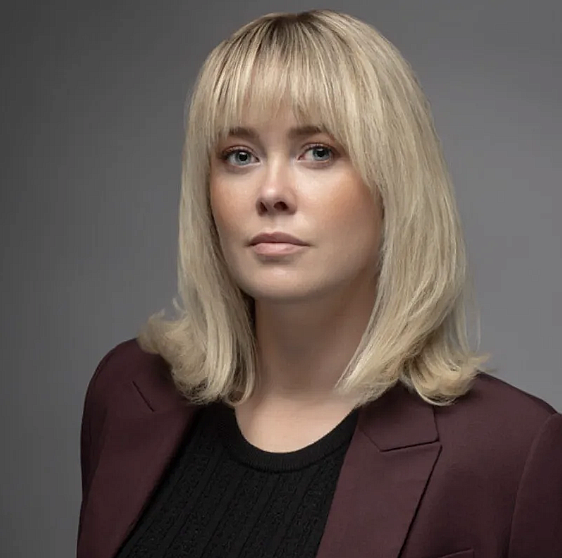
Sarah Kay Wiley, managing director at Tech Justice Law
With these concerns in mind, I sought out attorney Sarah Kay Wiley from Tech Justice Law, a group of attorneys and community advocates who have represented cases involving people who developed dependent relationships with AI tools, with fatal outcomes.
For example, in 2024, the organization took on the case of García v. Character Technologies, the first lawsuit to accuse an AI company of wrongful death due to negligence.
Since then, around 20 lawsuits have been filed against other companies, including OpenAI, the creator of ChatGPT.
“They are designed with features that are very problematic. And it is truly concerning that these companies are using whole populations as guinea pigs for their products. We have so many other safety measures in place in other industries where there's checks before a product is determined safe and then released to the public. There definitely needs to be more regulation in terms of what safety benchmarks these companies need to hit before they're releasing these products to the public.”
What Wiley is referring to is the rolling updates that these companies give their chatbots. Because of how lucrative the AI industry is, every developer releases their product as quickly as possible. According to the Texas A&M report on AI therapy chatbots, the global health AI market share is anticipated to increase almost eight times from $20.9 billion in 2024 to $148.4 billion in 2029.
The report concludes that AI therapy chatbots may increase access to mental health treatment, they "exist in a regulatory vacuum ridden with pitfalls," and calls for the FDA to regulate them as medical devices.
“Certainly they're not able to provide the best help and everyone deserves the best help.”
Although Michelle says the chatbot helps her feel less shy and nervous, she admits she has developed a complicated relationship with the tool.
“Right now, at this point in my life, I’m using it every day. I had gone about four months without using it—I had deleted it and gotten rid of it. So yes, it can become kind of addictive.”
And that is another aspect that concerns experts: its potentially addictive nature.
Dr. Sarma at UCSF is the founder of a research group studying the effects of artificial intelligence on mental health. This is one of the first initiatives in the world to document a case of psychosis associated with chatbot use. They are now analyzing patients’ chat logs to examine the relationship between what they tell chatbots and how it corresponds with their treatment.
“Maybe we could learn more about mental illness by looking at what people are talking about with their chatbot, because it's just this massive trove of information about how somebody is thinking and interacting in the world that otherwise we have no access to.”
For her part, Michelle is trying to stop using ChatGPT. Since she began using it last year for emotional support, she’s noticed its addictive quality.She even told me she feels like it’s making her dumber.
“I know I’m an intelligent person, but a lot of the time it’s just so much easier to ask ChatGPT. I strive for perfectionism and ChatGPT gives it to me.”
To achieve that, she is undergoing Dialectical Behavior Therapy.
“It’s specifically about developing tools to replace ChatGPT in real time with myself. So I hope I won’t need to use it the way I’m using it right now.”