

"The Burnout Is Real": The Psychological Toll on SoCal's ICE Watch Teams One Year In
This story was produced in collaboration with La Opinion.

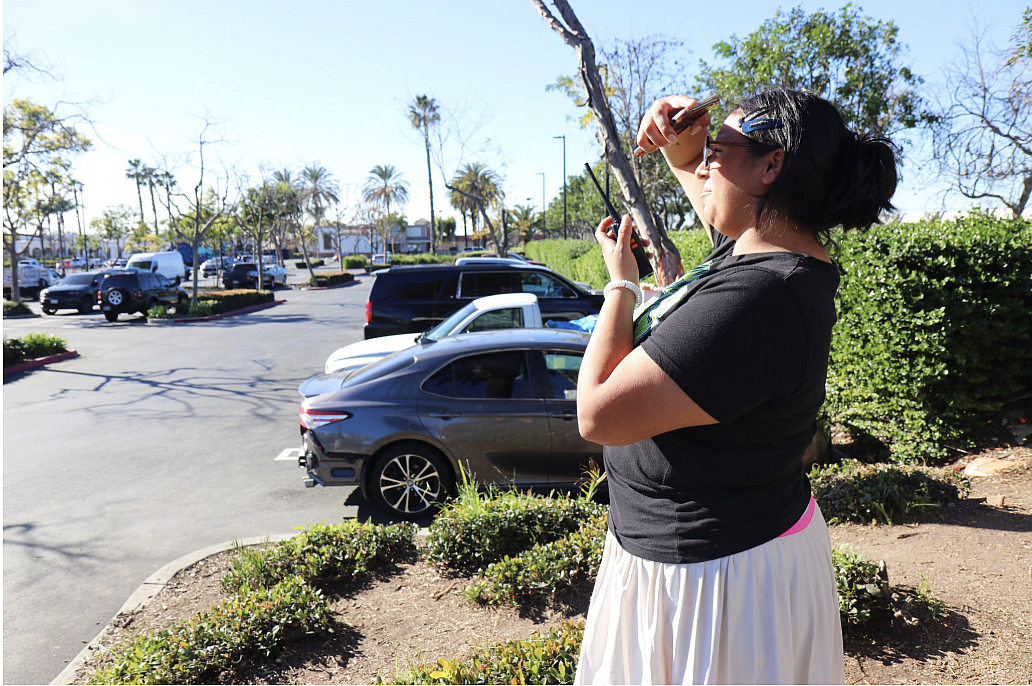
Celeste, a Santa Ana hub member, scans the Home Depot parking lot after receiving a call of a raid nearby.
Photo by Janette Villafana
“I think at the peak of everything we were all getting sick from the stress, common colds, body aches and pains, I simply couldn't sleep,” said Elaine, a mother who works a full-time job and also serves as a volunteer dispatcher for the OC Rapid Response Network, a coalition of civil rights attorneys, nonprofits, and community members advocating for undocumented immigrants. (OCRNN).
“For me, my number one thing is sleep, and a constant feeling of nausea, like I’m sickened by everything and nothing settles well.”
In South Orange County, Elaine says that many of the folks who have volunteered to patrol and protect their communities are like her, normal people — mothers, fathers, students, and even the elderly. Many of them manage their full-time jobs while putting in additional hours to protect their neighborhoods.
Elaine’s mornings usually start with her and others patrolling the streets of South Orange County’s neighborhoods, making sure the route to school is clear and safe for parents to take their kids, including her own son. After school drops off, she clocks in as a dispatcher for OCRRN.
For many ICE watchers and community patrollers, this is their first time dealing with the immigration system or dealing face-to-face with masked and armed agents, and many are learning how to safely conduct their patrols at community teach-ins organized by groups like the OCRRN.
But even those with years of experience contending with ICE weren't spared the psychological fallout these newfound raids brought to their doorsteps.
Sandra de Anda has been organizing in Santa Ana for over a decade. As director of policy and legal strategy for OCRRN, she thought she had seen it all, but nothing could have prepared her for the sheer volume of work, burnout, sleepless nights, and anxiety-filled days they would endure when the first ICE raids began in June of 2025.
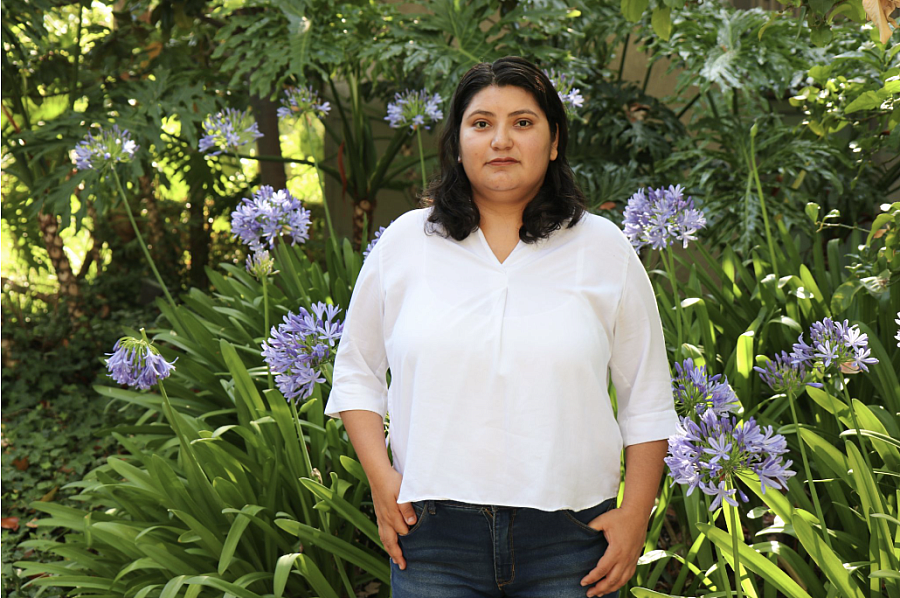
Sandra de Anda, director of policy and legal strategy for OCRRN, on a Friday evening in early May 2026.
Photo by Janette Villafana
De Anda is going live on Instagram after Bristol Car Wash in Santa Ana was raided by ICE in mid-September of 2025. The car wash had been the target of enforcement multiple times. Credit: Janette Villafana
Dispatches from a Different Kind of Frontline
On a recent Friday evening, De Anda was getting ready to wrap up her workday. She was set to attend a much-needed sound bath meditation session organized for local ICE watch teams and community members affected by the immigration raids.
But as with most evenings, she is answering calls to the OCRRN hotline until the very last minute. These days, her workweek looks a lot different from what it did just a few months ago; today, she has some breathing room to process her days.
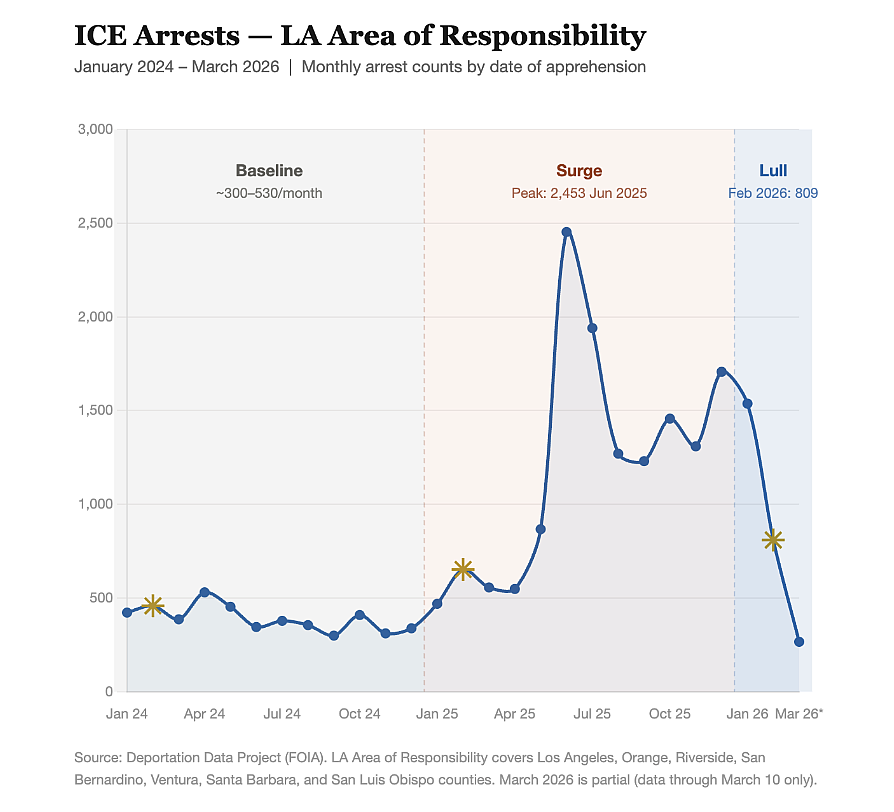
Since the Trump Presidency began on January 20th, 2025, ICE has made 384,490 arrests, including 14,302 in the L.A. area, which includes neighboring counties such as Orange, Riverside, San Bernardino, Ventura, Santa Barbara, and San Luis Obispo.
Before 2025, the OCRRN received 100 calls in an entire year. In 2025, that number skyrocketed to over 10,000 calls, with some days averaging 3 calls per minute.
“Most of the time we are verifying that the sighting was actually immigration, helping families whose loved ones have been detained or connecting folk to the right help,” she said as she walked along the corridor where she lives.
“If anyone saw (ICE) staging anywhere, we would go in person, go live on Instagram, and yell at them (the agents) to leave, and on several occasions, we were successful in getting rid of them without escalation. But I know that is not the case for every responder; people have had guns pointed at them.”
As the one-year mark of the escalated ICE raids nears, many of these organizers are feeling the weight of the work they have been doing— body aches, dissociation, depression, and anxiety.
According to the National Library of Medicine, research has shown that long-term exposure to immigration enforcement policies and actions contributes to cumulative trauma and can foster generational cycles of mental health disorders.
The OCRRN has been actively helping Orange County's most vulnerable for the past decade. But over the last 11 months, De Anda and her team, along with others across OC, have been working around the clock to protect their neighbors.
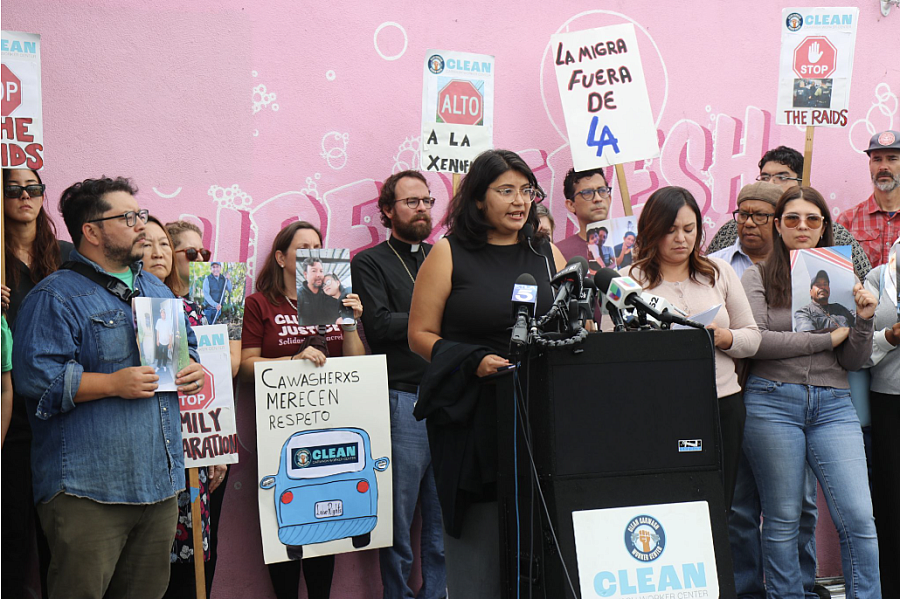
Sandra de Anda advocates for carwash workers at a press conference outside a car wash that was raided by ICE in September of 2025.
Photo by Janette Villafana
"We’re combating misinformation while also trying to protect the community, not just from enforcement but from people who are taking advantage of the situation, like attorneys who won't actually fight for them, while trying to keep sane ourselves,” said De Anda.
Some patrol their neighborhoods, others are in charge of dispatch, or protect local Home Depots, and others respond to and document any encounters with immigration enforcement agents in the streets and in courtrooms.
“During the height of the raids, everyone in the community was and is still being traumatized and re-traumatized every day over and over, putting the community into survival mode,” said Jennifer Leon Salinas, a Los Angeles therapist who works with the undocumented population, specializing in immigration trauma, PTSD, and more.
In the past few months, the very public and aggressive immigration raids that began in Southern California in June of 2025 have slowed, but even in the ‘lull,’ the number remains nearly twice as high as it was in February 2024.
Although the average daily number of individuals deported in 2025 has decreased by 10.9% compared with 2024, the average daily number of individuals held in immigration detention has risen significantly. While deportations may be declining, more individuals are being subjected to prolonged and often indefinite detention. And the community and first responders continue to bear witness to the violent kidnappings.
De Anda describes this period not so much as a slowdown but a change in tactics; she said the raids are now simply more spread out and targeted.
This brief respite has given them newfound time and space to process, for the first time, what they have witnessed since it all began.
“Today I feel grounded, I think because I've been really prioritizing my mental health since maybe January,” said De Anda, who attends therapy sessions every week, to help her evaluate some of what she has experienced.
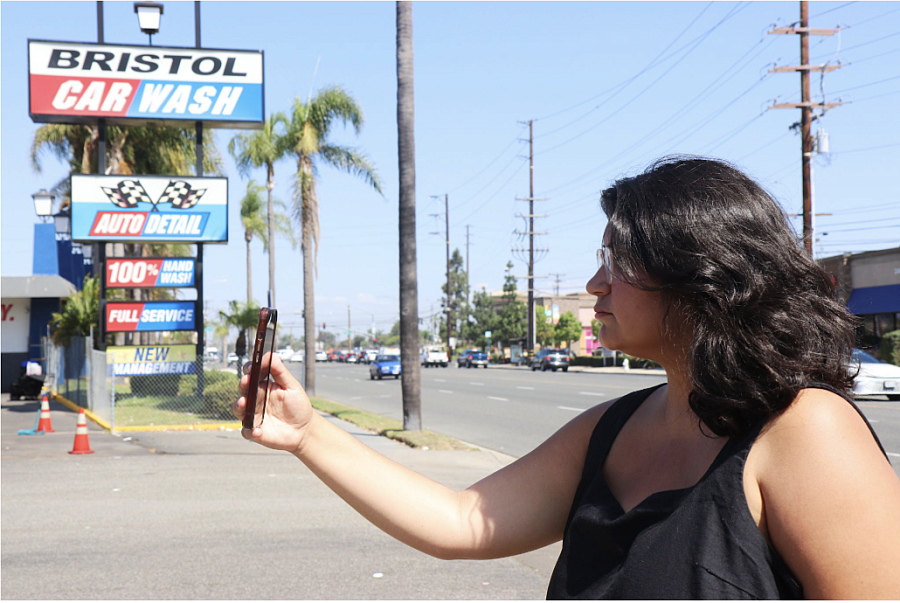
De Anda goes live on Instagram after Bristol Car Wash in Santa Ana was raided by ICE in mid-September of 2025. The car wash had been the target of enforcement multiple times.
Photo by Janette Villafana
“But it's just been a very interesting period of negotiating your feelings, because if you really sit down with everything that is happening right now, it's truly awful, but if you let that feeling overcome you, you feel frozen, and you can’t get stuck there.”
The immigrant rights advocate and community defender said that at the height of the raids, she and others were easily working 12-hour days with little to no breaks or days off.
“I guess I’m coming out of the burnout that I was feeling from January through April, it was like a whiplash of emotions,” said De Anda. “I was having feelings of, ‘maybe I’m not doing enough.’ That's something I have felt these last couple of months, ‘have I done enough to help my community?’”
Data recently shared with NPR from Zocalo Health, a primary care organization in Los Angeles, documented a sharp rise in anxiety, depression and suicidal thoughts among their patients.
“What I've been hearing a lot is that they are feeling a lot of anger and a lot of exhaustion because this fight with immigration is not new; it's been going on for years, and has been really demanding on the bodies and minds of advocates who are doing the work,” said Salinas, the Los Angeles therapist.
She explains her clients are reporting everything from nightmares and poor sleep to burnout symptoms like excessive fatigue and an inability to concentrate. These symptoms are exacerbated by a daunting demand for help.
“That’s why we hear a lot of advocates say they need more people in this fight because they can’t do it alone, it’s way too much,” she added.
“The Burnout Is Real”
“The burnout is real. Right now I’m equalizing because I can actually work the regular 9-5 schedule and my weekends haven't been taken over by border patrol enforcement,” she said. “But I honestly felt physically exhausted, my entire body was tired, I felt body aches every day, I felt like I was dissociating, every day I would see myself glare at the screen and totally dissociate.”
She said one experience in particular has haunted her. “Before we saw the mass raids in the streets, they started in the courtrooms. I have never seen anything like that,” De Anda said.
“That was the first time in Orange County we had seen masked agents inside the courthouse. Those arrests were happening to asylum seekers; entire families were being taken to Dilly in Texas. Just the thought of what I saw makes my skin crawl. I talk to my therapist a lot about the courthouse,” she added.
Celeste is attending a community event in Santa Ana that was raising funds for the OC Rapid Response Network. Little things like being in community, drinking her matcha while getting her hair braided are what have helped her stay grounded.
Finding Balance
The same sentiment is felt at a local Santa Ana Home Depot hub created to patrol, protect, and advocate for the day laborers who often go there to look for work. Celeste, who is with the Lucha Santa Ana Hub that patrols the local Home Depot, said that they, too, have felt the burnout and emotional toll of the raids.
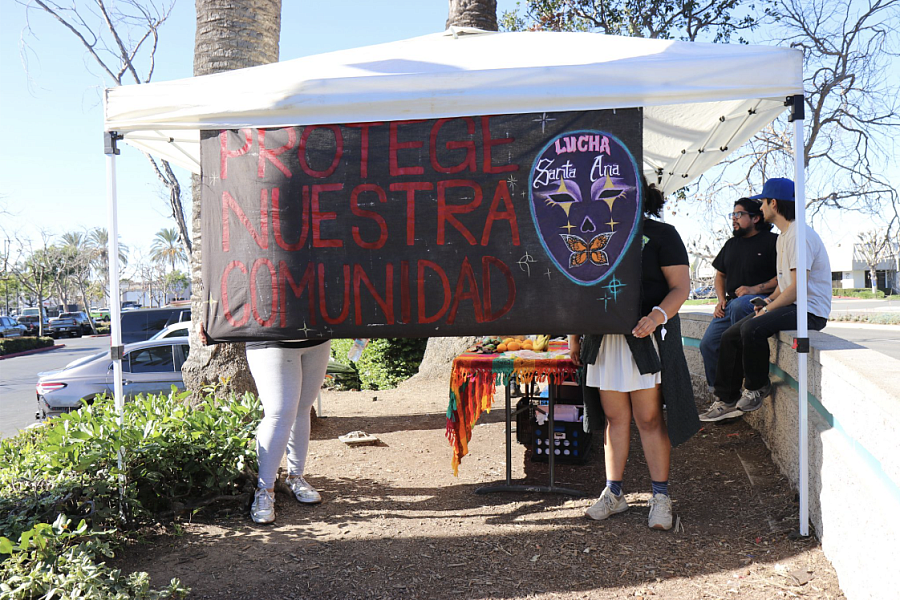
Lucha Santa Ana hub keeps watch and hands out essentials to workers at a Home Depot in Los Angeles,
Credit: Janette Villafana
Their group not only protects local day laborers but also provides them with resources, such as food, drinks, and other essentials. Over the past year, many of the volunteers, such as Celeste, who prefers not to disclose their last name, have bonded with the folk they protect.
“At the beginning, it was intense, I don’t think many of us had time to feel anything because it was like we were on alert 24/7 and on the go, go go,” said Celeste while patrolling the perimeter of the Home Depot. “I think the most difficult part is when we aren’t able to prevent an arrest because that guilt stays with you.”
Celeste is one of several volunteers at the local hub. She has deeply connected with many of the jornaleros, who praise her whenever we ask them about her.
“She is an angel, thanks to her and everyone else, we don’t feel alone,” said a day laborer in Spanish when we visited the hub. “We don’t feel like shadows that no one pays attention to or cares about. They make us feel like we’re worth protecting.”
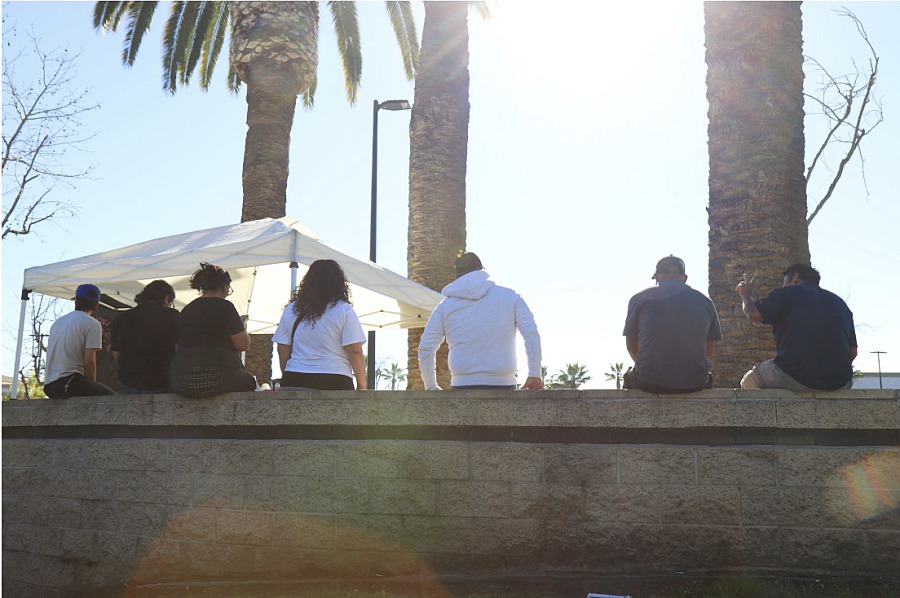
The Lucha Santa Ana hub sits alongside a wall with jornaleros as the day begins to unwind.
Credit: Janette Villafana
Equipped with her walkie-talkie, which she uses to communicate with other watchers in the parking lot stationed at each store entrance and exit, Celeste begins her shift. Usually, patrollers show up early in the morning and don’t leave until most of the day laborers have gone. On some occasions, they provide rides so workers can get home safely.
By January of this year, Celeste said she was feeling the emotional toll of being on the front lines. She said she would often cry, especially after they were caught off guard once, and immigration agents took an individual during a raid at the store.
“It’s hard, I go from feeling anger to feeling sad,” she said. “But I try to balance it out. I usually attend community events or need to be in community with others after something like that happens, otherwise the emotions will consume me.”
According to Salinas, what some advocates are experiencing is not considered post-traumatic stress disorder, only because PTSD indicates that it's just one experience and that the experience has stopped. But advocates patrolling the streets have been bearing witness consecutively for almost a year without any end in sight.
“Many are now experiencing depression too,” said Salinas. “I think the first thing one can do is acknowledge that your body is responding the way it's supposed to. The intensity of emotions, the sadness, and anger are a normal response to a situation that is far from normal or right.”
How Watchers Survive the Strain
Most of the folks La Opinion spoke with said they manage their stress and emotions through therapy if they have access to it, while others said outings with family and friends are how they unwind and clear their head. Salinas said she recommends that people first identify what they are feeling and then find healthy ways of releasing that emotion.
“If you are mad and need to scream into a pillow, do it. If throwing some ice at a wall helps you release the anger, do it, in a safe manner,” she said. “Your body is responding effectively, do not shame it, do not shut it down, don't guilt it away.”
For De Anda, it looks different each week; most recently, she has been working with some of the affected families to understand their cases, rather than being in the courts or on the streets as she was at the beginning. Although don’t be surprised if you see her responding to a sighting or going live to update the Santa Ana community.
“I’m sort of grounded in the motto that I can only control the things that I can control and contribute. I've been trying to respond to what I can, so it doesn't feel like it all lands on my shoulders or one person,” said De Anda. “And we do this gladly because it is our responsibility as a community to protect each other.”