

On Cape Cod, hunger hides in ‘paradise’
The article was originally published in Mass Live with support from our 2025 Data Fellowship.

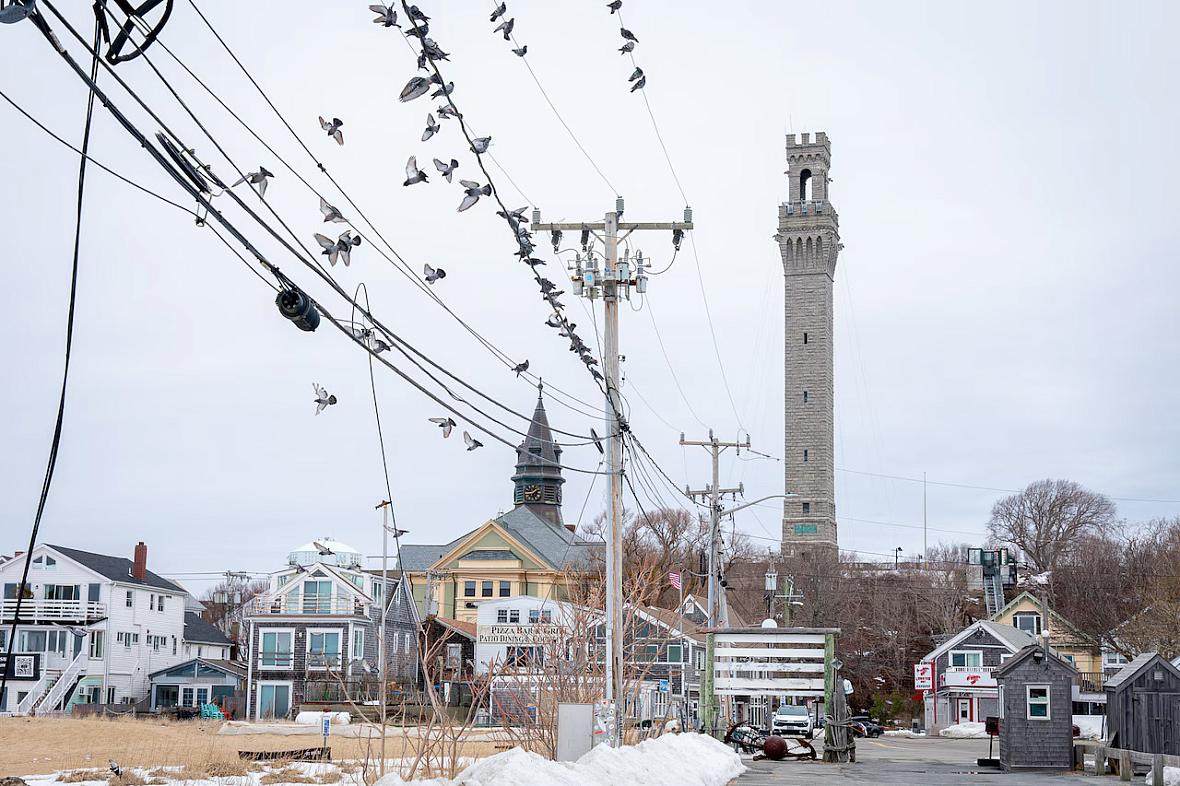
The Pilgrim Monument stands in the background of a quiet Provincetown on Feb. 20, 2026. The solitude that settles over the Cape and Islands each winter also ushers in higher unemployment and deepening food insecurity.
Will Katcher/MassLive
WELLFLEET — By day, she baked for locals and summer visitors at a pair of popular Cape Cod cafes. At night, she pulled her car into a nearby parking lot and tucked into a sleeping bag, trying to stay out of sight.
Victoria, who asked that her last name not be used, slept in her car for seven months over the last year, from the height of the Cape’s annual tourism boom in July through the depths of the regional hibernation in February.
Even in the full swing of the summer, when she worked as much as 50 hours per week, affording a one-bedroom rental at Cape Cod prices seemed impossible.
When one of the cafes where she worked closed for the winter, and the other laid her off for the season, her local food pantry became a lifeline.
Beneath the veneer of comfort and wealth in one of the Northeast’s most popular vacation destinations, thousands of working residents on Cape Cod, Martha’s Vineyard and Nantucket labor to make ends meet — and afford enough to eat.
A confluence of factors is responsible: the painfully high cost of living, an extraordinary housing crunch and an economy that blossoms seasonally but leaves many workers without consistent income in the off-season.
As jobs, income and circumstances change, local food pantries and other aid organizations step in to help, stretching limited resources as far as they will go.
“I know plenty of people who have left because they can’t afford to be here. Some of them were oystermen. Some of them were landscapers. Their families are here, and their friends are here, but they can’t afford it,” Victoria, 34, said in a recent in-person interview.
The unemployment rate fell last summer to about 4% on the Cape and Islands, below the statewide rate of 4.8%.
But while the statewide unemployment rate stays largely steady as winter sets in, the rate in the Cape region more than doubles, according to state data.
In some towns, it increases far more significantly.
At the northern tip of Cape Cod, Provincetown’s unemployment rate reached nearly 23% in February 2025, more than six times higher than in July.
For comparison, that peak unemployment rate was more than twice the national level at the worst of the Great Recession.
“People make their money in the summer and then there’s this idyllic notion of the Cape, particularly among folks off the Cape, that it’s a paradise,” Mark Forest, a Barnstable County commissioner and Yarmouth Select Board member, said. “But for many people in the winter, it’s really living paycheck to paycheck.”
Demand surges at food pantries
At The Family Pantry of Cape Cod in Harwich, the region’s largest food pantry, visitors can return every 10 days for bags of groceries as varied and nutritious as they could find at a grocery store, and worth as much as $200 to $300. Nearly 800 people arrive every week, according to Dave Simmons, the organization’s interim executive director.
On one recent weekday, three members of a landscaping crew pulled their truck into a parking space and headed for the pantry’s front door.
A line had already formed inside. Some people strolled through rows of donated clothes and toiletries — other costly items the pantry can help provide.
The difficulties some residents have putting food on the table are often invisible to the millions who visit the Cape and Islands each summer.
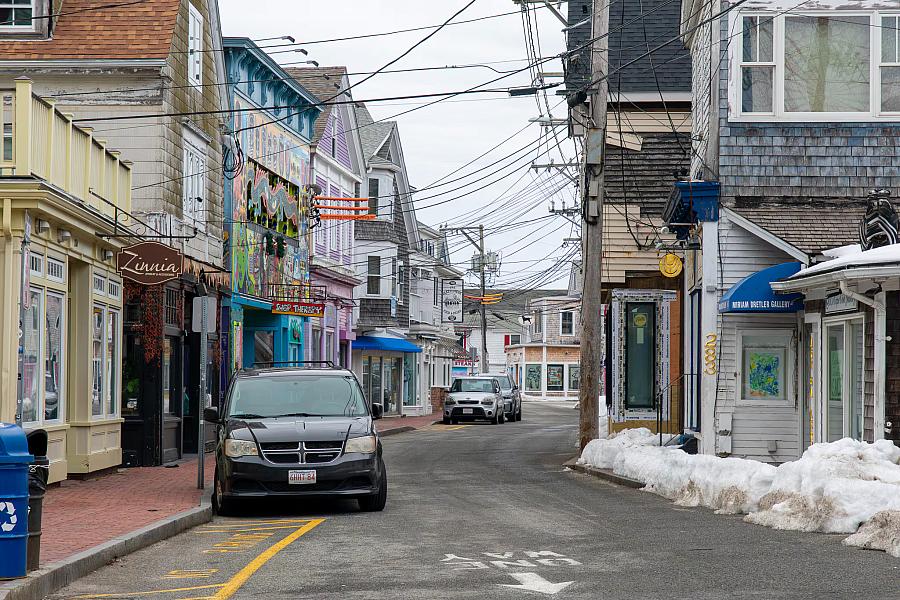
Commercial Street in the center of Provincetown had little activity on Feb. 20, 2026, in contrast to the exuberant crowds that fill the street during the summertime.
Will Katcher/MassLive
Tourists and second-home owners come to soak in the sun, dig into plates of seafood and amble through blissful seaside villages. Along the way, they inject an estimated $2.8 billion into the region’s economy.
But they may not notice the landscapers, painters and cleaners behind each picturesque cottage; the servers, cooks and dishwashers staffing the restaurants and the fishing boat captains and crews hauling in each day’s catch.
Short-term visitors also may not realize the escalating housing and living costs that have hampered employers’ ability to hire and retain workers.
“There are folks thinking, ‘There’s no poverty on Cape Cod. What do you mean, it’s a vacation destination?’” said Katie Wibby, CEO of the Lower Cape Outreach Council, a social services organization for the eight outermost Cape communities. “What we try to remind folks is the same people serving them in the restaurants, gas stations and grocery stores are here year-round.”
About 20,000 Cape Codders — 8.6% of the population — live at or below the poverty line, according to the U.S. Census.
On a recent weekday, a few couples strolled by the mostly darkened windows of Commercial Street in the heart of Provincetown. Two workers refurbished a shuttered storefront while Elton John’s “I’m Still Standing” rang from one nearby shop open for just a few hours that afternoon.
To little surprise, Provincetown hardly resembled its summer self as a bustling, bubbling hub of tourists, artists and the LGBTQ community.
Five days a week from November through April, a line queues at the Provincetown United Methodist Church for a hearty lunchtime meal offered by the Soup Kitchen in Provincetown.
The organization serves 200 meals a day, Mark Bjorstrom, a Provincetown resident and board member of the soup kitchen, said. Over half of guests report that the soup kitchen’s lunch is their only hot meal of the day, he said.
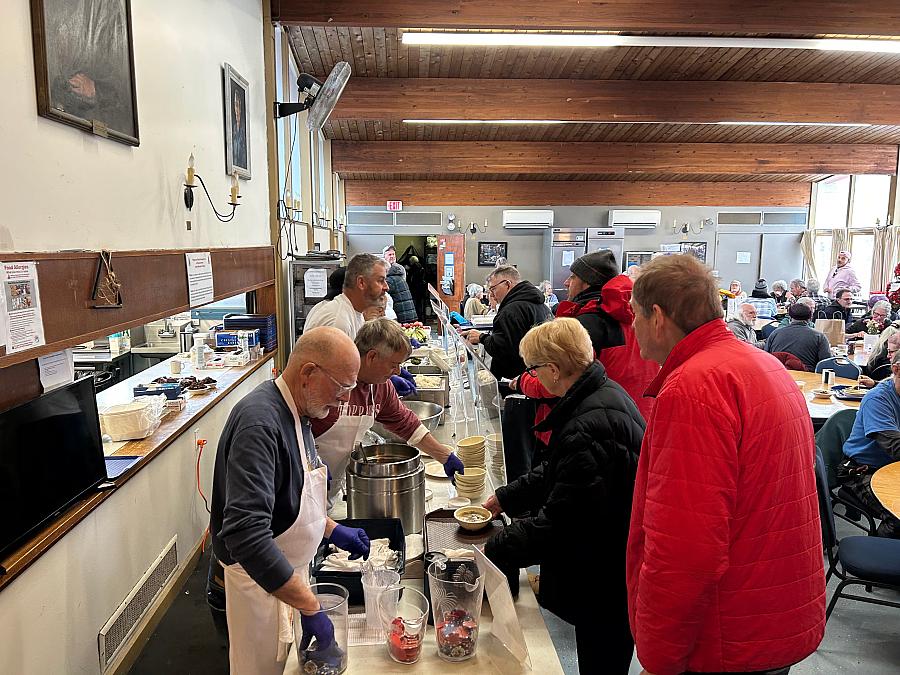
A line forms for lunch at the Soup Kitchen in Provincetown, hosted at the United Methodist Church, Feb. 20, 2026.
Will Katcher/MassLive
That dependence on the soup kitchen’s meals is echoed in another corner of the community: the fishermen who face their own version of seasonal uncertainty.
Most fishermen are self-employed and don’t have the benefit of unemployment, said Shannon Eldredge, of Chatham, a fourth-generation fisherman and community health worker for the Fishing Partnership, a nonprofit that provides support services to fishing families.
The fishing industry operates year-round, but is subject to lower demand in the winter, seasonal fishing patterns and the whims of New England weather.
Frigid temperatures earlier in the winter froze the ocean “almost to the horizon” and trapped the fishing fleet in harbor for multiple weeks, said Seth Rolbein, a senior advisor for the Cape Cod Commercial Fishermen’s Alliance.
The Feb. 23 blizzard paralyzed Cape Cod, leaving much of the region without power for days.
“This winter in particular has been very taxing on a lot of folks who would normally have been able to get out, but the ice wasn’t allowing it,” Eldredge said.
More families this winter have sought the Fishing Partnership’s help to “get over the hump” with utilities assistance, referrals to food pantries or guidance applying for the Supplemental Nutrition Assistance Program and other food aid, she said.
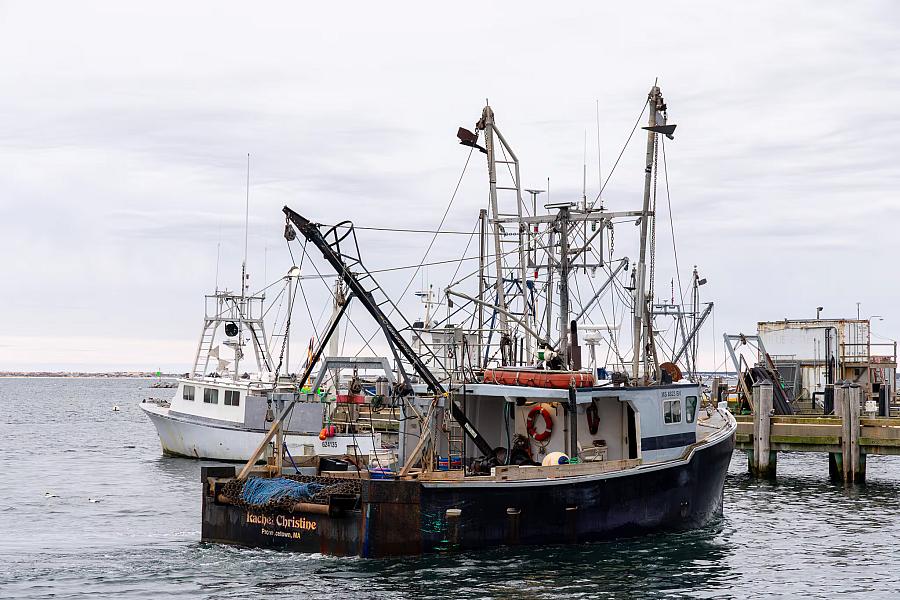
A fishing boat approaches Provincetown's MacMillan Pier, Feb. 20, 2026.
Will Katcher/MassLive
As the summer arrives, some aid organizations report a different sort of demand. Seasonal workers come to the Cape and Islands from all around the world. Though their employers may provide housing, many of the workers rely on food pantries before their first paychecks hit and the summer gets underway.
“The need is always there,” said Andrea Scarpellini, a food access coordinator for Barnstable County. “It just looks different at different parts of the year and at different times. It ebbs and flows, but it’s always there.”
Rising costs consume food budgets
Food pantries across Massachusetts have seen demand rise dramatically in recent years alongside the climbing cost of living.
On Cape Cod, the Lower Cape Outreach Council logged 20,500 visits last year, roughly four times the amount it did in 2019. The Falmouth Service Center food pantry is serving two-and-a-half times as many households per week as it did pre-pandemic.
The cost of housing is “the Big Kahuna” among all the key factors pushing Cape residents toward food pantries and other assistance programs, Dave Simmons, interim executive director of the Family Pantry of Cape Cod, said.
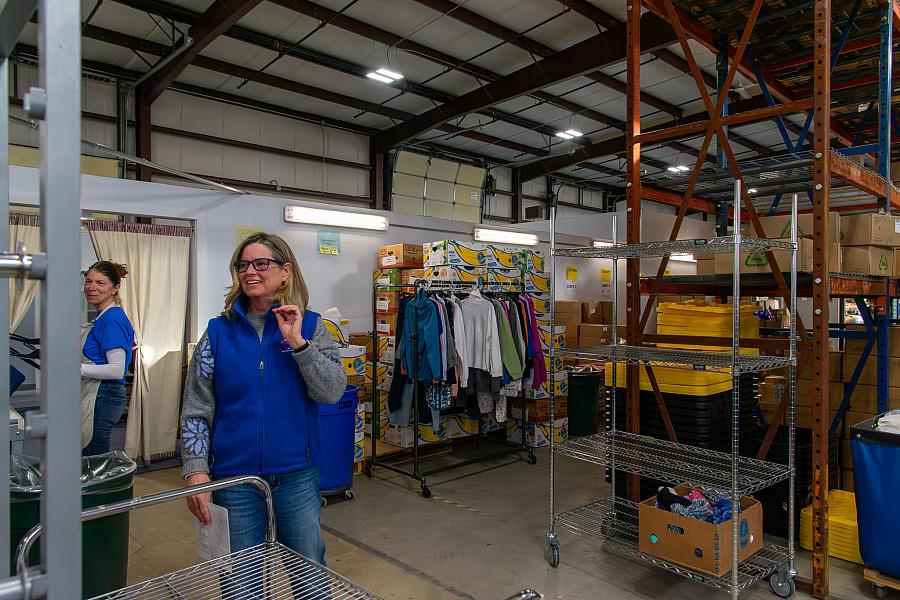
Melissa Masi, program manager of The Family Pantry of Cape Cod, the region's largest food pantry, walks through the organization's facility in Harwich, Feb. 19, 2026.
Will Katcher/MassLive
The state’s insufficient housing supply has driven prices upward from Provincetown to Pittsfield.
Roughly one in six Massachusetts residents now spends half their income on housing. As families strain to keep the roof over their heads, the heat on and the car running, the money available for quality food can fall to the wayside.
The Cape and Islands, home to roughly 270,000 people, face a distinct conundrum: More than a third of homes are seasonal properties or for short-term rentals, according to state data. In parts of the Outer Cape, as many as 60% to 70% of homes may be used only seasonally.
Even before the pandemic, the region’s limited housing stock left both middle-income buyers and seasonal workers without affordable options.
The market spiked during the pandemic as remote workers flocked to Cape Cod and property owners cashed in on demand. The median price of a single-family home skyrocketed from $433,000 in 2019 to $730,000 for 2023, according to data collected by the Cape Cod Commission, the region’s planning agency.
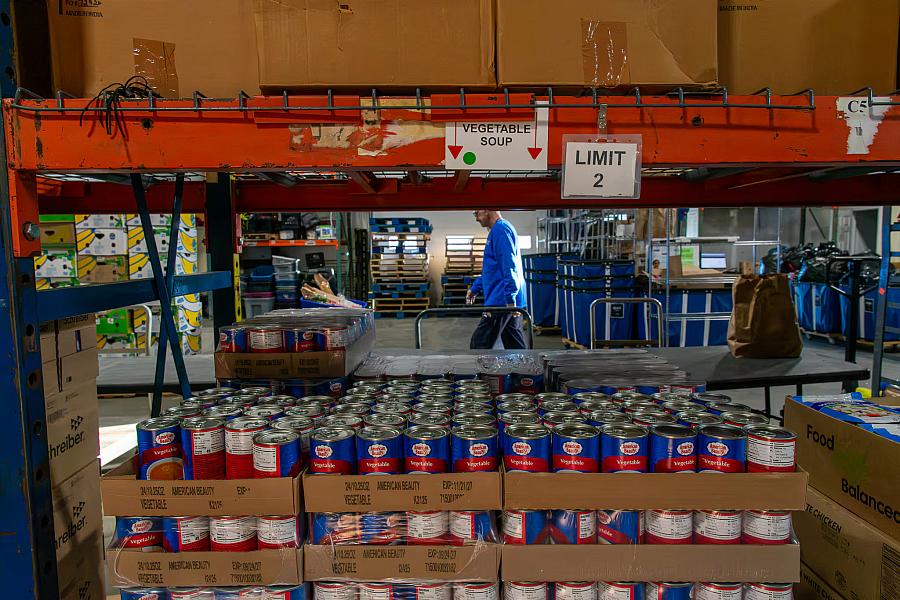
The Family Pantry of Cape Cod, in Harwich, is the region's largest food pantry, Feb. 19, 2026.
Will Katcher/MassLive
Unemployment ‘doesn’t even cover rent’
Victoria, the Wellfleet resident, turned to fast food and premade meals in the first few months living in her Subaru. She got pot pie at Shaw’s and pizza at Cumberland Farms, but the convenience came at a steeper cost.
She turned to the Wellfleet Food Pantry in October, finding a reliable supply of canned soup, rice and other food that wouldn’t spoil in her car.
In November, Victoria registered for unemployment benefits as her cafe jobs disappeared for the winter.
In Massachusetts, unemployment pays out about 50% of average weekly wages. Victoria receives about $300 a week.
“It doesn’t even cover rent,” she said. “I can’t find a place for $1,000 (a month). A lot of places are $1,600 to $1,800.”
Many leases extend only through the spring, when homes shift to short-term rentals for the summer, she said.

The Pilgrim Monument is reflected in the window of a shuttered store in Provincetown on Feb. 20, 2026.
Will Katcher/MassLive
In early February, Victoria’s luck turned.
During a visit to the food pantry, the staff realized she didn’t have a winter coat. They insisted she drive down Route 6 to Mass Appeal, a local nonprofit that offers free donated clothes.
There, a Wellfleet couple learned of her struggle and offered her a place to stay.
Unable to find affordable housing, many workers have been forced to relocate off the Cape and now commute to jobs there, while others have moved into Cape communities even though their jobs remain on the Islands.
In the summer, seasonal employees may live in group housing to limit costs. Some people arriving from overseas to work live with as many as five families in one single-family house, Simmons said.
“Most people say if you can’t afford to live here, you shouldn’t be here. That you should just move,” Victoria said. “But that kind of takes away the lower class on Cape Cod entirely.”
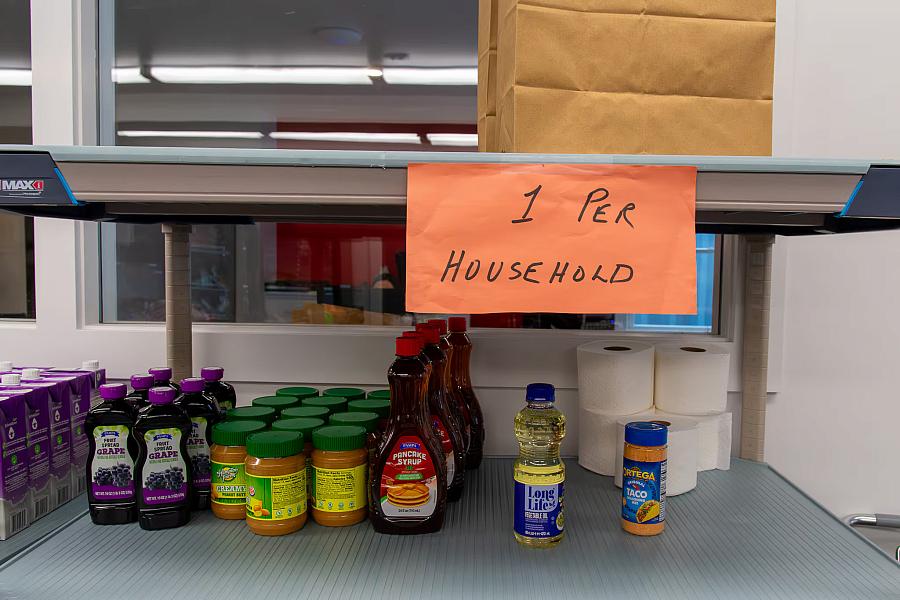
Food items at the main food pantry of the Lower Cape Outreach Center in Orleans, Feb. 18, 2026.
Will Katcher/MassLive
The Cape has the state’s oldest population
Cape Cod, long popular with retirees, has a median age of 55 — the highest in Massachusetts and 14 years older than the state’s median age.
Many of the region’s older residents live on fixed incomes, Wibby, the Lower Cape Outreach Council’s CEO, said. “They’re living on social security and the cost of living on the Cape continues to rise, whether it’s housing or food, and their income isn’t rising with them.”
The Outer Cape’s rural nature can pose challenges for older adults with mobility issues. With major grocery stores few and far between, the Provincetown Council on Aging offers rides to people who cannot travel to the store on their own, Chris Hottle, the council’s director, said.
Many food pantries and other organizations also deliver groceries or prepared meals to people’s homes.
Elder Services of Cape Cod and the Islands brings meals to 1,500 people each weekday. Roughly a third of them report that without the home-delivered meal, they wouldn’t have enough to eat, Laura Roskos, a spokesperson for the organization, said.
Neighbor helping neighbor is a Cape Cod tradition
Since the pandemic, food pantries across the region have offered stews and chowders made with fish caught locally through the Cape Cod Commercial Fishermen’s Alliance’s “Small Boats, Big Taste” program.
The initiative had two initial goals: keep independent fishing boats on the water even as restaurants closed during the pandemic, and provide families with a high-protein meal made from a local catch, said Rolbein, who helped start the program.
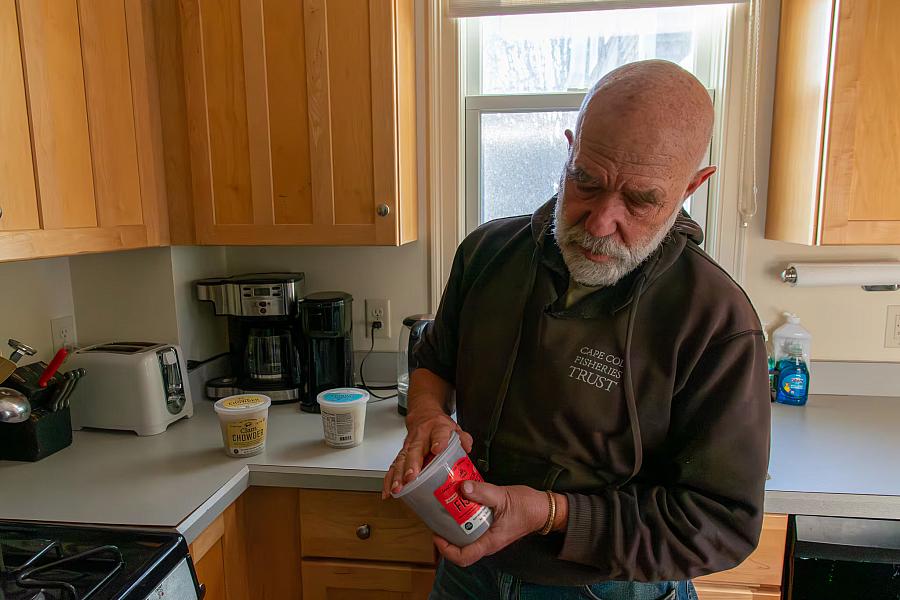
Seth Rolbein, a senior advisor to the Cape Cod Commercial Fishermen’s Alliance, helped start the group's “Small Boats, Big Taste” program. The initiative provides food pantries with stews and chowders made from locally caught fish. Rolbein is pictured at the organization's headquarters in Chatham on Feb. 19, 2026.
Will Katcher/MassLive
The Chatham Harvesters Cooperative, a coalition of about two dozen small, independent fishing boats, also provides fish to food pantries.
Nutritious protein and produce can be expensive, Eldredge, the Fishing Partnership community health worker and member of the cooperative, said.
For families on tight budgets or relying on food assistance programs, “Those are the sacrifices you’re going to make because you’re trying to feed an entire family with a very little amount of money,” she said.
Kerin Delaney, the executive director of the Falmouth Service Center, understands how difficult it can be “to walk through the doors of a food pantry and say you need food.” But she wants community members to feel comfortable seeking help and to understand the variety and quantity of food that pantries offer.
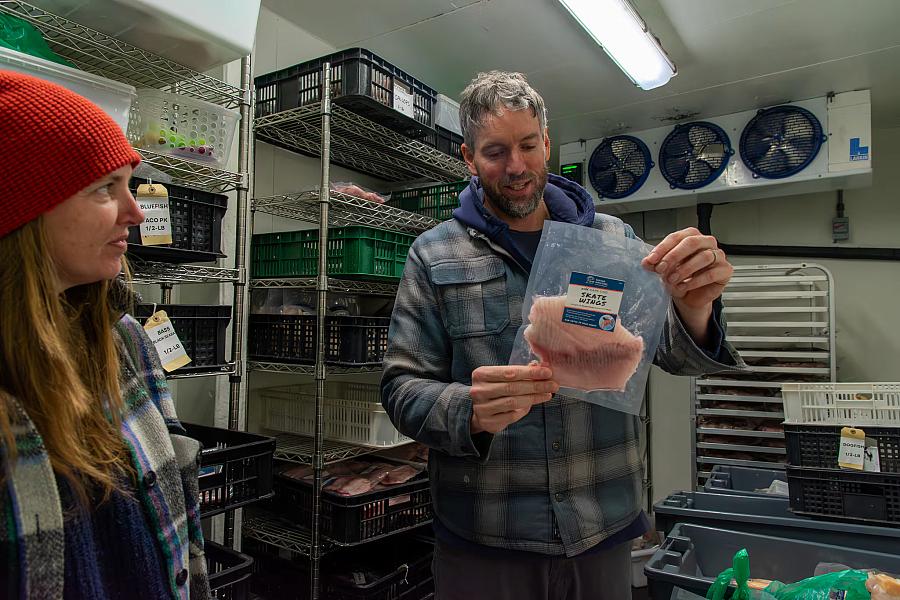
Shannon Eldredge and Brett Tolley, members of the Chatham Harvesters Cooperative, show off a fillet of skate prepared and packaged at their facility in Chatham, Feb. 20, 2026.
Will Katcher/MassLive
“If they can get a lot of key items here, they can stretch their budget at the market and then pay for rent and other expenses,” Delaney said. “It’s not only peanut butter and pasta. We have meat, eggs, cheese, fresh produce, frozen produce … People can really save a lot of money.”
One senior couple sent the Falmouth Service Center a letter of appreciation describing how the pantry saved them some $10,000 in groceries over the course of a year.
“They were able to keep up with their housing and utilities,” Delaney said. “We share that letter with people who are thinking, ‘I don’t want to go to the pantry, I’d be taking food from other people who need it.’”
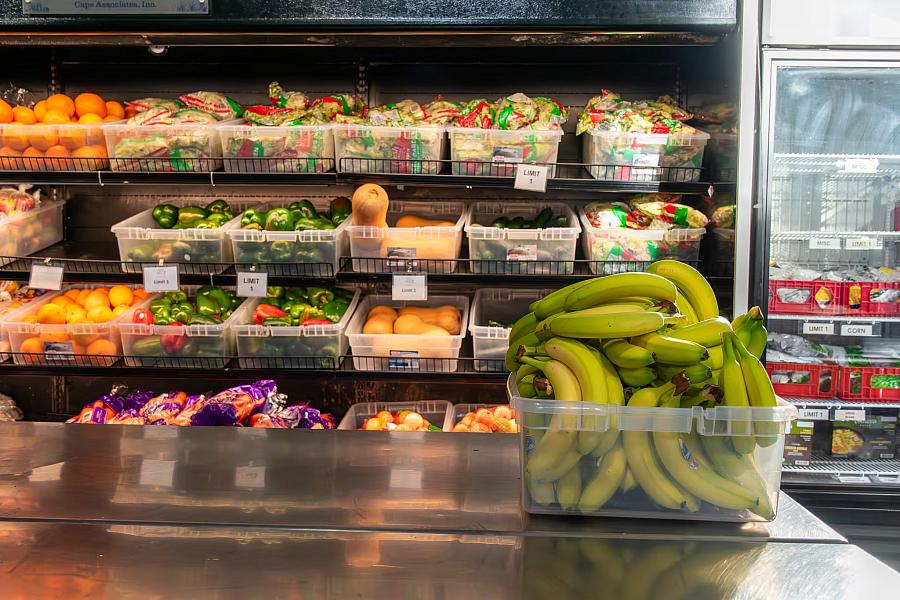
The Family Pantry of Cape Cod, in Harwich, is the region's largest food pantry, Feb. 19, 2026.
Will Katcher/MassLive
The bulk of Cape pantries’ supply comes from the Greater Boston Food Bank, the largest hunger-relief organization in New England. Multiple food pantries said local grocery stores, from community markets to corporate chains, also regularly donate food.
Victoria is now living in a cottage owned by the Wellfleet couple she met last month. She was there when the Feb. 23 blizzard struck. Though the house lost power, the property had a generator.
With summer work still about two months away, she has continued to benefit from the Wellfleet Food Pantry.