

Challenges for rural Ozarks EMS include funding, employee retention and response times
The story was originally published by the Springfield News-Leader with support from our 2025 National Fellowship.

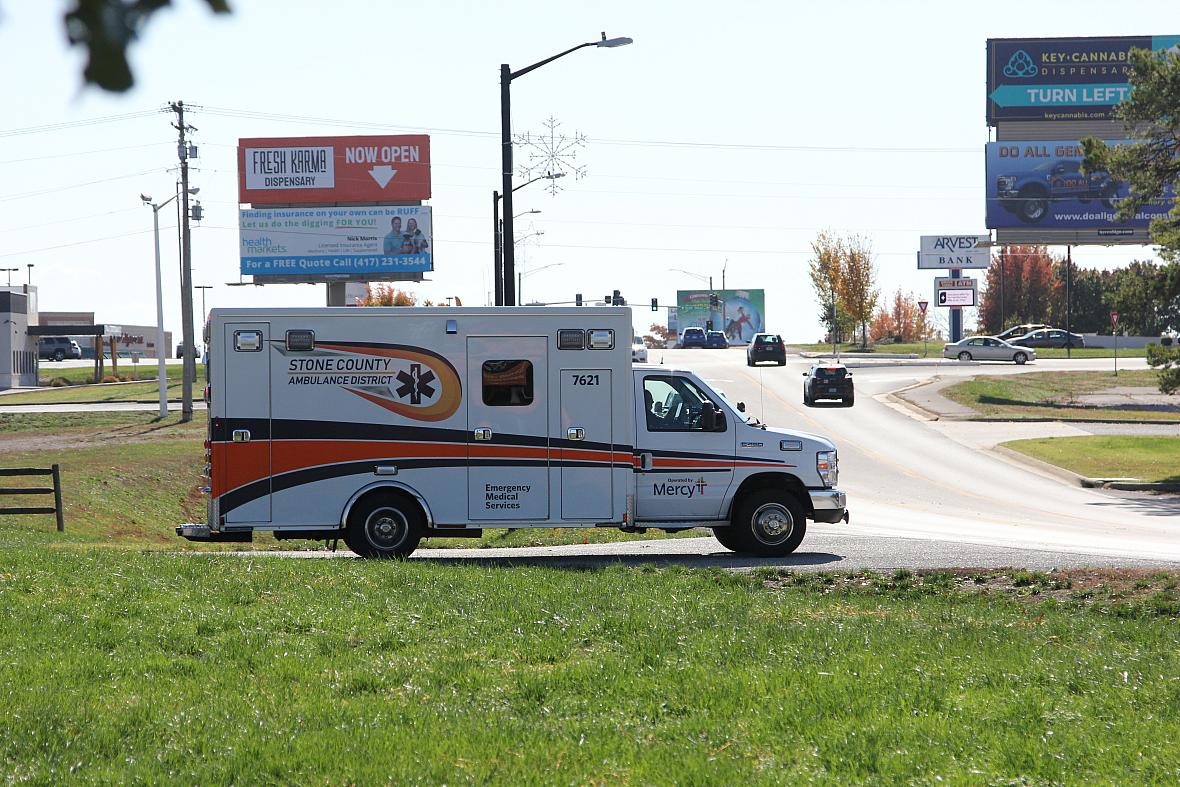
When someone calls 911 after a car accident, most expect help will arrive in short order.
That isn't always the reality for people who live outside of urban or suburban areas, and it's not just due to the increased distance between ambulance stations and where people live. Funding and staffing are perpetual challenges for emergency service providers, while poverty and chronic health issues in rural areas often complicate the calls they answer.
"You get outside of the city and it just completely changes," said Tony Mingo, paramedic and division chief of the mobile integrated health program at Washington County Ambulance District in eastern Missouri. "It’s a slower way of life and a lot of people like it that way, but it definitely comes with other
challenges."
In 2017, one in five Americans were classified as living in rural areas, according to the U.S. Census Bureau, with the Census Bureau defining a rural area as being sparsely populated, having low housing density and being far from urban centers.
The differences are reflected in an old adage in the emergency medical industry: If you've seen one EMS service, you've seen one EMS service. Art Groux doesn't buy into that line of thinking — while the frequency or severity of some challenges may differ in rural areas, many of the obstacles providers face are relatively consistent across the industry.
"The problems that we face, even in urban markets, are very similar across the board," said Groux, who spent much of his career as a paramedic in New England, including in rural areas. He now travels around the country consulting with EMS agencies as chief partner-client officer for Beyond Lucid Technologies, an organization that specializes in data-sharing technologies.
"We may do things a little bit different from place to place, but at the end of the day, we’re doing the same things, we’re facing the same problems."
Low pay, toll on mental health contribute to turnover
The combination of long hours, intensive training and often-disturbing situations means emergency medical services aren't for everyone.
The American Ambulance Association's 2025 study of more than 46,000 EMS employees found that voluntary turnover rates for EMS employees in 2024 were around 15% to 24% — a turnover rate that means "an organization is likely to replace most of its workforce within five years," the study said. The overall turnover rates have remained relatively stable since AAA began doing the survey in 2017, but the study said "the level of turnover remains higher than desirable" for a group of people on the front lines of delivering service to clients and patients.
Competitive wages, or the lack thereof, can be a big problem for EMS in general.
"The last service I was at, we kept raising our rates to pay EMTs. Every time you raised it, it seemed like you’d drive by McDonald’s that had a sign out front (saying) they were paying $18 an hour with full benefits," Groux said. "How do you compete with that?"
Many EMS services can't. The Washington County Ambulance District "consistently sees a decent turnover rate," according to clinical practice chief Doug Anderson, despite the service covering employee's initial education, certifications and credentialing for critical care providers.
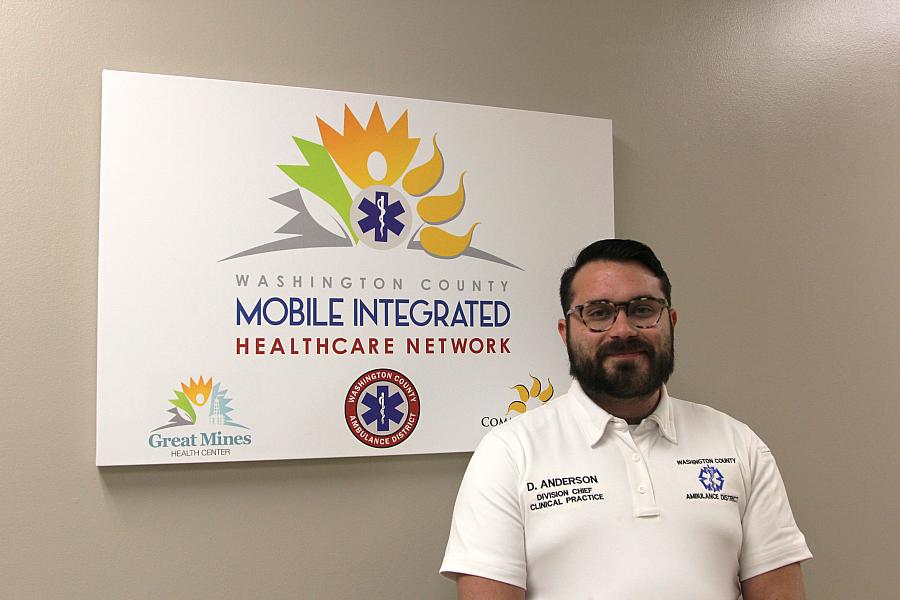
The district ends up being "like a stepping stone" for many employees, Anderson said, a place where they train and gain experience before moving on to higher-paying jobs in more urban areas.
Relying on volunteer EMS providers isn't a feasible long-term solution, either. Those volunteers still may have to be paid, and even if they're not, the competencies and continued training can be difficult to maintain, said Bob Patterson, Mercy's Emergency Medical Services executive director.
"The number one expense for this is the cost of our team, and they’re well worth it. They’re professional, they’re highly trained, so we want to compensate them fairly, so that’s a challenge, too,” Patterson said.
While the physical demands on EMS staff are straightforward, the mental demands traditionally have received less attention, at least until recently.
"A lot of people think that small rural agencies like us don’t really see the bad stuff like other places do, like we don’t have a ton of shootings and stuff like that, but our acuity is still really high and people do see a lot of really, really bad things," Anderson said.
There's also the fact that people go into EMS to help others — something they may not be to do on every call.
“These guys have a bias to help, right? They want to take care of people and it’s hard. You can’t fix everything. We want to fix everything, that’s just how we’re wired. It’s just really hard to do that, to be everything to everybody,” Patterson said.
Despite the burgeoning support for first responders' mental health, they can't be shielded from all harm, which can make it a daunting job. Just as firefighters willingly run into fires, those in EMS must willingly witness sometimes horrifying scenes. That trauma can't all be avoided, as those new to the field must experience those situations so they learn how to compartmentalize emotions and provide competent care in the midst of a crisis.
"I know, as a provider myself, I disassociate — I don’t want to say completely — on scene, but it’s a ‘It’s not my emergency. If I run around screaming, who am I helping?' With my experience I’m able to do that. Is it something I want to remember? No. Is it something I will? Yes," Mingo said. "That’s not something you can truly teach somebody ... A guy who (dies by) suicide might be one thing — you walk in and see a guy who shot himself in the head versus a 4-year-old hugging his dad’s leg as he’s hanging. They’re both suicides, but take a new provider and ... for so long it was, 'All right, get back to work.' That’s not the way it should be."
Covering more ground while stretched thin
Research from the Baylor College of Medicine in Houston, Texas, indicates that response times for EMS in rural areas can take almost 20 minutes longer than the national average. The researchers analyzed 64.6 million calls from January 2023 to January 2025 in the National Emergency Medical Services Information System. The information, while not yet peer reviewed, was presented at the American College of Surgeon's 2025 Clinical Congress in early October.
WCAD covers 1,600 square miles, with four ambulance stations serving parts of different counties. Depending on where a call comes in from, it could take a while to have someone respond.
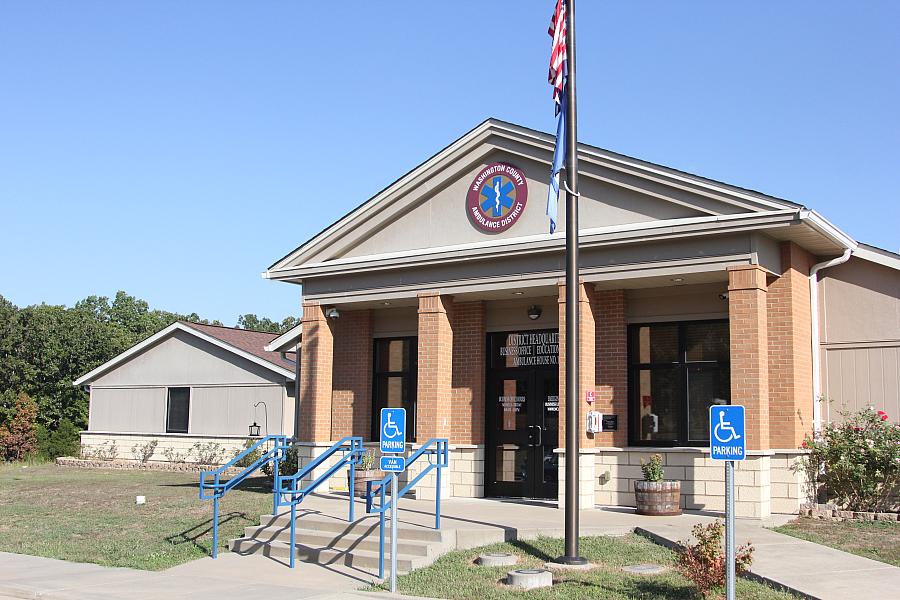
"(In Reynolds County) you’re minimum two hours from a trauma center, by ground," Anderson said. "Here, in Washington County, you’re usually about an hour and some change from a trauma center depending on which one you go to and what your patient needs."
Longer transport means that WCAD has to focus more on providing patients care, even if that means going beyond what is typical for urban EMS.
"(We have to be) pushing the boundary and making these things available to the patient before they go to the hospital, that can make or break it for the patient’s life or long-term outcome. Most places don’t do all these things and unfortunately those patients don’t have very good outcomes," Anderson said, referring to WCAD's pre-hospital blood program, which allows them to administer blood on the scene or
during transport, a measure that can save someone's life in the event of a trauma.
"It’s not cheap and it’s not easy.”
“But it’s what’s right," Mingo added.
“It is a sacrifice because the extra supplies and equipment that it takes is very, very costly, but we believe in providing the best care that we can," Anderson said.
While the acute emergencies may require more in-depth care, there's the other side of the coin: People who call for seemingly minor problems may require more assistance when it comes to accessing resources that are already stretched thin.
"In rural areas the populations are much poorer, much less educated, we don’t have public transportation to get to doctor’s appointments and resources that they need," Anderson said, adding that he believes WCAD deals with "a lot more chronic illness issues than we do injuries and acute problems."
While it's common in both urban and rural areas for people to call 911 for basic medical care, calls like those in rural areas can have dire consequences.
The Center for Medicaid and Medicare Services developed the Medicare Ground Ambulance Data Collection System (GADCS), which began collecting information from EMS providers that bill CMS. In December 2024, RAND Health Care released an analysis of two years of data that examined information from nearly 4,000 organizations across the U.S.
Included in the report was information on average trip time — time from an ambulance beginning a response to the time the ambulance was able to respond to another call from service, which can include waiting at the destination, travel time back to station and other components. The report found that 66% of organizations in rural areas reported an average trip time of more than an hour, compared to 57%
of organizations in urban areas.
"Especially in rural environments, (calling for basic medical care) takes that resource out of the community for so long, depending on where their transport is," Patterson said. "We’re pretty lucky (in Branson West) because Cox Branson’s not terribly far away, and a large number of our patients go there, but if you think about going to Springfield or going to Rogers or over to Joplin, it takes that resource out
of the community for a long time.”
Those barriers and lack of access mean that it's easy for a chronic condition to
snowball into something larger.
“A lot of our 911 calls, by the time we get there, it’s not a simple problem, but it initiates with a simple problem, like the patient couldn’t get to the pharmacy or couldn’t pay for their prescription medications and now we’re in the situation we’re in because they’ve been off their medications for a period of time," Anderson said. "That’s what a lot of our 911 calls are for, are because a lot of people don’t have the resources to maintain their health conditions."
Finding ways to fund rural EMS
While any business can face financial challenges, the problem is especially thorny when it comes to EMS. Some services are funded by taxpayers, others by grants, some by hospitals. But the question remains: How do rural EMS programs not only find a way to pay their employees and the bills, but do so in a sustainable way that ensures communities can continue to receive life-saving care?
Those who spoke with the News-Leader said they're still trying to figure that out.
While EMS is, indeed, a business, Groux said, it's not always run like one.
"We see this all the time: The person who is running the service is the one who has
been there the longest, the one who didn’t say no when they asked them and now
they’re forced with dealing with, even these smaller services, are dealing with
budgets of a couple million dollars a year," Groux said. "They’re now having to plan
for the future and we see services all the time that end up in financial trouble
mainly because they haven’t thought past today. Through no fault of their own,
that’s not what they were trained to do."
The fear of losing ambulance services led to the creation of an ambulance district in Stone County.
CoxHealth's and Mercy's emergency medical services both served Stone County, Missouri, for decades, said Stone County Ambulance District Interim Director Jeff Hawkins. But the county and the services came to a crossroads in 2023 as increasing health care costs and complex insurance reimbursement models combined with the county's rural location and residents' low socio-economic status
put operations in the red.
"It was more complicated in this county to generate enough money through those transports to the hospital to be able to sustain operations," Hawkins said. "Each of them reported that they were losing approximately half a million dollars a year just trying to service Stone County and it was unsustainable for them."
County residents voted in 2024 to establish the district and support infrastructure and operations with a 1/2-cent sales tax. Mercy was chosen as the EMS organization to serve the county. Patterson feels that community involvement is what is going to ensure sustainability for rural services going forward.
"The key to sustainability for EMS programs, especially in rural communities, is some type of partnership with the community, whether that’s an ambulance district or whatever that is," Patterson said. "It’s just not sustainable for what we call ‘fee-for-service,’ so just charges to the patient. It’s just not sustainable. Medicare and Medicaid generally do not offset the cost of provision of service, so it’s very
challenging.”
A related issue is the fact that many EMS providers only receive reimbursement when the patient is transported to an emergency room, according to a 2016 committee report by the National EMS Advisory Council, but not all patients require a trip to the emergency room. The GACDS report found in two years, about one in four (27%) ground ambulance responses did not result in a transport, though that data is for both urban and rural EMS providers.
“On the 911 side, if you don’t transport, you’re not paid," Mingo said. "We don’t itemize bills, so if I go work a whole code in someone’s home, and we don’t transport (them to the hospital), we just spent how much money on equipment that we’re now eating."
Grants, while a good short-term solution, aren't sustainable long-term, especially since President Donald Trump's administration terminated a number of federal grant programs and rescinded funding for others, some of which benefited rural areas.
"It’s not the Field of Dreams. You can’t build it and they’ll pay for it; you have to figure out a mechanism to pay for it before you build it," Groux said.
"There’s a lot of costs around getting a program set up and grant funding is a great way to get it started but to sustain a program on grant funding, that’s a big problem."
As part of the One Big Beautiful Bill Act, the Rural Health Transformation Program was authorized, which "empowers states to strengthen rural communities across America by improving healthcare access, quality, and outcomes by transforming the healthcare delivery ecosystem," according to the Center for Medicare and Medicaid Services. It will allocate $50 billion to "approved states" over five fiscal years. Applications closed Nov. 5, and CMS will announce awardee decisions by Dec. 31.
Other methods of funding, such as forming tax districts or increasing existing rates, have their own hurdles — namely, they're unpopular with voters.
"Take a second look at your area and how well your area’s being funded, because I can tell you most of Missouri needs additional tax districts, higher tax rates. As a citizen, I get it, it’s terrible to pay extra taxes. I don’t want to," said Kyle Meadows, EMS business manager for CoxHealth. "But when it comes to, ‘Will I have an ambulance when I have a heart attack? When my wife’s sick, will I get somebody to
respond?’ that makes all the difference in the world.
"I think that’s the big thing. The public needs to know how we’re funded and not that it’s just always funded."