

Domestic Violence in the Shadow of Deportation
The story was co-published with Telemundo 33 Sacramento as part of the 2025 Ethnic Media Collaborative, Healing California.
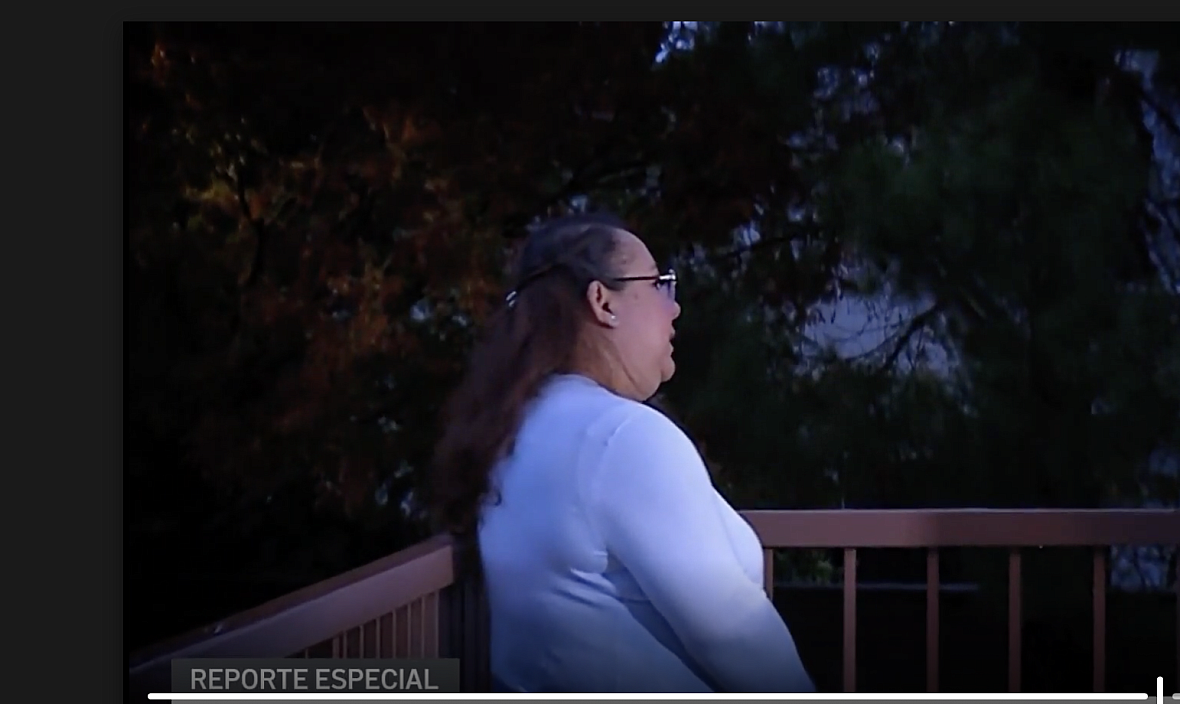
Cristina, a domestic violence survivor: “The truth is, you have to find strength… sometimes it’s very hard for me to take a step forward because it’s very difficult when someone is threatening you… and especially in a country that isn’t your own.”
Telemundo 33 Sacramento
In the middle of today’s immigration climate, many victims of domestic violence in our community live with a double fear: the abuse at home… and the fear that reporting it could bring them closer to deportation. Today, we hear the story of cristina… a mother who decided to confront her abuser despite everything.
[SOT – CRISTINA, DOMESTIC VIOLENCE SURVIVOR]
“The truth is, you have to find strength… sometimes it’s very hard for me to take a step forward because it’s very difficult when someone is threatening you… and especially in a country that isn’t your own.”
TRACK
For many women, abuse isn’t just physical or emotional. Immigration status is used as a weapon to control them, threaten them, and keep them in silence.
[SOT – ERICA VÁZQUEZ, SPOKESPERSON, “MIL MUJERES”]
“The fact that they are undocumented is used as a way to manipulate them emotionally. They’re told: ‘if you report it, they’ll take your children away, or they’ll deport you.’”
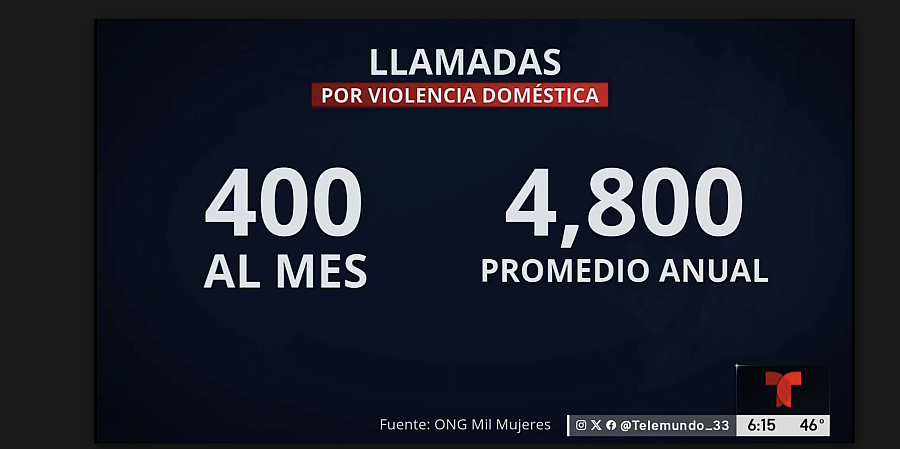
According to Mil Mujeres, they receive at least 400 calls every month in Sacramento, and an annual average of 4,800 calls.
Carlos Alberto Trestini
TRACK
According to Mil Mujeres, they receive at least 400 calls every month in Sacramento, and an annual average of 4,800 calls. That is why they operate a 24/7 text line. And because of this high need, they provide therapy services, English classes, and counseling.
TRACK
And although violence can be physical, many times it begins with much more silent forms… like emotional, economic, or psychological control.
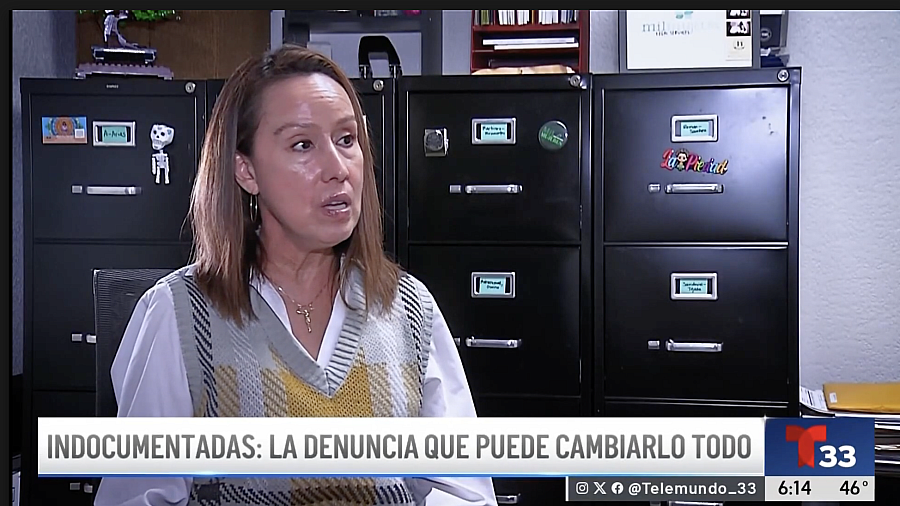
Erika Vasquez, spokesperson Mil Mujeres: The fact that they are undocumented is used as a way to manipulate them emotionally. They’re told: ‘if you report it, they’ll take your children away, or they’ll deport you.
Telemundo 33 Sacramento
[SOT – ERICA VÁZQUEZ, SPOKESPERSON, “MIL MUJERES”]
“There are levels and forms of violence: economic, where they are not allowed to work… or emotional, where they’re constantly told they’re not good enough, that they’re worthless, that they’re not good mothers.”
[ON CAM – CARLOS]
In Cristina’s case, the abuse began in an invisible way… until it became a real threat to her life.
[SOT – CRISTINA, DOMESTIC VIOLENCE SURVIVOR]
“He insulted me because of my body… he told me i was worth nothing, that he didn’t love me. The funny thing is that he didn’t love me, but he kept living in my apartment.”
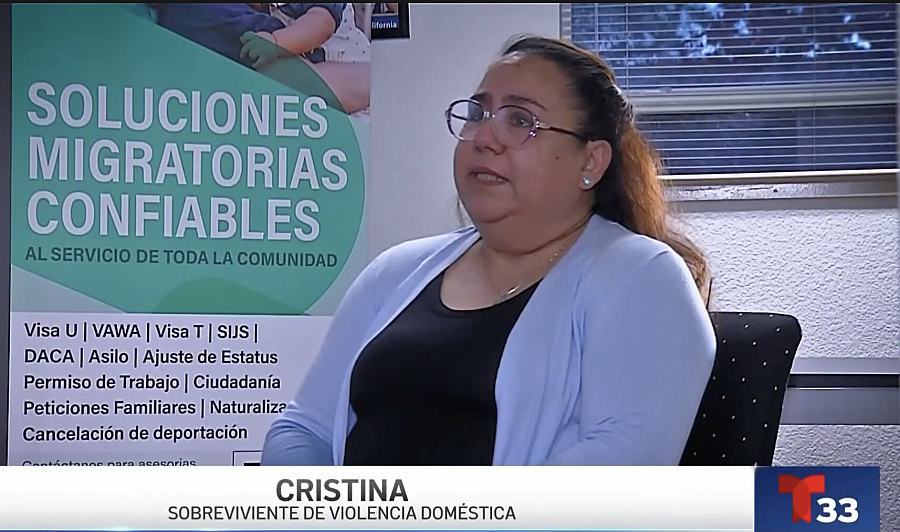
Cristina: “And i’m here waiting for my turn to finally get my residency.”
[SOT – CRISTINA, DOMESTIC VIOLENCE SURVIVOR]
“He started threatening me… saying he wanted to kill me.”
[ON CAM – CARLOS]
How were those threats made?
[SOT – CRISTINA]
“Verbally… and the last time, he shot at me with a gun.”
TRACK
After that incident, Cristina knew she had to defend herself and report the abuse. But for more than 10 years, she lived under the shadow of violence.
[SOT – CRISTINA, DOMESTIC VIOLENCE SURVIVOR]
“I knew it was violence, but that’s the fear… of being alone… of breaking up a family… of your child growing up without a father.”
TRACK (GRAPHIC)
According to the California Department of Justice, more than 9,000 domestic violence calls were received in Sacramento county in 2024, and nearly 7,000 of them involved weapons.
[ON CAM – CARLOS]
To understand how real these fears are, we consulted an attorney specializing in domestic violence cases.
[SOT – JAIME PRETELL, ATTORNEY]
“Obviously, with the current government there is fear of deportation… but when it comes to domestic violence, it’s the opposite.”
TRACK
According to the attorney, reporting doesn’t just protect the victim… it can also open legal pathways to remain in the country.
[SOT – JAIME PRETELL, ATTORNEY]
“There’s the vawa system… the u visa for victims… and the t visa, which applies in many cases of violence.”
TRACK
And those same laws are what now allow cristina to hope for a safe immigration path. However, according to the 19th, an independent nonprofit newsroom, pending lawsuits that allege ICE is violating federal law by targeting immigrants with pending u and t visa cases. Over the past year, women have been detained and deported while waiting on pending T or U visas. The recently filed lawsuit seeks to halt those deportations, and legislation to do the same has been introduced in congress.”
[SOT – CRISTINA, DOMESTIC VIOLENCE SURVIVOR]
“And i’m here waiting for my turn to finally get my residency.”
TRACK
But domestic violence victims also face a long road before they can obtain a visa of this type.
[SOT – ERICA VÁZQUEZ, SPOKESPERSON, “MIL MUJERES”]
“what they receive in one year can take three or four years just to be reviewed. It’s causing a backlog… someone applying for a u visa can wait 4 to 8 years or more before they finally receive it.”
TRACK
But even after years, the wounds remain… though the willingness to heal also remains.
[SOT – CRISTINA, DOMESTIC VIOLENCE SURVIVOR]
“The scars remain… I had to see psychologists, not just one. Several.”
[ON CAM – CARLOS]
Does it still hurt to talk about this?
[SOT – CRISTINA]
“These are things that don’t stop hurting… because of the powerlessness of not being able to defend… in my case, my son.”
TRACK
But with the arrival of a new administration, new challenges have also come for nonprofit organizations.
[TAKE SOT – KRISTA COLON, CALIFORNIA PARTNERSHIP TO END DOMESTIC VIOLENCE]
“Our organization directly receives CDC funding, and we had to navigate the termination of all CDC staff who worked on that project.”
TRACK
In organizations like “Mil Mujeres,” they see every day the impact of immigration fear on mental health and the decision to report abuse.
[SOT – ERICA VÁZQUEZ, SPOKESPERSON, “MIL MUJERES”]
“There is constant fear… you don’t know who to trust, where to go… whether your children are safe at school. It’s a lot of fear… and that affects the mental health of our community.”
TRACK
But despite everything, women like cristina know that the path to breaking the cycle of violence begins with taking the first step.
[WALKING SHOT – CARLOS & CRISTINA / WIDE SHOT]
And just like Cristina, many women today are deciding to break the silence. Because reporting doesn’t just save lives… it also opens doors.
In the midst of fear, there is hope…
and that hope, even if small, grows with every step taken toward freedom.