

The Health Divide: Will pharmacies finally get HIV prevention to the people who need it most?

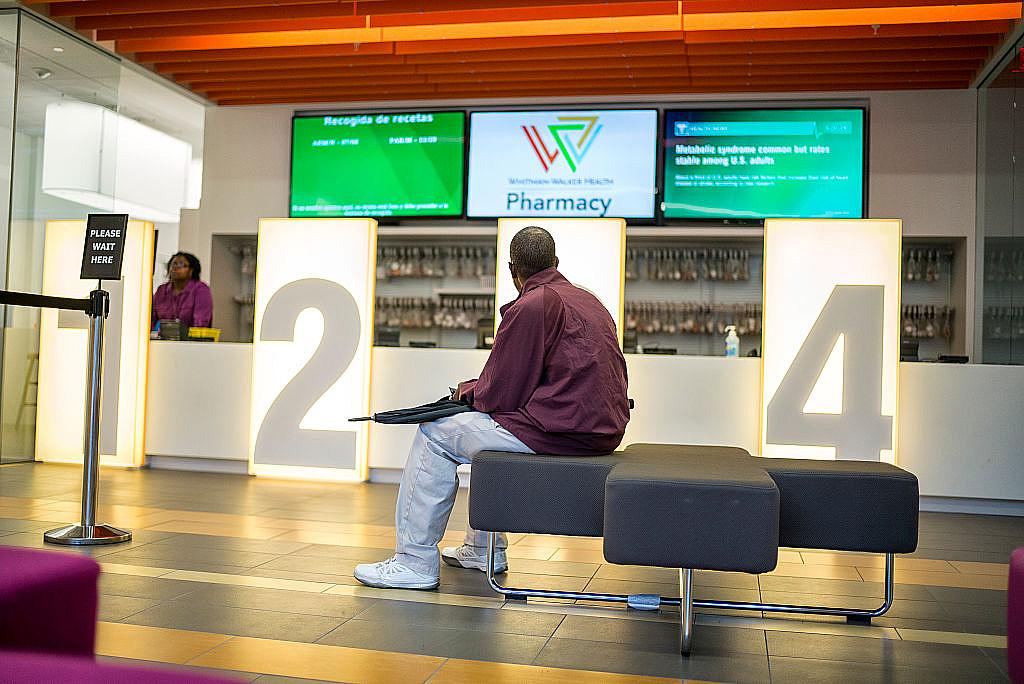
(Photo by Charles Ommanney/The Washington Post via Getty Images)
Three years ago, a research team in Georgia mapped a stark pattern.
Across the South, the epicenter of the nation’s HIV epidemic, clinics offering HIV treatment and preventive care were largely clustered in the heart of larger cities, which often don’t have the highest rates of infection in a region. Meanwhile, HIV clinics were sparse in the hardest-hit communities — predominantly Black urban and suburban neighborhoods and rural areas.
In many of the highest-risk neighborhoods in metro Atlanta, for example, there was nowhere to get a prescription for PrEP, or pre-exposure prophylaxis, a daily pill or a long-acting injection that virtually eliminates the risk of contracting HIV.
“There’s a complete mismatch between where we see PrEP clinics, and where we see HIV,” said Natalie Crawford, the senior investigator on the project and an associate professor of behavioral, social and health education sciences at Emory University.
But the researchers’ map also revealed a way to close the gap: tap drugstores to prescribe the medication. “We see pharmacies in neighborhoods where we do not see PrEP clinics,” she said.
Although PrEP has gained traction in the 14 years it has been on the market, the CDC has estimated that roughly 2.2 million Americans who aren’t receiving it could benefit. They’re disproportionately Black men and residents of the South.
There are many reasons why the drug isn’t reaching so many people who need it, as James Causey recently wrote for the Center for Health Journalism. One big barrier is access.
An analysis of U.S. data from 2017 showed that census tracts in the South were eight times more likely than those in the Northeast to be classified as “PrEP deserts,” which means it takes more than an hour, and in many cases more than two, to drive to a clinic and back.
HIV researchers, doctors and advocates have pushed for years to make the medication easier to obtain by allowing pharmacists to dispense it without a physician’s order. Yet as of August 2025, seven of the 11 states with the most liberal laws on pharmacist-prescribed PrEP are in the West. The South, which accounts for more than half of new HIV diagnoses, has lagged in giving pharmacists independent authority to prescribe the medication.
But that’s changing.
A new, bipartisan law in Georgia authorizes pharmacists in that state to prescribe PrEP and post-exposure prophylaxis, or PEP, which blocks infection if taken within 72 hours after exposure. A similar law in Louisiana took effect last year.
Crawford and partners, including the nonprofit AIDS United, the Black Public Health Academy, and the National Pharmaceutical Association, have spearheaded an initiative to support and train pharmacies in HIV prevention, education and referrals, by pairing them with community-based organizations that have worked with high-risk populations for years.
“Pharmacies are able to reach folks that traditional health care models have missed,” Crawford said, “and these are pharmacies that will really be a gateway to the rest of the medical system.”
Pharmacies are already playing a sorely needed role in frontline health care by providing vaccinations, blood pressure screenings, diabetes management and other services that once required a trip to the doctor. So it’s easy to understand the rationale for adding HIV prevention to the list. Many people trust pharmacists to deliver sound, nonjudgmental advice, even on sensitive issues like obesity, contraception and sexually transmitted diseases.
Pharmacies have other benefits too, such as longer opening hours than most doctors’ offices and shorter wait times. Getting a PrEP prescription could become as easy as picking up aspirin and a box of tissues.
But the initiative, called Rx for Change faces headwinds on many fronts.
Medicaid cuts and the growing numbers of uninsured Americans will make it harder for many people in need to pay for HIV medications, just as new prescribing rules are supposed to make it easier.
Budget cuts and mass layoffs at the Centers for Diseaƒse Control and Prevention’s Division of HIV/AIDS Prevention have eroded federal leadership on the epidemic and expert guidance for local interventions like Rx for Change.
And pharmacies are also strained. Thousands have closed since 2010. One in eight U.S. neighborhoods, home to millions of people, lack convenient access to pharmacy services, according to a mapping tool developed by researchers at the University of Southern California. The shortage is worst in the very places where PrEP is needed most: rural areas and underserved urban communities, and no state is immune.
Even when laws allow pharmacists to prescribe PrEP, there’s no guarantee they will do it. A recent study in California, the first state to authorize pharmacist-prescribed PrEP, found that only 3% of pharmacies — 31 in a state of nearly 41 million people — offer the service. What gets in the way? Some of the same issues that thwart many innovations in health care: reimbursement problems, staffing shortages, bureaucracy and liability worries.
Crawford believes the engagement of organizations with deep community roots will help pharmacies overcome barriers to prescribing PrEP.
As for larger political and financial challenges at this moment in the country — she knows as well as anyone that public health rarely advances without a fight, and persistence on the ground.
She began her career in harm reduction efforts in New York City at the height of panic about HIV and IV drug use, and she lived through fierce battles over easing restrictions on the sale of sterile syringes at pharmacies. What once seemed impossible to pull off, given the politics of the day, now is common practice in New York, and widely seen as an important measure to stem the spread of blood-borne disease.
Crawford hopes the PrEP story will end the same way.
“I’m actually really optimistic,” she said. “When I first introduce this work in Georgia, that would have been probably around 2013, people looked at me like, ‘What are you talking about? Do people who are at high risk for HIV even go into pharmacies?’ As if people who have sex don’t go everywhere!
“Now here we are, more than 10 years later, and we have legislation that could make this happen.”