

When Respect Becomes Silence: Inside the Generational Divide of Korean American Families
This story was produced in collaboration with SBS International as part of the 2026 Ethnic Media Collaborative, Healing California.

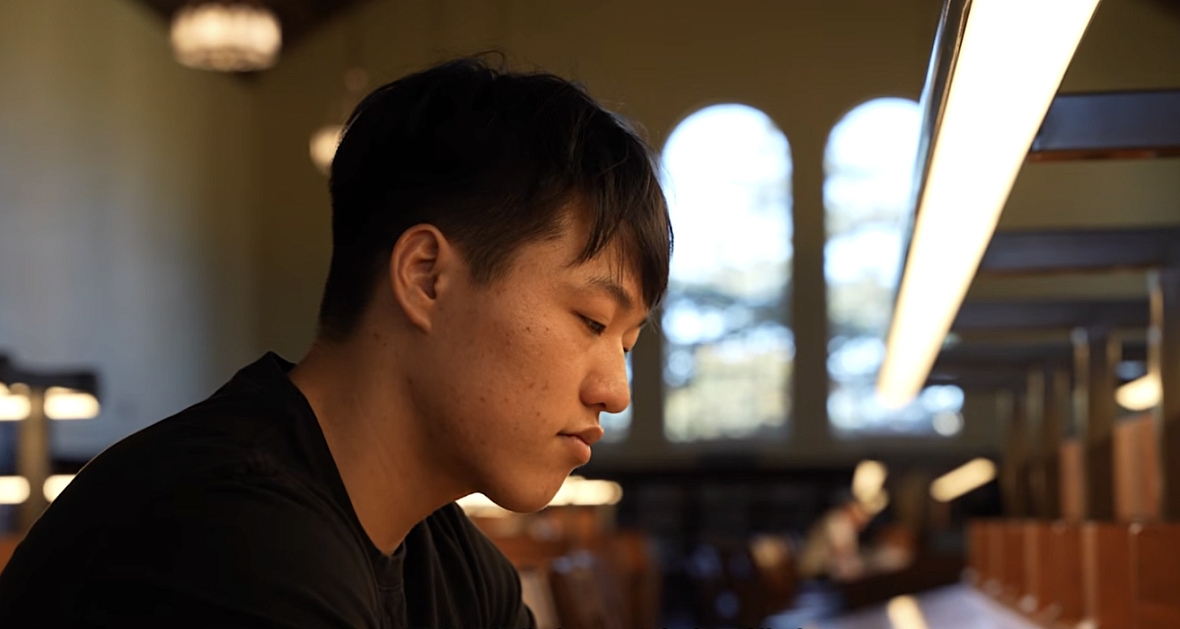
Stefan, a second-generation Korean immigrant sits inside a library doing schoolwork. A child who speaks confidently at school can become quiet the moment they walk through their own front door.
Same family. Same house. Yet two very different realities. This is a story about generational communication within Korean immigrant families.
Same Home, Different Rules
Stefan (Second-generation immigrant):
“I couldn’t share my thoughts fully, and I couldn't really open up. So I just keep to myself. I didn’t feel like I had a good relationship.”
Gloria Kim (First-generation immigrant, mother):
“I thought I understood my child well. But my child told me, 'You don’t fully understand the difficulties in American society.'”
In many Korean immigrant families, respect is a core value. But what happens when respect turns into silence?
A child who speaks confidently at school can become quiet the moment they walk through their own front door.
Same family. Same house. Yet two very different realities.
This is a story about generational communication within Korean immigrant families.
Expression Outside, Deference at Home
Stefan:
“Sometimes we disagree with what adults say. But in Korean culture, it feels rude to speak up or share your own ideas.”
Outside, self-expression feels natural. At home, respect comes first. The issue wasn’t simply language. It ran deeper — an unspoken rule: don’t speak back to elders. To avoid conflict, many young people choose silence. Children know how to speak — but not to their elders.
Respect becomes hesitation. Hesitation becomes silence.
What Works at School, but not at Home
Isaac (Stefan's college friend):
“He’s funny in his own way. A little socially awkward sometimes, but a great friend. We met during orientation.”
On campus, Stefan is the friend who puts people at ease. But at home, the same stories stop. Explaining feels risky. Speaking feels like it might create distance. And so those words are left unsaid.
With Love, But Always Busy
For many first-generation parents, early immigrant life was about survival. Responsibility came before emotion. Endurance became routine.
Gloria Kim:
“After coming to the U.S., my focus was on raising my husband and two children well. My life followed a very set routine — work, church, home. That was what life felt like in the immigrant community. But for my children, it was different. They wanted to spend time with friends and travel on weekends with family. But there were limits to what we could do, living as an immigrant family.”
It wasn’t a lack of love. There simply wasn’t space or time to learn how to truly connect.
The Perception Gap
In December 2025, a forum and survey were organized by the Overseas Koreans Agency, YouStar Foundation, and Korea University’s Department of Psychology.
A total of 496 participants responded.
27% of parents reported no major communication problems. But 71% of second- and third-generation respondents said it was difficult to express their thoughts and emotions at home.
The largest gap appeared in one question: “Do family members feel they can speak openly within the family?”
Soyoun Park / President, YouStar Foundation:
“First-generation parents don’t perceive much conflict, but second- and third-generation children clearly do. Parents believe communication is fine, while younger generations say it is very difficult to express themselves.”
Silence does not always mean peace. Sometimes it means the same home is being experienced in very different ways.
Emotional Distance and Delayed Help
Dr. Soyoung Sung / Clinical Psychologist:
“Second-generation children need English to express their emotions. But when they are told to speak in Korean, they often start to talk and then say, ‘Never mind.’
From the parents’ perspective, when their child speaks in English, they may not fully understand the words. They only see the emotion. Then they begin to wonder, ‘Why does my child dislike me? Why does my child seem to resent me?’ That hurts them.
And over time, families end up maintaining peace by avoiding conversation. That’s how many households have continued — by preserving harmony through silence.”
Experts say that when emotional isolation continues over time, it may increase the risk of depression or anxiety. What makes things even harder is that growing silence and isolation also means it can delay families seeking help, creating a dangerous cycle.
Connie Chung Joe / President, Asian Americans Pacific Islanders in Philanthropy:
“What we found was that our Korean immigrant families were usually going to wait twice as long as other American families before they got help.”
Behind that delay are multiple barriers.
Connie Chung Joe:
“It was hard because they felt ashamed. It was hard because they didn’t speak English. It was hard because they didn’t have insurance. They didn’t know where to find a therapist who spoke their language.”
Help was delayed not because families didn’t care, but because the path to help was unclear. In some families, problems continue to build until they can no longer be ignored.
But not every family remains in that place.
Choosing to Speak
Gloria Kim:
“It was meaningful to attend the forum, the experience, together with my child. Talking about the same topic gave us a chance, a starting point for my child to feel more comfortable expressing their own thoughts going forward.”
Stefan:
“Just looking at how many people came to the event — I just saw how many people valued this and thought about this as a very serious thing. There are so many other people that are going to open up to their parents as well.”
In families shaped by respect, silence will not disappear on its own. But it can be broken. What matters most is not conversation after a crisis, but sitting together before distance becomes permanent. Conversations don’t begin in grand ways.
They begin on the drive home. They begin when people realize they can choose, simply, to speak.