

“You Feel Degraded, Like Your Life Doesn't Matter”: For L.A. Street Vendor, Health Toll of ICE Detention Endures
This story was produced in partnership with La Opinion for the Ethnic Media Collaborative's 2026 Healing California project.

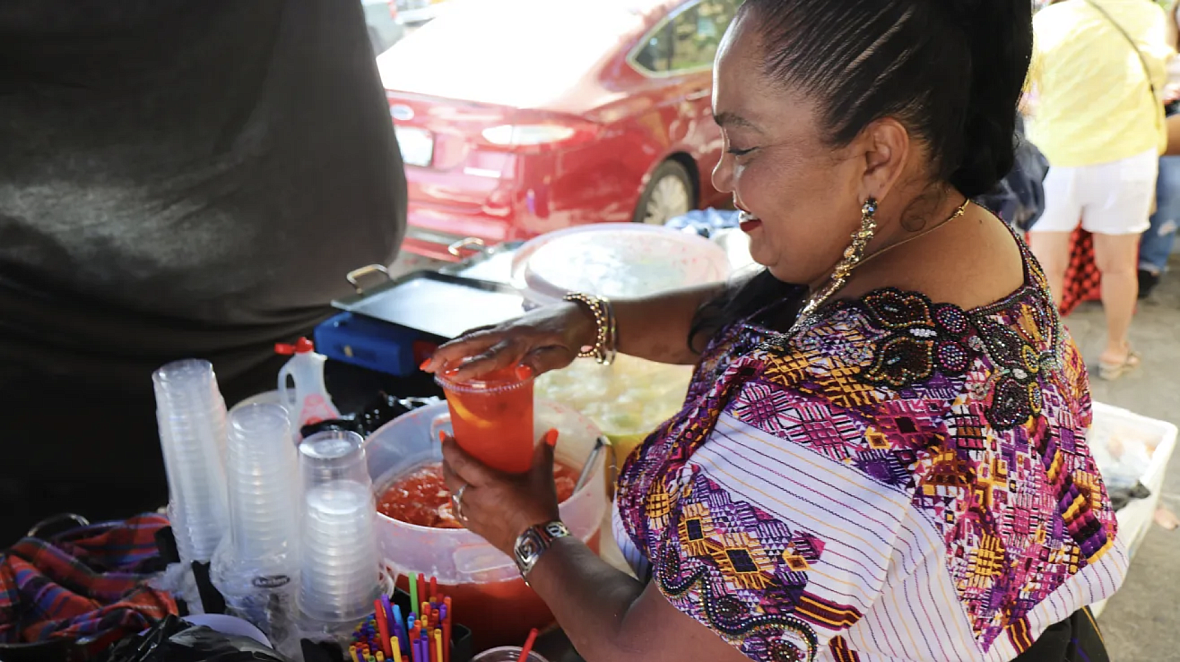
Emma De Paz serves herself a fresh glass of agua fresca one afternoon in East Hollywood.
Janette Villafana | Impremedia
It’s a sunny Sunday afternoon in Los Ángeles and Emma Marcela Crespin de Paz, a 59-year-old indigenous Guatemalan woman, is helping herself to a refreshing cup of agua fresca.
“No teníamos esto allá dentro,” De Paz said while she visited her daughter's hot food stand outside the LACC Swapmeet in Los Angeles. “We didn’t have any of this inside there.”
You wouldn’t know it at a glance because of De Paz’s joyful spirit, but she carries a sadness behind her eyes. De Paz was detained at gunpoint by federal agents on June 19, 2025, outside the Hollywood Home Depot during a massive ICE raid. The effects of that experience and her four-month detention at the Adelanto ICE Processing Center still endure.
A longtime street vendor, De Paz wore a colorful, traditional hand-embroidered Guatemalan blouse and skirt; gold and silver jewelry adorned her hands. “Hola, mija, como estas,” De Paz said as she greeted her daughter, a wide smile spreading across her brown skin. “Hi, mija, how are you?”
At the time of our visit, it had been 5 months since De Paz was released from the Adelanto detention center. De Paz described the months following her release as trying to climb out of a very deep hole with no ladder in sight.
“I’m trying to figure out how to get out of this,” De Paz said. “To climb my way out, because I know I won’t be able to do it alone, but with psychological and emotional support, and the help of the people around me, I know I will be able to,” she said.
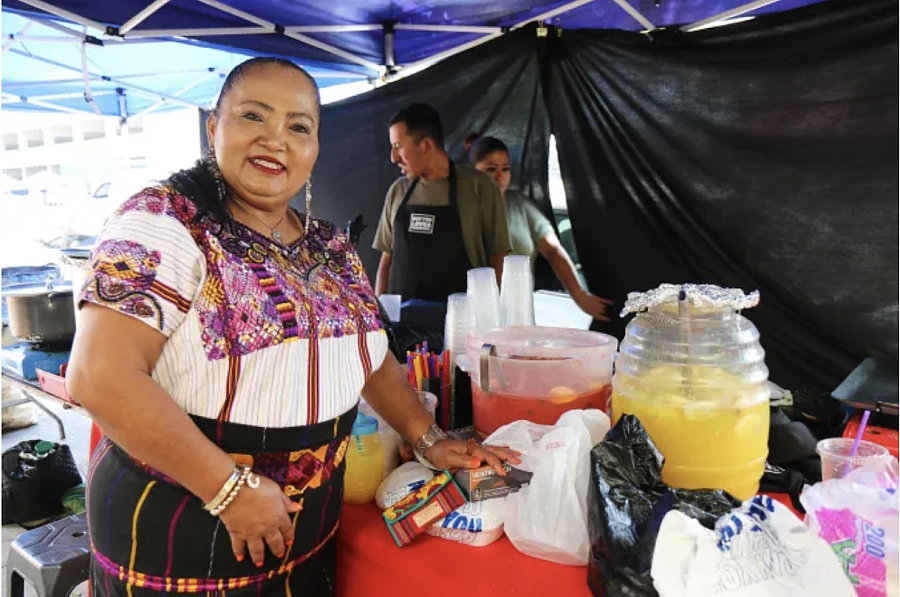
Emma De Paz poses at her daughter's food stand in East Hollywood.
Janette Villafana | Impremedia
De Paz poses with family and friends who were delighted to see her in an area where she used to organize and where her daughter now sells food. Credit: Janette Villafana
For many, being released from an immigration detention center may mean physical freedom, but that freedom is often accompanied by a long journey of processing their lived experience and trauma. From reliving the moment of their arrest to being confined in a cell under near constant fluorescent lights, it can be challenging to reenter society and reunite with family without scars.
De Paz can still recall being thrown to the ground during her arrest, the feeling of the cold metal of the federal agent's gun being pressed against her temple, and the sound of his voice ordering her not to run.
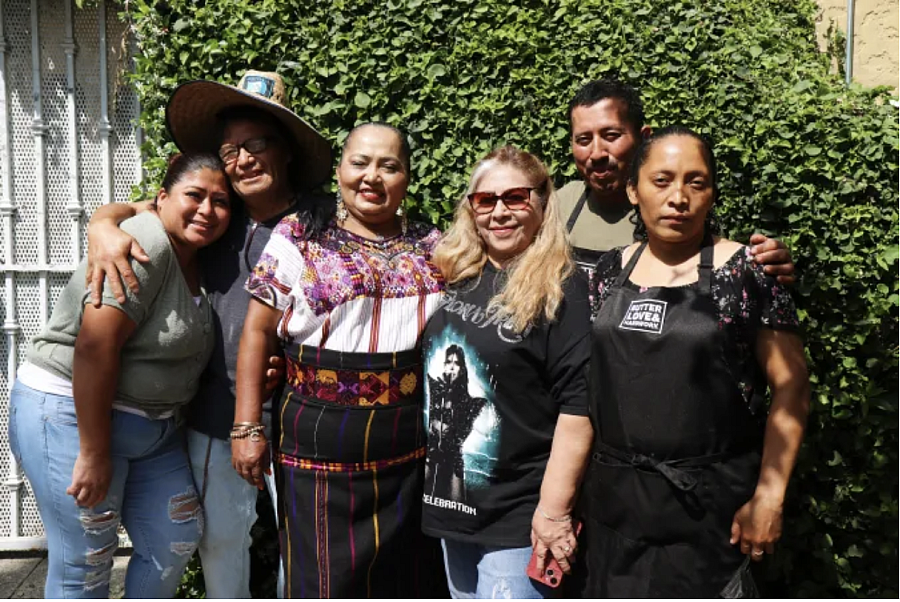
De Paz poses with family and friends, who were delighted to see her in an area where she used to do organizational work and where her daughter now sells food.
Janette Villafana | Impremedia
“It’s a moment I don’t think I’ll ever forget,” De Paz said. “Why would I run if I’m not a criminal?”
According to a report from the American Psychological Association, "Detention introduces a new layer of trauma marked by isolation, uncertainty, and often dehumanizing conditions,” writes author Myriam Vidal Valero, “that can severely worsen existing mental health challenges,” as many detainees don’t receive the mental health care they need. And the longer a person spends in detention, the more likely they are to be at risk of mental health problems that can linger and eventually develop into post-traumatic stress (PTSD) and thoughts of suicide.
“Conditions within immigration detention can not only worsen mental health illness if someone has that diagnosis coming in, but they can also contribute to a new diagnosis,” said Altaf Saadi, MD, MSc, a clinician investigator at Massachusetts General Hospital whose work is cited in the report.
Recalling her violent arrest, De Paz said, “I was trying to keep myself together because I felt weak—precisely because of the way they attacked us. Honestly, I’ve remembered every moment since that day because it traumatized me psychologically—on top of the fact that I was already ill.”
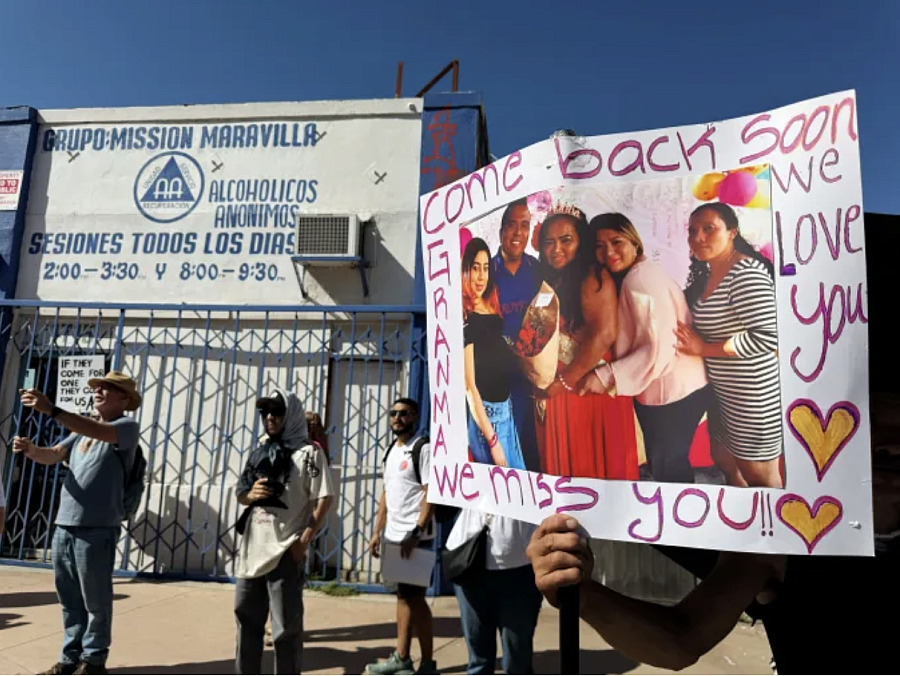
A relative of De Paz holds a sign at a community event calling for her release from the Adelanto center in 2025.
Janette Villafana | Impremedia
Detained at Gunpoint
De Paz said the federal agents and immigration officers who have detained more than 610,000 people since Trump regained office in January 2025 are not thinking about how these aggressive arrests may worsen pre-existing illnesses or anxiety and create new traumas for an already vulnerable population.
“They don’t consider what a person is going through inside when they arrest us,” said De Paz.
As De Paz told La Opinion her story that afternoon from the shade of a tree near her daughter's food stand, she often paused mid-conversation, her eyes drifting to the sides for alerts from the community watch team that vendors had created to patrol Monroe Street, where her daughter worked.
She said when she was arrested, she was already struggling with depression, something she has dealt with after her partner’s passing, among other illnesses including diabetes, high cholesterol, hypertension and vertigo. Even before she was detained, De Paz said she suffered from persistent anxiety due to the constant fear of getting detained.
“It's very painful for me to tell this story, but it's the reality of what I went through and what many others went through,” De Paz said.
Then Came B-18, A Very Cold Place
After her arrest, De Paz was taken to B-18, a temporary holding and processing basement facility operated by U.S. Immigration and Customs Enforcement (ICE) in the basement of the federal building in downtown Los Angeles near Alameda Street.
“When they took us to Alameda, it was a very shocking experience for me,” she said before pausing. “It was a place where it was very cold.” The long-time street vendor and leader in street vending advocacy groups said it was so cold that she felt her body go numb multiple times.
“I had to blow my own breath into my face mask, letting my breath escape to warm my body,” she said as she demonstrated inhaling and exhaling while cupping her hands around her mouth.
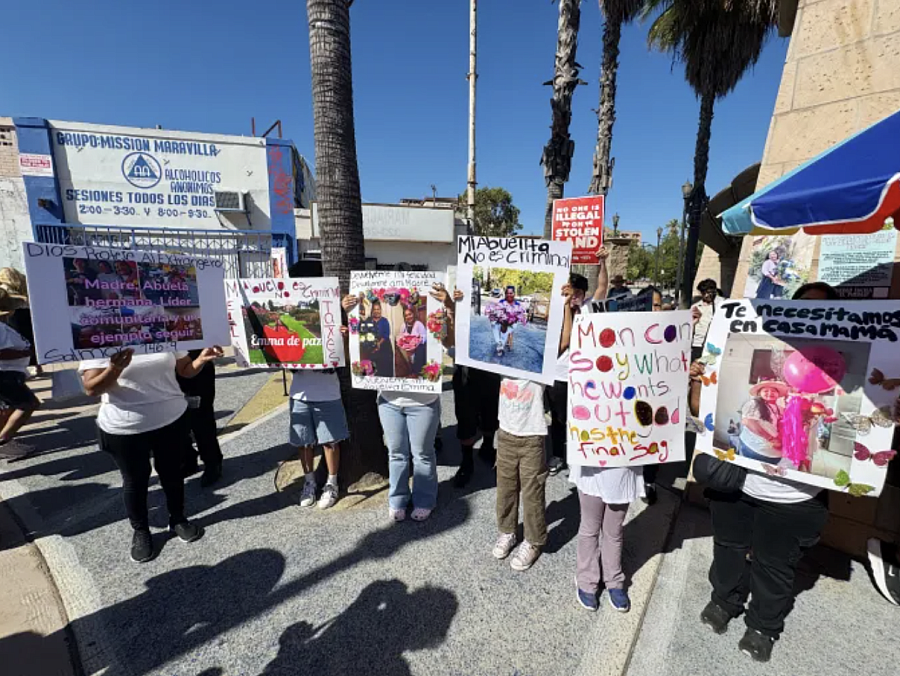
De Paz's siblings, children, and grandchildren hold signs calling for the street vendor's release in July 2025.
Janette Villafana | Impremedia
De Paz was eventually transferred to Adventist Health White Memorial Hospital, where she said she spent three days without communication with the outside world; it would be the first of multiple visits to a hospital during her detention related to her high blood pressure and diabetes.
A 2025 study — Duration in Immigration Detention and Health Harms — found that those held in detention for longer periods of time were significantly more likely to report poor health, mental illness and PTSD than those held for shorter periods.
“It's something real that's still on my mind, and I won't be able to let it go because, unfortunately, I was struggling to survive and this felt like the final blow,” De Paz said, caressing her hands to soothe herself as she retold her experience.
The Cold Continues at Adelanto
Shortly after her hospitalization, De Paz was transferred to the Adelanto ICE Processing Center, where she said she was first put in a cell by herself.
“My anxiety was so intense that I didn't want to be separated from the others. I wanted to be somewhere with other people; I didn't want to be alone because I was so anxious,” she said. “I felt like I was going to die. I told an officer, ‘Please don't put me in that room—I don't think I can handle it.’ I begged them not to put me in there.”
“You feel degraded in there and like your life doesn't matter,” she added.
De Paz said that while detained, she couldn't wrap her head around seeing guards who looked like her treat “their own” so callously.
“You may be doing this work for a check, but don’t contribute to our trauma,” she said. “We need our rights to be respected. Listen to the people who need assistance.”
De Paz would eventually be moved into a cell with other women.
She said the hours spent under the fluorescent lights only worsened her physical and mental health, and she continued to be plagued by the cold and numbing sensations in her body.
“Many times I even went so far as to bite my lips with my teeth because my body was falling asleep,” she detailed. “When I couldn’t feel anything, I’d dig my fingernails behind my ears and hurt myself just to feel something, and if that didn’t work, I’d pinch myself to see if [I could feel it].”
De Paz said that she wished the detention centers offered therapy inside to start the process of addressing the many emotions that run through you while enclosed in a space for a prolonged time.
“I wouldn’t wish what I went through on anyone. It’s a horrible experience.”
De Paz sits in her home in East Hollywood on a Monday afternoon. Credit: Janette Villafana
Physical Freedom Doesn’t Mean Psychological Freedom
De Paz was eventually released from Adelanto in early October 2025 after Community Power Collective, an organization she had worked with for years to advocate for street vendors in the city, helped come to her aid and secured her legal representation. She was granted bond after four months of detention after her attorney Karla Navarete and her team filed a Habeas Corpus petition.
Back at her home, her family and community surprised De Paz with flowers, balloons, gifts, cards, and posters welcoming her back.
De Paz said that although it’s been a year since she was released, she is still fighting to stay in the U.S., but the uncertainty plagues her as she fled Guatemala out of fear for her own life.
“I immigrated to this country for a reason—I didn’t do it on a whim. I think a lot of people immigrate out of necessity, due to circumstances [people] never understand.”
Uncertainty Endures
On November 5, 2026 De Paz had one of her in-person court check-ins in Los Angeles, where she was accompanied by the organization Union Del Barrio. Despite her nerves, her visit went well and she returned home safely.
“They were there for my safety and I’m so thankful because we’ve heard of people getting detained at the courts,” she said in Spanish on a recent call with La Opinion.
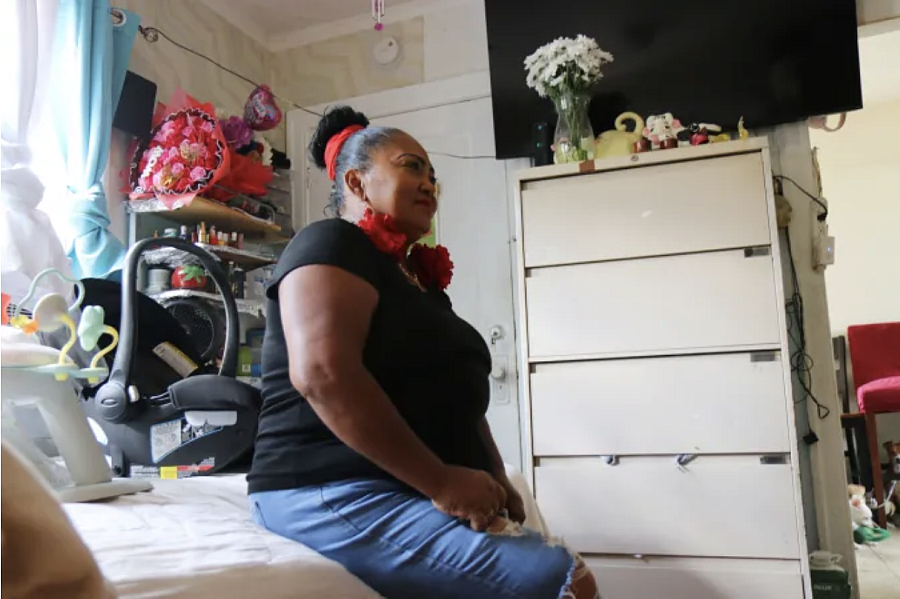
De Paz sits inside her East Hollywood home on a Monday afternoon in 2026.
Janette Villafana | Impremedia
While she is rarely called in for a court check in, De Paz said she does have to upload a photo of herself every week to a phone application called ICE SmartLINK, which is used by immigration enforcement as a form of surveillance for people with pending cases. The app is part of ICE’s alternatives- to-detention program, which lets a person fight their case outside a confined cell while still being monitored.
Now outside, De Paz is still haunted by her time inside. “The first few months, when I woke up, I had to remind myself that I was no longer in that place,” she said. “I’m free, but I’m not free.”
Before detention, her life was about being outside; if she wasn’t selling food to the day laborers who frequented the Home Depot, she was organizing street vendors across the city. Now she lives a quieter life, mostly surrounded by family and friends. She has since returned to work out of necessity, but said she is still scared of being re-detained, so she limits her work hours and days.
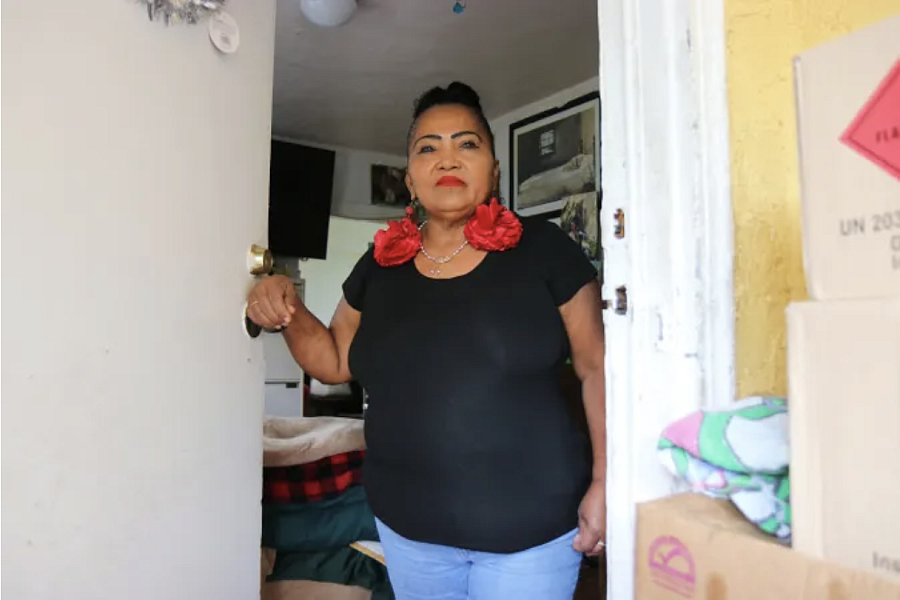
De Paz looks out from her front door, observing the movement in her East Hollywood neighborhood.
Janette Villafana | Impremedia
“At times my anxiety, depression and fear are so debilitating that I don’t want to step out of my house, I don’t want to talk to anyone,” she said. “Sometimes I prefer to sleep to stop my racing thoughts, but at the same time I’m hopeful that I will get through this because the worst has already happened,” she added.
De Paz shared that she has started therapy and has been meeting with a psychologist every three weeks since she was released. The sessions help ease the nerves and anxiety that worsened during her arrest and detention at the Adelanto ICE Processing Center.
She said she often finds refuge at her local church, which is where she was coming from the Sunday she met with La Opinion; these days, De Paz tries to keep a low profile, staying home most of the time other than stopping by her daughter's stand to say hello and visit old friends.
“The church is one of the few places where I find some peace and safety,” she said. “I’m a long way from being ok but I tell myself I’m a strong woman, if I survived everything I’ve gone through up until this point in my life, I can survive this too.”