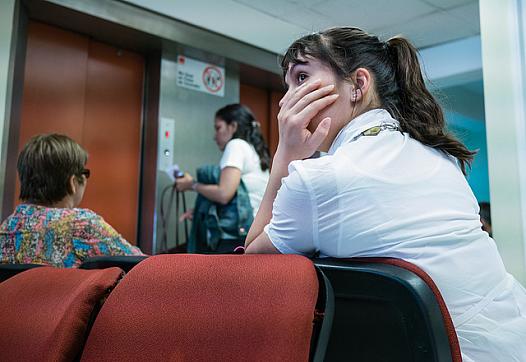
At the Native American Health Center in East Oakland, health reform has pushed clinic staff to experiment with new ways of delivering care. But changes in the way care is reimbursed and increased competition for patients still leaves clinic leaders nervous about longterm survival.
Mental Health
In 1965, the deinstitutionalization of mental health treatment charted a path toward overcrowded prisons and a shortage of mental health treatment facilities. Today, Imperial County in California is dealing with both of those consequences.
Beaches, sunshine, natural beauty, high-priced homes. In so many ways, Ventura County embodies the affluent, laid-back lifestyle of California’s coastal regions....
This three part series will be looking into mental health care among black communities within the U.S. Focusing on access, stigmas and cultural views toward mental health.
With high rates of many mental illnesses and not much money to treat them, are the rural counties of far-northern California destined for meager mental health services? What's lacking in these systems, and - perhaps more importantly - how did ones in similar areas overcome the same problems?
We know that kids who grow up with a lot of adversity are far more likely to suffer poor health and early death as adults. But how well do we understand the means by which early trauma is translated into health problems decades later? Researchers are still teasing apart the mechanisms at work.
From providing mental health care at the supermarket to training pediatricians in infant mental health, some in health care and social services are trying to apply the lessons of brain science and development to prevent problems that can threaten children’s health and well-being.
Three high-profile deaths that occurred over the past year are worth noting as reminders of the larger topics that should be top of mind for health writers.
For more than a year, Baltimore Sun reporter Andrea K. McDaniels and photographer Lloyd Fox have examined the unseen impact of violence — on children, caregivers and victims’ relatives.
Prevention is key when it comes to reducing the harmful long-term health affects of toxic stress and childhood adversity. But when prevention is no longer an option, could mindfulness help adult survivors lead healthier, higher-quality lives?