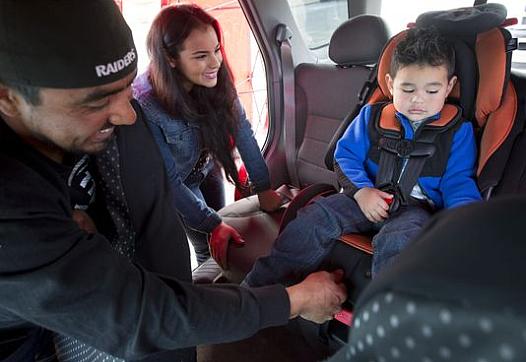
It started as a series of reports on the dangers Latino children face when they're not placed in car seats. It bloomed into a full-scale public awareness campaign. Here’s how one dogged reporter made it happen.
It started as a series of reports on the dangers Latino children face when they're not placed in car seats. It bloomed into a full-scale public awareness campaign. Here’s how one dogged reporter made it happen.
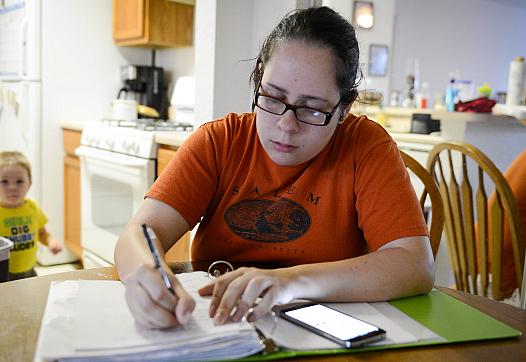
Jennifer’s experience in Florida’s Medicaid system isn't unique: She waited three months for her son’s appointment and drove 50 miles, only to have the doctor spend five minutes with him, ignore her concerns and tell her to go someplace else.

The effect of squalid housing on people’s health is difficult to determine in California's Sonoma County, since there is no study, stockpile of data or government agency that tracks illness in connection with living environments.

This week brought news of a compromise in the battle over new school lunch standards. It comes quick on the heels of new research that questions critics' claims of tossed food and lost revenues.
There has been growing recognition in recent years that "toxic stress" can disfigure young lives in lasting ways. But how do health systems begin to address the problem? Daisy Rosario looks at how the Montefiore health system in the Bronx is tackling the issue through pediatric care.
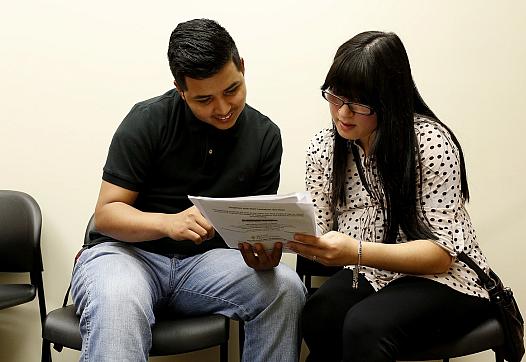
Delaying care or not getting any at all puts the baby and the mother at greater risk of serious medical problems, and Bexar County, Tex., has one of the highest rates in the nation of premature births. So what might be done to ensure mothers get better care, despite scarce resources?
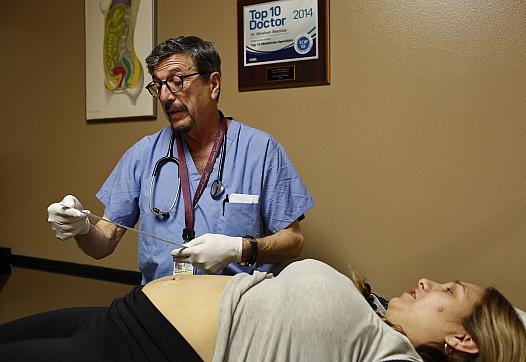
Waiting for Medicaid eligibility is a common experience in Bexar County, Tex., and one big reason why women don't receive prenatal care as early as they should. It contributes to the rising number of babies born to women who received prenatal care after their first trimester — or not at all.

Thousands of babies are born every year in Bexar County, Texas, to mothers who receive no prenatal care. Those women are more likely to give birth prematurely, increasing the odds that their newborns will develop immediate and long-lasting health problems that can be both costly and fatal.

Melody Cao's reporting was undertaken as a California Health Journalism Fellow at the University of Southern California's Center for Health Journalism.