

The Health Divide: Author Karabi Acharya says we need to better understand multiracial Americans

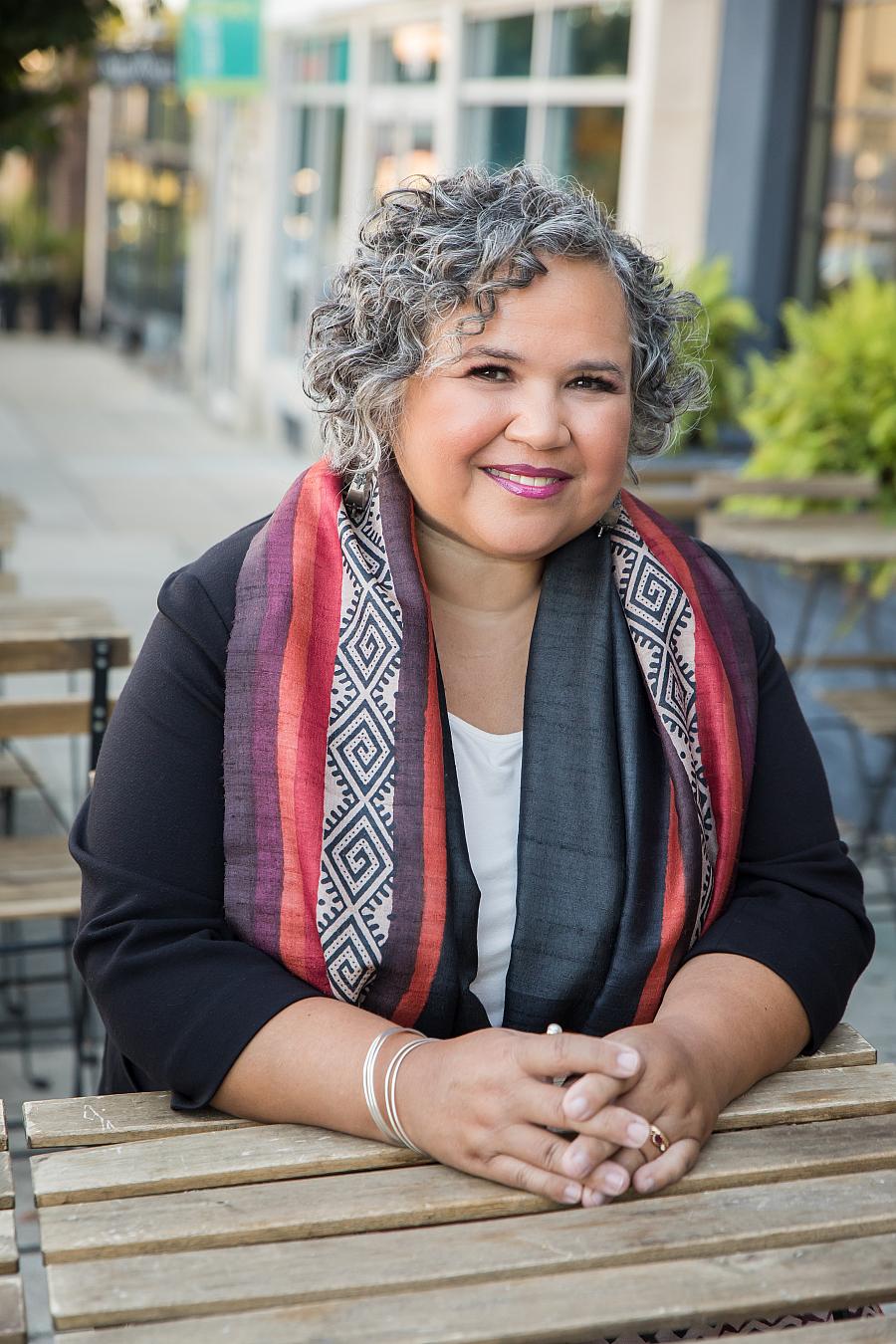
Dr. Karabi Acharya, author of the new book “Multitudes: The Multiracial Experience and How to Forge a Culture of Absolute Belonging.”
(Courtesy photo)
For years, the box on forms that asked about race left Karabi Acharya frozen with indecision.
Her mother was white, with roots in the U.S. stretching back to the 18th century. Her father was Bengali. On forms and in her own mind she was “other.” But that said nothing about what she was, only what she wasn’t. And eventually the designation came to feel “like you’re just part of a hodgepodge, the leftovers, miscellaneous,” she says now.
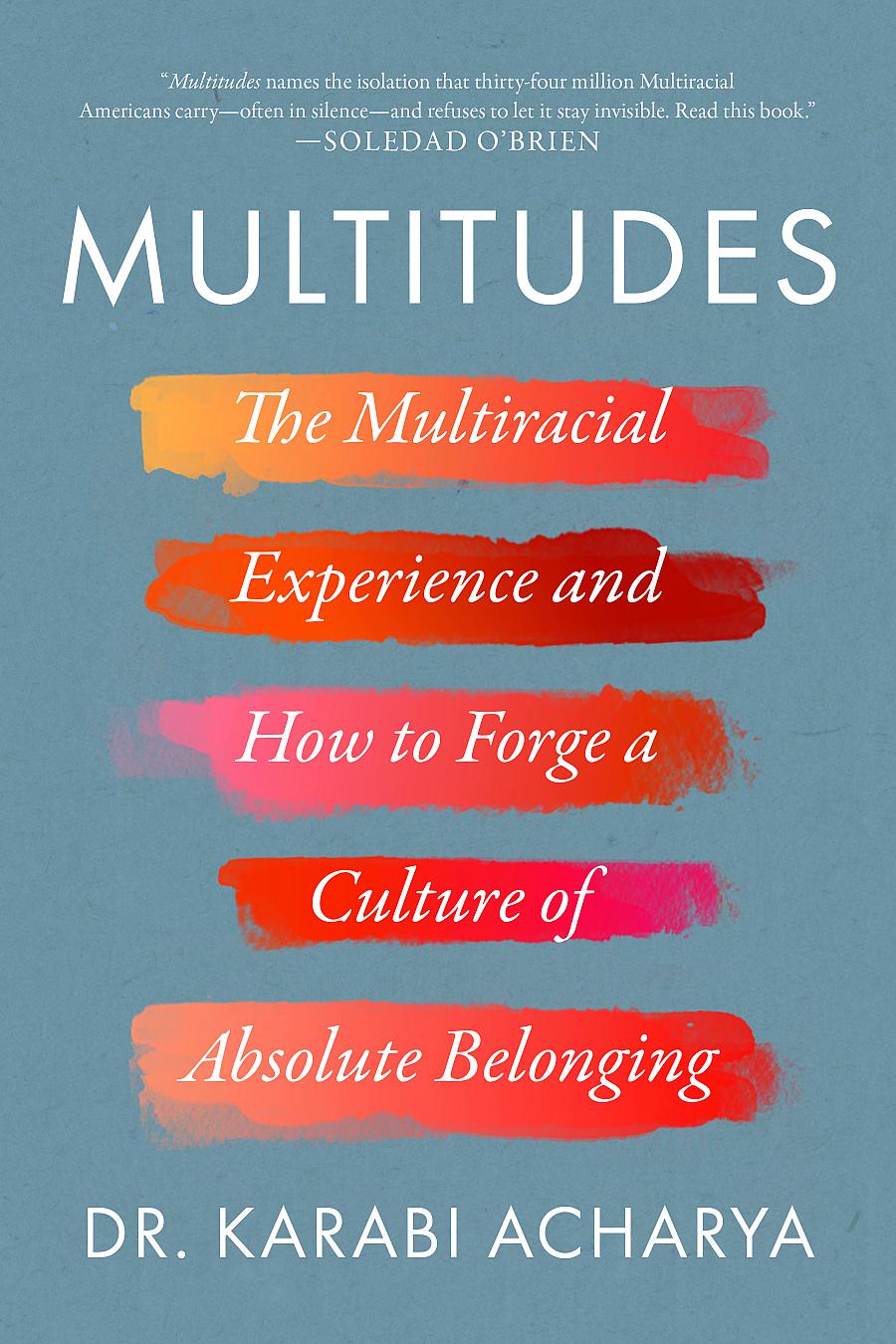
Multiracial people are among the fastest-growing populations in the U.S. Yet they remain invisible in our institutions, our health research, and our narratives about America, Acharya writes in her new book, “Multitudes: The Multiracial Experience and How to Forge a Culture of Absolute Belonging.”
Not until the 2000 census did the federal government allow people to check more than one box for race. In the 2020 census, 33.8 million people, roughly 10% of the population, identified as two or more races, a 276% increase since 2010. Roughly one-third of the multiracial population was under age 18.
Combining memoir, interviews and research, Acharya explores the isolation of being “other,” even within one’s own family. As a child, she writes, she was not American in the eyes of her classmates in Illinois or Indian enough to her family in Kolkata. While the book is aimed at a multiracial audience grappling with identity and inclusion, it raises important questions for the country as a whole.
How can we think about race, ancestry and identity with more nuance? How do we make room for experiences that rigid racial categories obscure? How must systems and institutions change to see, and serve, our vast, diverse, multiracial population?
“It turns out one of the most significant racist structures multiracial people face is erasure,” she writes. “We don’t have a way to know the multiracial experience because according to the research we did not exist.”
Acharya has spent a career in public health and is now a senior director of Global Ideas for U.S. Solutions at the Robert Wood Johnson Foundation. My conversation with her has been condensed and edited.
You write that multiracial Americans are largely invisible in research and public policy. What are the consequences, particularly for health?
Belonging is as essential a need as food and water. It’s not just a nice-to-have. There’s a little bit of research that suggests that multiracial people are at higher risk of depression and mental illness. But we know relatively little about this group, and that’s obviously one of the things I call for. We need more research, and we need people to disaggregate their data appropriately to include this population.
What research would you like to see?
Do multiracial people share certain health characteristics, whether mental health or otherwise? Are they treated by the health care system in certain ways? Do they even cohere as a group? My hypothesis is there is a certain level of coherence. Certainly, the folks I talked to shared a lot of the same pain points and some of the same stressors.
Every intake form and research survey asks people to identify their race. Why do you see that as problematic?
Too often, the race question is a proxy for ancestry, identity, nationality and physical appearance. But those things don’t all match up. That was certainly true for me. When people look at me, they tend to think I’m Latina. I’m not Latina. I don’t speak Spanish. My nationality is one thing. My identity is something else.
We need to get specific about why we’re asking the question, what we’re going to use the data for, and what we really want to know. Are you trying to understand my ancestry and, therefore, my risk for certain diseases? Are you trying to understand my experience with racism? In that case, you might want to know more about how I look or how I feel I’m treated. And look at the forms! Too often, they still make you check one racial category, which is ridiculous at this point.
While you argue for more detail and nuance, the Trump administration has halted a lot of race-related data collection and wants to eliminate questions on race and ethnicity from the 2030 census.
The argument often goes: Race is a social construct. It doesn’t exist in biology. There’s only one human race, so why should we count it?
So yes, race is a social construct, and it does not have a biological basis. But as a social construct, it’s used to discriminate against people. Until we get rid of structural racism, it’s really important to see very clearly how our systems are working for some people and not working for other people.
How would you like to see journalists cover the growing mixed-race population?
The key is asking questions. What about this group the census calls people who check off two or more races? Who are they? What is their experience? Are they getting lost or overlooked, whether in the health care system, education or housing?
I’d also like to see more talk about how we classify people. This notion of rigid, mutually exclusive racial categories really doesn’t serve us for the world that we are coming into.
Your book includes something powerful your mother wrote toward the end of her life. She admitted she’d always thought of you and your sister as white and now realized she’d failed to see race as a crucial factor in your lives. What did that say to you?
My mother was a child of the ’60s. She grew up marching for civil rights and women’s rights, and she was a sociology professor who taught about race and class. Yet we didn’t talk about race in our home and as it applied to us because race was a black and white issue. It wasn’t until I was in my 20s that she asked me, “Do you identify as a person of color?”
It had never occurred to her that her children’s experience or identity was different from hers. Of course, she knew we were brown. We didn’t get a sunburn, and she wanted to tan. She could see we were a different color, but she never thought about the social experience we were having. Which is crazy when you think about it, right? It shows how strong these blind spots are when there is no language, and when the erasure is so complete.
**
Update on SNAP: My Nov. 9 column described how bodegas and convenience stores were scrambling to meet tough new federal requirements for the foods they must stock in order to remain authorized to accept SNAP. The rules took effect Nov. 4 with little advance guidance. On Nov. 13 the Trump administration gave stores 90 more days to comply, after Mayor Zohran Mamdani of New York City — home to nearly 10,000 bodegas and 1.8 million SNAP recipients — pushed for a delay in a phone call with the president.