

The Health Divide: One man’s diabetes struggle holds lessons for covering disparities
Author(s)

Image
Getty Images
Published on
October 19, 2026
Thomas McCreary didn’t know it then, but a summer day spent with his three brothers in Michigan in 2018 would become one of the most important memories of his life.
The brothers went to lunch, did some shopping and even got pedicures.
At one point, McCreary asked a question: When was the last time all four of them had been in the same car together? They realized it had been more than four decades. They laughed, shared stories and enjoyed being together.
When McCreary looks at pictures from that day now, he sees something he missed. His twin brother, Timothy, looked exhausted. He appeared to be in pain. Yet during all that time together, the brothers never really talked about their health.
A few months later, on Christmas Day 2018, Timothy was hospitalized with pancreatic cancer.
Six days later, on New Year's Eve, he died.
McCreary was devastated. He doesn't know whether anything could have changed what happened to his brother. But Timothy's death forced McCreary to confront his own mortality and think differently about a disease he’d already been living with for more than a decade — diabetes.
Image
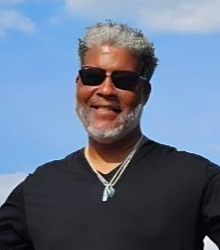
Thomas McCreary
McCreary, 64, who lives in the Milwaukee area, recently completed a 126-page e-book, “Stronger Than Diabetes: A Plan of Attack,” about his journey.
His story raises a larger question for those of us who report on health disparities: What happens when a disease that disproportionately harms Black Americans is made worse by the messaging many men have been taught since childhood?
“Be strong. Keep going. Handle your problems yourself. And don't let anybody know when you're hurting.”
Diabetes is taking a toll on Black Americans
The numbers show how serious diabetes is in the Black community. According to the U.S. Department of Health and Human Services, Black adults were 24% more likely than U.S. adults overall to have diabetes in 2024.
In 2022, Black Americans died from diabetes at a rate 78% higher than that of the overall U.S. population. And Black adults were more than twice as likely as U.S. adults overall to develop kidney failure caused by diabetes in 2021.
Those numbers make the health divide obvious. But they don't explain what’s driving it. Diabetes disparities aren't simply the result of individual choices. Where people live and work can affect their ability to prevent and manage chronic diseases, and factors including access to nutritious food and other social determinants of health play a major role.
For some Black men, there's another challenge: Talking about their health in the first place.
Why some suffer in silence
I don't know about you, but I grew up around men who were expected to be strong. You went to work. You took care of your family. You handled your business. If something was bothering you, you didn't necessarily talk about it. You dealt with it.
McCreary recognizes that mentality. “We are driven to be strong and nonstop and go, go, go,” he told me.
Research suggests his experience isn't unique.
A study of 458 African American men found that certain masculinity norms and experiences with everyday racial discrimination were associated with greater barriers to seeking health care.
That's important because it would be easy to reduce this issue to a stereotype that Black men refuse to go to the doctor. But it's more complicated than that.
A man might fear what a doctor will tell him. He might not trust the health care system. He might be worried about cost or have had a bad experience with a doctor. Or he might have spent his entire life believing that admitting something hurts is a sign of weakness.
Sometimes several of those things can be true at once.
McCreary learned how much diabetes can take
McCreary knows what can happen when diabetes isn't well controlled.
Before his diagnosis, he was constantly thirsty, urinating frequently and feeling exhausted. By July 2005, he could barely function.
His wife took him to an emergency room, where doctors discovered his blood sugar was 547. He had Type 2 diabetes.
But getting diagnosed didn't mean he suddenly knew how to manage the disease. He took medication but struggled with his eating habits, sugar cravings and weight.
McCreary has undergone numerous eye injections, cataract surgery in both eyes and two vitrectomies. The National Institute of Diabetes and Digestive and Kidney Diseases says diabetes can damage blood vessels in the eyes and lead to vision loss or blindness. He also dealt with serious foot problems and feared losing his toe.
Then life delivered more blows. After McCreary lost Timothy in 2018, his grandson Rashad was murdered in April 2020. McCreary struggled with grief and depression.
During the pandemic, he started walking around his neighborhood and eventually reached nearly 5 miles a day. Today, he says he weighs about 201 pounds, down from a high of 297.
What health journalists can do
For health journalists, McCreary's story is a reminder that reporting diabetes disparities can't stop with statistics showing Black Americans are more likely to develop the disease or die from it.
We need to ask about the underlying structural factors that are shaping those disparities.
Start with access. Find out whether patients can reach primary care doctors, endocrinologists, ophthalmologists, podiatrists, dietitians, and other specialists. Ask about appointment wait times and whether insurance status is limiting who patients can see.
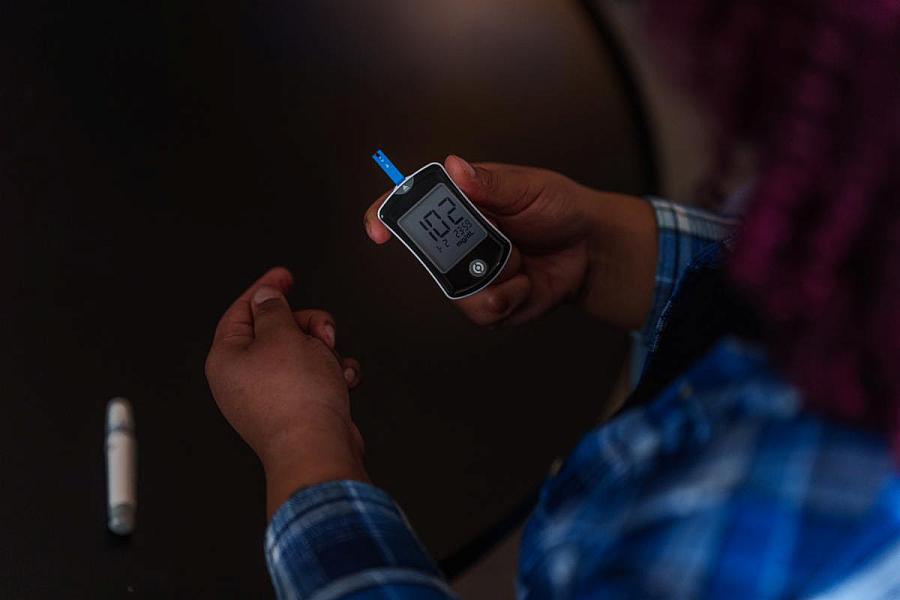
It also pays to follow the money. What do medications, glucose monitors, healthy food, and specialist visits cost? A treatment plan means little if someone can't afford to follow it. You can find someone dealing with diabetes management and use their story to highlight these costs.
Ultimately, health reporters need to look beyond individual behavior. If we're reporting about diet and exercise, we should examine whether people can afford nutritious food and have safe places to exercise.
And talk to Black men themselves. And not just doctors, researchers, or public health officials. Go to barbershops, churches, and community centers. Ask men what keeps them from seeking care and whether experiences with the health care system have made them reluctant to return.
When someone says he doesn't trust the medical system, don't simply write that he has “medical mistrust.” Ask what happened.
Most importantly, don't report these disparities as if Black men alone are responsible for them. That’s not to say personal responsibility doesn’t matter. McCreary would be the first to say that.
But access, affordability, insurance, and the quality of care people receive also matter. Behind every diabetes statistic is someone like McCreary. Someone trying to protect his eyesight and his feet. Someone who wants to live long enough to watch his grandchildren grow up.