

The Health Divide: What’s keeping Black and Latino men from the doctor?

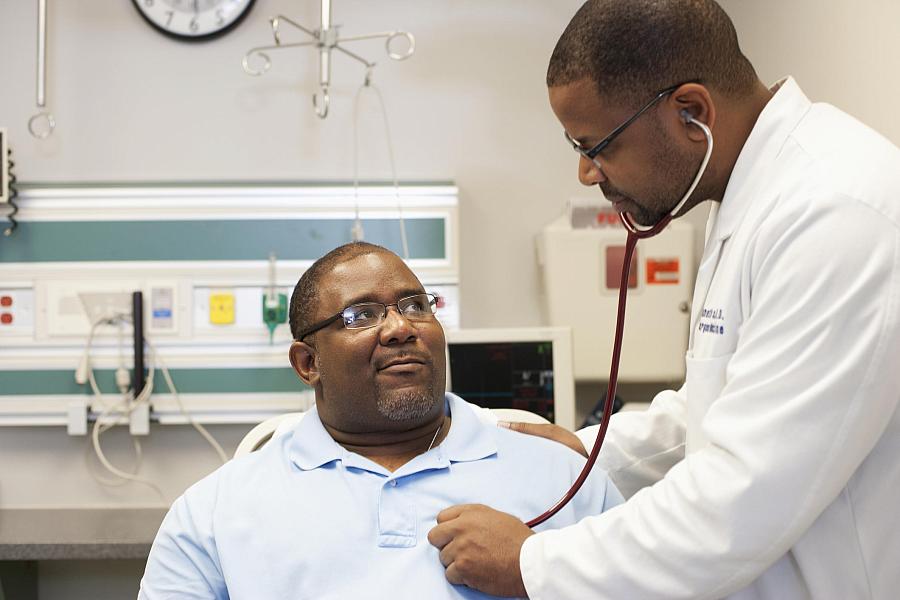
(Getty Images)
Every year around my birthday on the first of August, I give myself a present: I schedule my annual physical with Dr. William Hall.
I've been seeing him for more than a dozen years. We've built the kind of relationship every patient hopes to have with a physician. I trust him completely, and I know I can talk to him about anything related to my health. We're close enough that I even have his cellphone number.
As a 56-year-old Black man in relatively good health, I know those yearly checkups are about more than confirming everything is fine. They're about finding potential problems early, before they become serious.
That's why this column is personal.
Too many of the men in my family and circle of friends — most of them Black or Hispanic — don't get routine checkups. They wait until something hurts, or they convince themselves the problem will go away on its own.
I also work with a Hispanic colleague, whom I've known for more than two decades. He recently admitted he hasn't seen a doctor in years. He's 56.
Not long ago, I noticed him limping around the newsroom because of a knee injury he'd been dealing with for at least six months. I asked whether he'd gone to see a doctor.
He hadn't. Instead, he offered a list of reasons that probably sound familiar to many men.
"I'm treating it myself."
"It's not as bad as it was a month ago."
"What if the doctor sends me to a specialist? That's going to cost more money."
"And what if they find something else wrong with me?"
None of those reasons surprised me because I've heard them from men my entire life. Those answers may seem reasonable, but delaying medical care often comes at a cost.
When it comes to health care, timing matters. The longer someone waits to see a provider, the longer they may live with an illness or injury that could worsen or become more difficult to treat.
Research shows that Black and Hispanic men, on average, are less likely than some other groups to receive routine preventive care. The reasons are complex and often have less to do with personal choice than with barriers such as cost, work schedules, access to care, a long history of racism that has led to distrust of the health care system, and concerns about what a visit might uncover.
Delaying a checkup doesn't cause a disease, but it can mean conditions such as high blood pressure, diabetes and some cancers aren't detected until they're more advanced, when treatment is often more complicated, more expensive and less effective.
The problem isn’t just insurance
A recent study of men in California found that more than 84% of minority men surveyed had health insurance, yet only about half reported getting routine checkups. The researchers concluded that having insurance alone wasn't enough. Men who knew how to find an in-network doctor and already had a relationship with a clinic were much more likely to get preventive care.
As a member of Black Men Organizing, a Milwaukee group focused on mentoring young people, addressing disparities and improving men's health, I've heard many of the same concerns shared by men across different age groups. One of our goals is encouraging Black and Hispanic men to build relationships with primary care doctors while acknowledging the role race, racism and mistrust have played in the health care system.
Practical barriers matter. Where someone lives can influence access to transportation, nearby clinics and other health care resources. Cost remains another obstacle. Previous research cited in the study found that 38% of men delayed doctor visits or filling prescriptions because of the expense.
But one barrier stood out to me more than any statistic: fear.
I've had uncles who avoided going to the doctor because they didn't want to hear bad news. I've talked with friends who believed that if they ignored a health problem long enough, it might simply go away.
It doesn't work that way. You can't treat what you don't know. Finding a problem early doesn't guarantee an easy road, but it usually gives you more options and a better chance at a positive outcome.
The kinds of stories that help
Health journalists have an opportunity that many health care providers don't: We can reach men before they become patients.
It's our job to tell stories that make preventive care feel relevant, achievable and worth making time for.
That starts with people, not statistics. Tell the story of the father whose annual physical uncovered a blocked artery before it caused a heart attack. Profile the man who finally scheduled a checkup after years of putting it off and learned he had diabetes early enough to get it under control. Those stories often resonate more than a page full of numbers.
We can also help remove some of the fear by explaining what happens during a routine physical. For many men, an annual visit is a conversation about their health, a blood pressure check, routine blood work, a review of family history and a discussion about recommended screenings. Knowing what to expect can make that first appointment feel far less intimidating.
Journalists can also seek out trusted voices in the community — pastors, barbers, coaches, veterans, business owners and fathers — who can talk honestly about why they make their health a priority. When respected men say an annual checkup may have saved their life, readers are more likely to listen.
Every year around my birthday, I walk into Dr. Hall's office hoping he tells me everything looks good. If he doesn't, I'd rather find out now than after a heart attack, a stroke or a cancer diagnosis that could have been caught earlier.
That's the real value of an annual checkup. It's not about looking for bad news. It's about giving yourself the best chance to stay healthy for the people who count on you.
That's also the story health journalists should keep telling.