

I thought Duluth’s lead threat was in the water. The data told a different story.

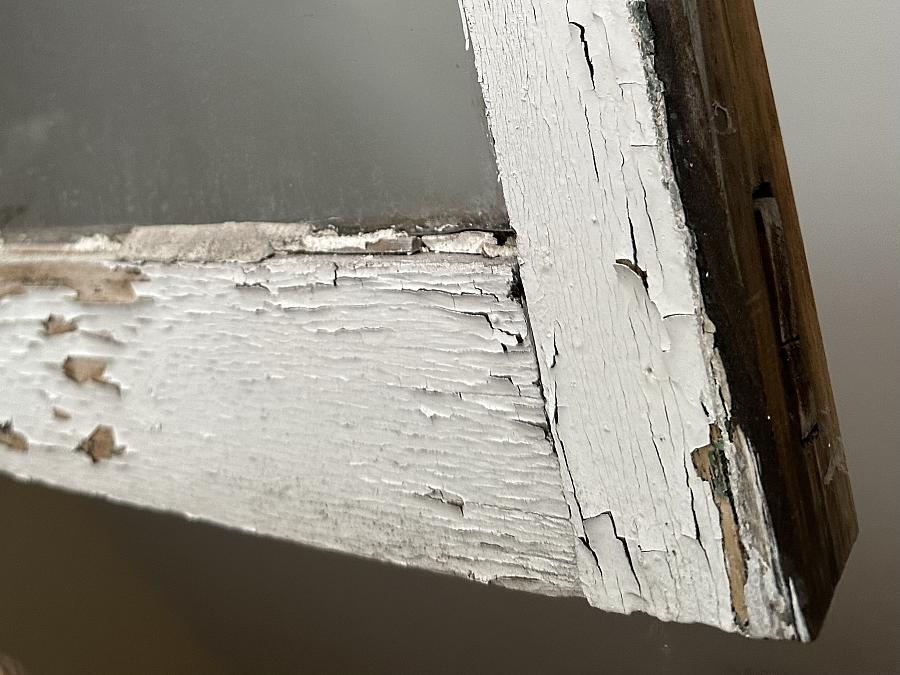
Peeling paint on the exterior window of a home built in 1911 in Duluth, Minnesota.
Photo by Jimmy Lovrien/Duluth Media Group
I knew children in Duluth, Minnesota had higher rates of elevated blood lead levels, or EBLLs, than much of the state, and I, like others, assumed lead in drinking water was to blame.
The city’s old homes, including my own, have lead service lines connecting the water main under the street to houses, and the city is in the midst of an aggressive push to replace thousands of such pipes.
Mailers, free water filters and other notices from the city are delivered to houses throughout the city with information on when their lead service line might be replaced, and what to do in the meantime to limit lead exposure.
Between that and the not-so-distant memory of the Flint, Michigan water crisis, it makes sense that one would associate high lead levels in children with drinking water. Information about lead lines is everywhere. Lead paint? Not so much.
So, when I applied for the Data Fellowship from the Center for Health Journalism, I expected my first and main story on Duluth’s aging housing stock to focus on where these lead service lines are, who are most likely to live in those neighborhoods and how that relates to rates of childhood blood lead levels.
Next, I planned a follow-up story on the dangers of other lead sources in these old houses — namely, lead paint — once the lead pipes are out. Then, I planned to look at how a lack of air conditioning affects people living in old homes amid climate change.
I would do this by analyzing census-tract-level demographic, housing and other data using the R programming language skills I picked up through the fellowship.
But as I started interviewing sources for this story, the public health officials I spoke to all agreed: Exposure to lead paint and lead paint dust were almost always the cause of elevated blood lead levels in the city’s children.
A county public health nurse who has spent the last 13 years responding to childhood EBLLs in the city said that lead in water has only caused a child’s high blood lead level in two or three cases.
So I switched gears for the first story, focusing instead on the dangers of lead paint and lead paint dust in old homes, of which there is no shortage in Duluth.
In Duluth, the median home age is 100 years old, and more than 86% of the more than 26,000 homes standing today were built before lead paint was banned for residential use in 1978.
I was also able to get my hands on the state’s latest childhood blood lead level testing data at census-tract level, which had previously been unreported and was not yet publicly available on the Minnesota Department of Health website. With that and the reams of data crunched in R, I was able to break some sobering news in the first story, too: Two Duluth neighborhoods have the highest rates of childhood EBLLs anywhere in the state, both with rates of over 9%.
The analysis I conducted confirmed that census tracts in the city with the highest blood lead levels also tend to have older homes, more rentals, higher rates of poverty and are less white than the rest of the city.
I also found a family living in a 120-year-old rental home willing to share their story. Their child, then 18 months old, had propped herself up using the windowsill to look outside, and, because she was teething at the time, began nibbling at the sill, which, testing later confirmed, had lead paint.
Testing showed she had levels of 34.5 micrograms per deciliter, nearly 10 times the level considered elevated by the U.S. Centers for Disease Control and Prevention and the Minnesota Department of Health.
Thankfully, after the lead paint was covered, her blood lead levels began to drop. And after a year, they were nearly below the elevated threshold.
My second story in the series tackled lead lines, but its angle focused more on the uncertainties around future state and federal funding. Still, I was able to show which census tracts had the highest rates of lead lines prior to replacement, and where the lines had actually been replaced so far.
Duluth’s water chemistry has kept drinking water from picking up too much lead from service lines, which has generally protected its residents from high lead levels in water.
But no amount of lead is considered safe, which I made sure to highlight and explain in the story, and removing lead service lines will still benefit the public.
One state public health official framed it in an especially helpful way: While removing the city’s lead service lines would target relatively small amounts of lead, it would end up preventing low-level exposure in a lot of people.
My hope is that my reporting prompts the public to grasp that lead paint remains a danger and is causing far higher lead levels in Duluth children than lead lines. It was also a good reminder for me to keep an open mind going into a reporting project. Assumptions, like data and other sources, should be challenged.