

When immigration enforcement becomes a health crisis

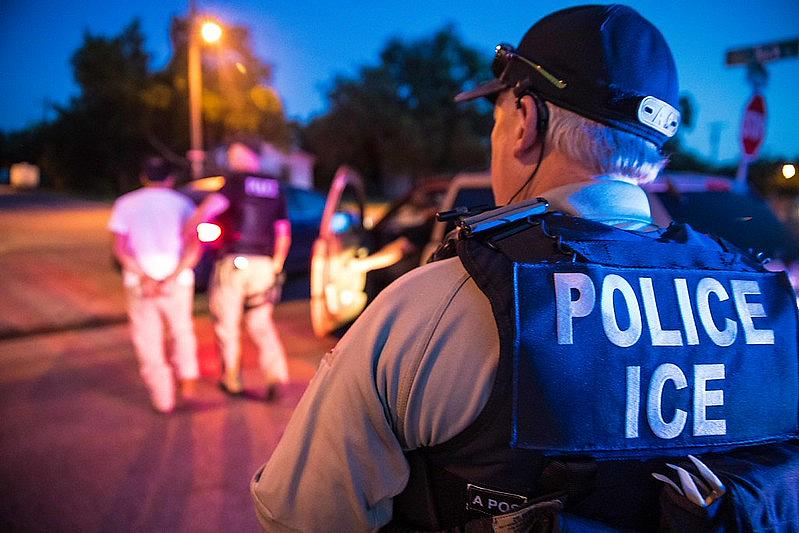
(Photo via Flickr/Creative Commons)
I am a first-generation American, the son of Latino immigrants who worked in the freight industry. From the San Gabriel Valley and Pomona to the Inland Empire, I have lived my entire life in regions shaped by industry, pollution, and labor that is often invisible but essential. Growing up, I saw how economic survival and environmental inequalities impacted my own household and community.
From an early age, I wanted to share the stories and lived experiences of my culture and community. I wanted to show how they have been shaped by policy decisions, economic systems, and power. I came to see journalism as a tool to document harm, surface inequities, and provide insights that can help inform discussions about improving the communities we live in. Many people I spoke with described feeling unable to seek help or access support, choosing instead to suffer in silence. That silence is something I recognize deeply, and it is also something I have experienced in my own mental health journey.
When I applied for the USC Center for Health Journalism’s Health and Equity Fellowship, I wanted to move beyond surface-level coverage of the warehousing and e-commerce boom and more closely examine the health indicators tied to the industry’s growth in the Inland Empire. To understand why enforcement was having such profound mental and physical health impacts, I had to situate these experiences within the broader conditions shaping life in the region.
The Inland Empire’s rapid economic and population growth over the last three decades has been fueled largely by e-commerce, warehousing, and public service sectors. Latino and immigrant communities have been central to that growth. Over the past 20 years, the Latino workforce has nearly tripled, from about 460,000 workers to more than 1.2 million. By 2022, Latino men and women made up the largest share of the region’s labor force.
Yet despite their outsized role in the local economy, Latinos in the Inland Empire continue to earn lower wages and are less likely to have access to health insurance or stable housing. Many also face elevated health risks, including higher exposure to asthma, cancer, and other chronic illnesses tied to living and working in some of the most smog- and particle-polluted
areas in the United States.
In June 2025, as the Trump administration escalated immigration raids and deportation efforts across Southern California, it became clear this crisis was rapidly reshaping those same health outcomes. I made a difficult but necessary decision to reinvent my project, shifting my focus to how increased federal immigration enforcement was disrupting access to health care, jobs and livelihoods for immigrant families in the Inland Empire.
After several conversations with my senior fellow, Will James, and with the support of my newsroom at KVCR, I refocused my reporting on two stories on mental health and access to medical care for undocumented people and their families. As a longtime Inland Empire resident and Spanish speaker, I felt a responsibility to use my reporting to deliver timely, accessible information to the communities most directly affected.
My first story examined the barriers Latino and immigrant communities face when discussing mental health, and how increased arrests and immigration enforcement have intensified stress, fear, and anxiety in communities already bearing environmental and economic injustice. That reporting also highlighted how local community organizations are responding by creating culturally responsive, trusted spaces that support individuals and families navigating chronic stress, trauma, and uncertainty.
Through repeated conversations with community leaders, I came to understand that the harms of enforcement extend far beyond legal consequences. Fear of detention, family separation, and surveillance creates chronic stress that erodes mental health, morale, and a sense of safety. Luz Gallegos of TODEC Legal Center described to me immigrants contemplating suicide after feeling trapped, isolated, and unable to see a way forward.
Trusted community spaces often serve not only as sources of legal guidance, but as vital places where people can process trauma, share fear without stigma, and rebuild emotional resilience.
In reporting my second story, I saw how this anxiety and distrust are also reshaping the delivery of health care itself. As distrust in institutions rises, frontline nurses and doctors are encountering increased tension between hospital staff and patients. In conversations with physicians, nurses, and lawmakers, I heard how fear, driven by immigration enforcement, disinformation, and lingering post-COVID burnout and moral injury, has become part of everyday care delivery. Clinicians described patients delaying or avoiding treatment, miscommunications fueled by fear, and the emotional toll on staff trying to uphold standards of care in an atmosphere of uncertainty.
Through my reporting, I observed how federal policies that intensify fear affect mental health, access to care, and the systems meant to support community wellbeing. This work reaffirmed my belief that journalism is a public health tool, capable of centering lived experience and forcing accountability in systems that too often fail the communities they serve.