

Budget Cuts Threaten HIV Services for Latine Immigrants in San Francisco
This story was co-published with Radio Bilingüe as part of the 2026 Ethnic Media Collaborative, Healing California.

In San Francisco, the majority of Latino immigrants living with the virus are gay men, nearly half of whom lack health insurance, and one-third speak Spanish as their native language.
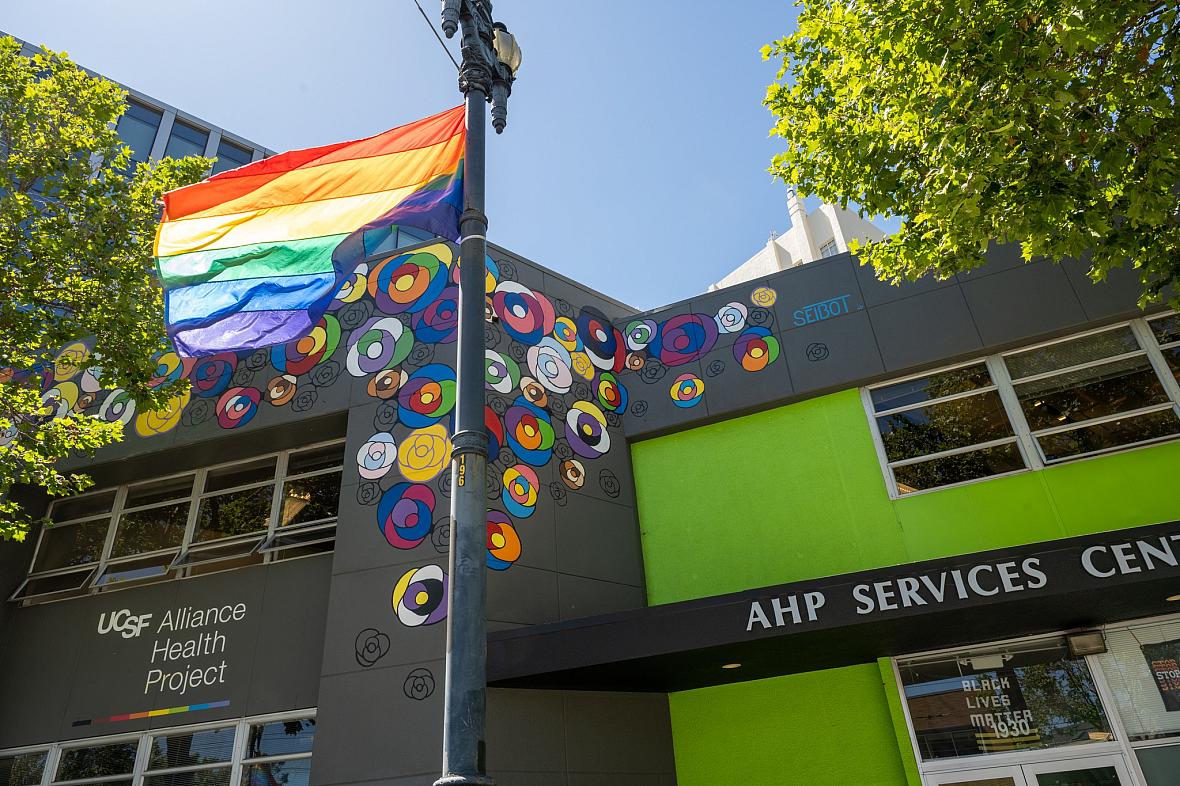
UCSF Alliance Health Project
Renatto Guerrero has lived with HIV for 15 years.
“It was three days before I turned 33, and I didn’t know much about it. The first things that came to mind were fatalistic thoughts: what’s going to happen, how am I going to get medication, how will I access medical care?”
For Latine immigrants like Guerrero, San Francisco has long been celebrated for pioneering HIV care in America. It opened the nation’s first dedicated AIDS clinic in 1983 and championed a model of care now considered the gold standard.
San Francisco is proposing to cut roughly $25 million from community health organizations this budget cycle to address a $640 million two-year deficit, a shortfall that has been hanging over the head of the city since the pandemic. Of these cuts, an estimated $5.4 million would come from HIV and AIDS services.
The community organizations serving some of the most vulnerable residents — including the queer Latine population — warn that these cuts will mean fewer prevention workers, longer waits for care, and ultimately more people at risk of contracting HIV.
The Mission District in southeastern San Francisco — known for its Latine roots — is home to Instituto Familiar de la Raza, a community organization supporting Latine immigrants since 1978 through mental health services, addiction treatment, and housing assistance.
Through its Sí a la Vida program, Instituto Familiar de la Raza also serves those living with HIV, many of whom are unhoused or living in residential hotels, exposed to drugs, and sometimes lack food. Latine people currently account for 32% of new HIV diagnoses in the city.
For the past two fiscal years, Instituto Familiar de la Raza’s HIV-support program received more than $2 million from the City of San Francisco for mental health services and prevention services. However, in mid-April, they were informed of a proposed 6% cut to their prevention services funding as part of the city’s attempt to address the deficit gap. That loss of funding, which will begin in 2027, will reduce services such as outreach, preventative care, and support groups.
“One of the things is prevention. We have many young people, and I think that part is crucial for preventing HIV, for educating them, and for providing them support. So the programs that are designed for them—if they are cut—then there won’t be that education, right?”
This is Bertha Osorno, a therapist at the Institute. She says caring for someone with HIV means caring for the whole person.
“You can’t look at a person only through their HIV diagnosis—you have to look at everything around them. For example, housing is very important, but there isn’t much help for people with HIV who need housing. So layer upon layer builds up. There’s also not enough staff to properly serve people with HIV who are disabled or trans—just imagine.”
According to an analysis by the People's Budget Coalition, the San Francisco AIDS Fondation is facing over $1M in cuts over two years which will hit everything from prevention services and substance use treatment and counseling to a syringe litter pick up program. Also affected is The Rafiki Coalition,which provides HIV prevention,holistic care, and housing and economic support to a largely Black population.
Alliance Health Project, a UCSF clinic serving the Latine and queer communities, stands to lose all city funding for its program providing clean needles and safer use supplies to help reduce HIV transmission. Braulio García is Deputy Director of Alliance Health Project. He says these city budget cuts put San Francisco’s reputation as a leader in HIV prevention at risk.
“San Francisco has always been a benchmark in HIV prevention and treatment precisely because it has consistently invested in these services. So, when funding for prevention is reduced, that model begins to weaken.”
Garcia says the impact on patients would be immediate.
“It’s going to mean fewer funds for fewer PrEP navigators.”
PrEP is a medication taken daily that reduces the risk of contracting HIV by about 99%.
“That’s an important role for linking and connecting community members to preventive PrEP services, along with less community outreach and more delays in actually connecting people to care after a diagnosis. That doesn’t just affect individuals—it also obviously impacts public health overall, because it increases the risk of transmission in the community.”
Like Osorno, García works every day to make sure patients are heard and understood culturally.
“We function as a safety net for those who don’t normally have access to their resources.”
Guerrero knows a system that serves the whole person with compassion and cultural fluency is rare.
“In my case, with this doctor I had through private insurance, when I went, I felt judged. He told me, ‘You don’t need to get tested so often because it doesn’t look good to your insurance.’
Guerrero lives in San Mateo, California, about 19 miles from San Francisco, where he had settled after migrating from Perú in 1999. But when he was diagnosed with HIV, he felt ashamed to talk about his diagnosis with his doctor.
“He didn’t know what my sex life was like. As a gay man, he was already putting up a barrier, implying that I shouldn’t have sex or get tested.”
According to research from Open Forum Infectious Diseases, in San Francisco, Latine immigrants living with HIV are mostly gay men diagnosed around age 30, like Guerrero. About one-third speak Spanish as their first language, and nearly 40% have no health insurance.
That’s why, for Guerrero, finding a clinic that understood his community and spoke his language was essential.
“My experience at this public clinic was very different because most of the population was Latino, many were queer. The way they treated you was not to demonize you or say, ‘Oh, you shouldn’t do this because it doesn’t look good for your insurance or socially.’ It was about making you feel comfortable so you could receive services and express yourself with your doctor.”
Using his diagnosis as inspiration, Renatto now works with the Latine immigrant community living with HIV.
“One of the biggest concerns is whether a person will have a safe place to store their medication and take it on time. If their health is affected, everything else is affected too.”
A safe place often means having a roof over your head.
“A person without stable housing, based on my experience with many clients, often turns to substance use as a way to survive on the streets. Once under the influence, they miss medical appointments, don’t take their medications. It's all connected. It’s not like we have many resources to begin with, and cutting the few we have is making things much worse.”
Those cuts also threaten the cultural knowledge that makes meaningful care possible in the first place.
Osorno says many gay and trans individuals come to the U.S. from Latin America with limited knowledge of the disease.
“In our countries, there isn’t much education about HIV. And what little there is often portrays it as a death sentence. I can tell you that 100% of our patients thought they were going to die.”
Many also carry the heavy stereotype that HIV is a “gay virus” Guerrero explains.
“Imagine going somewhere and being given a separate plate because you have HIV. Families reject them for being gay, trans, or HIV-positive. They have no community. Families don’t understand—there’s a lack of education.”
Osorno says the cuts will also affect patients’ ability to access HIV prevention medication.
“The young people I have, their Medi-Cal expired, and because they’re undocumented, they can’t renew their Medi-Cal. And that creates a huge barrier. So we’ll be working with them to figure out how they can continue accessing PrEP and other medicines.”
Guerrero says these spaces are often lifelines.
“We’re creating community. When you’re alone, all those fatalistic thoughts come in. Talking with people who’ve lived with the diagnosis for 20, 15 years, or those recently diagnosed—it was very therapeutic.”
Now working with others living with HIV, Guerrero can see the potential fallout on the community firsthand. “There are very few providers who connect culturally and offer services in Spanish. Cutting these funds will bring back long waitlists for mental health services like therapy or psychiatry. Workers will be overwhelmed, and we won’t have capacity for new cases. That already happens—sometimes there are no openings, and people feel rejected.”
Today, an HIV diagnosis is no longer a death sentence as it was in the 1980s and 1990s. Treatment involves antiretroviral therapy—daily medication that controls the virus and can make it undetectable. In San Francisco, treatment is available for insured and low-income patients at Ward 86, the nation's first AIDS clinic inside San Francisco General Hospital, where patients can begin therapy quickly after diagnosis. Free or low-cost care is also available at City Clinic, a municipal sexual health clinic.
Reina Tello, a community organizer with PODER, works to inform Latine immigrant families about their rights. She is also part of the steering committee of the People’s Budget Coalition, a network of about 150 organizations advocating for working-class communities and opposing the city’s widespread budget cuts. Tello, citing the People’s Budget Coalition, says:
“Cuts to the Latino community would total $3.6 million—20% of the budget. That’s a huge impact, not just on HIV services but also immigrant services like English classes.”
Tello is also concerned about reduced funding for outreach programs.
“When you go to a hospital, someone greets you, asks your symptoms, and guides you to the care you need. If no one is there to direct you, you won’t get that connection. That’s essential—not just for medical care, but for housing access, healthcare, and eviction defense.”
At the April 20 Health Commission meeting, DPH Director Daniel Tsai said the city’s roughly $25 million annual investment in direct HIV treatments would remain intact.
“There are no cuts to the current roughly $25 million per year of the general fund backfill for San Francisco.”
But advocates say protecting treatment is not the same as protecting prevention. They believe cutting community outreach, testing, and education programs will ultimately lead to delayed care and a sicker community.
At the same meeting Director of Harm Reduction Policy at SFAF, Laura Thomas, pushed back against Tsai’s assurances. She said SFAF was being singled out for deeper cuts precisely because they were ramping up to bill Medi-Cal and develop new revenue streams to sustain services. Thomas said the city is making cuts in anticipation of Medi-Cal billing that doesn’t exist yet.
“As someone who used to work for the Department of Public Health, our HIV response is our greatest public health legacy. So you're cutting the system by 7%. You're additionally singling out the San Francisco AIDS Foundation for a 15% cut to our clinical services solely because we are planning to put the infrastructure in place in order to be able to bill Medi-Cal. While we believe that we want to do that, we want to do that so we can expand services and reach additional people. This is a perverse incentive.”
To mobilize the community, the People’s Budget Coalition plans to rally on May 12 in front of San Francisco City Hall.
“If you look at San Francisco’s history, change comes from community organizing and mobilization to defend our rights. We are not victims—we have the power to fight.”
Meanwhile, community clinics will continue serving people with HIV, while facing an uncertain future.
“Especially in the Latino community, we need to reinforce that people shouldn’t feel ashamed to seek help. If services exist, use them—because if they’re not used, they’ll disappear, and that will affect others too. Everyone deserves to access the limited resources available so they aren’t lost.”