

In rural Kentucky, life-or-death asthma care is too often out of reach
This article was originally published in the Courier-Journal with support from our 2026 National Fellowship, the Fund for Reporting on Child Well-Being and the Dennis A. Hunt Fund for Health Journalism.


Kentucky Route 8 traces the Ohio River in rural Lewis County. Nov. 5, 2026.
Connor Giffin/The Courier Journal
The ambulance raced through the Meade County countryside toward Christopher, a 9-year-old boy whose lungs were failing him.
His airways, constricted by a sudden asthma attack, would not open up even after a breathing treatment. Soon, he was being loaded onto a helicopter and rushed to the nearest children's hospital, a 20-mile flight to Louisville. Every minute counted.
Laura Tarakam, his mom, rushed to meet him at the ER. This was not Christopher's first life-threatening asthma attack, she reminded herself.
"This has happened before," she thought. "He's okay."
This time was different. Christopher was pronounced dead at 2:33 p.m., Nov. 5, 2012, moments before Tarakam arrived at the hospital. The cause would later be confirmed as bronchospasms, a tightening of the airways caused by asthma.

Laura Tarakam and her son Christopher at Niagara Falls, one year before his death from an asthma attack.
Provided By Laura Tarakam
In the blur of years that followed, Tarakam threw herself into advocacy. She volunteered with the American Lung Association and spoke to lawmakers in Frankfort and in Congress, sharing her son's story.
He was "unstoppable," Tarakam said in an interview this year. Despite his asthma, Christopher "wanted to be active, needed to be active," she said. He liked flag football and soccer, and taught himself to do backflips. "It was hard to have him sit still."
Tarakam pushed for a statewide smoke-free law, improved protections for lung health across the state and greater awareness of asthma's deadly risk. She spent years researching the disease, trying to understand: "What could I have done to protect my child?"
More than a decade later, Kentucky is still struggling to curb the pervasive burden of asthma. It reaches every corner of the state, and extracts a billion-dollar cost annually.
Since Christopher's death in 2012, asthma has been linked to nearly 400 deaths in Kentucky, according to federal data. In just the last four years, the disease has sent people to Kentucky emergency rooms a staggering 50,000 times.
In rural areas like Meade County, asthma can bring unique challenges, including distance from medical care and lung specialists. In some of Kentucky's rural counties, asthma prevalence is among the highest in the country. Across parts of Eastern Kentucky, rates are double the national average.
The risks and prevalence of asthma are especially high in communities struggling with rural poverty. When paired with a lack of transportation, unhealthy housing and other barriers, some families are at immense risk from a common disease that should be manageable in nearly every case.
Even for Kentuckians who work with a doctor or lung specialist to find an asthma treatment plan, the price of inhalers and other life-saving medications may be out of reach.
Tenuous systems are in place to bridge these gaps — but they're at risk.
Rural hospitals are stretched thin. Broad cuts to Medicaid will take effect next year. Small and rural school districts, which often act as a connector between families and resources, including health care, are under-resourced.
State data indicates thousands of Kentucky children, many of whom have asthma and other chronic diseases, attend a school that does not have a nurse on staff.
In the absence of proactive care and resources, asthma is sending Kentuckians to the hospital. Investments in rural health care and intervention could save money in the long run, doctors emphasized, while keeping children and adults out of the ER and avoiding the worst outcomes of asthma.
"There's no reason that you cannot treat the patients in Appalachia for asthma the same way that you can in Louisville or Lexington," said Dr. Zachary Fyffe, a pulmonologist at UK St. Claire in Morehead.
"I think that's a misnomer, to say that we can't do those things," Fyffe said. "We can do those things. But you have to have that continued investment."
The unique challenges of asthma care in rural Kentucky

Lewis County, population 13,000, sits along the Ohio River in far northeast Kentucky. Nov. 5, 2026.
Connor Giffin/The Courier Journal
In early November, the Appalachian foothills of Lewis County were draped in late-fall foliage. Tucked in a valley along Kentucky Route 10, the Vanceburg Family Health Center is one of the only clinics for miles.
Many of the staff are natives to this stretch of the Ohio River Valley, including Dr. Katherine Redmond, a pediatrician who has seen life-threatening asthma attacks in her young patients.
In October, she called EMS for a child who was struggling to breathe and struggling to stand after going several days without his asthma medication. He was sent up to the ER in Maysville, about a half hour away, Redmond said, and from there ended up hospitalized in Cincinnati.
"He was so lethargic," she said. "It was really scary."
For the Vanceburg clinic, which is an extension of Southern Ohio Medical Center across the river, a large portion of patients rely on Medicaid and Medicare, and many earn low incomes, said Dr. Sarah Porter, senior medical director of primary care.
Poverty in and around Lewis County leaves some families with impossible choices about their health care and expenses. Some patients at the Vanceburg clinic are facing steep costs for medication and $1,000-per-month electric bills, Porter said.
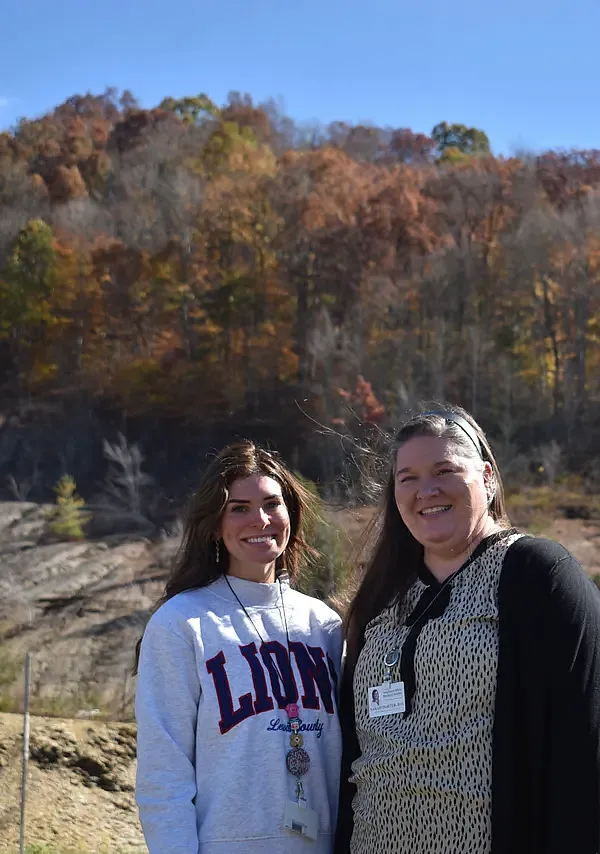
Dr. Katherine Redmond, a pediatrician, left, and Dr. Sarah Porter, senior medical director of primary care at Vanceburg Family Health Center in Lewis County. Nov. 5, 2026.
Connor Giffin/The Courier Journal
It's not uncommon for homes in Eastern Kentucky to rely on burning wood or kerosene for heat, both of which release indoor air pollutants that can contribute to asthma and other chronic respiratory problems. Older homes may also suffer from mold, pests and other asthma triggers.
Doctors also described a broader tendency to put off medical care, seeking help for a health condition only when it becomes an acute emergency.
"I think that's kind of cultural," Porter said. "You go to the doctor when you're sick, not when you're well."
Dr. John Saylor, a pulmonologist at Rockcastle Regional Medical Center in Mt. Vernon, described an "atmosphere" in rural Kentucky in which patients "get used to being short of breath," he said.
"They'll go to the ER five or six times a year for shortness of breath and they just think that's the way that it's supposed to be," said Saylor, who grew up in Rockcastle County. "These people just get used to having uncontrolled asthma."
Cost is driving hesitation. Anytime Saylor mentions a medication to a patient, the first question he gets is how much it will cost. Any out-of-pocket expense can pose a barrier.
"Even if it's $5, some of our patients just don't have $5," Porter said. "It seems minimal, but they just don't have it. Especially on a recurring basis."
Shelia Grigsby, a Henry County resident with asthma, has faced "astronomical" prices for asthma medicine, sometimes totaling hundreds of dollars per month depending on her insurance. She has had to adjust her medications based on what she can afford, she said, "because when you don't have the money, you just don't have the money."
When Kentuckians cannot treat their asthma proactively, they're at risk of ending up in the emergency room or even an inpatient hospital stay, which can cost thousands of dollars and send families to far-flung facilities. From Lewis County, the nearest major hospital is in Cincinnati, a 90-minute trip each way.
Many patients don't have reliable transportation for that trip, Porter said. "Families look at me and say, 'My vehicle's not going to make it to Cincinnati.'"
"You could spend a lot less money preventing these hospitalizations if you could get them on the correct therapy before it gets out of control and they have to come in," Saylor said. "And, of course, it's miles and miles safer for the patient."
'From the very minute they step off the bus, we're doctoring'
In some rural counties, schools are working to bridge the gap between low-income families and health care. But school districts striving to fill a social services role for children — including those with chronic health conditions like asthma — are themselves struggling with extremely limited resources.
Carter County Schools, with an enrollment of about 3,900 students, employs one person to oversee district health: registered nurse Toni Jobe.
The district has the highest ratio of students to nurses in the state, according to data from the Kentucky Department of Education. Looking after students' health is a team effort.
"Let's put it this way," Jobe said. "Being in a rural area, our staff, our office staff, especially our teachers, they're all like mothers. They do take care of the kids."
Many of the district's students live in poverty, lacking warm clothes or adequate food, said Superintendent Jennifer Fraley. School staff know to expect some children to arrive at class hungry, sick and tired.
"From the very minute they step off the bus," Fraley said, "we're doctoring."
The seal of Carter County Schools is displayed outside the district's offices in Grayson. Nov. 5, 2026.
Connor Giffin/The Courier Journal
Students with uncontrolled asthma are at greater risk of missing school and falling behind in their education. The disease is a leading driver of chronic absenteeism nationally. For children living in poverty, housing conditions may contribute to asthma and other chronic health conditions.
"We have kids who live in garden sheds," Fraley said. "And as soon as we find that, we're working on trying to find homes for them and do those things, but that happens." Others live in homes without running water, heat or ventilation.
"If you have not ever experienced rural poverty, then you don't have a firm understanding of what poverty is, because it is different," Fraley said. "You don't have the civic supports of public transportation, public housing. You don't have all those things."
School nurses are a crucial lifeline for children with asthma and other chronic conditions that require consistent care. But many Kentucky school districts are short-handed.
In the 2024-25 school year, about 20 school districts reported a ratio of students to nurses exceeding 1,000-1, according to state data. Thousands of Kentucky students attended a school district that did not report employment of any staff or contract nurses, though the data collection is voluntary and may be incomplete.
The American Academy of Pediatrics and other authorities recommend staffing one full-time nurse per school, a standard that the Kentucky Department of Education considers "an important goal for ensuring students have timely access to appropriate health services," spokesperson Jennifer Ginn said in a statement.
But the state does not require nurses in every school, instead leaving staffing up to the districts.
Urban and rural school districts alike also struggle to collect complete data on the health conditions affecting their students. Some districts reported asthma in less than 1% of their student population, a rate so low that it almost certainly indicates gaps in health data.
Hundreds of miles west of the Appalachians, where Kentucky meets the Mississippi River, Karen Elliott is the only nurse for Carlisle County Schools, a district of more than 600 students.
Elliott, a nurse of 40 years and past president of the Kentucky School Nurse Association, said her district also struggles with high poverty rates, health care access and distance from hospitals. The district's campus is surrounded by farmland on all sides. In an emergency, an ambulance may take 40 minutes to arrive.
The schools in Carlisle County do not stock rescue inhalers. Even if they did, Elliott said the district does not employ a nurse practitioner or doctor who could oversee a prescription medication program.
"We don't have a doctor on staff. We don't have a health clinic here," she said. "I mean, it's me."
Some districts, including in Carter and Greenup counties, partner with nearby health care providers for support. The UK King's Daughters medical centers in Ashland and Grayson may send nurses to local schools. Jennifer Trippett, district health nurse for Greenup County Schools, said the Ashland hospital offers telehealth for students and even provided rescue inhalers for schools through a grant program.
Trippett said. It's her job to get them through it.
"You can hear that gasp, that airway being tightened," she said. "For me, it's always the look in that child's eyes. I can look in a child's eyes and tell immediately, almost – the fear in their eyes."
The 'triple whammy' of Medicaid cuts
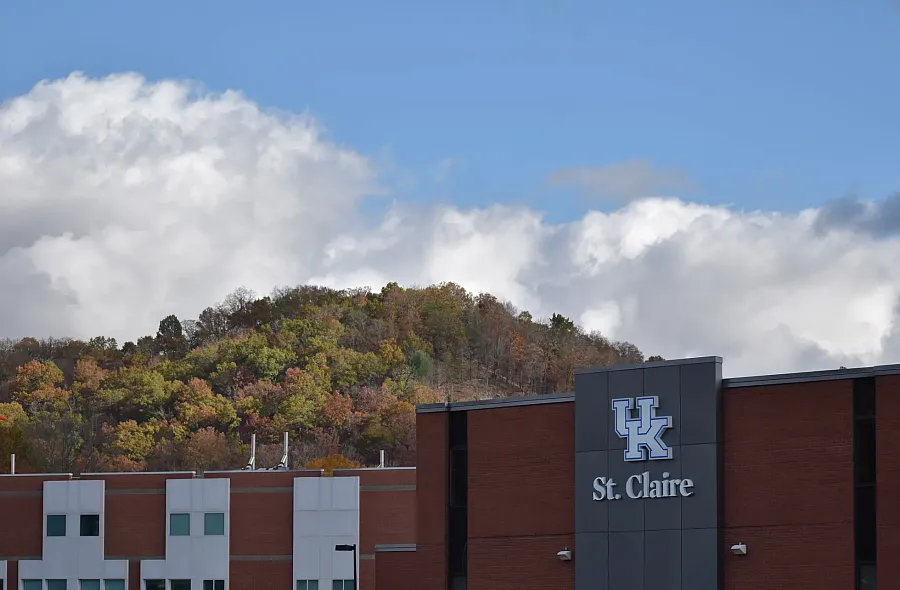
UK St. Claire Regional Medical Center in Morehead is one of the largest rural hospitals in Eastern Kentucky. Nov. 5, 2026
Connor Giffin/The Courier Journal
Medicaid underpins the delivery of health care across rural Kentucky. Without steady coverage and continued funding for rural hospitals and clinics, many Kentuckians are at risk of falling off regiments of care for asthma and other conditions – especially in remote parts of the state.
"People like Appalachia," said Fyffe, the pulmonologist in Morehead. "When they're out here, they want to stay out here, and you have to ultimately bring those resources to them."
Kentucky is preparing to administer a Medicaid program with significant changes, mostly taking effect next year under changes made by the Republican-led Congress in 2025. State officials are bracing for vulnerable residents, including people with asthma, to lose access to health care.
"The potential loss of widespread health coverage raises significant concerns about access to care, especially for preventive services and ongoing management of chronic conditions like asthma," said Beth Fisher, a spokesperson for the Kentucky Cabinet for Health and Family Services, in a statement.
For people with "life-threatening conditions," emergency Medicaid coverage may remain available for a limited time, Fisher said. But "many Kentuckians could otherwise face losing access to their healthcare providers, medications, therapies, and other treatments they rely on."
Few places in the country count on Medicaid for health care as much as Eastern Kentucky, where 30-40% of residents are enrolled in the program. Cuts are expected to land hardest in rural communities.
"It's really a triple whammy," said Joan Alker, executive director of the Center for Children and Families at Georgetown University. Patients find themselves with less access to primary and preventative care; hospitals and clinics are threatened by the cuts; and if rural facilities shutter, patients in turn must travel farther.
Amid the sweeping changes to Medicaid, the federal government is directing billions of dollars to states through its Rural Health Transformation Program, meant to bolster rural providers through 2030. Researchers at the Georgetown center, which has been tracking the changes, expect the $50 billion program to fall short of filling the nearly $1-trillion-sized hole in Medicaid.
"There's no way to mitigate the largest cut in Medicaid's history," Alker said, "especially in a state like Kentucky, which is not a rich state."
Rejecting the status quo
Tarakam grew up on a farm. Years before she ever advocated for smoke-free policies and lung health, she was helping hang tobacco in a Meade County barn. She has asthma herself, and has family members who smoke, though "they knew when to step back," she said, conscious of the effects from secondhand smoke.
Tobacco has long been engrained in Kentucky heritage. Thirty years ago, the crop was grown on nearly 50,000 Kentucky farms. Today, Kentucky's smoking rates remain among the highest in the country.
In the years following Christopher's death, Tarakam sat down with state leaders, including Kentucky Senate President Robert Stivers. She pushed for policy changes that would protect lung health, including a statewide prohibition on smoking in public spaces and workplaces.
"I just tried to share his story and advocate as much as possible from that point," she said. "I don't remember much of my 30s, either. There's a lot of trauma blocking that happens in my brain, trying to protect itself."
But one feeling has stuck with her a decade later: a sense that state leaders were unmotivated to change the status quo, she said, or to find solutions.
Policies and investments that could improve respiratory health, spanning housing, schools and air quality, have gone overlooked, The Courier Journal reported last month, as asthma's steep costs continue. Unlike most states, Kentucky still has not enacted a statewide smoke-free law, despite evidence that it would reduce emergency room visits.
The Courier Journal asked the Kentucky Senate majority about Tarakam's concerns, and for lawmakers' response to data on steep asthma-related costs, such as ER visits and missed school days. Angela Billings, a spokesperson, declined to comment.
The Ohio River Valley and Kentucky are notorious for asthma and allergies. But after years of advocacy, Tarakam was troubled by the idea that nothing could change, or that lawmakers are powerless to protect the health of Kentuckians with asthma. She refuses to accept that.
"For my son to have lived," she said, "he should have moved out of Kentucky? That doesn't make sense to me."