

Silent Signals: Suicide and Isolation in the Korean Community
This story was produced in collaboration with SBS International as part of the 2026 Ethnic Media Collaborative, Healing California.

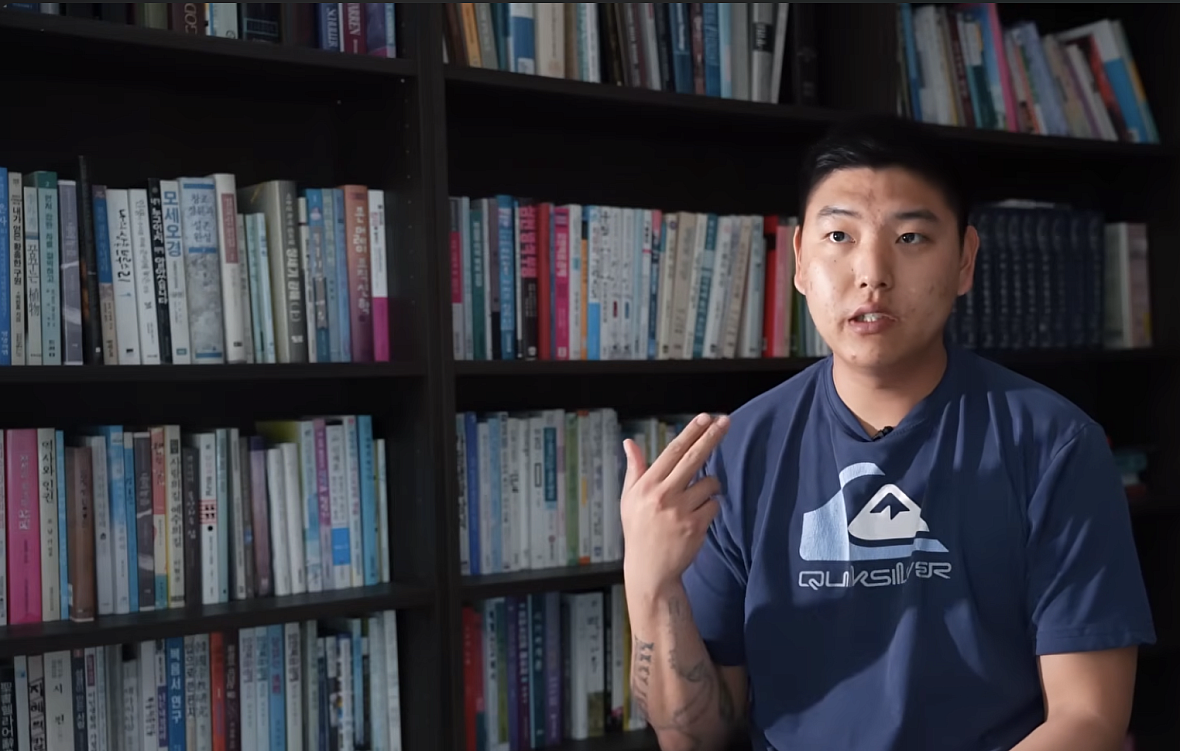
Abraham Jun was 19 years old when he put a gun to his head. In a community where suicide rates have climbed for over a decade, his story is not as rare as it should be.
Duhyun Lee
Silent Signals
Abraham Jun (Suicide Attempt Survivor):
“I had a gun… and I put it to my head.”
Anonymous Korean American Senior:
“At that time, I was in shock…and I started thinking it might be better to leave this world while I’m still healthy.”
Suicide is a problem that quietly affects both young people and older adults. On the surface, it may look like a momentary decision.
A Survivor’s Story
Abraham Jun (Suicide Attempt Survivor):
“She [my mom] was in the kitchen cooking food. I was in my room, and I could hear her knife, chopping tak, tak, tak. I halfway pulled, and then I gave up.”
Abraham Jun was 19 years old at the time. He says it wasn’t a carefully planned decision, but that desperate moment didn’t come out of nowhere.
Abraham Jun (Suicide Attempt Survivor):
“During that time, I was sinning a lot, a lot of bad things. Stealing, fighting, doing drugs. I was hurting a lot of people. Just little things would hurt me a lot. Just little things, but at the time I was very sensitive.”
During that time, he was also struggling with his relationship with his mother.
Abraham Jun (Suicide Attempt Survivor):
“I know when I talk to my mom she is not proud of me – she is disappointed and ashamed she doesn't like me so I thought, ‘If she doesn’t like me, I might kill myself.”
He did not pull the trigger.
Abraham Jun (Suicide Attempt Survivor):
“After I put the gun down, I couldn’t believe what almost happened. I started crying. Tears started coming down. And I thought of my mom.”
Abraham survived that moment. But for some, those moments become their last.
Aging Into Isolation
And this crisis is not limited to younger generations.
Anonymous Korean American Senior
“I’ve lived here for about 20 years. As people get older in the U.S., they often become more distant from their children. Many live in different states, so it’s harder to see each other. There are fewer chances to meet people, and fewer companions around. And as the body weakens over time, it becomes harder to move. When you stay home like that, you end up becoming isolated.”
Sometimes, this leads to deep depression.
Anonymous Korean American Senior
“In just a few months, I experienced several difficult situations with people around me. Seeing my family and acquaintances struggle really shocked me. And I started thinking…maybe it’s better to leave while I’m still healthy.”
This experience does not end as an individual story.
The Numbers Behind the Pain
Over the past decade, suicide among Korean Americans has remained a persistent issue. According to CDC public health data, as analyzed by Korea Daily and the USC Center for Health Journalism, the suicide rate among Korean Americans rose 52% from 2011 to 2022.
This is more than three times the pace of the overall U.S. rate during the same period.
Recent data shows the problem continues. According to CDC mortality data, the number of Korean individuals who died by suicide increased from 174 in 2023 to 214 in 2024.
Dr. Soyoung Sung | Clinical Psychologist:
“Among Asian Pacific Islander groups, Korean Americans rank second.”
A Gap in Perception
Despite these high numbers, a dangerous gap exists in how suicide is perceived. In a survey conducted last December, by the Overseas Koreans Agency, Korea University’s Department of Psychology, and the YouStar Foundation, interviewing 496 Korean Americans, less than half of respondents strongly agreed that “suicide must be prevented.”
Professor Tae-Kyun Hur | Korea University:
“People should take suicide seriously and actively try to stop it. That's the “prevention-minded group. But only 46.2% fell into that category. The remaining 53.8% have a more permissive attitude toward suicide. In others words, they may think suicide is not preventable or have a low willingness to prevent it.”
Cultural Barriers
Suicide cannot be explained by a single cause. Depression, isolation, economic pressure, and cultural barriers that make it difficult to seek help — all of these factors overlap, deepening the risk.
South Korea has ranked among the highest in suicide rates among OECD countries for nearly two decades.
SBS “Morning Wide” (Korea, 2025):
“Since 2017, suicide rates among teens to 30s in Korea have steadily increased. Suicide is the leading cause of death for all these age groups.”
Experts say a culture focused on achievement and the stigma around failure contribute to the problem. These cultural pressures do not disappear after Koreans immigrate to America.
Soyeon Park | YouStar Foundation:
“There is stigma around being unwell. People think it’s a family issue — even something genetic and feel they cannot talk about it. There’s a belief that speaking out would bring shame to the family. So even though the suicide rate is high, very few people seek help. The barrier feels too high to overcome.”
The Signals Before the Moment
Suicide may appear to be a single moment. But before that moment, there are often many signals. Whether someone overlooks those signals or chooses to ask one more question can change the outcome of someone’s life.
Soyeon Park | YouStar Foundation:
“On average, there are about 28 attempts before a suicide is completed. Thinking about or attempting suicide is often a sign a cry for help.”
Abraham Jun (Suicide Attempt Survivor):
“She started talking to me. Yeah, and I was like, ‘This is good.’ I wanted to talk to my mom. She started talking and asking me questions. How I was doing, what I had been up to.”
Anonymous Korean American Senior:
“I try to take initiative and focus on positive things — like exercising, traveling, and just finding things that make me happy. I go to places like senior centers, work out, and meet friends.”
Despite how big this problem is, solutions are often found on a small human level.
Suicide can be prevented. And that possibility is already around us.